 InkForge
What a sun tattoo means
Almost every culture in history has looked at the sun and seen something powerful. As the source of light, warmth and growth, it has stood for life itself, and its daily return made it a natural symbol of renewal, hope and new beginnings.
Some of the best-known sun traditions:
- Ancient Egypt honored the sun god Ra, often shown with a sun disk, and saw the sun’s journey across the sky as a daily cycle of death and rebirth.
- Greek mythology pictured Helios driving the sun across the sky in a chariot.
- The Inca worshipped Inti, the sun god, at the center of their religion.
- Japan’s Shinto tradition venerates Amaterasu, the sun goddess, and the country’s name is often translated as “origin of the sun.”
Many Indigenous peoples also have sacred sun symbols. The Zia sun, for instance, belongs to the Zia Pueblo in New Mexico, which has spoken out about its commercial use. If a particular cultural sun speaks to you, learn its story and consider designing your own sun instead of copying a sacred symbol.
In personal terms, a sun tattoo often means:
- Optimism: choosing to look on the bright side.
- Strength and vitality: energy and confidence.
- A fresh start: marking the end of a dark period.
- Someone who is your sun: a child, partner or parent who lights up your life.
Popular sun tattoo designs
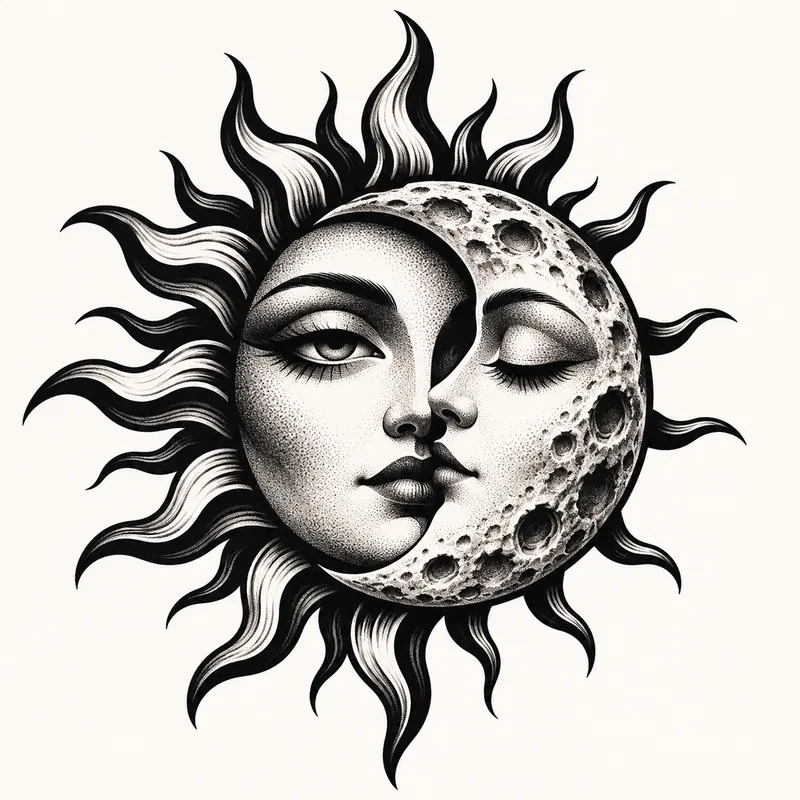
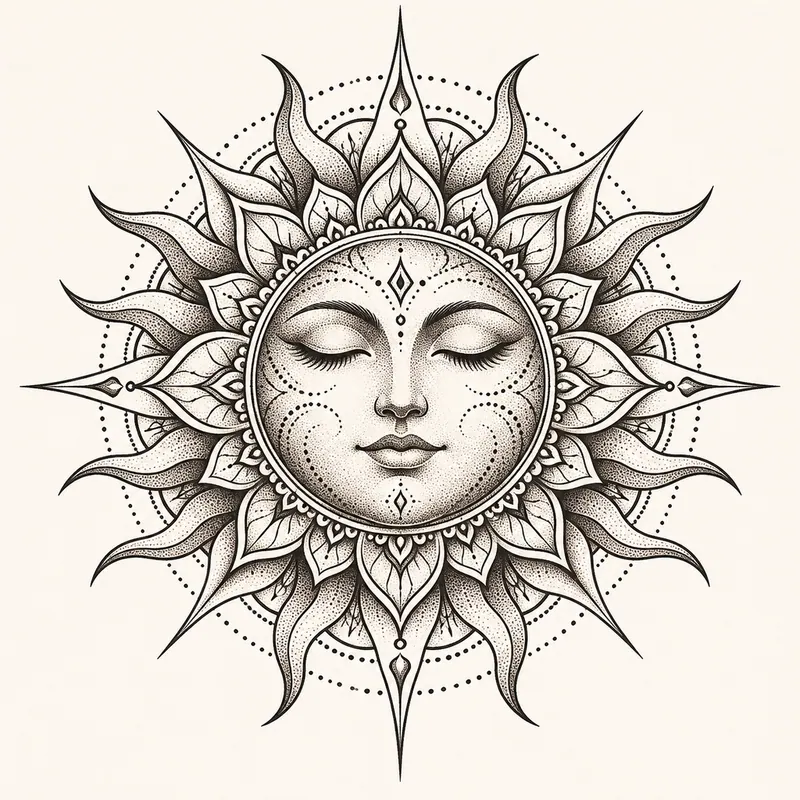
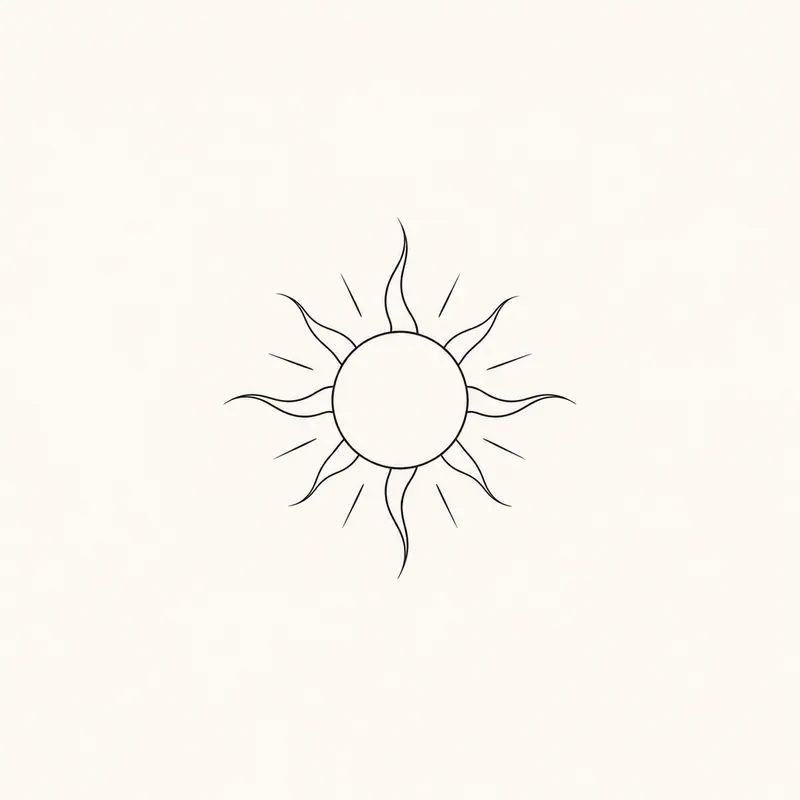
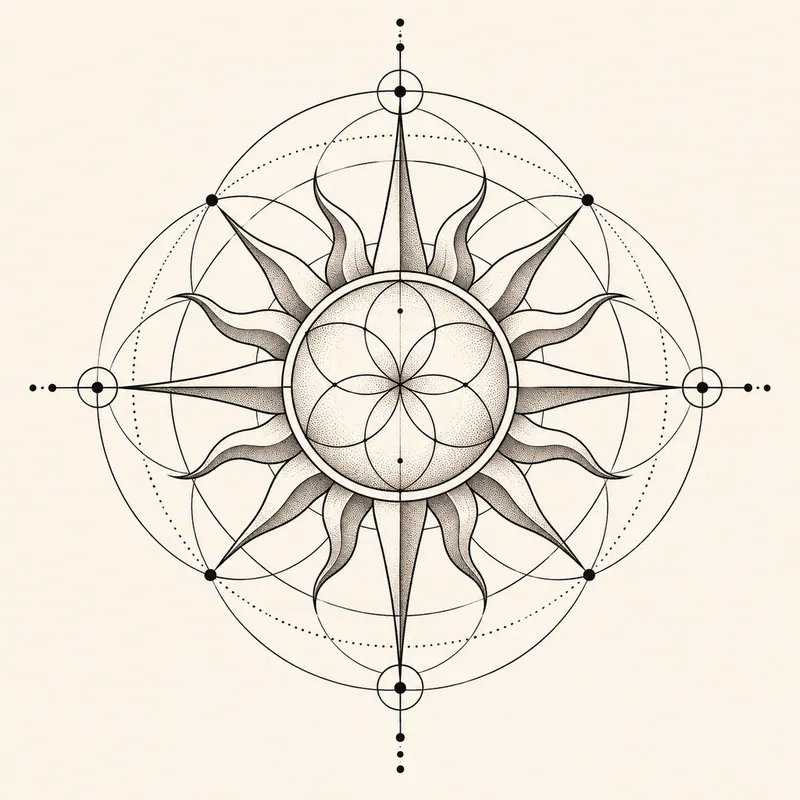
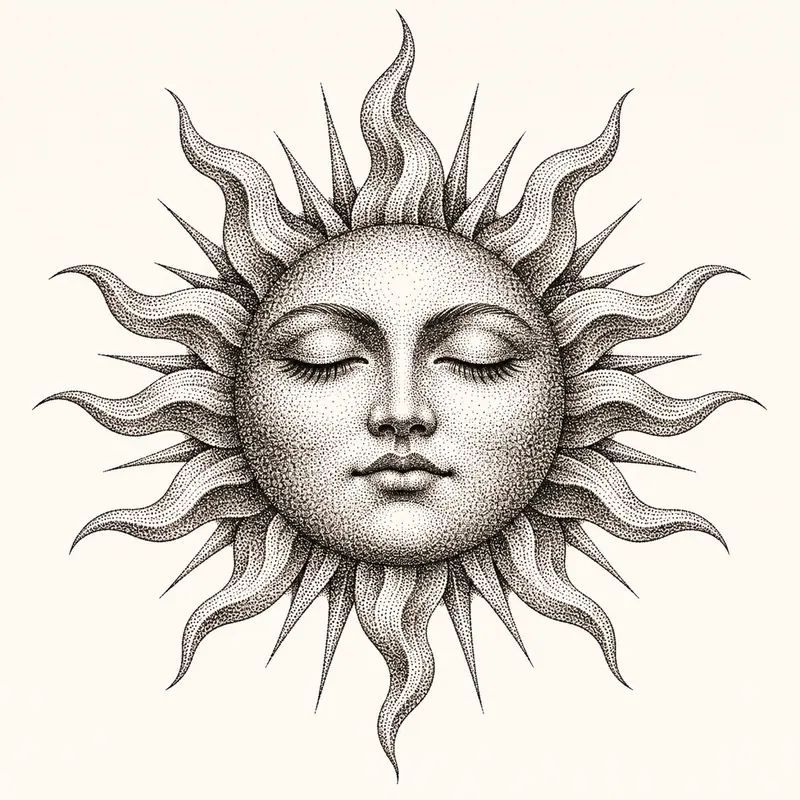
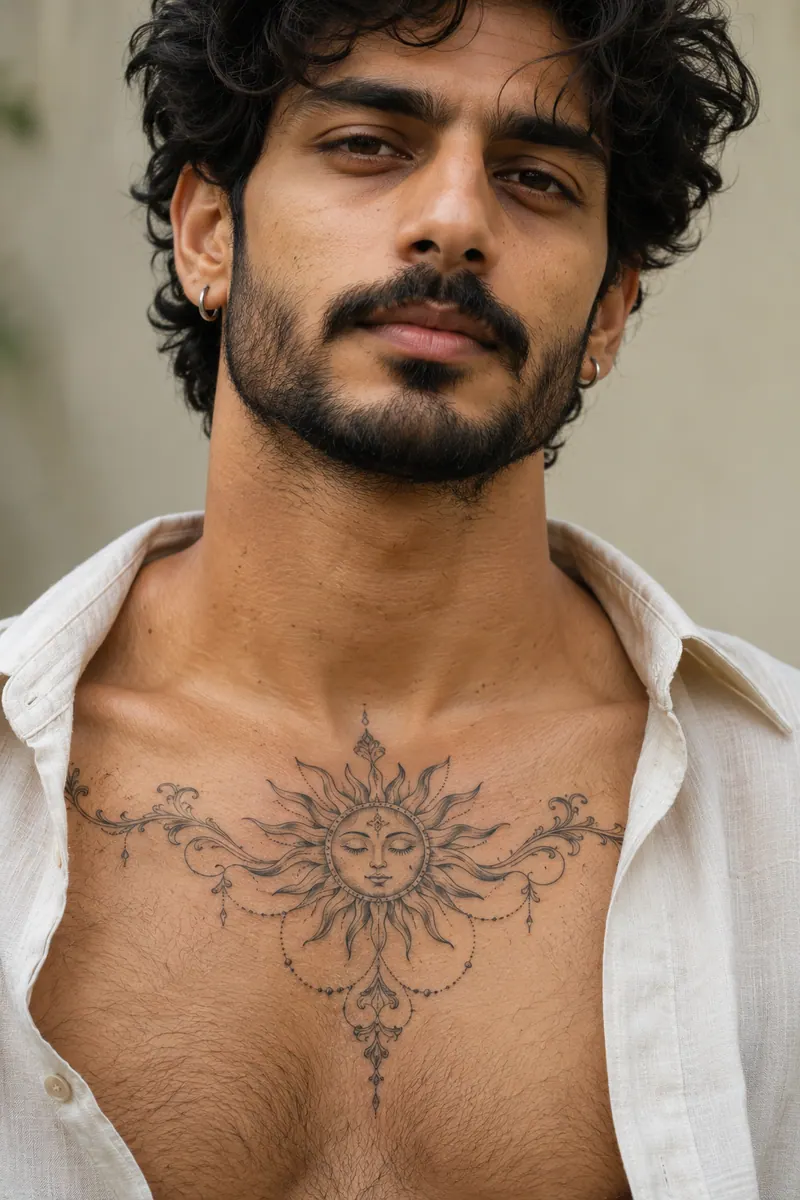
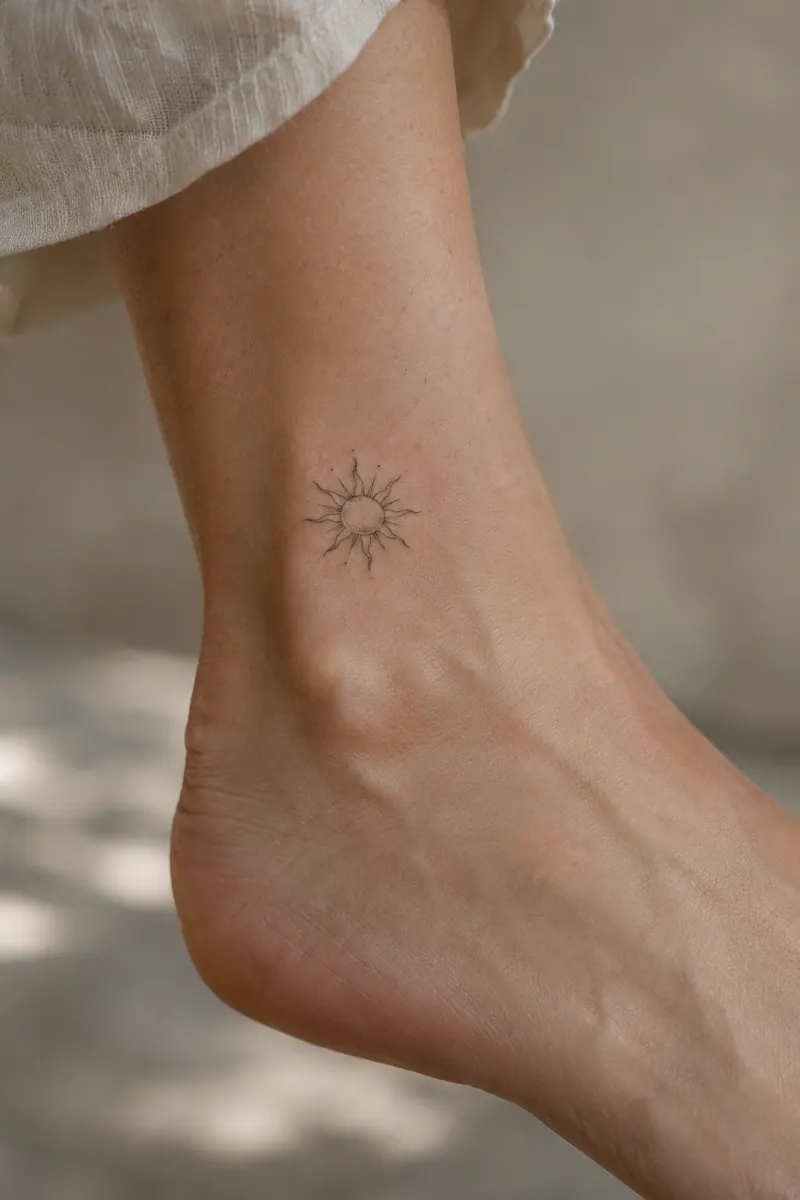
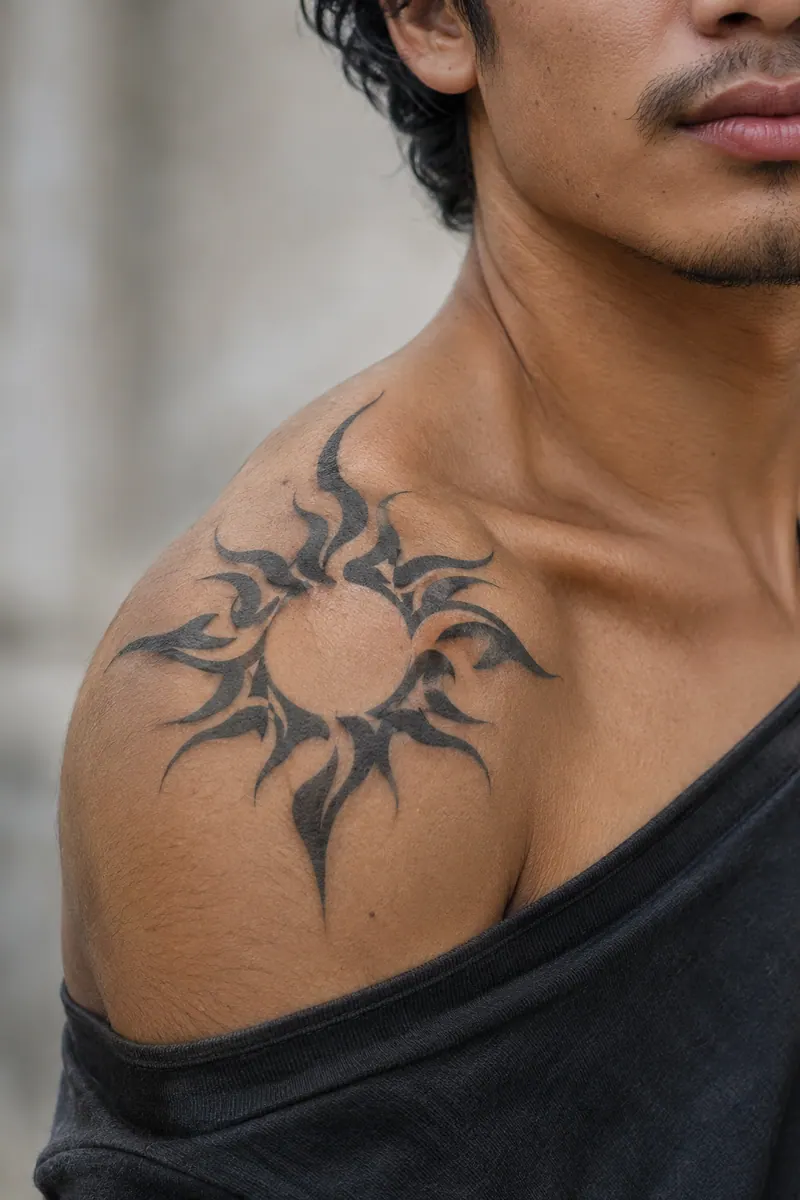
The gallery above shows how much a simple shape can do:
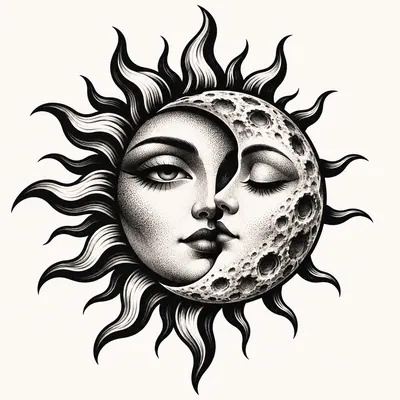
- Sun and moon combined into one face. A blackwork chest design where half the face is the sun and half the moon, the classic image of balance. See our moon tattoo ideas for the other half of the pair.
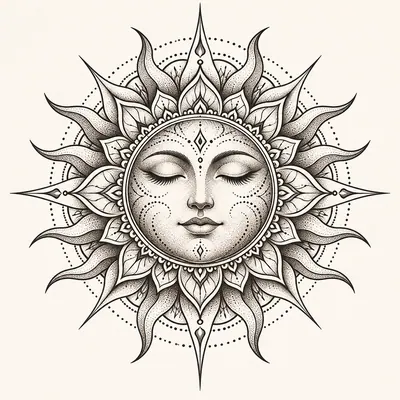
- Sun with radiating rays. A mandala back piece where the rays become layers of ornamental pattern.
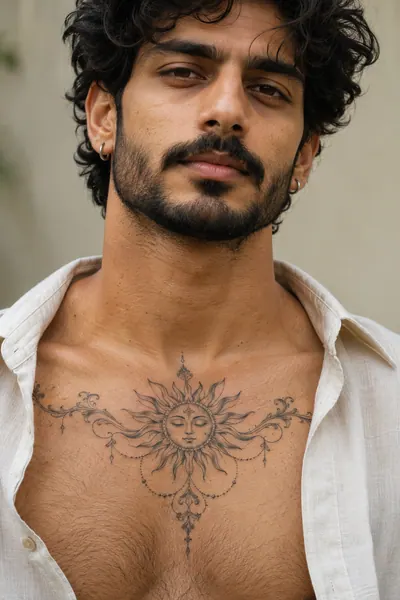
- Sun with ornamental rays. A sternum design whose rays spread like jewelry across the chest.
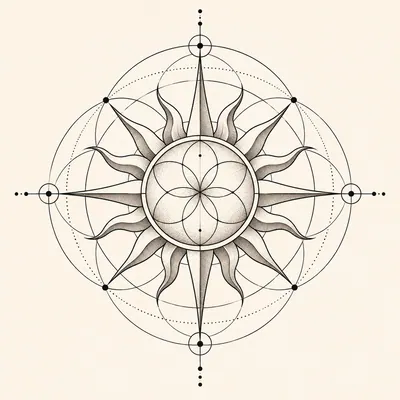
- Sun made of clean lines and circles. A geometric forearm piece that reduces the sun to precise shapes.
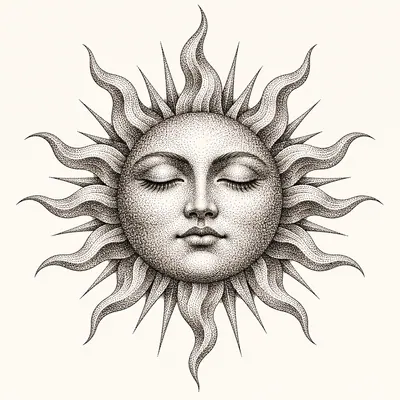
- Stippled sun. A dotwork shoulder design where shading builds a soft glow.
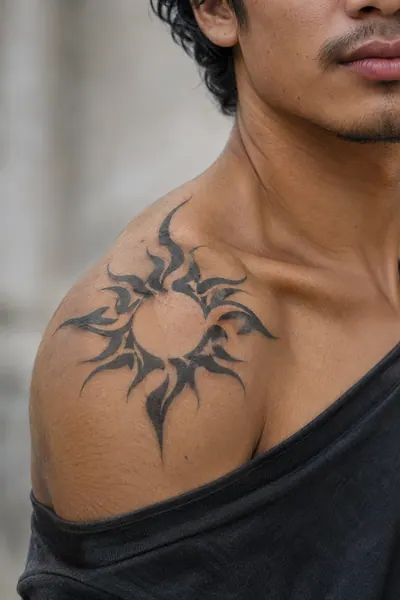
- Sun made of sharp flame shapes. A tribal shoulder piece with bold black rays.
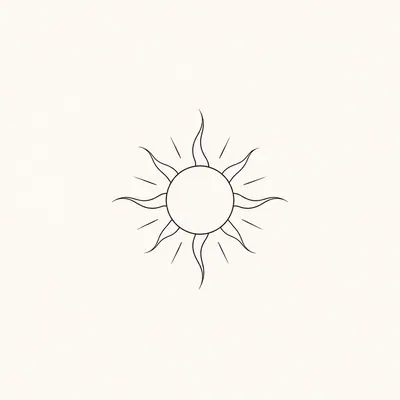
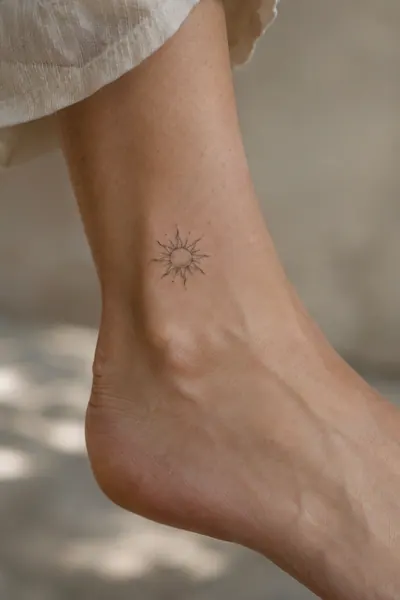
- Small and tiny suns. A minimalist wrist sun and a fine line ankle sun, often just a circle and a few short lines.
Suns pair naturally with sunflowers, mountains, waves and compasses for travel or nature-themed pieces.
Choosing a style for your sun
Fine line and minimalist suns are simple, clean and easy to place almost anywhere.
Mandala and ornamental styles turn the rays into intricate pattern work. They are at their best when centered on the body, on the sternum or spine.
Geometric suns play with perfect circles and straight lines for a modern, graphic look.
Dotwork gives a soft radiance without solid fills.
Blackwork and tribal suns are bold and high-contrast. They read from a distance and hold up well over time. Keep in mind that modern tribal is a Western style, distinct from the traditional tattooing of specific cultures.
Where to place a sun tattoo
A sun is radial, so it looks best where it can sit centered or follow a round part of the body:
- Sternum: a sun with long rays spreading toward the collarbones and ribs is a popular statement piece.
- Upper back and spine: room for mandala and geometric suns with layered rays.
- Shoulder cap: a round sun wraps the curve of the shoulder well.
- Forearm: a medium sun or a sun-and-moon design.
- Wrist, ankle and behind the ear: tiny suns, ideally a simple circle with short rays.
Circles are unforgiving: even a small wobble shows. For small suns, ask your artist about stencil placement and check it in a mirror before you start.
Your sun can carry details only you recognize: the number of rays for people you love, a sunrise over a place that matters, or a sun-and-moon pair split with someone close. In InkForge you can describe your idea, generate it in fine line, mandala or blackwork, and preview it on a photo of your chest or shoulder to check proportions. Save your favorite and share it with your artist as a starting reference.