InkForge
Two very different dragons
Before you choose a design, it helps to know which dragon you are getting, because the word covers two separate traditions.
The East Asian dragon (lóng in Chinese, ryū or tatsu in Japanese) is long, snake-like and usually wingless, with antlers, whiskers and clawed feet. It is generally a benevolent creature tied to water, rain, the sky and good fortune. In imperial China the dragon became a symbol of the emperor. In tattooing it stands for wisdom, strength, protection and the ability to rise through hardship.
The European dragon is a winged, fire-breathing beast with a heavier body. In medieval stories it often guards treasure or represents chaos and danger, which is why heroes and saints are shown slaying it. Yet it can also be a proud emblem: the red dragon on the flag of Wales is a well-known example. In tattoos it usually means power, ferocity and defiance.
Norse myth adds its own serpentine monsters, like the world serpent Jörmungandr, which often turn up in Viking-inspired knotwork designs.
Dragons in Japanese tattooing
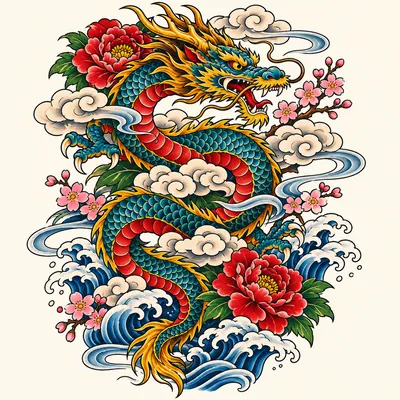
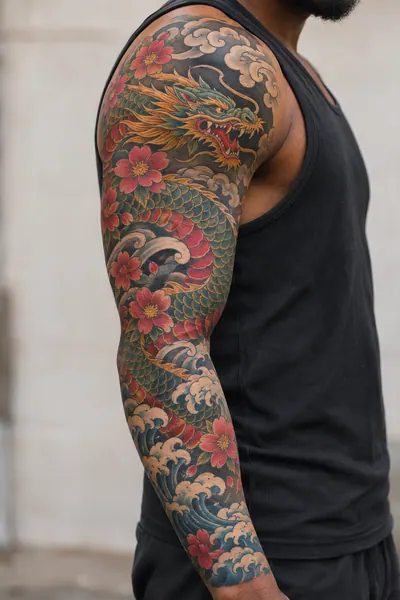
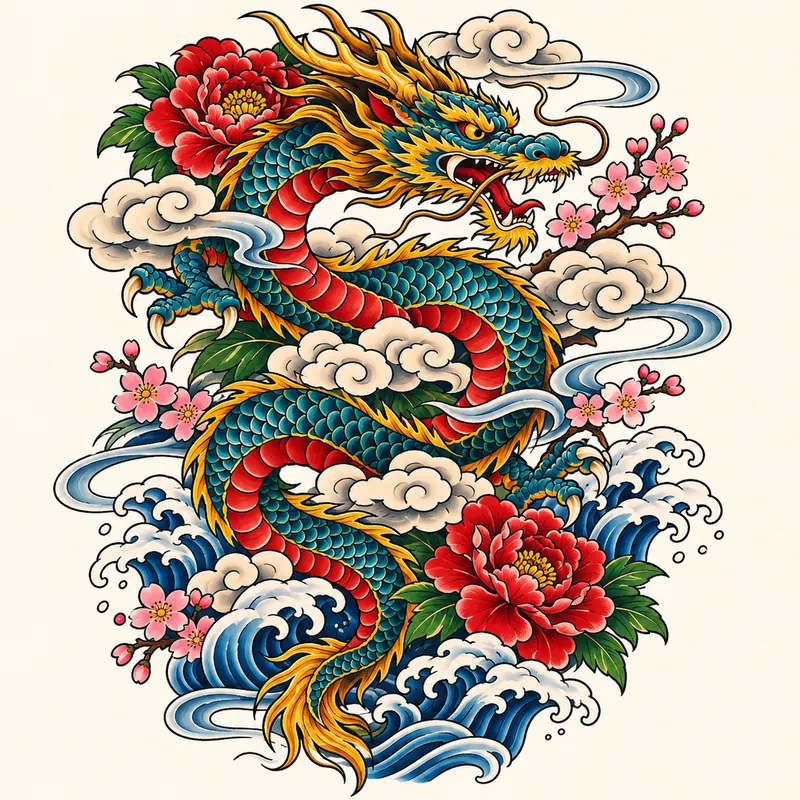
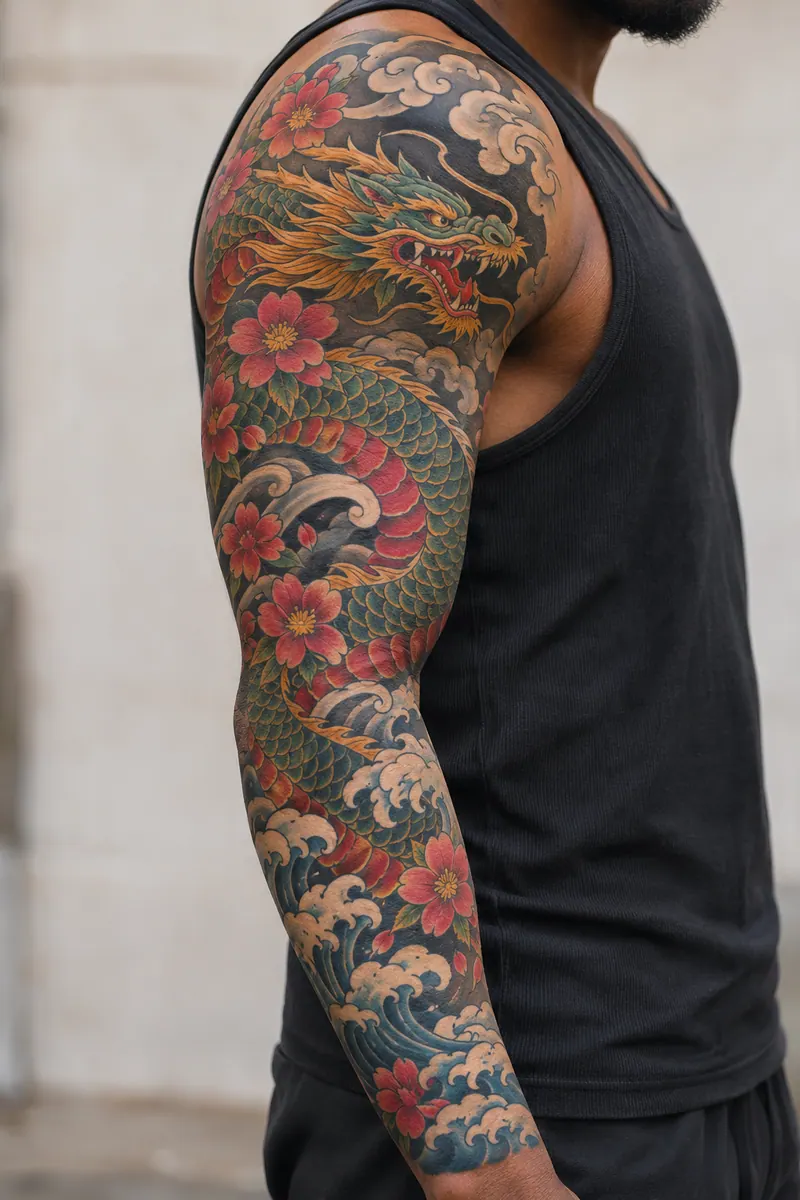
The dragon is one of the most important images in Japanese tattooing (irezumi), a tradition with deep ties to ukiyo-e woodblock prints. Dragons are traditionally shown twisting through clouds or waves, framed by wind bars, and are often planned as large back pieces or sleeves that follow the flow of the body.
Two gallery variants come from this tradition: a dragon coiling through clouds across the back, and a dragon rising from waves along a full sleeve. If this style speaks to you, look for an artist who specializes in Japanese tattooing and is willing to talk through the traditional pairings; a well-composed piece follows conventions that took generations to develop.
A related legend: a koi that swims up a waterfall and through the Dragon Gate becomes a dragon. A koi fish tattoo that turns into a dragon is a popular way to show perseverance paying off.
Dragon tattoo designs in the gallery
Beyond the Japanese pieces, the gallery shows how far the dragon can move from tradition:
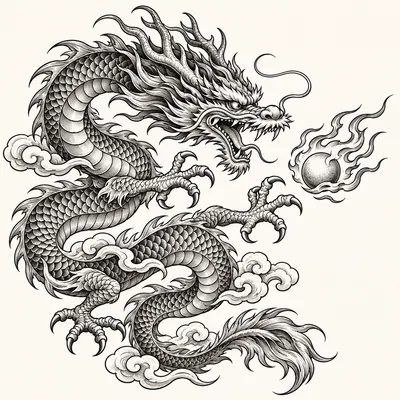
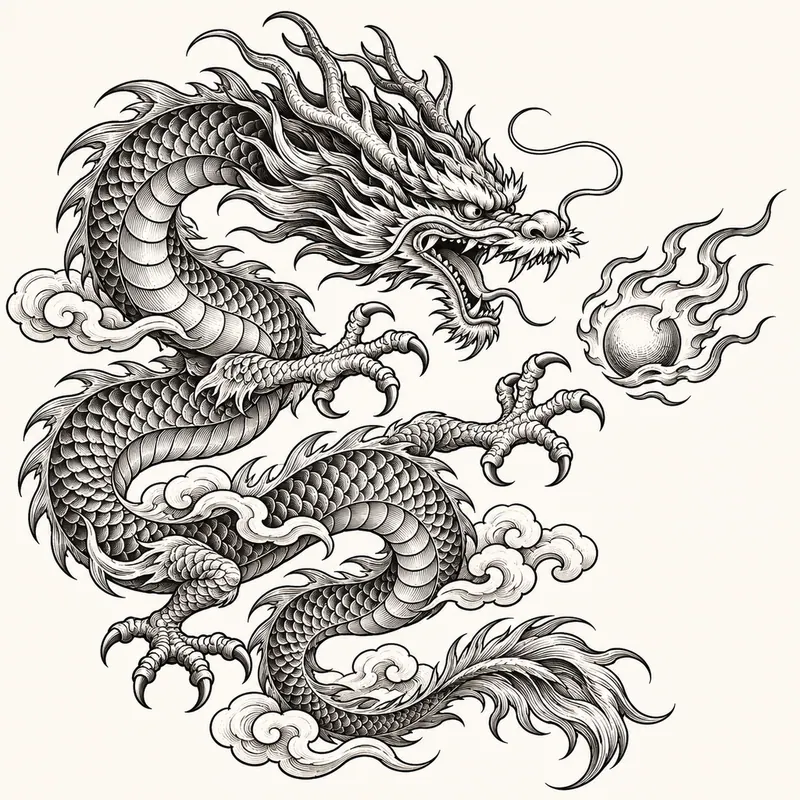
- Dragon chasing a flaming pearl. An illustrative upper arm piece built on the classic Chinese motif.
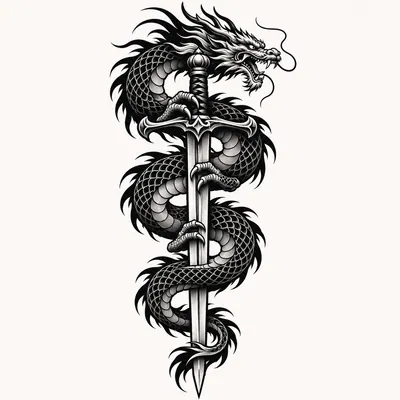
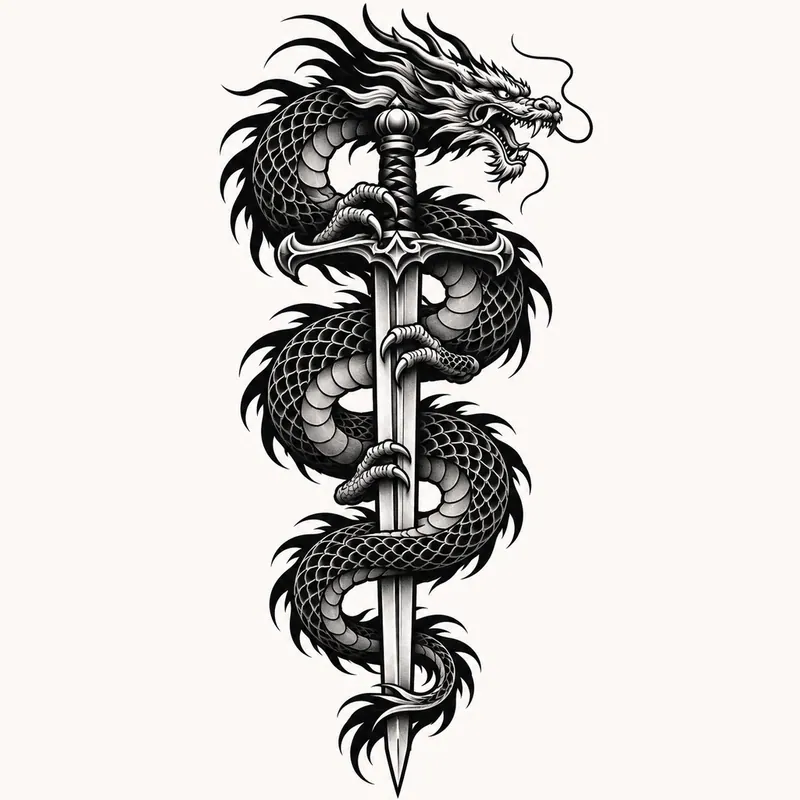
- Dragon wrapped around a sword. A blackwork forearm design that leans toward the Western warrior idea of the dragon.
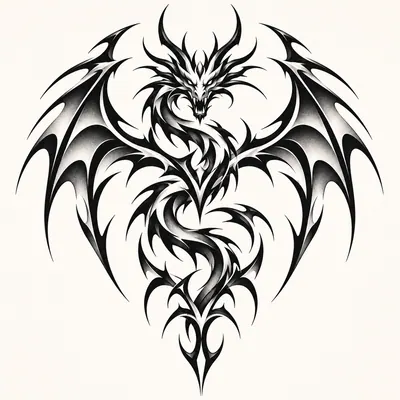
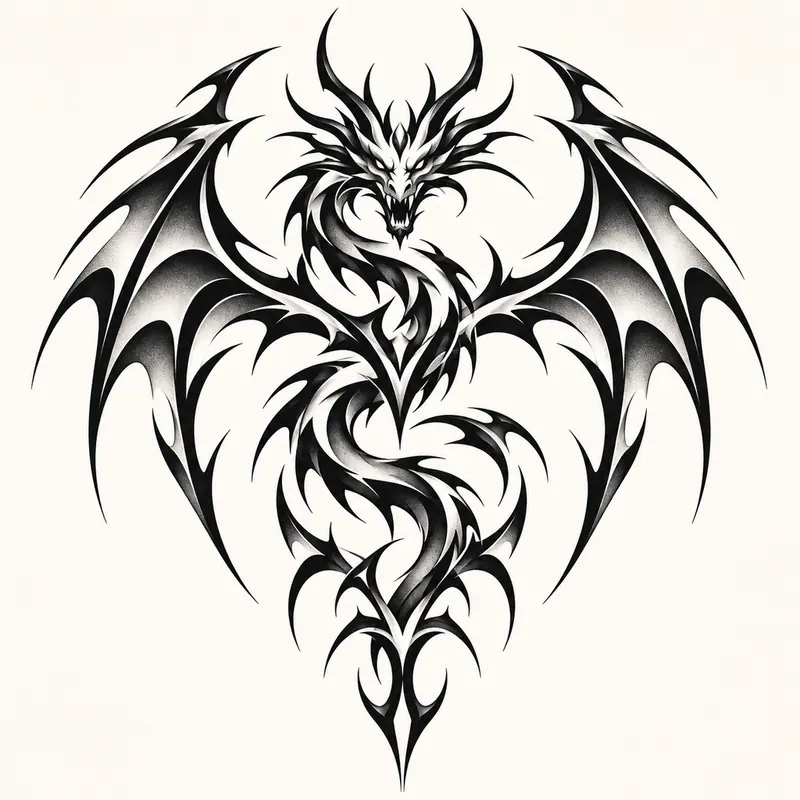
- Dragon of sharp flowing shapes. A modern tribal design on the forearm. Note that this Western tribal style is a contemporary graphic look, not a specific Polynesian or Indigenous tradition.
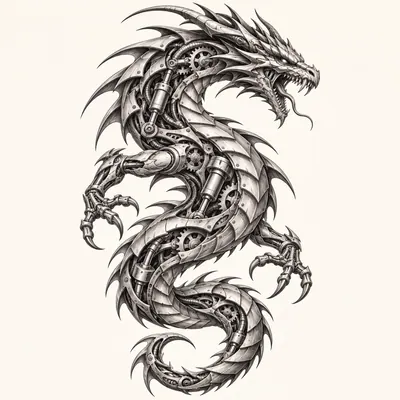
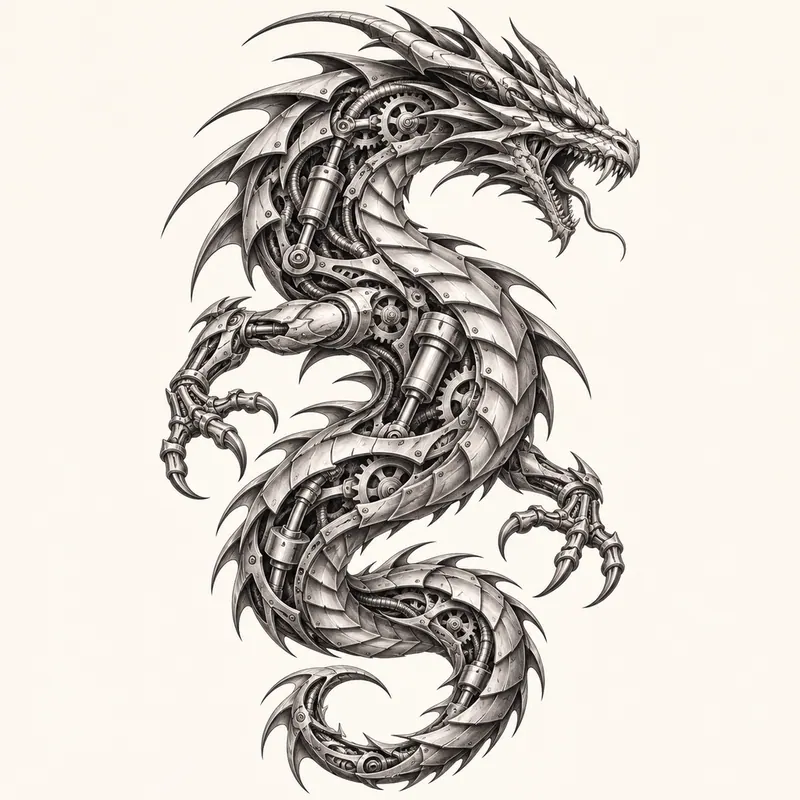
- Armored biomechanical dragon. Mechanical scales on the thigh for a sci-fi take.
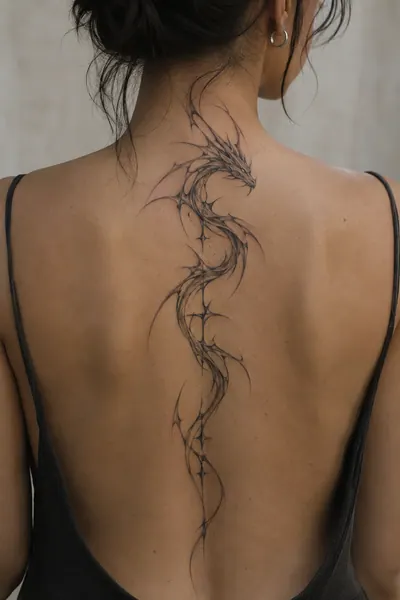
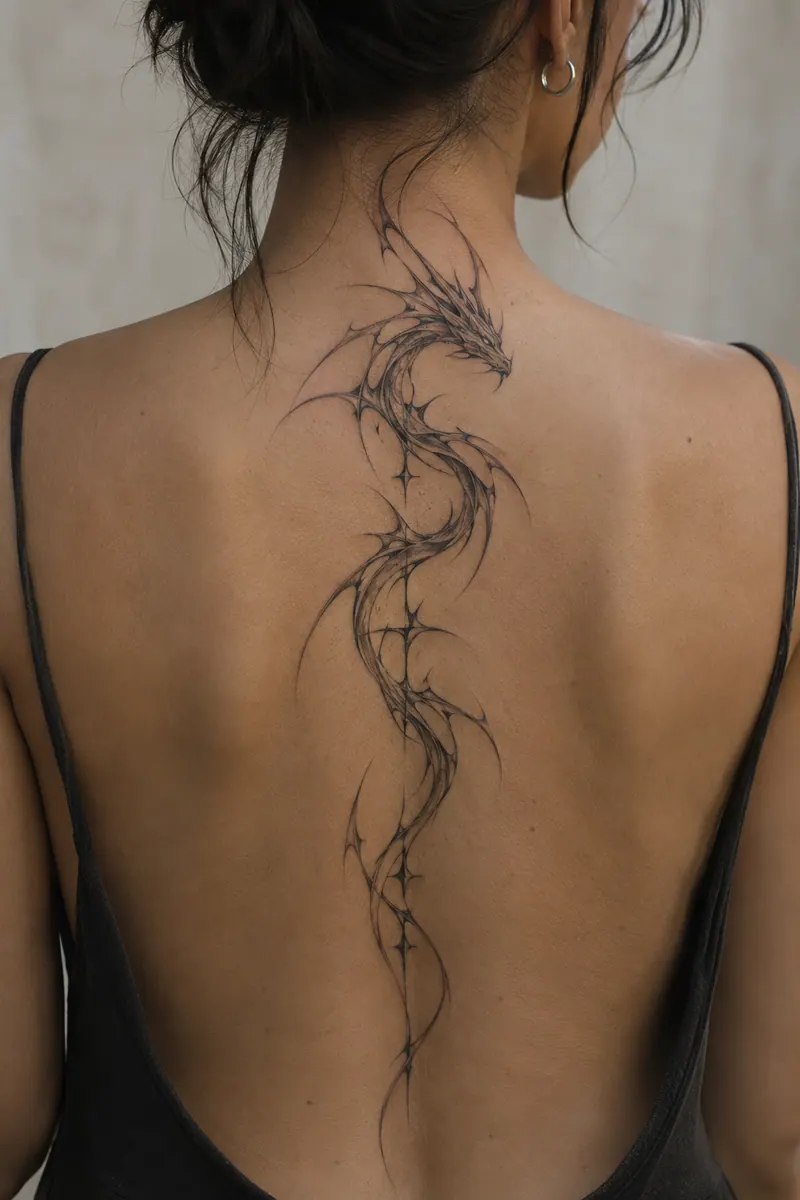
- Slim dragon running down the spine. A cyber sigilism piece where the body turns into thorny, glyph-like lines.
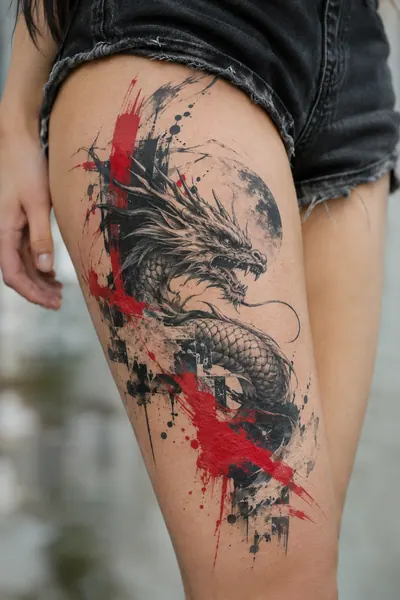
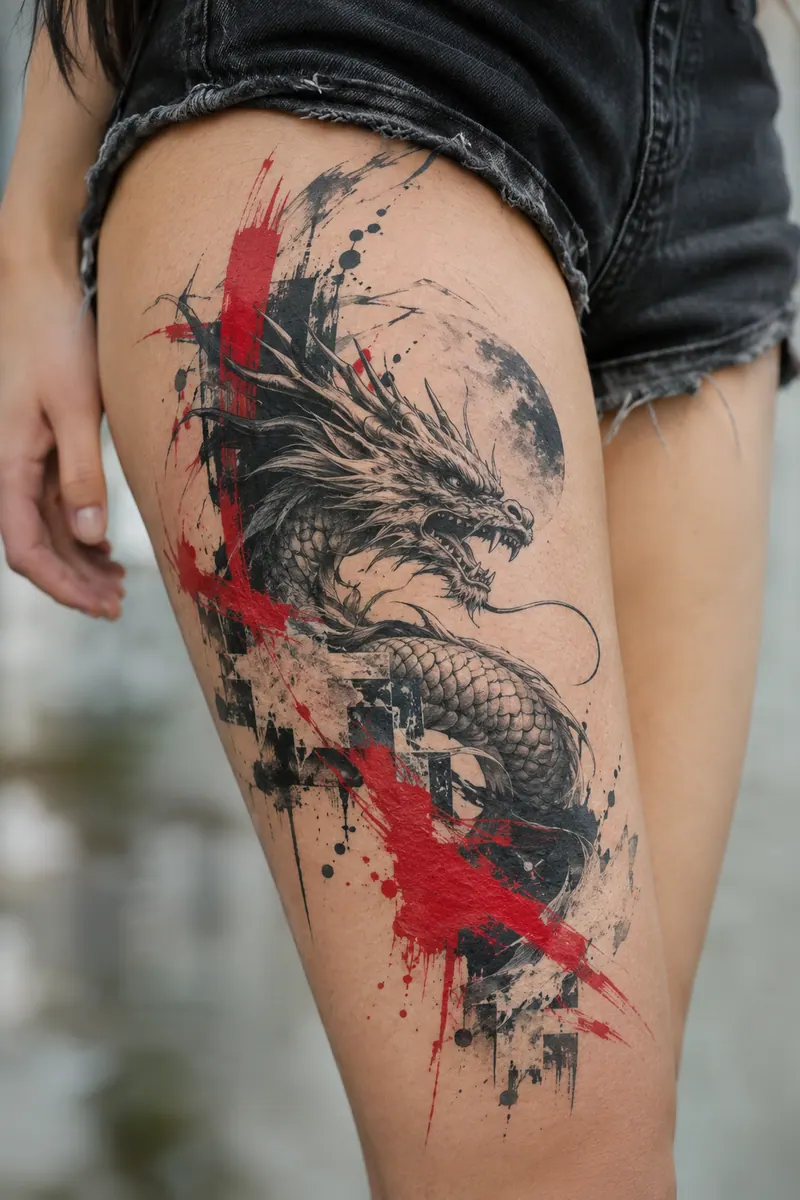
- Fierce red-and-black dragon. A trash polka thigh piece with brush strokes and splatter.
Placement: give the dragon room to move
A dragon’s body is its composition. A cramped dragon loses the sense of motion that makes it impressive.
- Back: the classic canvas for a full dragon, with room for clouds, waves and a dramatic head over the shoulder.
- Sleeve: the dragon can wrap around the arm, with the head on the shoulder or forearm.
- Spine and ribs: long, narrow areas for slim or stylized dragons.
- Forearm and upper arm: best for simplified dragons, dragon heads or dragons wrapped around an object.
Size, color and detail
Scales, whiskers and claws are where detail goes to die if the tattoo is too small. Plan larger than you think, or choose a bolder style like blackwork or tribal that keeps the silhouette strong. Color dragons in Japanese style traditionally use a limited, saturated palette against black clouds or waves, which helps them stay readable for decades.
Sketching your version
Decide first which dragon you mean, Eastern, Western or something new, then choose what it is doing: guarding, rising, chasing, coiling. InkForge lets you describe that scene, generate it in any of its 22 styles and repaint a single area, such as the head or claws, with the Edit brush. Take the version you like best to an artist who can scale it to your body.