InkForge
What a moon tattoo means
The moon is a symbol of cycles. It grows, fills, shrinks and vanishes, then returns, month after month. That rhythm is why moon tattoos so often mark change: a new chapter, a recovery, a loss you have learned to carry, or simply the belief that dark phases pass.
Other common meanings include:
- Intuition and the inner life: the moon rules the night, dreams and the parts of us we keep private.
- Femininity: many cultures connected the moon with feminine figures; the Romans called the moon goddess Luna and the Greeks Selene.
- Calm and reflection: the moon gives light by reflecting the sun, a quiet idea some people find meaningful.
- Connection over distance: two people looking at the same moon is a classic image for long-distance love and family.
Moon folklore appears all over the world, from the “man in the moon” faces of European art to the moon rabbit seen in East Asian stories. If you are drawing on a specific tradition, it is worth reading about it so the details you choose actually mean what you intend.
Popular moon tattoo designs
The gallery above covers both the delicate and the dramatic:
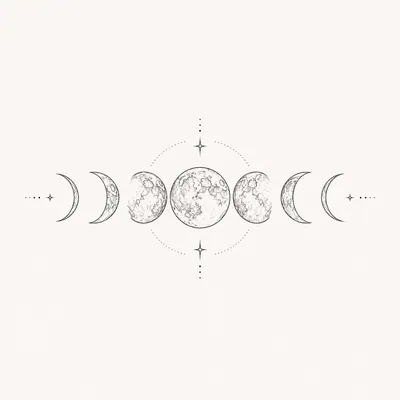
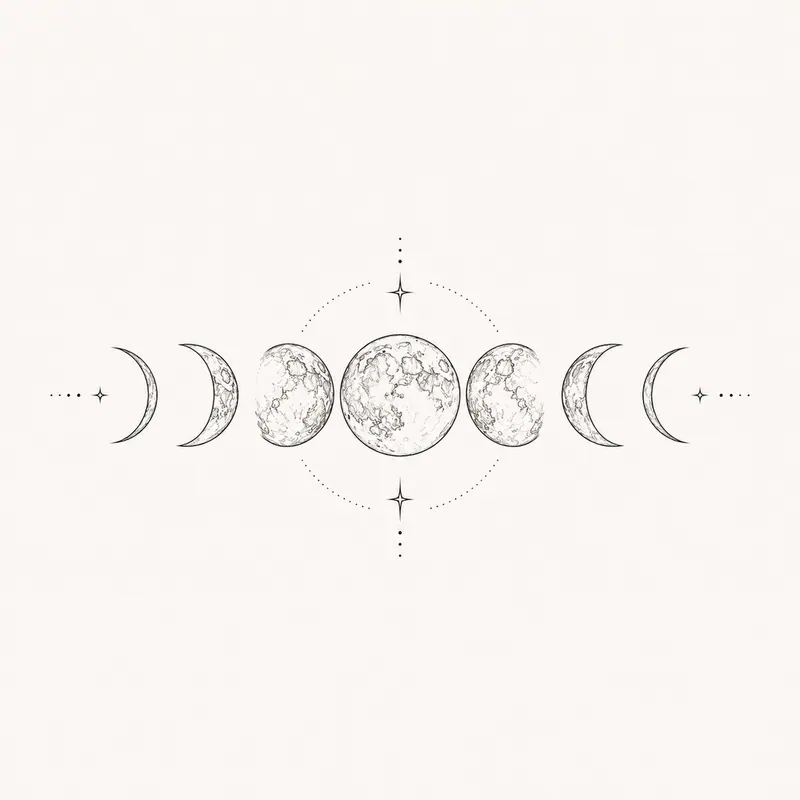
- A row of moon phases. A minimalist forearm design moving from new to full and back, sometimes with the full moon at the center.
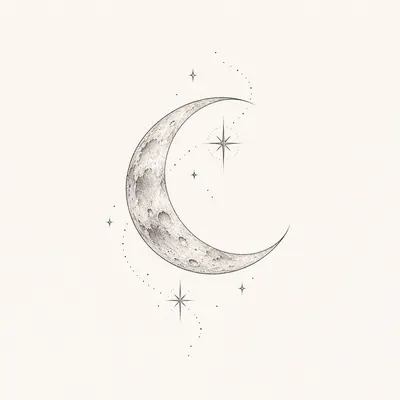
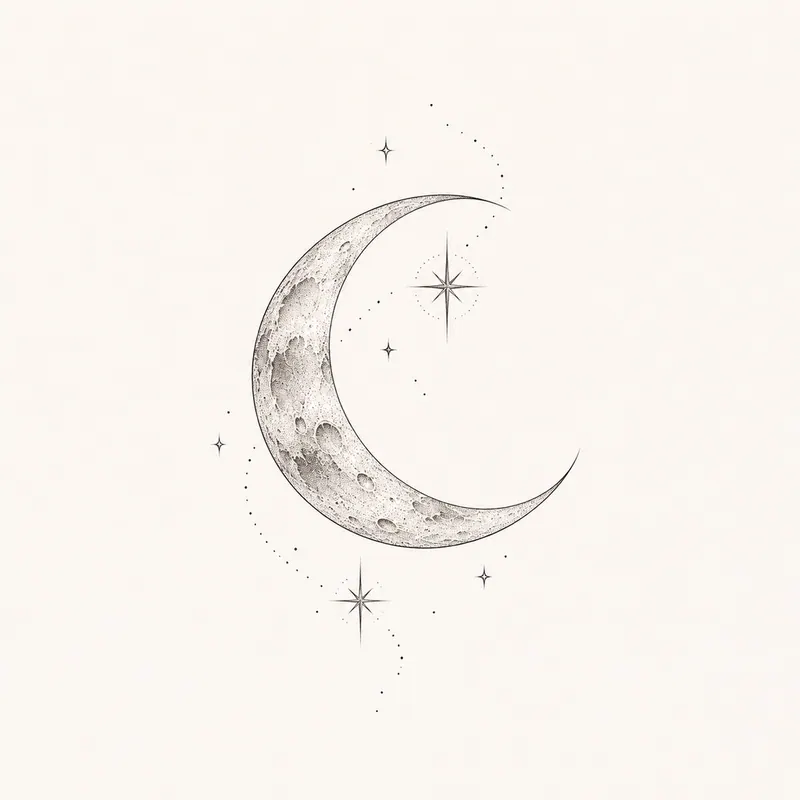
- Crescent moon with small stars. A fine line wrist piece, one of the most requested small tattoos.
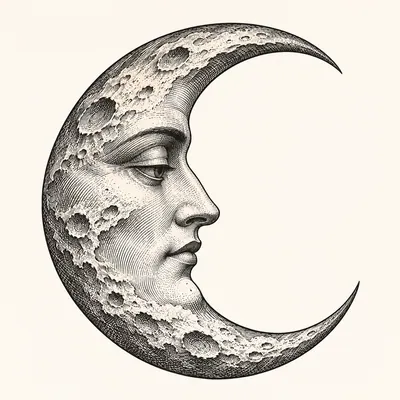
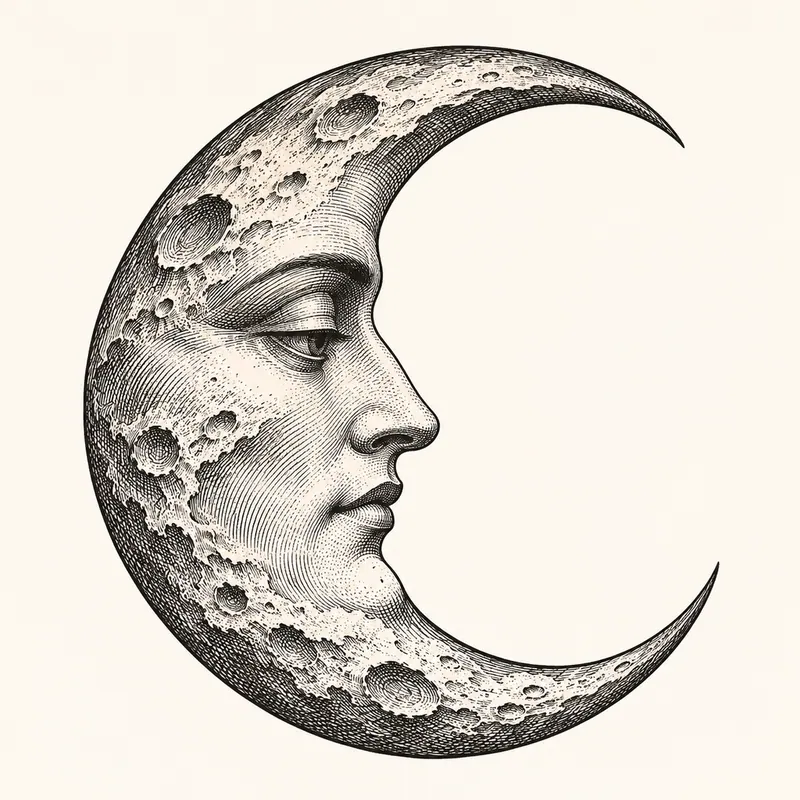
- Crescent moon with a face. An engraving-style upper arm design inspired by antique woodcuts and old almanac illustrations, where the moon has a calm, sleeping profile.
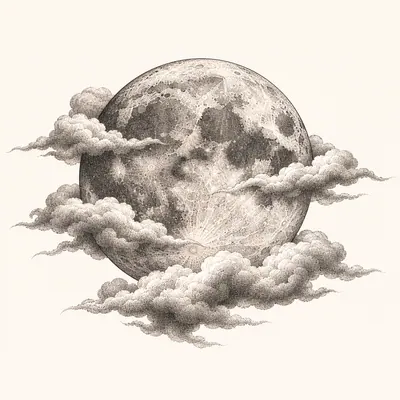
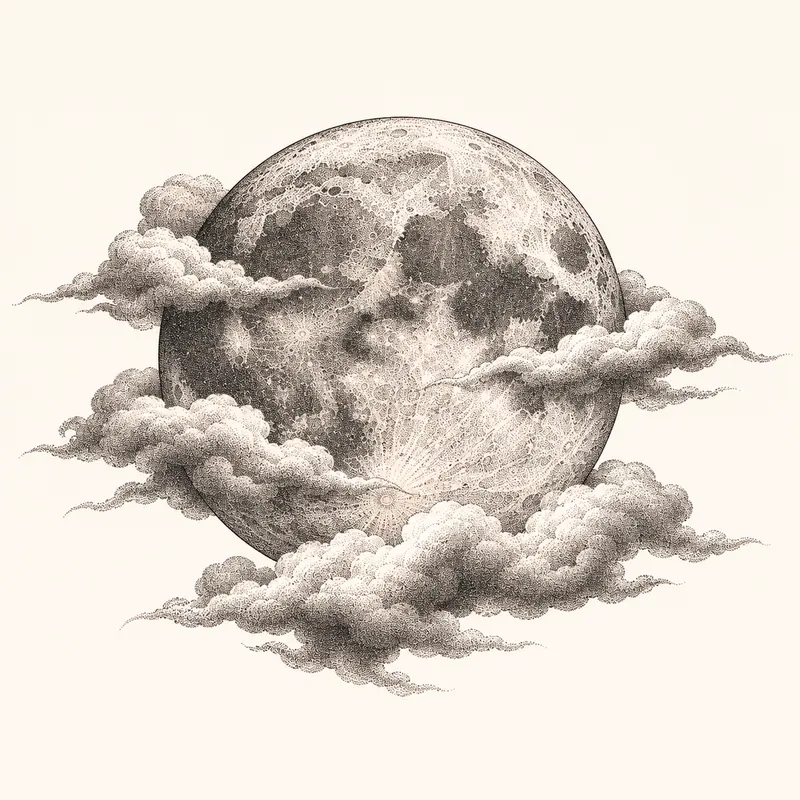
- Full moon behind clouds. A dotwork shoulder piece where stippled shading gives the moon its cratered texture and the clouds a soft edge.
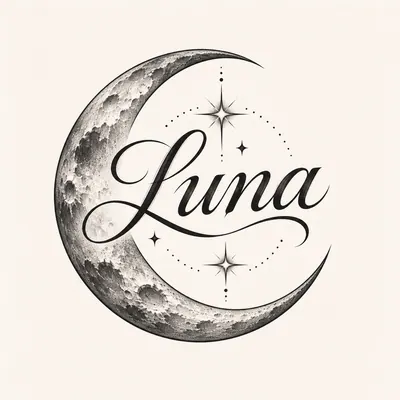
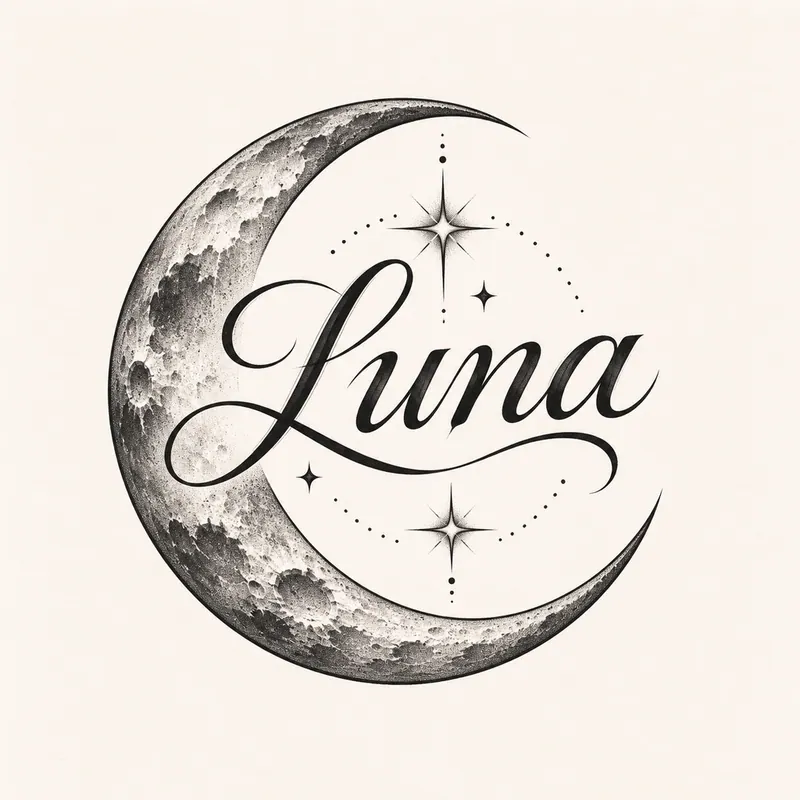
- Crescent moon with the word “Luna.” A lettering forearm design that pairs the shape with its Latin name.
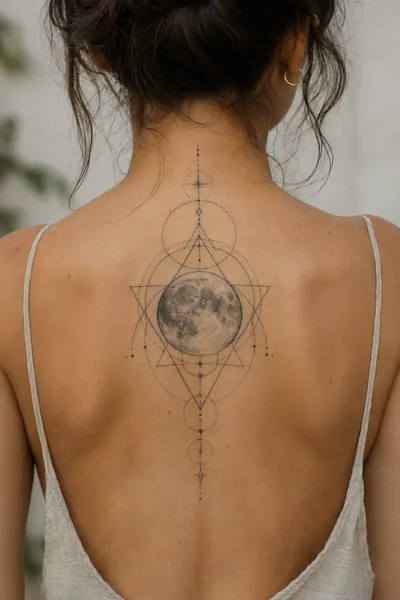
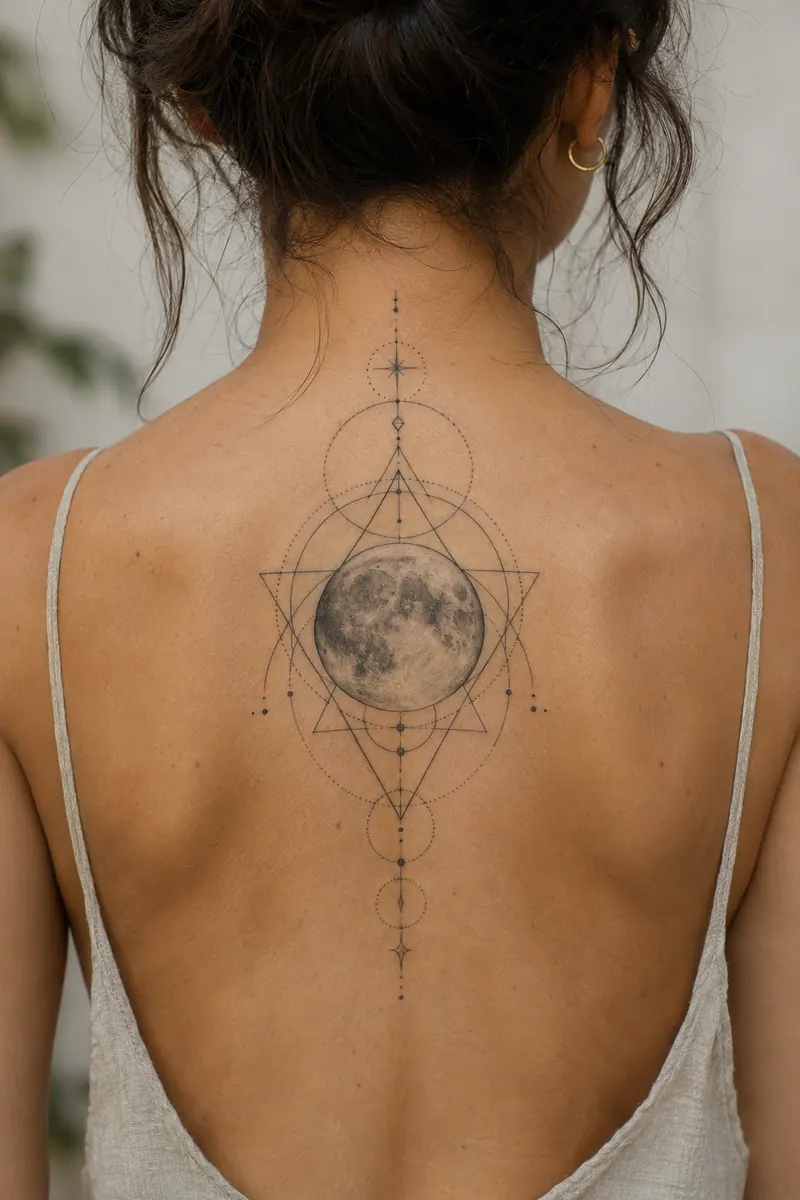
- Moon inside sacred geometry. A geometric back piece built from circles, lines and the phases of the moon, often running down the spine.
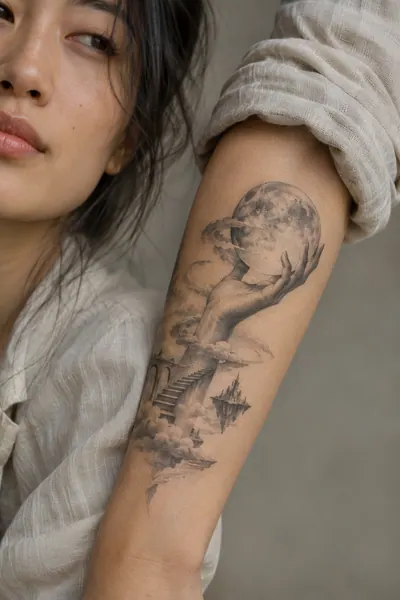
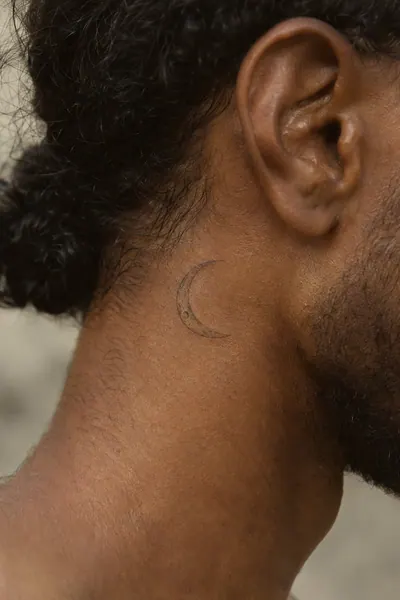
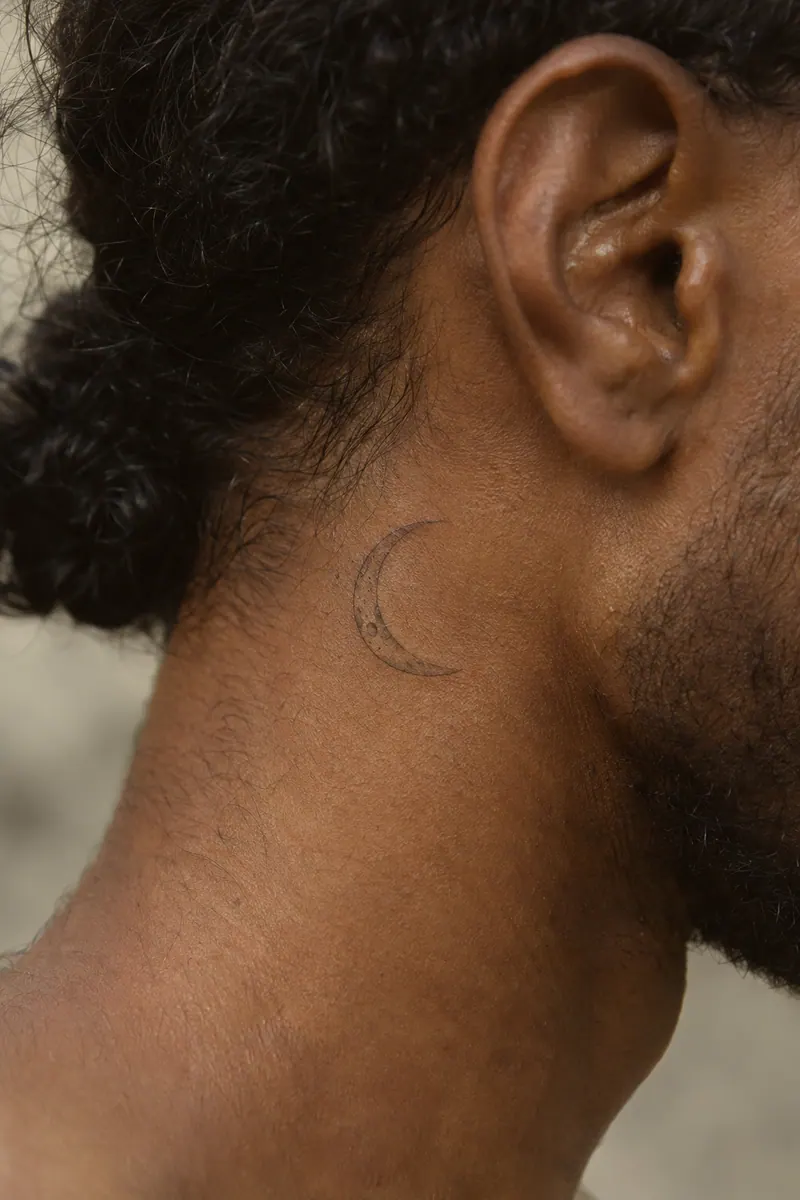
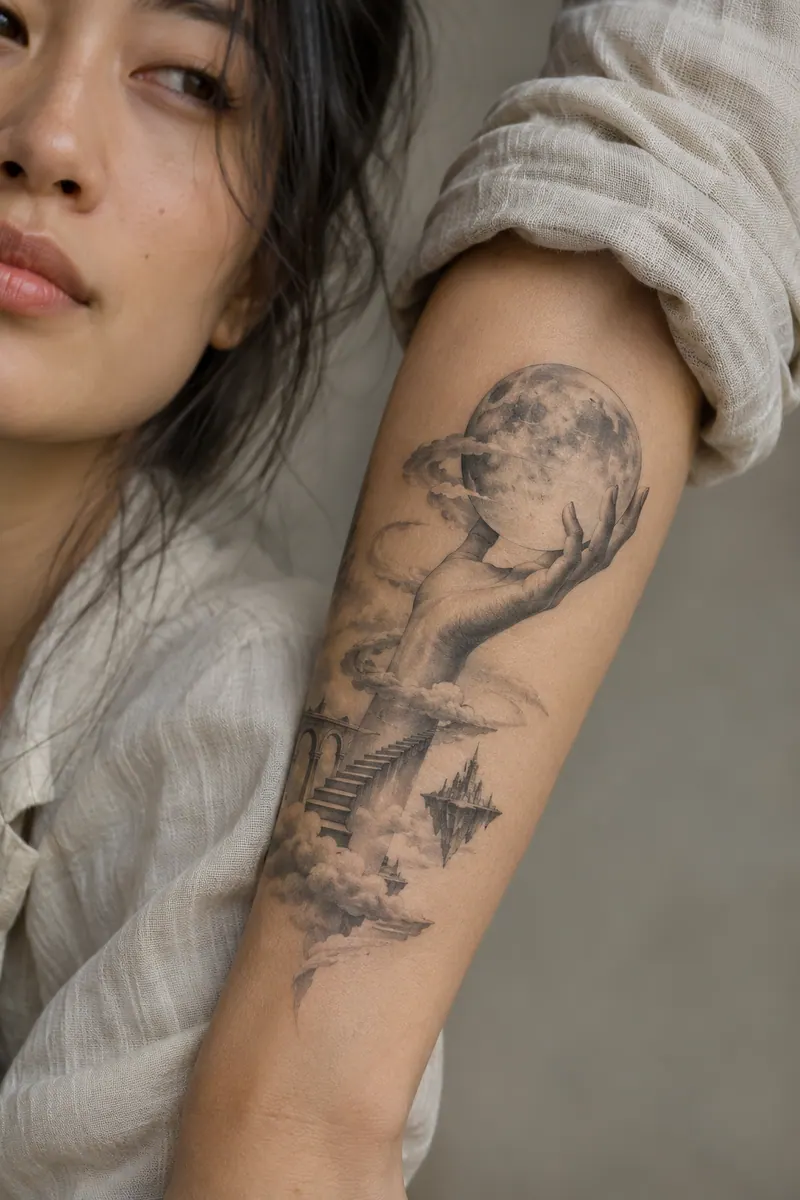
- Small crescent moon on the neck and a hand holding the moon in surreal style show the range from subtle to imaginative.
The moon is also one of the most popular companions for other subjects: a wolf howling at the moon, a moon paired with a sun for balance, or a moth or owl under a crescent.
Choosing a style for your moon
Fine line and minimalist moons are timeless and easy to place. A clean crescent and a few stars need very little space.
Dotwork is ideal for full moons, because stippling can suggest craters and glow without solid black.
Geometric moons work with circles, lines and symmetry, and scale up well to back and sternum pieces.
Engraving gives the moon an old-world, almanac feel, especially with a face.
Surreal designs let the moon become an object: held in a hand, cracked open or reflected in an eye.
Where to place a moon tattoo
The moon’s shape helps decide where it goes:
- Crescent moons are curved and compact, perfect for the wrist, behind the ear, the side of the neck or the ankle.
- Moon phase rows are long and narrow: run them down the forearm, along the spine, or across the collarbone.
- Full moons with texture need a round, flat area like the shoulder, upper arm or thigh so the shading stays visible.
- Geometric moon pieces suit the back and sternum, where symmetry can follow your center line.
For phase rows, check the spacing. Each phase needs enough room to stay distinct as the lines soften over the years.
Sketching your version
A moon tattoo becomes personal through a specific phase: the moon on the night someone was born, the date you started over, or the full moon you watched somewhere unforgettable. In InkForge you can describe that moon, try it in fine line, dotwork or geometric styles, and place it on a photo of your wrist or forearm to compare sizes. Save the one that fits and bring it to your artist as your reference.