InkForge
What defines ornamental tattooing
Ornamental tattoos treat the body as something to adorn, not as a canvas for a picture. Their vocabulary comes from decoration: filigree curls, scalloped edges, beads and jewel drops, lace patterns, rosettes and repeating borders. The goal is harmony with the body. A good ornamental piece frames the sternum, follows the spine or wraps an arm the way a bracelet would.
Many designs are symmetric, mirrored left to right, which gives them a calm, balanced presence. Others are built from flowing, asymmetric scrolls that move with a limb.
Decorative roots
Ornamental tattooing draws on a long human history of decoration: jewelry and metalwork, lace, Victorian filigree, architectural ornament, and the patterned arts of many regions, including South Asian, Middle Eastern and North African design traditions, as well as henna (mehndi) body art.
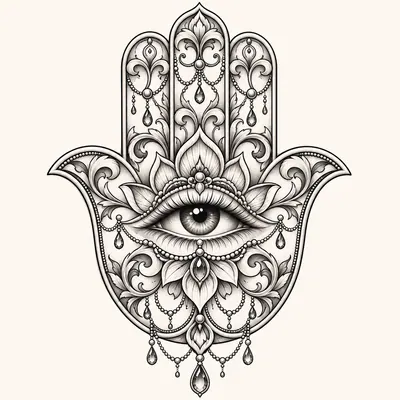
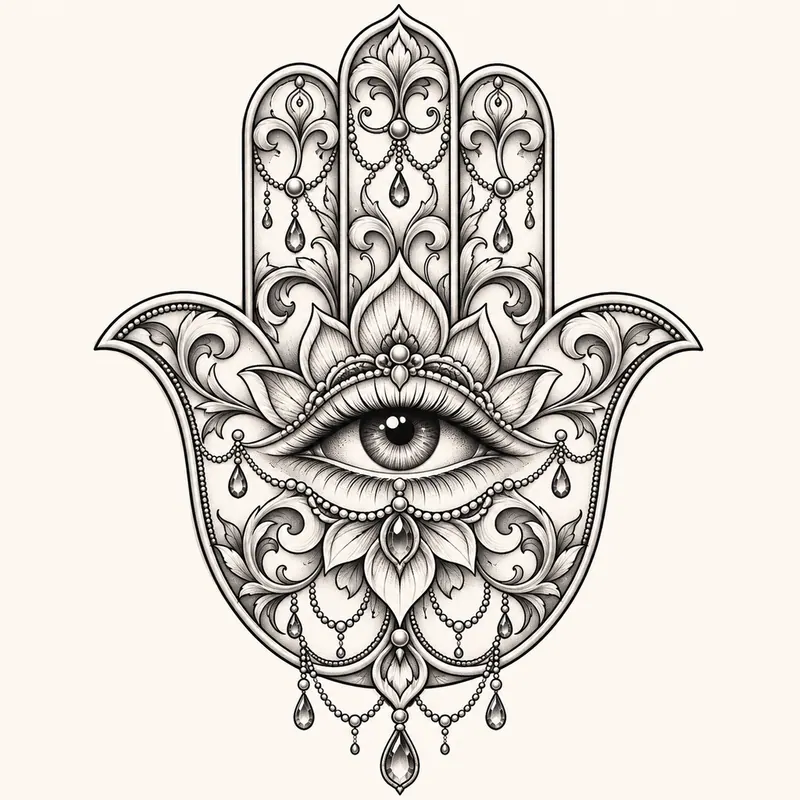
Some of these sources carry real cultural or religious significance. The hamsa, for example, is a protective symbol across Middle Eastern and North African cultures and in both Jewish and Muslim traditions, while henna patterns are tied to weddings and festivals in South Asia, the Middle East and North Africa. If your design borrows from a specific tradition, learn what it means and use it with care rather than as random decoration.
As a tattoo style, ornamental work grew alongside dotwork and blackwork as artists explored pattern-based, body-fitting designs. It is best described as a contemporary approach drawing on many older sources, not a tradition with one origin.
What ornamental tattoos look like
- Symmetry and rhythm: mirrored halves, repeated motifs and borders.
- Mixed textures: fine lines, dot shading and small areas of solid black.
- Jewelry details: pendants, chains, beads and teardrop shapes.
- Body-led composition: designs shaped around the sternum, collarbones, spine or joints.
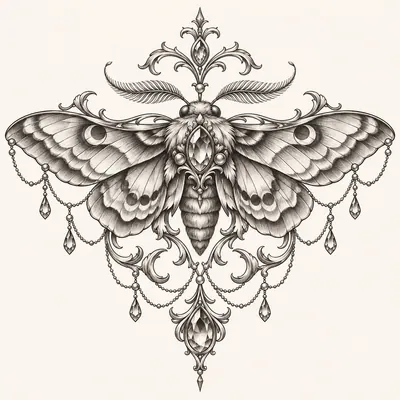
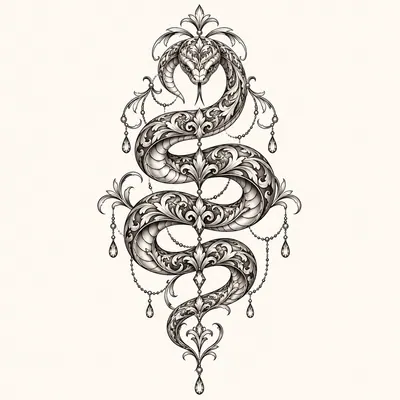
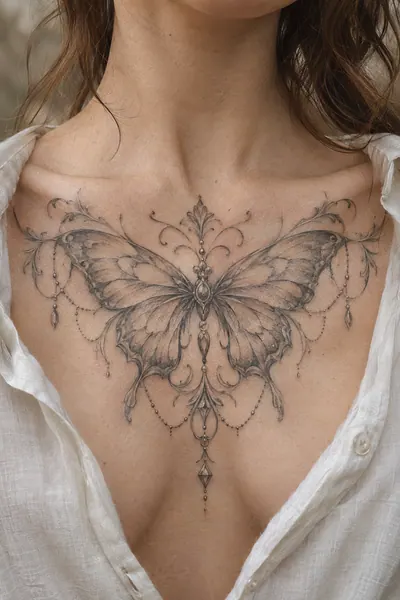
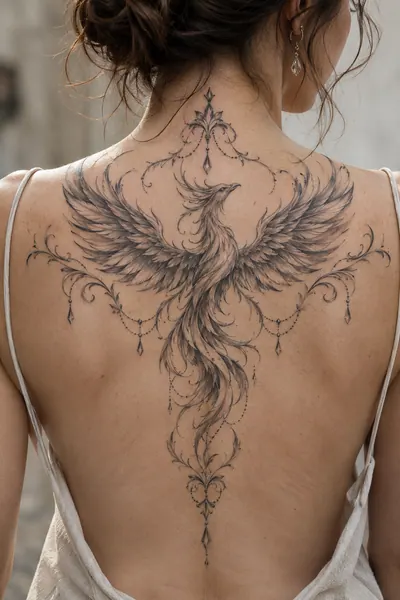
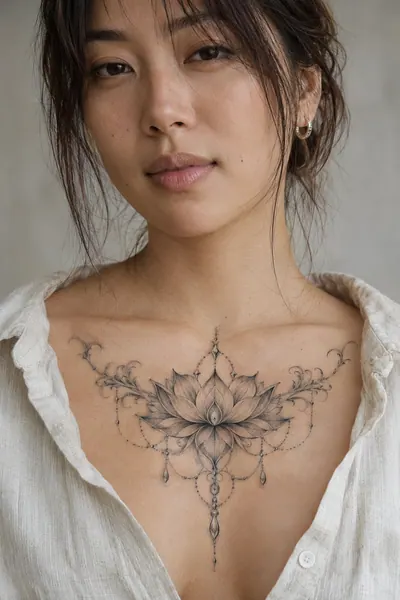
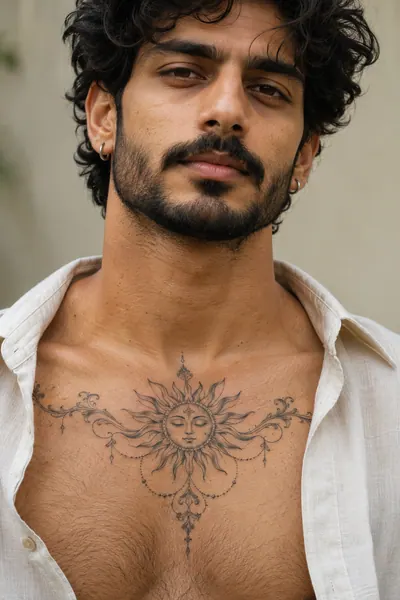
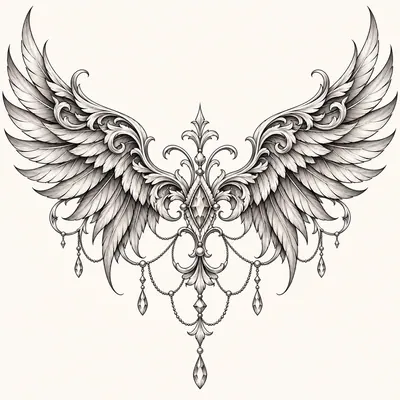
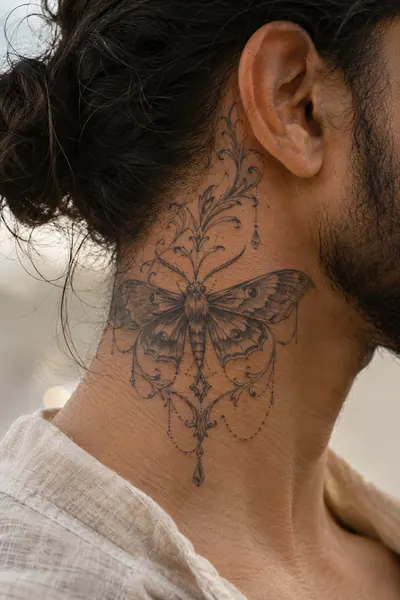
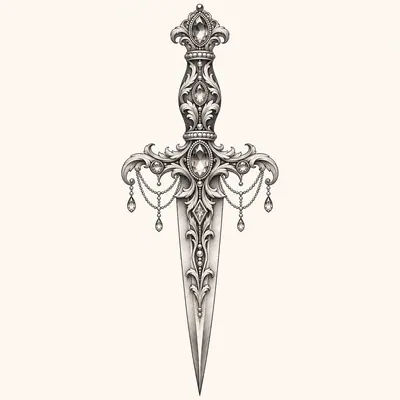
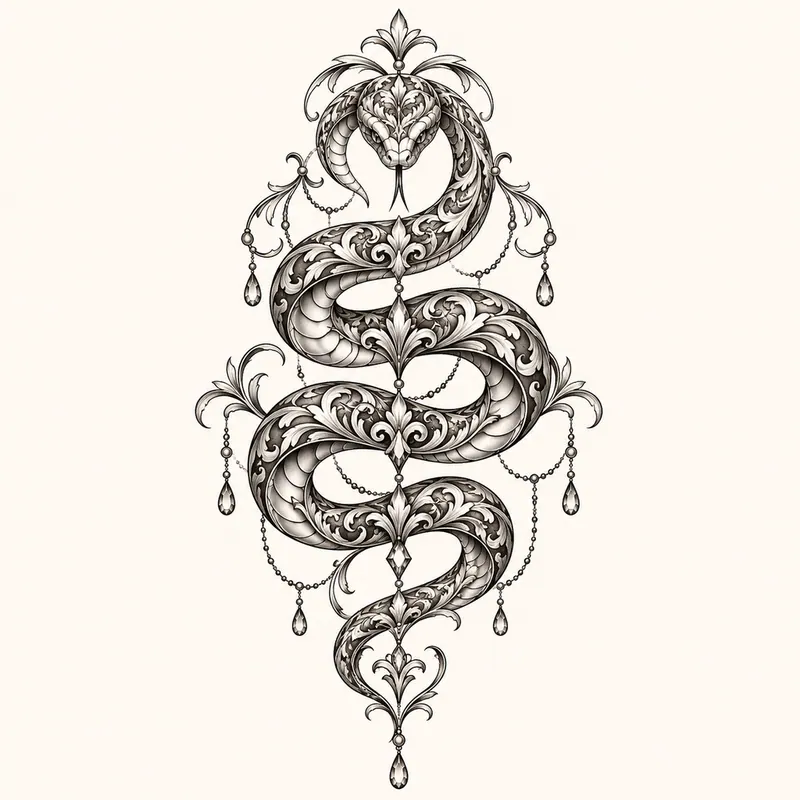
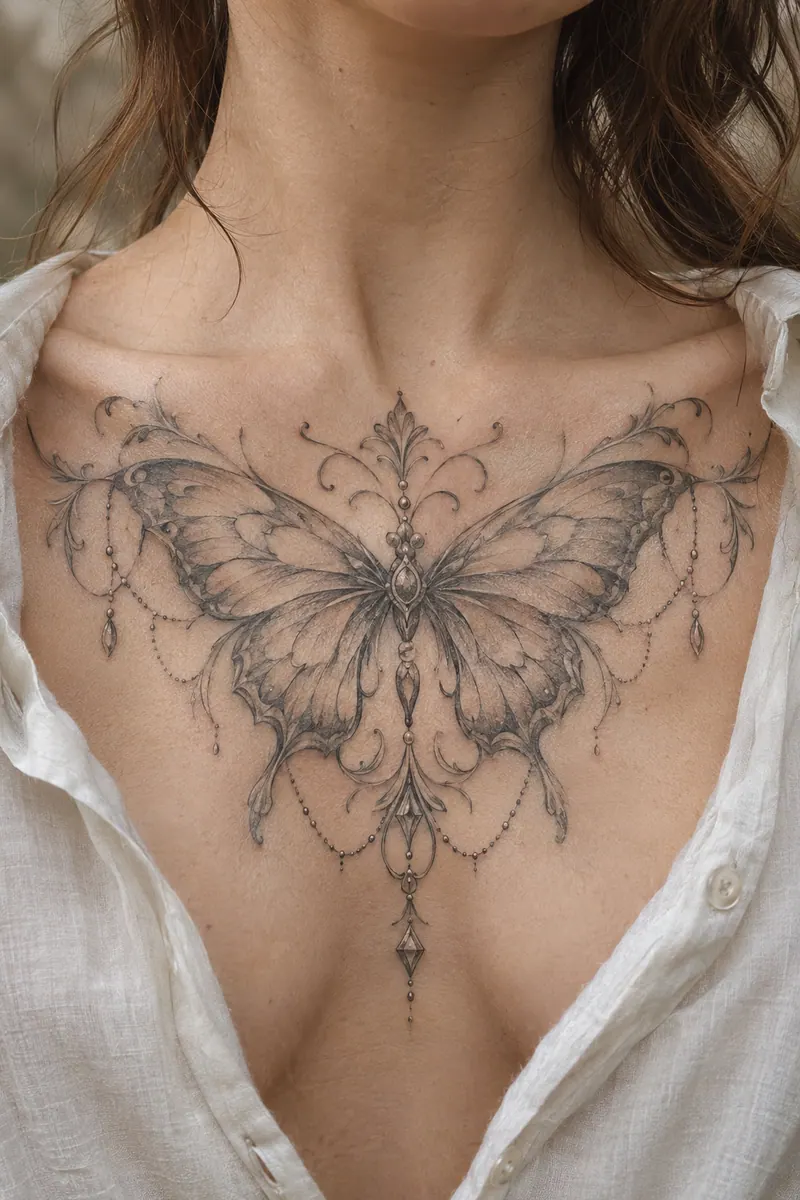
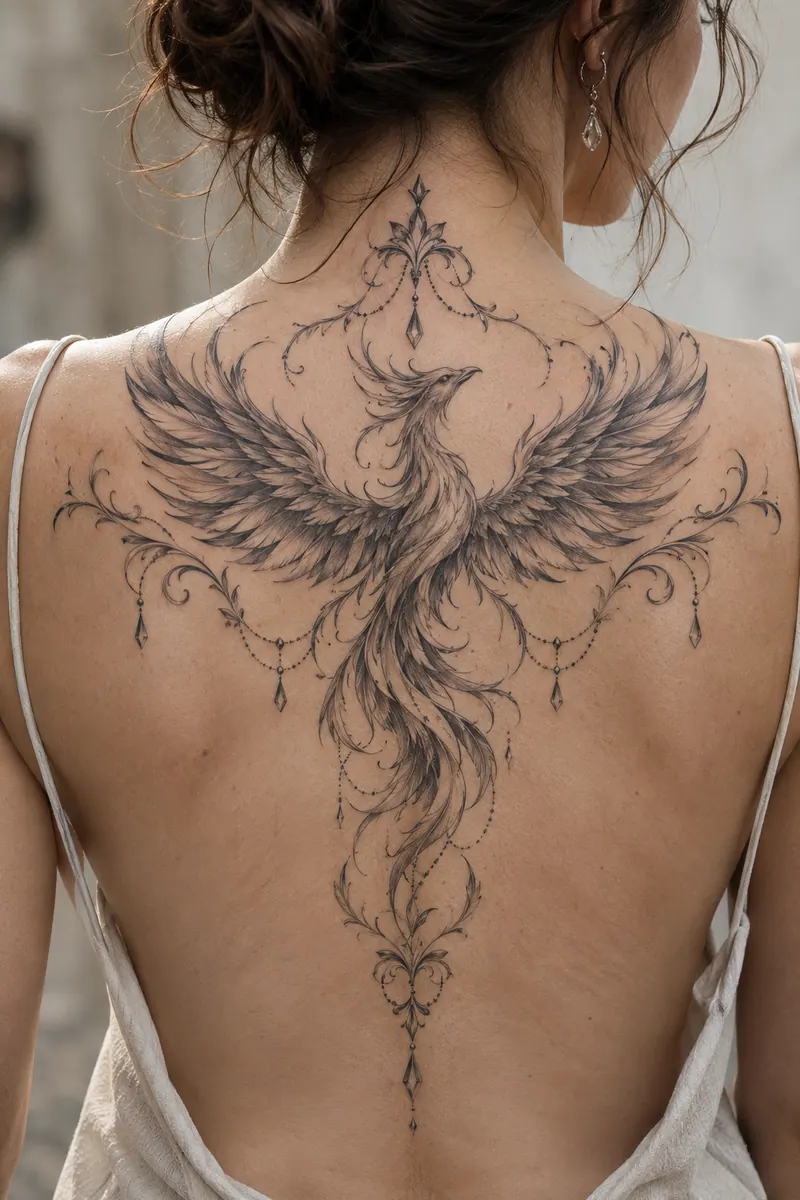
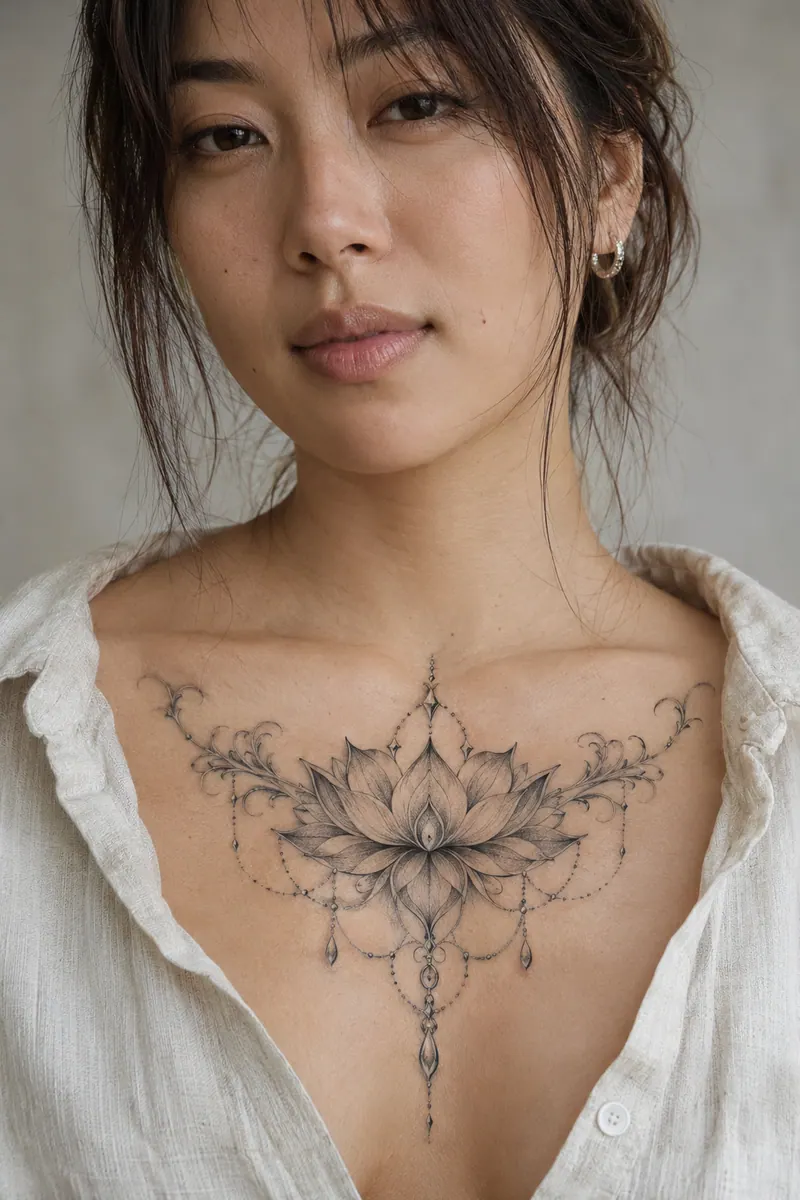
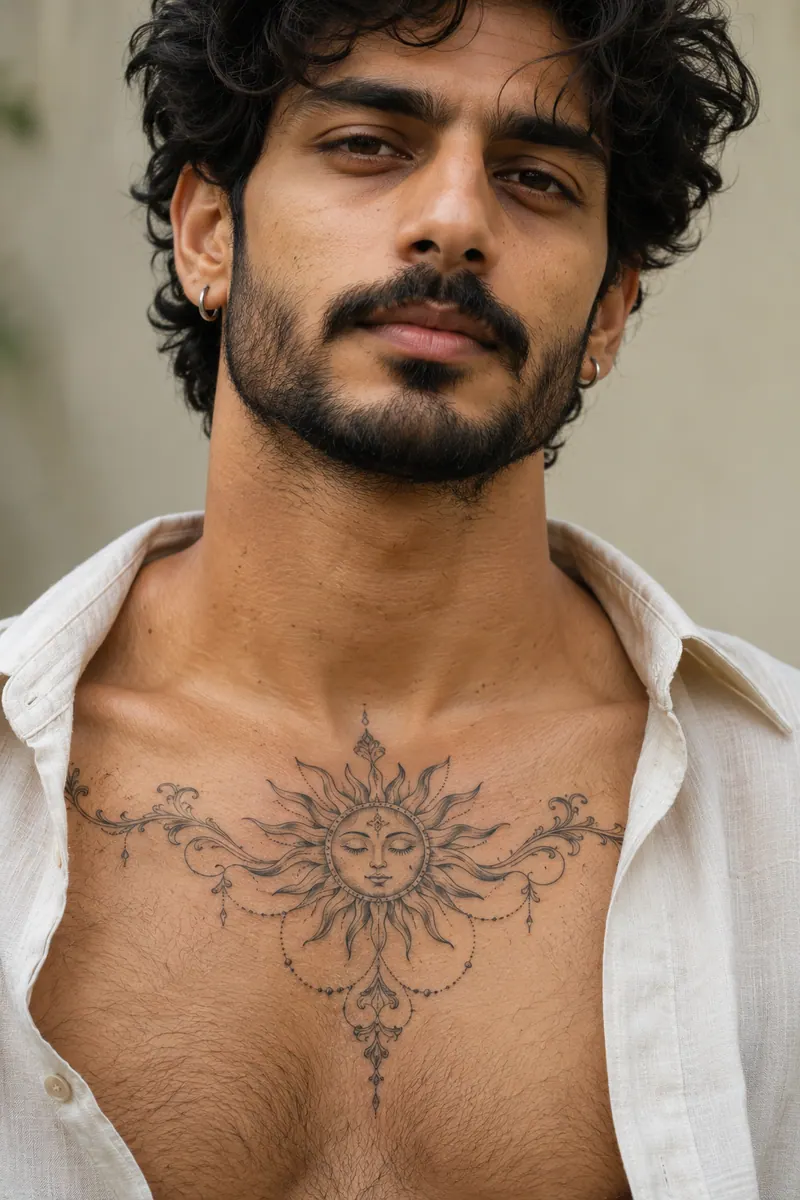
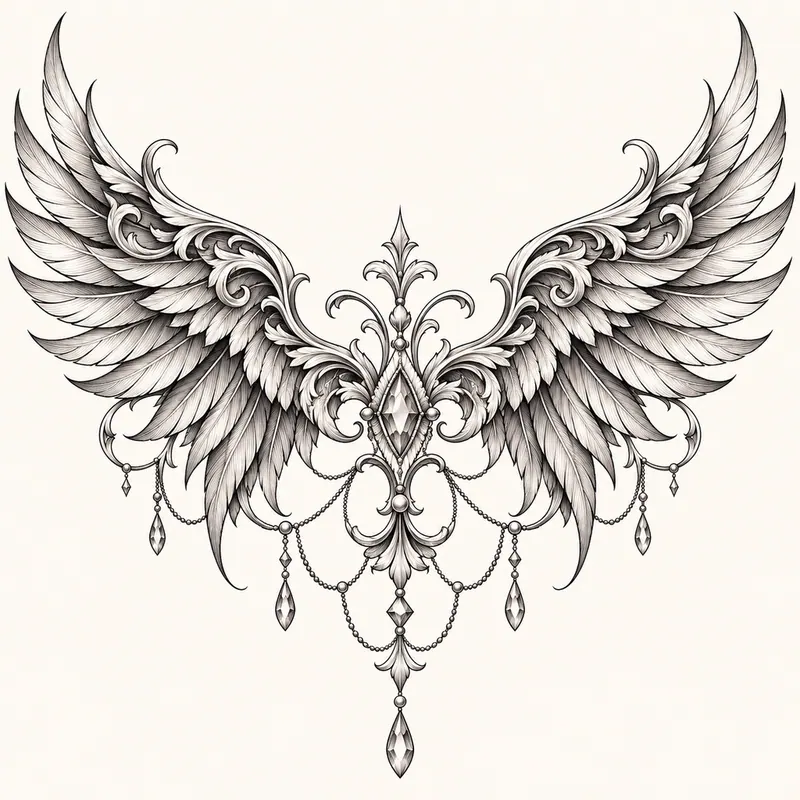
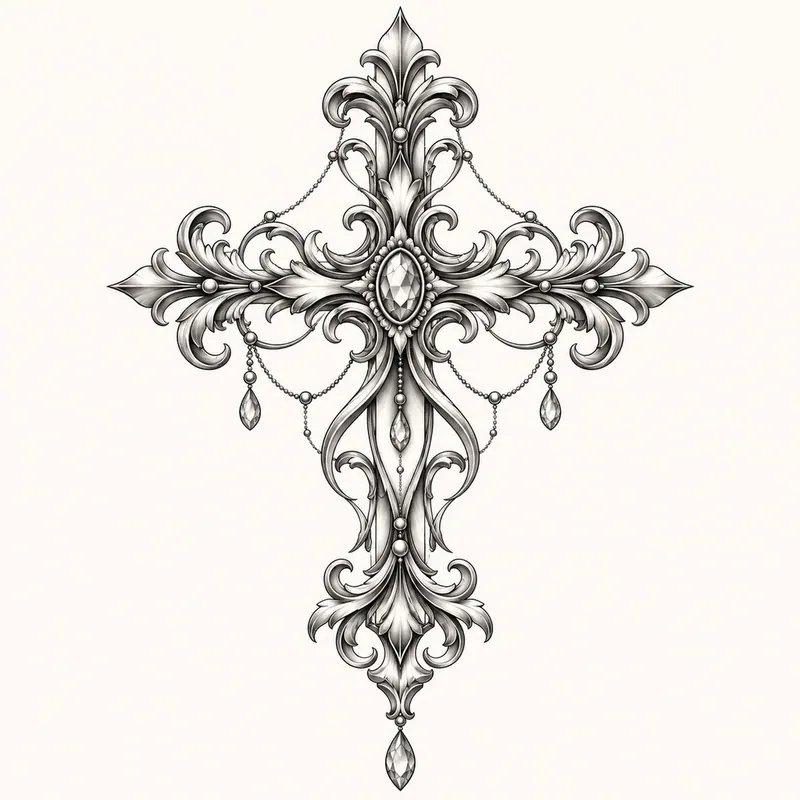
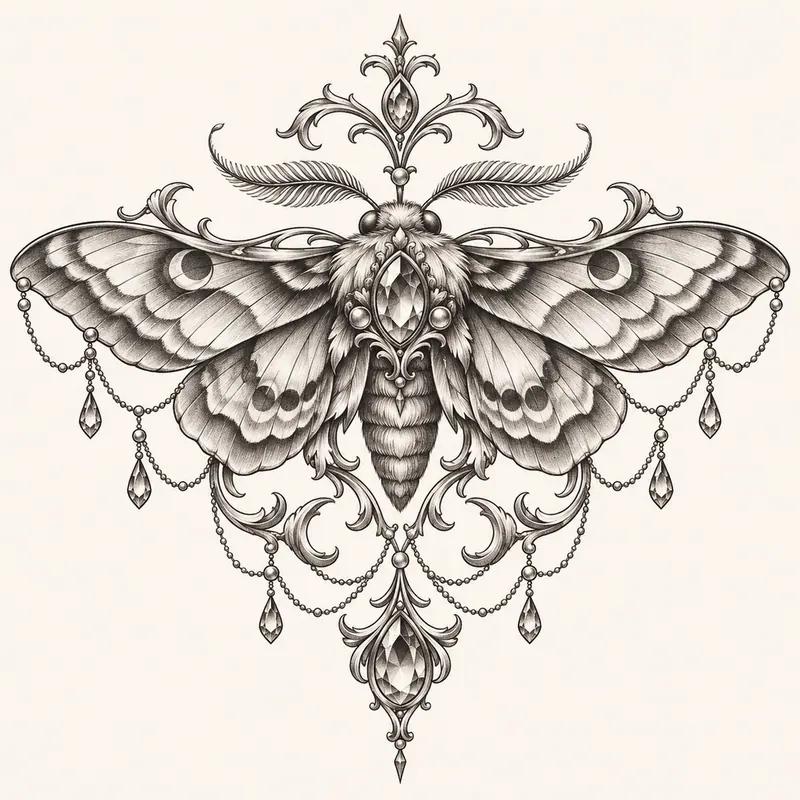
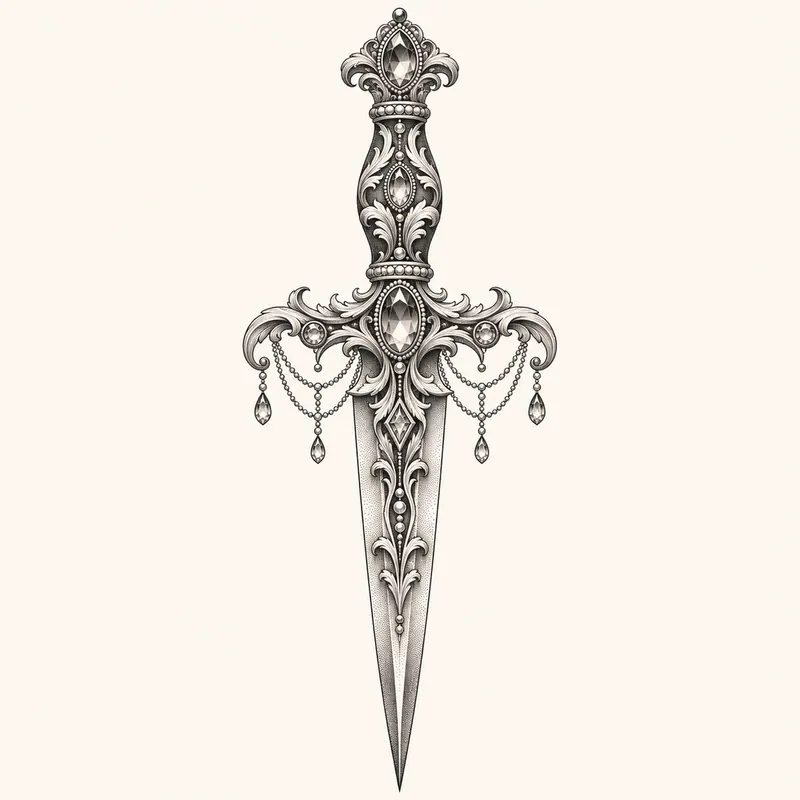
The gallery shows ornamental decoration applied to subjects: a snake with filigree scales on the back, a large symmetric butterfly chest piece, a phoenix with spread wings, a lotus with hanging jewel ornaments, a sun with ornamental rays, a hamsa eye in the palm of a hand, wings with filigree feathers, a cross with filigree, moths with jewel details and a jeweled dagger.
How ornamental tattoos age
The most delicate lace and dot patterns are the most vulnerable. Over time, ink spreads slightly under the skin, so dots placed too close together can merge and fine scrollwork can lose crispness. Durable ornamental pieces mix fine detail with stronger anchors, such as bolder outlines or small blacked-in shapes, and leave clean skin between elements. Sun protection helps, especially for shoulders and backs.
Best placements for ornamental tattoos
Ornamental work is all about fitting the body’s architecture:
- Chest and sternum: the signature placement for symmetric pieces, often centered between or below the collarbones.
- Back and spine: long vertical designs that mirror the spine, or large upper-back pieces.
- Thigh: ornate bands, garter-like designs and pieces built around a central motif.
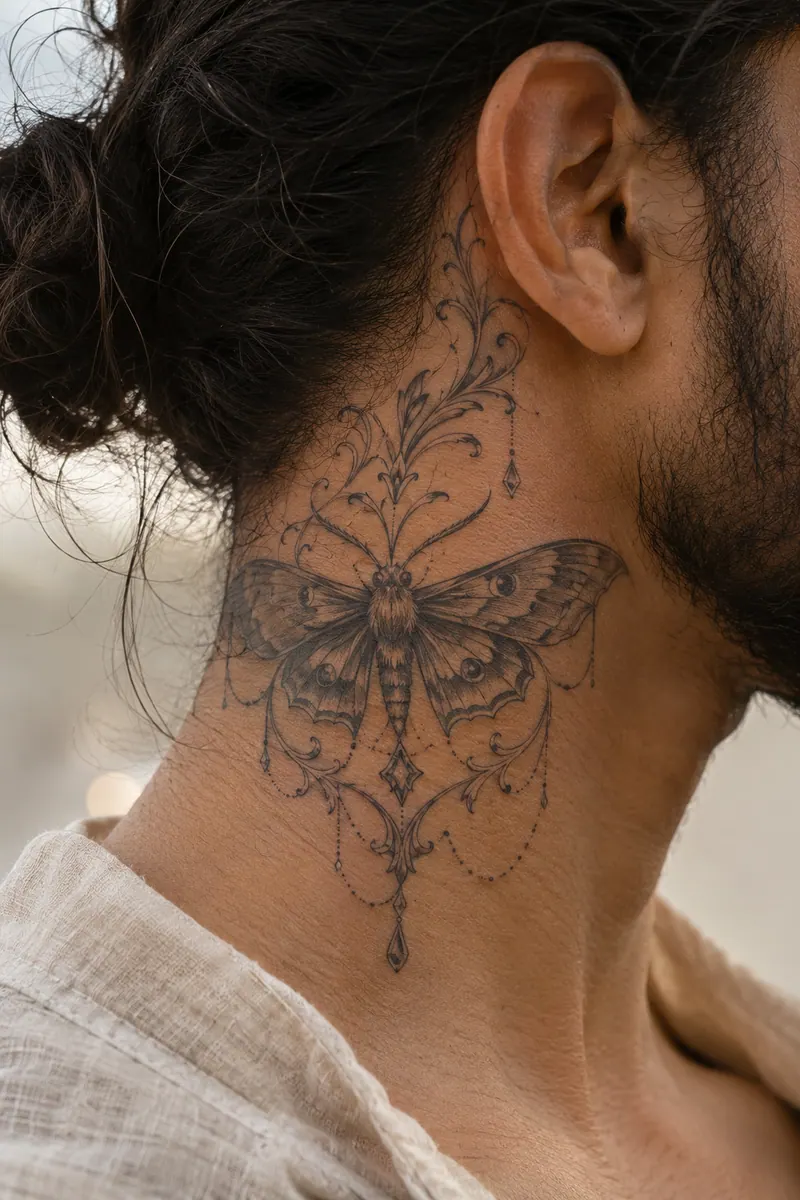
- Neck, calf and forearm: cuffs, wraps and pendant shapes.
Symmetric designs must be placed carefully, since small asymmetries in the body become visible. Expect your artist to spend time on stencil positioning.
Ornamental vs. neighboring styles
- Mandala: a specific radial form with spiritual roots; ornamental covers every decorative shape.
- Dotwork: a shading technique that ornamental tattoos often use, but dotwork can depict anything.
- Geometric: built from straight lines and precise shapes; ornamental favors curves, scrolls and jewelry forms.
- Fine line: a technique; ornamental is defined by its decorative purpose.
Choosing an ornamental artist
Look for a portfolio with healed symmetric pieces on the body, not just flat designs. Check that both halves match, that linework is even, and that dot shading is smooth. Ask how they handle placement on curved areas like the sternum and how they plan multi-session work.
From concept to stencil
Decide whether you want pure decoration or ornament around a meaningful motif. In InkForge you can describe the idea, choose the Ornamental style, generate symmetric variations and preview them on a photo of your chest, back or thigh with Try-On, adjusting size and position by hand. Your artist will then fine-tune the design to your body.