InkForge
What a snake tattoo means
The snake carries more contradictory meanings than almost any other animal in tattooing, which is exactly why people love it. The core idea most wearers connect with is transformation: a snake sheds its old skin and keeps going, so it is a natural symbol for leaving a version of yourself behind.
Other meanings come from history and religion:
- Healing and medicine. The Rod of Asclepius, a single snake around a staff, comes from the Greek god of medicine and is still a medical emblem. (The two-snake caduceus is often confused with it.)
- Eternity. The ouroboros, a snake swallowing its own tail, shows up in ancient Egyptian and Greek imagery and later in alchemy as a sign of endless cycles.
- Protection and royalty. In ancient Egypt the rearing cobra (the uraeus) was worn on royal crowns as a protector.
- Temptation and knowledge. In the Garden of Eden story the serpent stands for temptation, which is why snakes still read as seductive or rebellious.
- Good fortune. In Japanese tattooing the snake is commonly associated with protection, wisdom and luck, and in Hindu and Buddhist traditions nāgas are serpent beings treated with real reverence. If you draw on those sacred images, learn their context first.
Popular snake tattoo designs
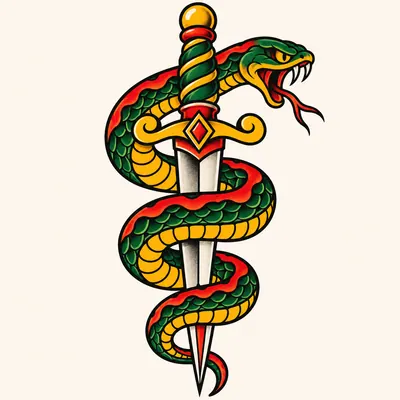
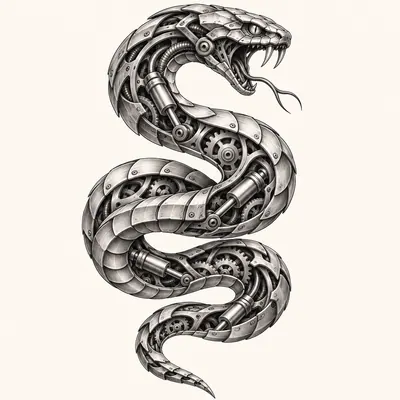
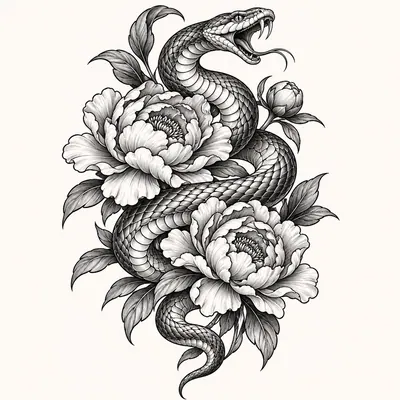
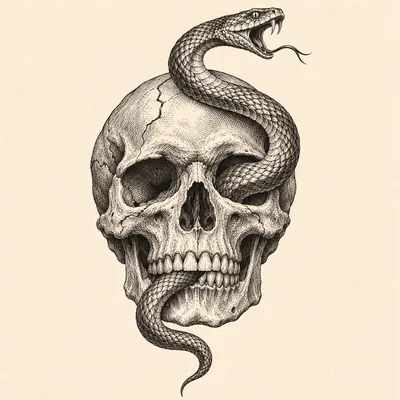
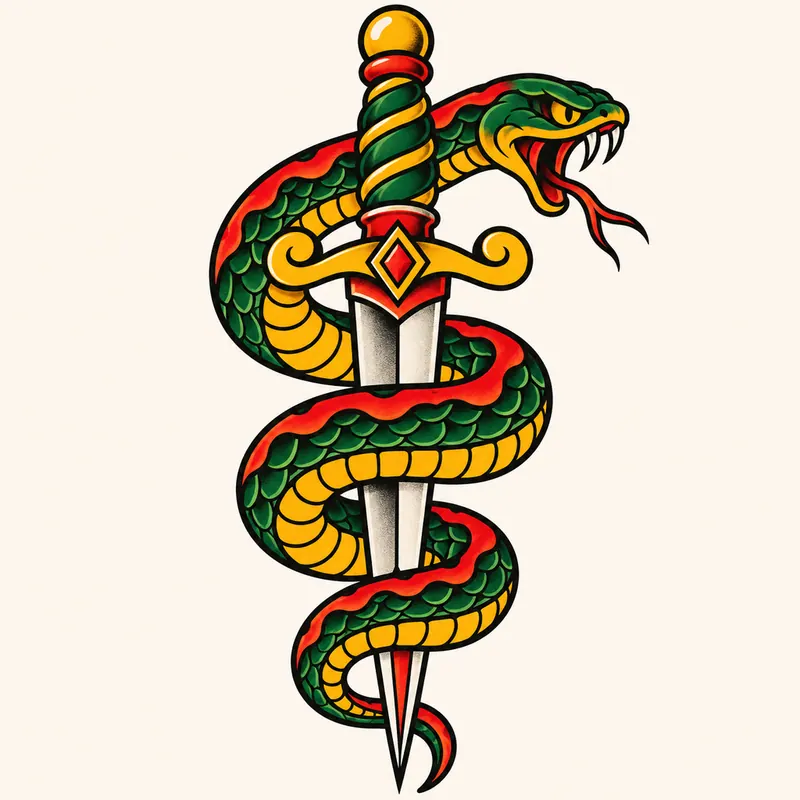
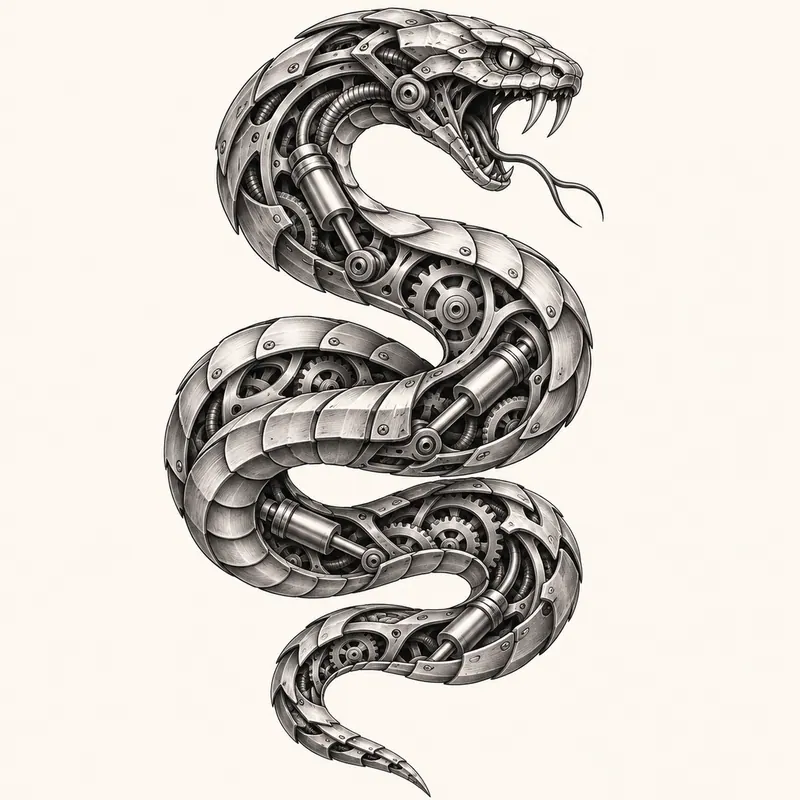
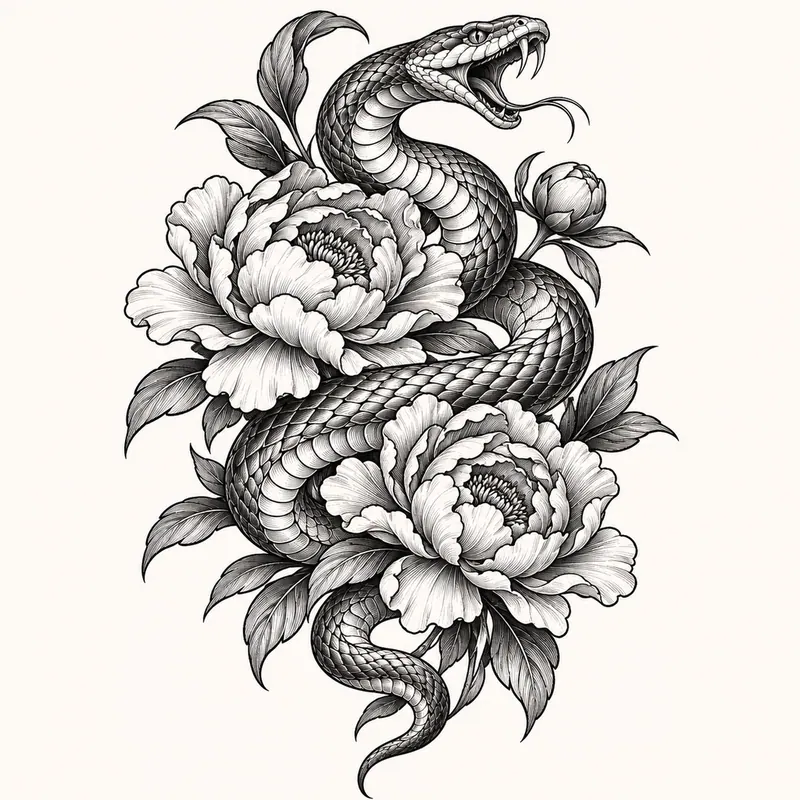
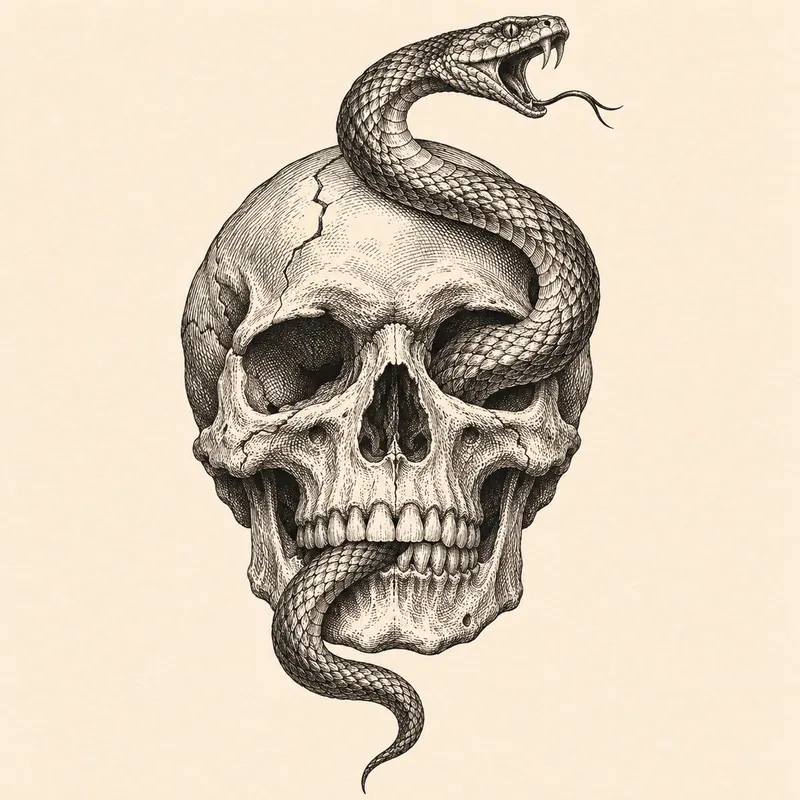
The gallery above shows how much the subject changes with its companion elements:
- Snake and dagger. The American traditional classic, usually on the forearm. Bold outlines and a limited palette make it read clearly from across a room.
- Snake and skull. A snake slithering through an eye socket is a memento mori image about mortality and what survives it. Engraving-style linework gives it an antique, etched feel on the calf.
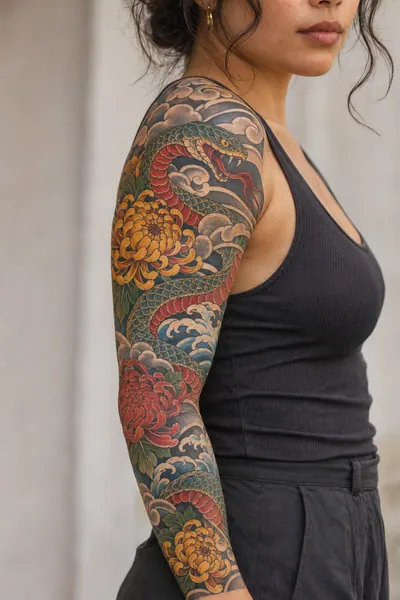
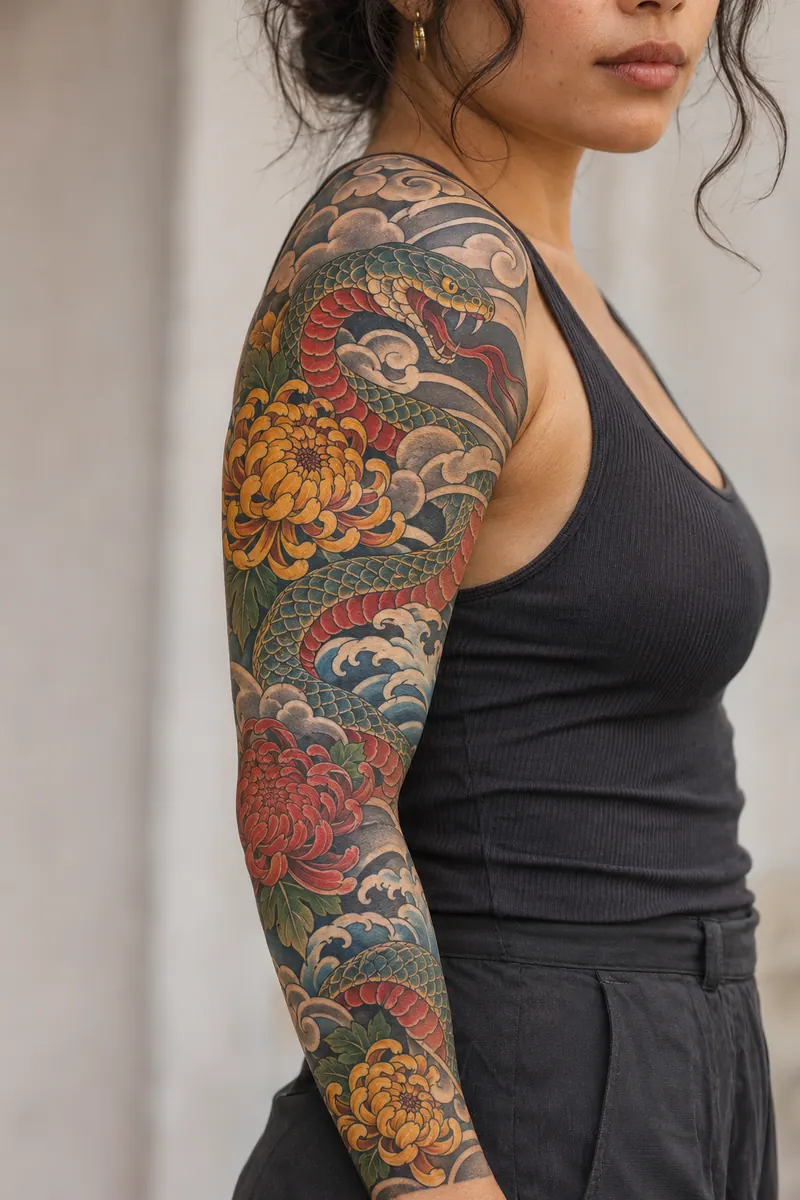
- Snake with flowers. Peonies in an illustrative thigh piece or chrysanthemums in a Japanese sleeve soften the snake into a symbol of balance and renewal.
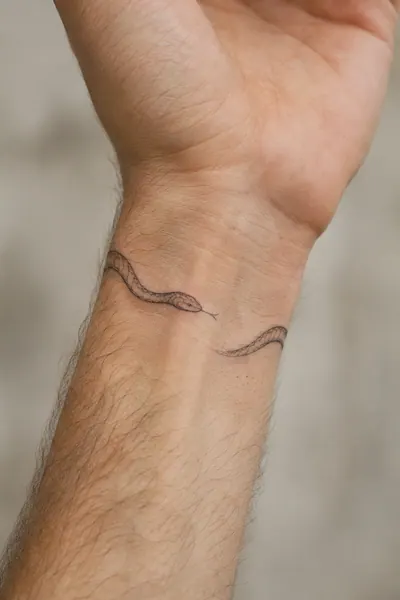
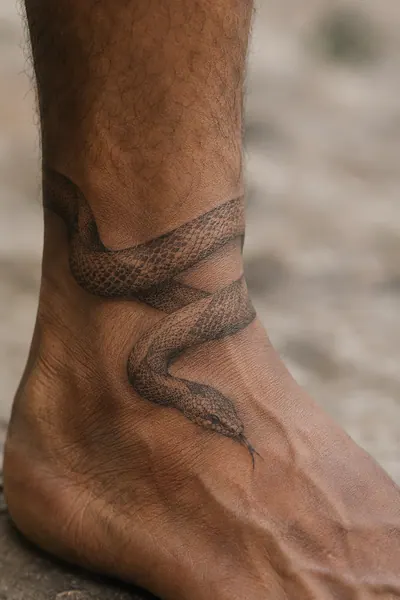
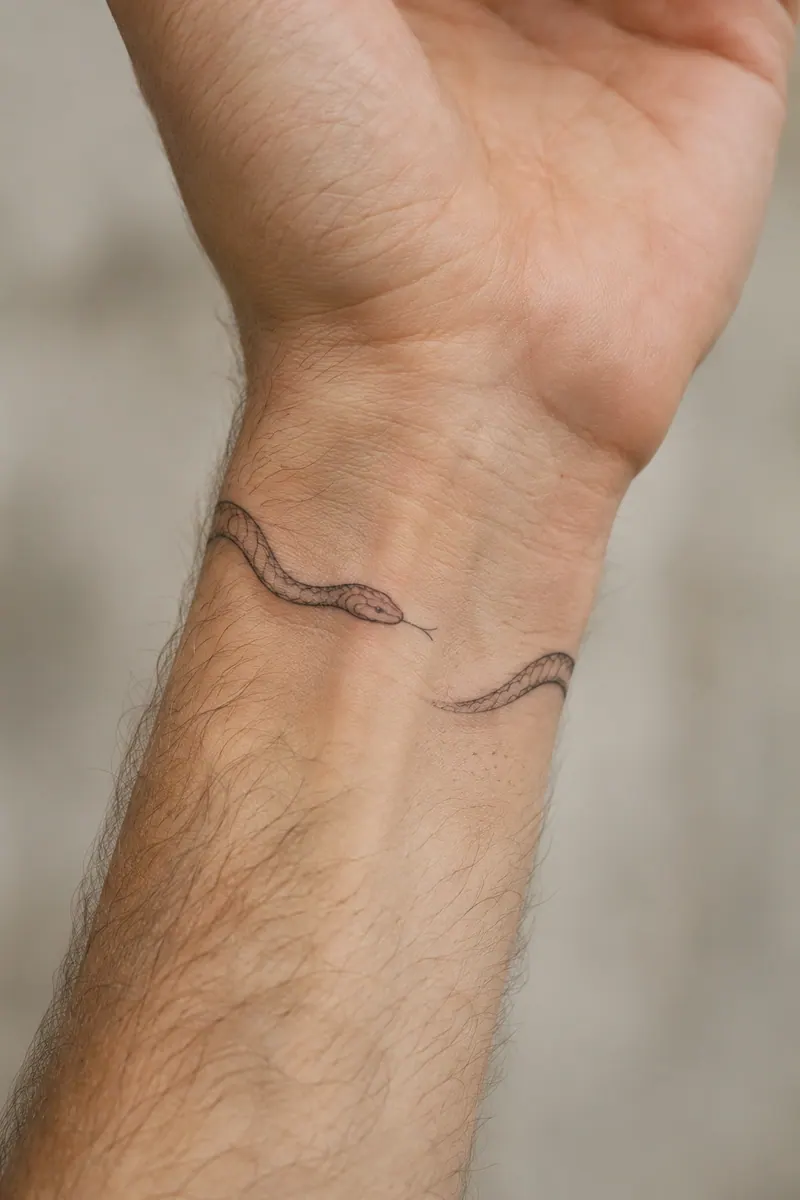
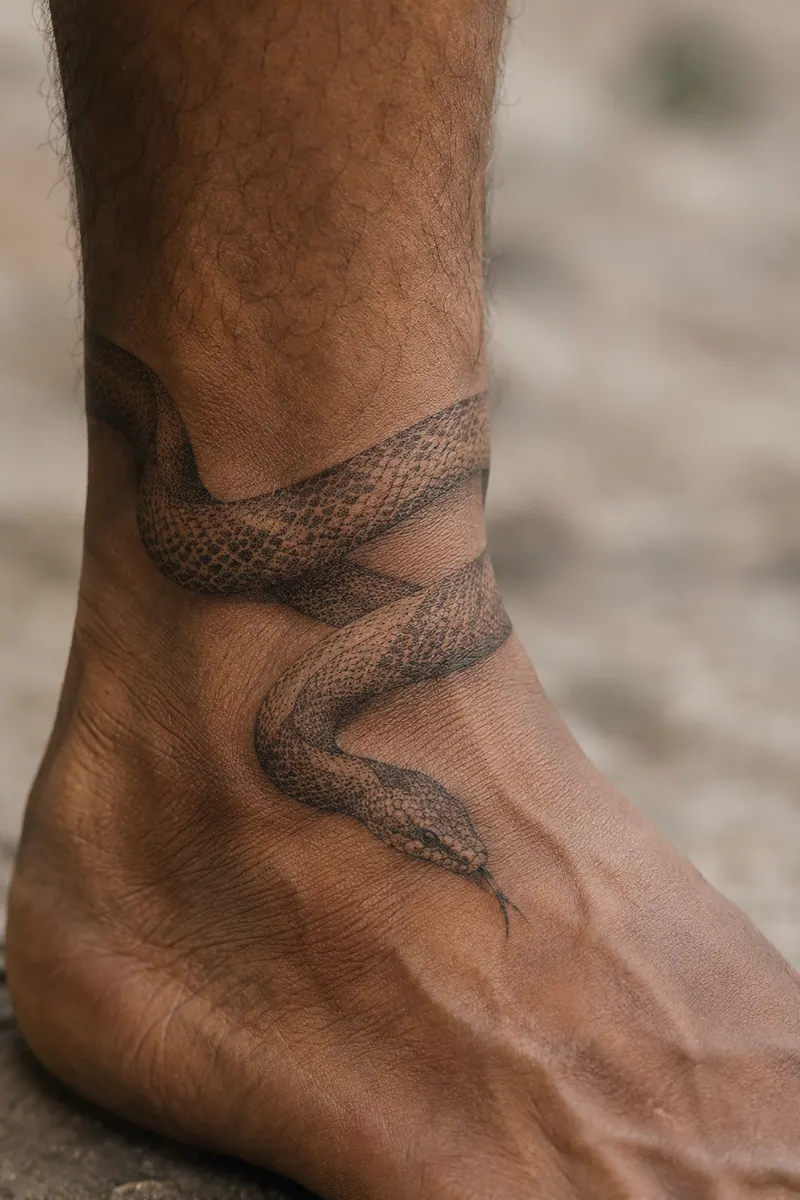
- Wrap-around snakes. A small minimalist snake curling around the wrist, or a dotwork snake coiling up the ankle, uses the body itself as part of the design.
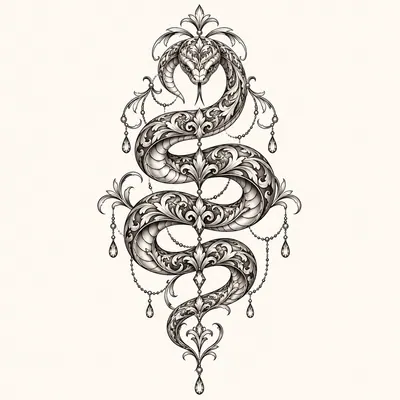
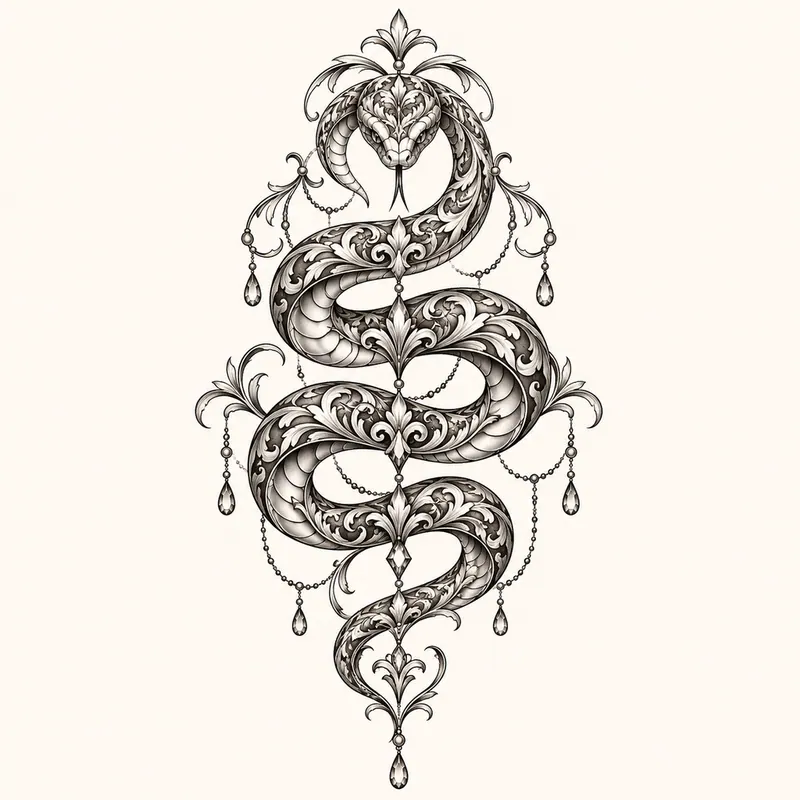
- Ornamental and mechanical snakes. Filigree-patterned scales turn a back piece into something jewelry-like, while a segmented metal body in biomechanical style feels futuristic on the upper arm.
Best styles for snake tattoos
Snakes suit nearly every style because the body is a simple line that can be filled with almost anything. A few pairings stand out:
- Traditional for bold, readable flash that ages well, especially snake-and-dagger or snake-and-rose combinations.
- Japanese for large pieces with wind bars, flowers and flowing movement that wrap a whole arm.
- Dotwork and fine line for small, delicate snakes where scales are suggested rather than drawn one by one.
- Ornamental when you want the scales to become pattern and decoration.
If you want something that feels like a print or an old naturalist’s illustration, engraving and illustrative styles give scales a beautiful hatched texture.
Placement: let the snake follow the body
The biggest design decision for a snake is not the snake itself but how it moves across your body. A well-placed snake looks alive; a poorly placed one looks like a sticker.
- Straight or S-curved snakes fit long areas: the forearm, calf, spine or the side of the thigh.
- Coiled snakes wrap around round areas such as the wrist, ankle and upper arm. Plan where the head ends up, since that is where the eye goes.
- Large snakes with flowers need a full sleeve or back, where the body can twist and disappear behind petals.
Think about the head direction too. Many people prefer the head pointing up or toward the front of the body so the snake looks like it is moving forward rather than crawling away.
Size and detail tips
Scales are the detail that blurs first. On a small wrist or ankle snake, suggest scales with a few lines or dots rather than drawing every one. On larger pieces, scales can carry a lot of texture and shading. Fangs and a forked tongue add character, but keep them big enough to stay readable over time.
Before you book
A snake becomes personal through what it is wrapped around: a birth flower, an object that marks a turning point, a date worked into the pattern of its scales. Describe the idea in InkForge, generate it in a few styles, then use Try-On to place the design on a photo of your arm or leg and rotate it until the curve feels right. Take the version you love to your tattoo artist as a reference.