InkForge
What a tiger tattoo means
The tiger is a solitary hunter, and that colors its meaning in tattooing. Where the lion stands for leadership within a group, the tiger is about personal power, intensity, independence and courage. People often choose one to mark a time when they had to rely on their own strength.
In East Asia the tiger carries much more:
- King of the beasts. In Chinese and Korean tradition, the tiger rather than the lion is the king of animals. Folklore reads the dark stripes on its forehead as the Chinese character for “king.”
- Protector. Tigers have long been painted and carved as guardians that ward off evil spirits and misfortune. In Korean folk painting, the tiger is one of the best-loved animals.
- The White Tiger. In Chinese cosmology the White Tiger is one of the Four Symbols and guards the west.
- The zodiac. The tiger is one of the twelve animals of the Chinese zodiac, and some people choose it for their birth year.
- Tiger and dragon. The two are often shown as rivals or complementary forces, earth and sky, and the pairing is a classic theme in Japanese tattooing.
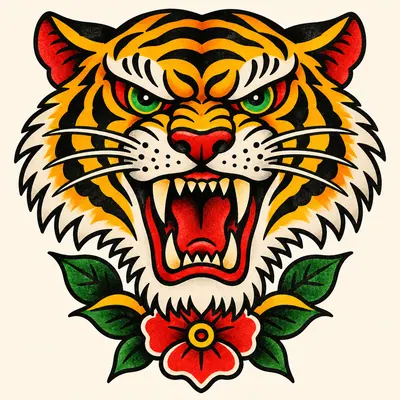
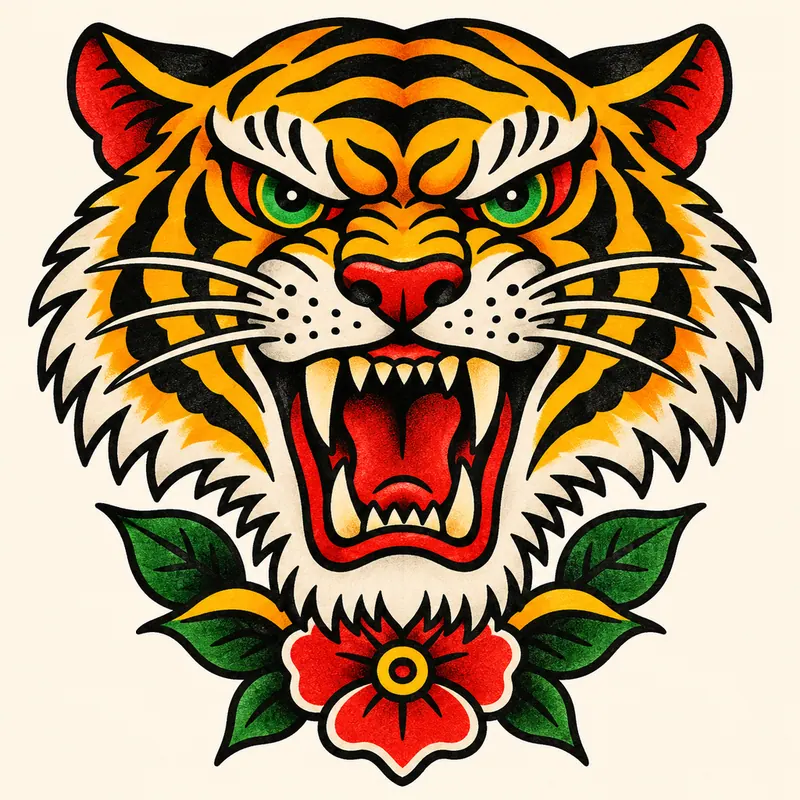
In Western tattooing, the roaring tiger head has been a staple of American traditional flash for generations, prized for its aggression and bold color.
Tiger tattoo designs in the gallery
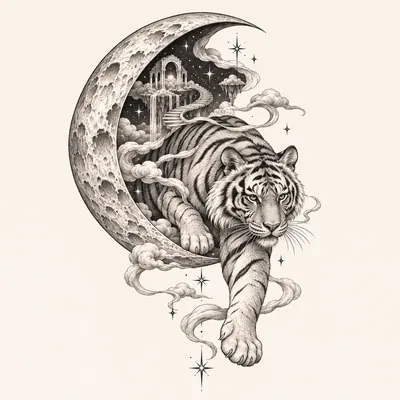
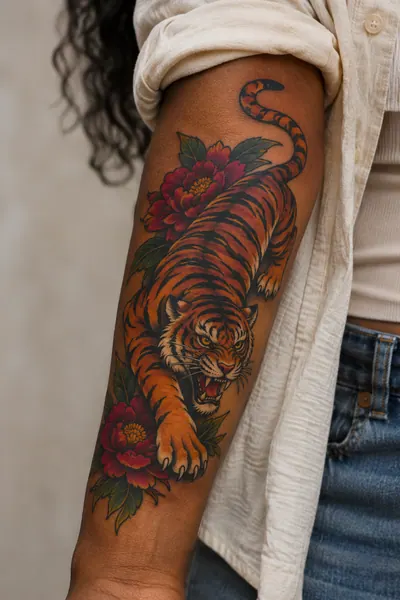
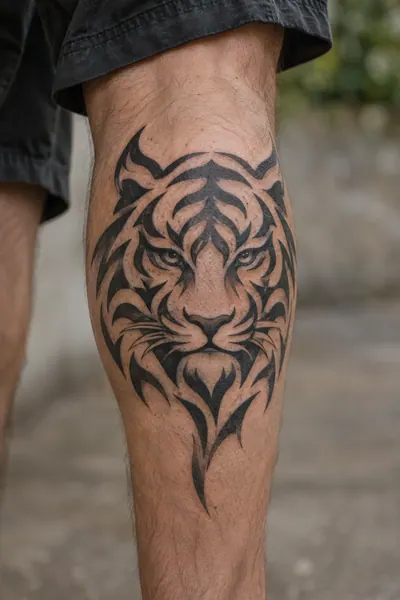
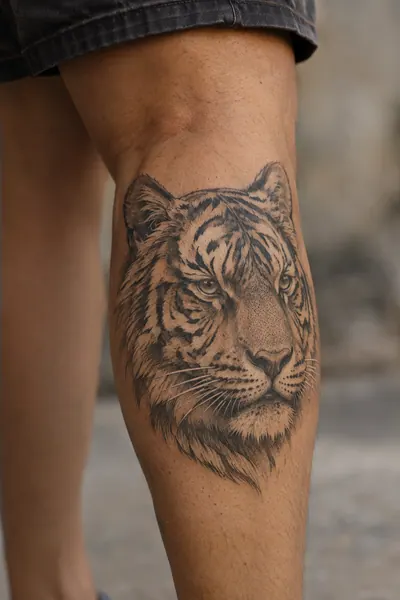
Each variant above takes the tiger in a different direction:
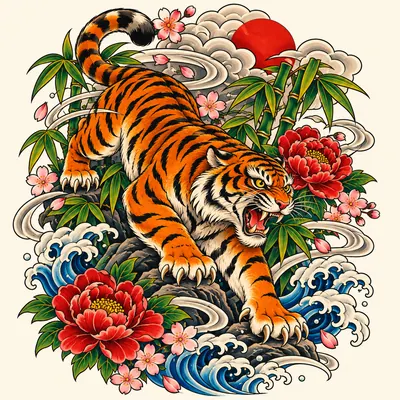
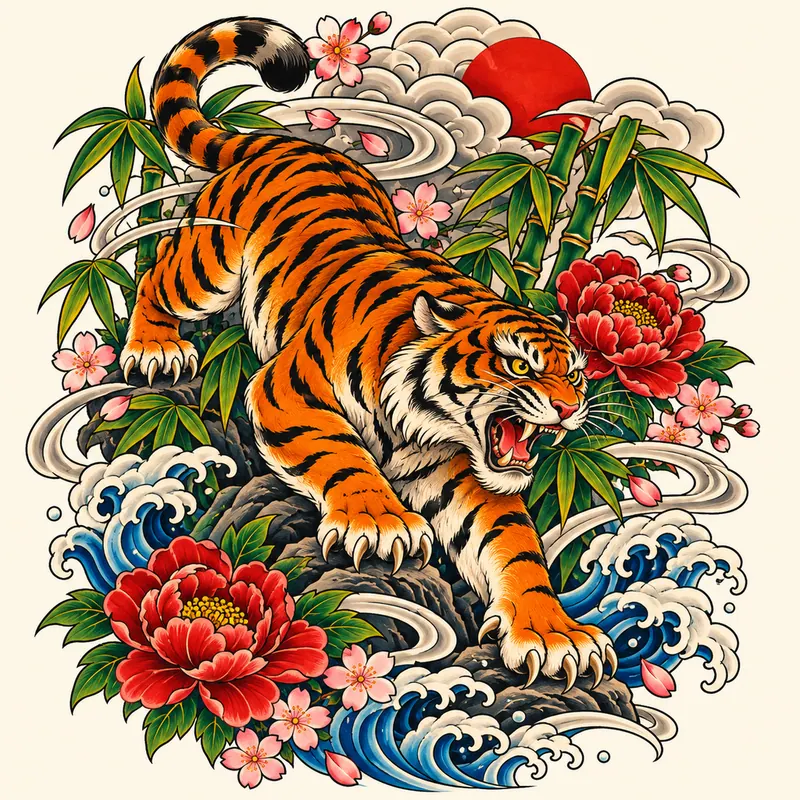
- Tiger among bamboo leaves. A Japanese thigh piece drawing on the classic tiger-and-bamboo pairing.
- Roaring tiger head. A traditional chest piece with thick outlines and a few saturated colors, made to read from far away.
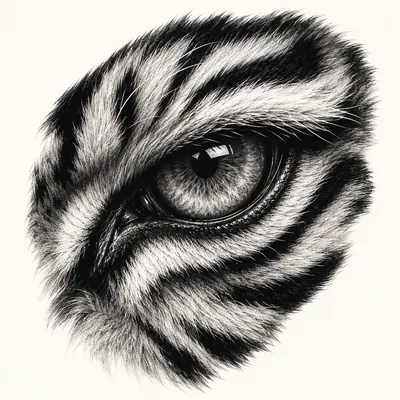
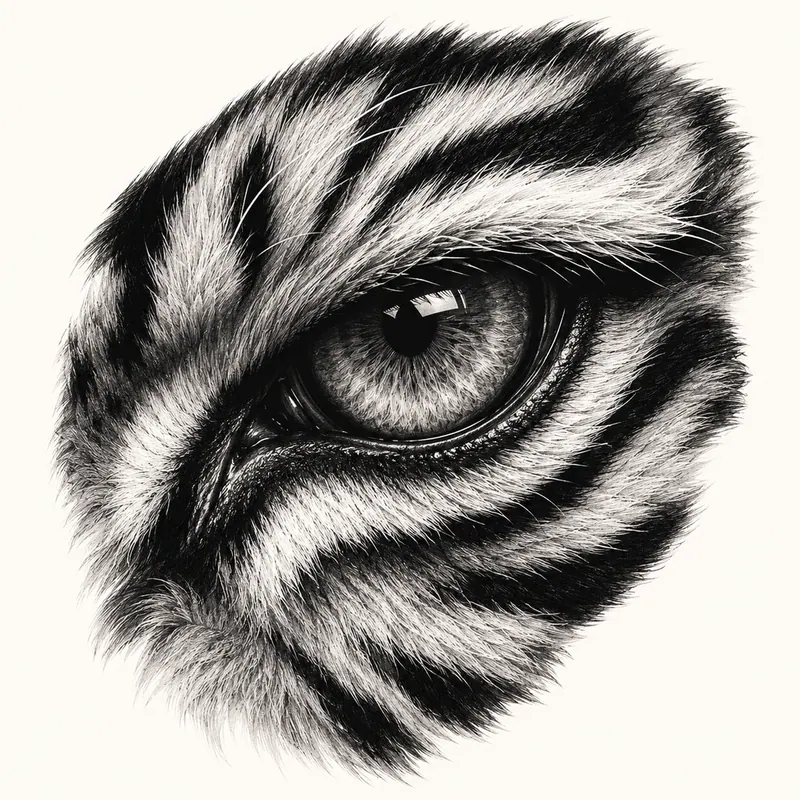
- Close-up of a tiger eye. A realism forearm design where the fur around a single eye carries the whole image.
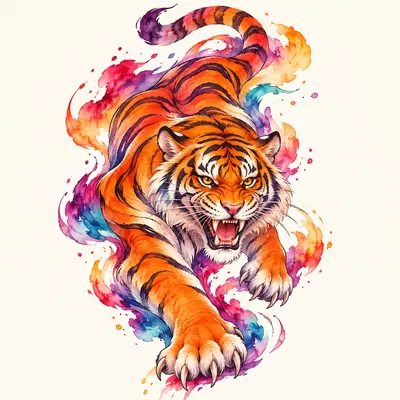
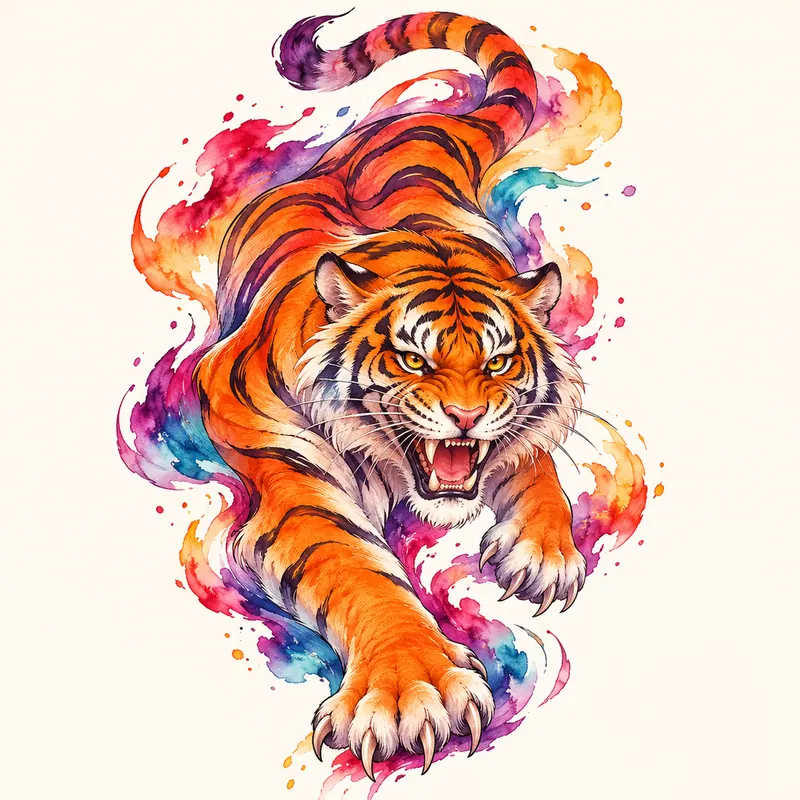
- Tiger with flowing stripes. A watercolor shoulder piece where the stripes dissolve into washes of color.
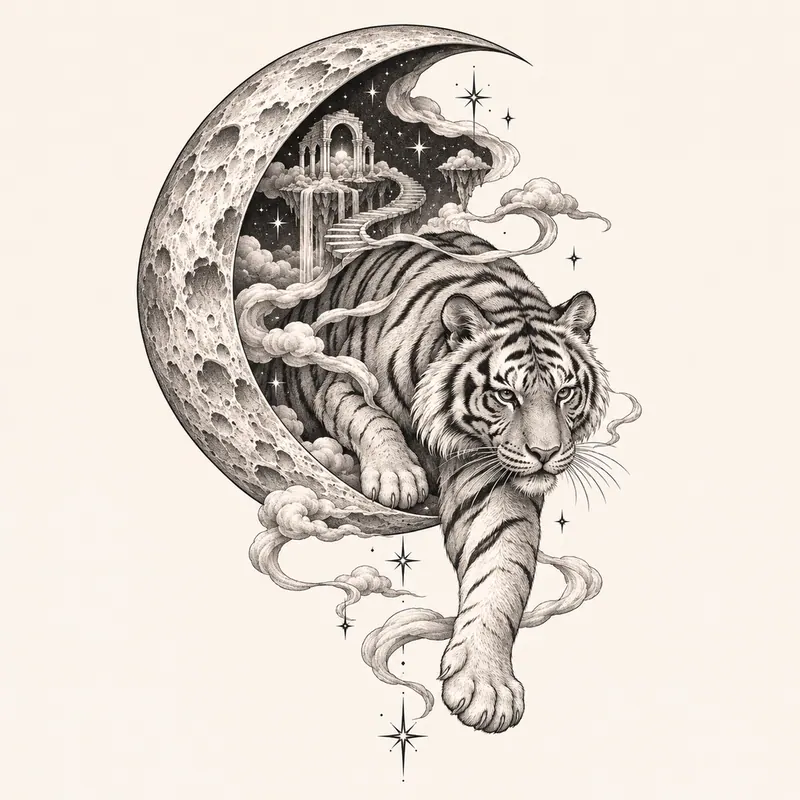
- Tiger walking out of a crescent moon. A surreal forearm piece that turns the animal into a dream image.
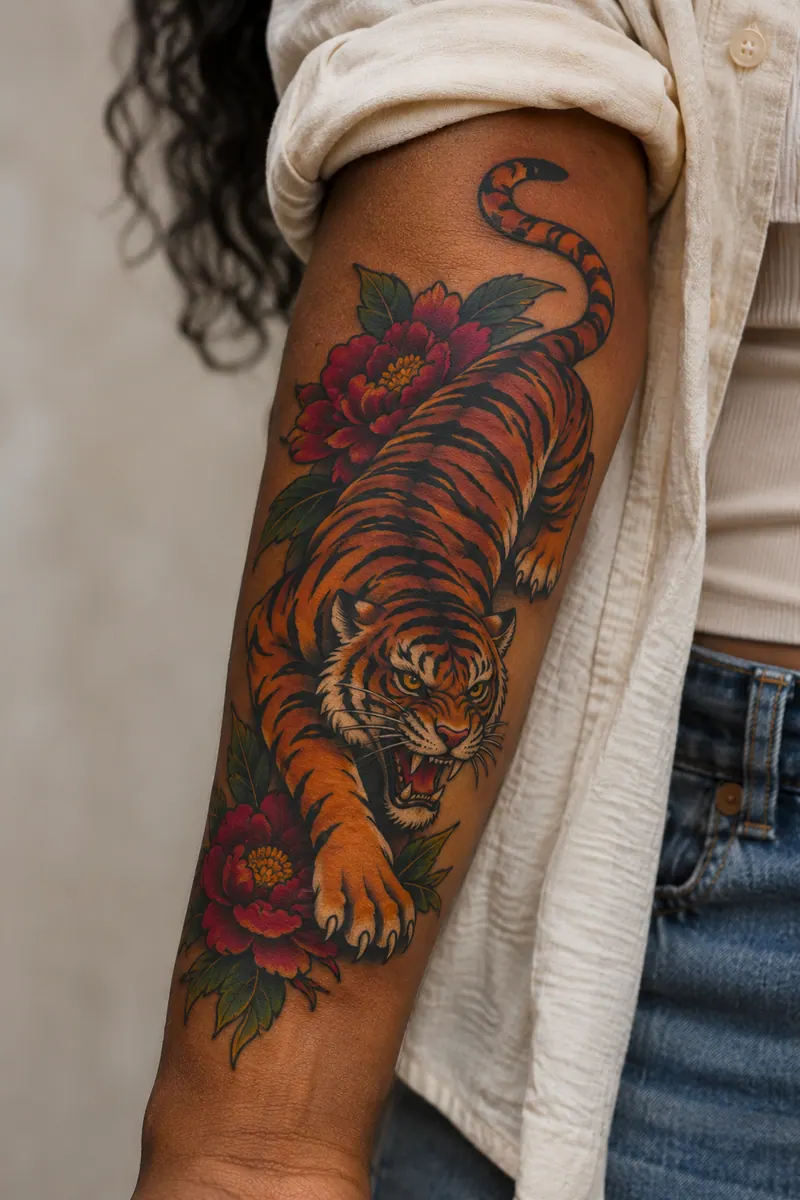
- Crawling tiger. A neo traditional forearm design where the tiger’s body stretches along the arm, as if stalking.
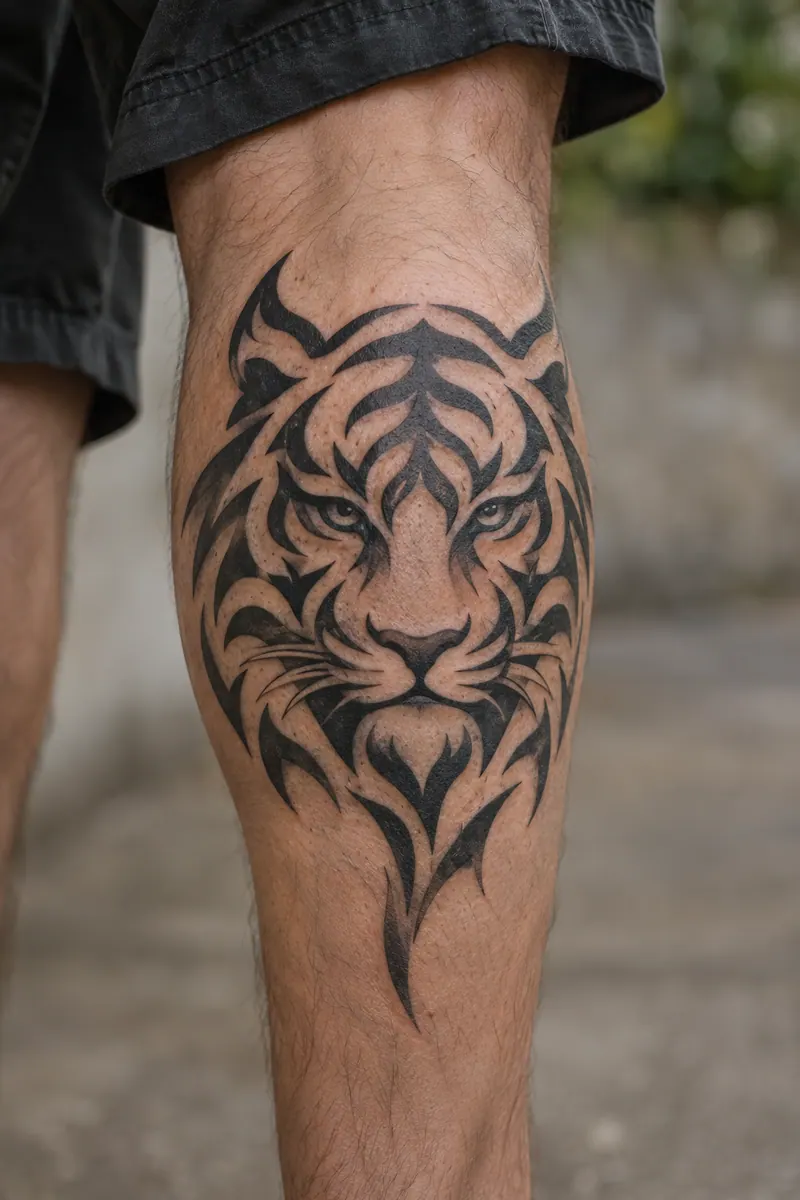
- Tiger head of sharp black shapes. A modern tribal calf piece where the stripes become the design. This is a contemporary graphic style, distinct from any specific cultural tradition.
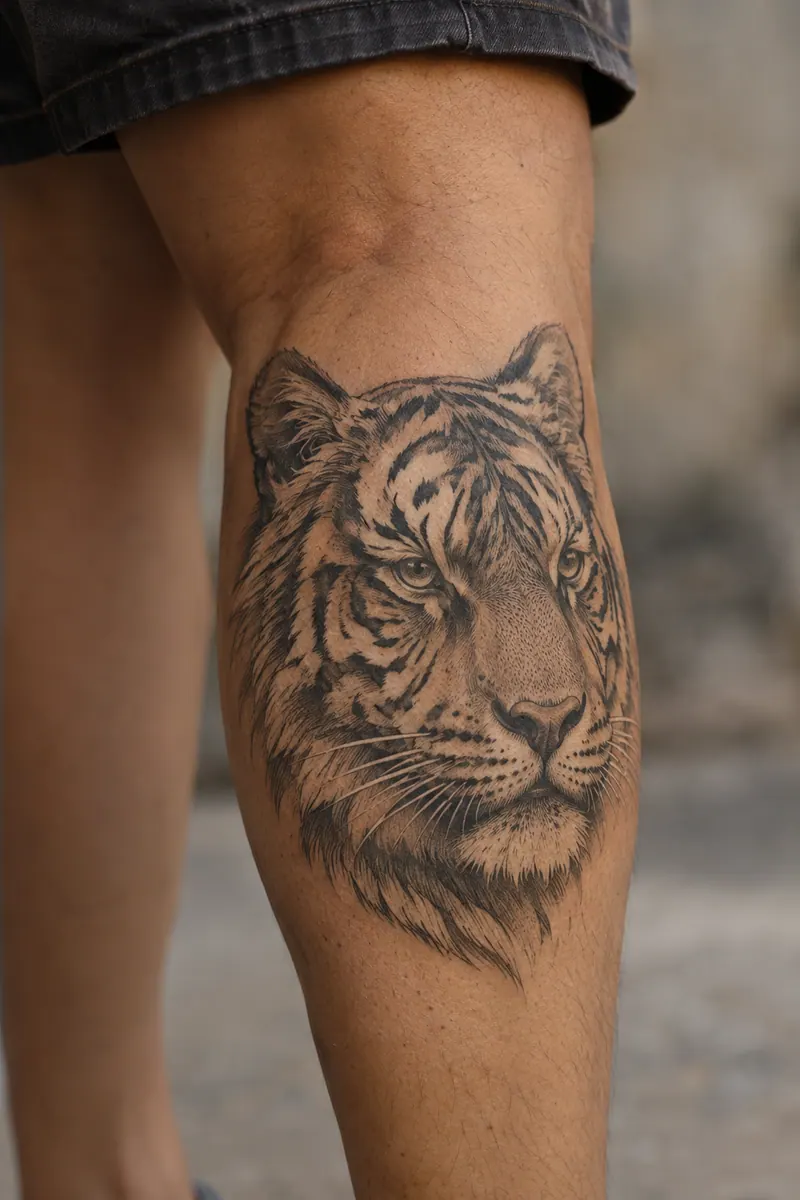
- Illustrative tiger head. A calf piece with strong linework and etched shading.
Working with stripes
Stripes are what make a tiger instantly recognizable, and they are also a design tool:
- They follow the body. On a crawling tiger, stripes that bend with the muscles of the arm or leg make the animal look alive.
- They create contrast. In black-and-grey or blackwork, stripes give you strong dark shapes without needing color.
- They can become the tattoo. Tribal and minimalist tigers sometimes reduce the animal to just its stripes and eyes.
Real tigers each have a unique stripe pattern, so some people ask their artist for a pattern that is not copied from a photo but drawn specifically for their body.
Placement and size
- Forearm and calf: natural homes for crawling tigers and tiger heads; the long shape suits a stalking pose.
- Thigh: a wide, flat canvas for a full tiger with bamboo, rocks or clouds.
- Chest: a roaring tiger head centered on the chest is a bold traditional statement.
- Back or sleeve: for a Japanese-style tiger, possibly facing a dragon on the other side.
Realistic tiger eyes and fur need space to hold their detail. If you want a small tiger, choose a bolder style with fewer lines, such as traditional or tribal, which stays readable as the tattoo ages.
Taking it to your artist
Decide what your tiger is doing: roaring, resting, stalking, or emerging from a moon. That single choice sets the mood more than anything else. In InkForge you can describe the pose and setting, try it in traditional, Japanese and realism styles, and preview it on a photo of your forearm or calf with Try-On, adjusting size and rotation until the body lines up with the limb.