 InkForge
Why the rose means so much
The rose has been a symbol of love for thousands of years, linked in classical mythology to Aphrodite and Venus, the goddesses of love. But a rose tattoo rarely means only one thing, because the flower comes with a built-in contrast: soft petals on a stem full of thorns. That pairing of beauty and pain is the reason so many people choose a rose to mark a relationship, a loss or a hard-won recovery.
A few other layers worth knowing:
- Secrecy. The Latin phrase sub rosa, “under the rose,” came to mean something said in confidence, and roses were sometimes carved or painted on ceilings of meeting rooms for that reason.
- Remembrance. Roses are a common memorial flower, often paired with a name or a date.
- Faith. In Christian art the rose is often associated with the Virgin Mary, and the rosary takes its name from the flower.
- Color. The Victorian “language of flowers” gave each color its own message, which still shapes how people choose: red for passion, yellow for friendship, white for new beginnings, black for loss.
Rose tattoo designs in the gallery
Each gallery variant tells a slightly different story:
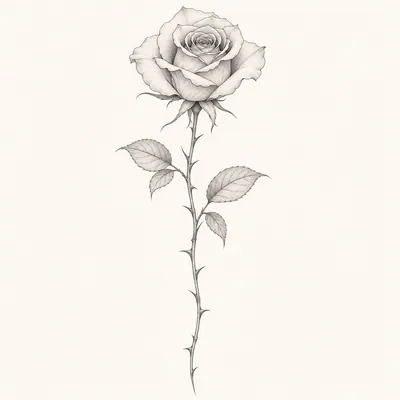
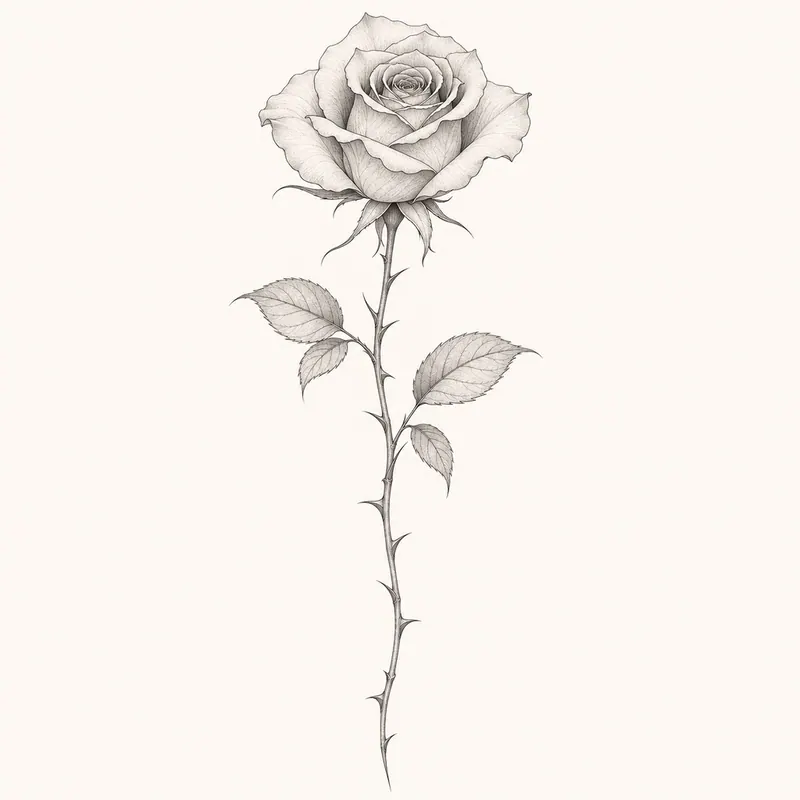
- Single rose with a long thorny stem. A fine line forearm piece that reads as elegant and personal. The visible thorns keep it honest.
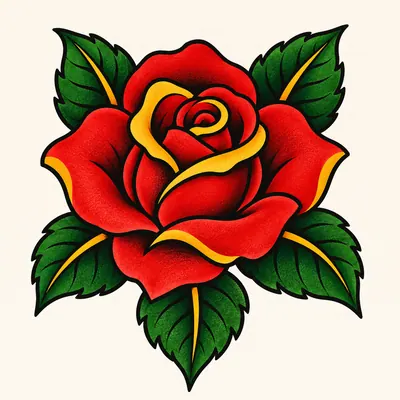
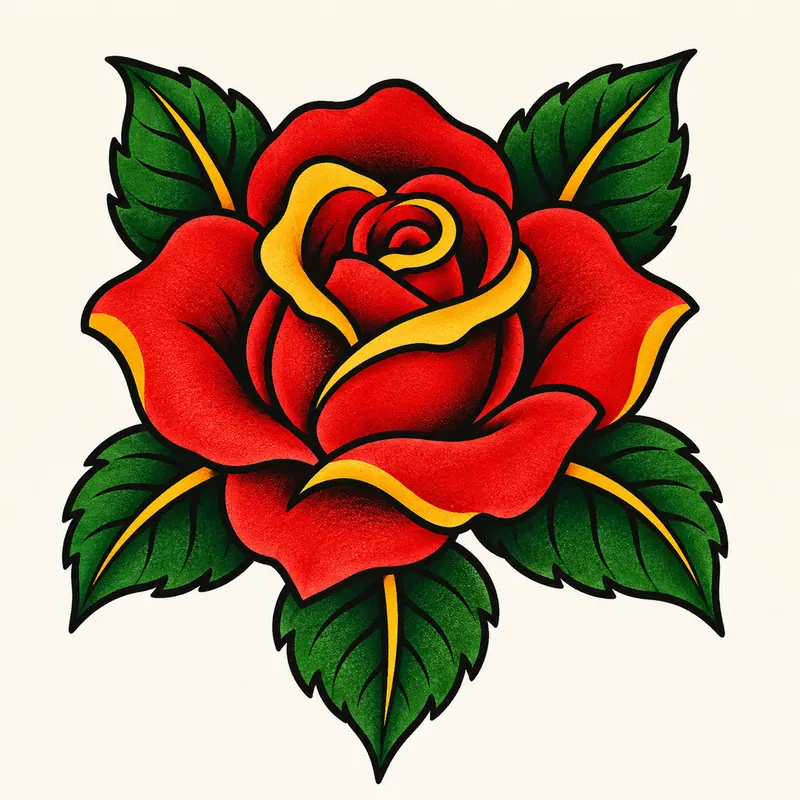
- Classic rose with bold leaves. The traditional rose is one of the most iconic images in tattoo flash. On the upper arm it reads clearly and ages very well.
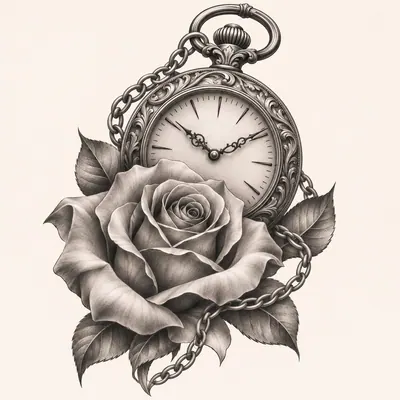
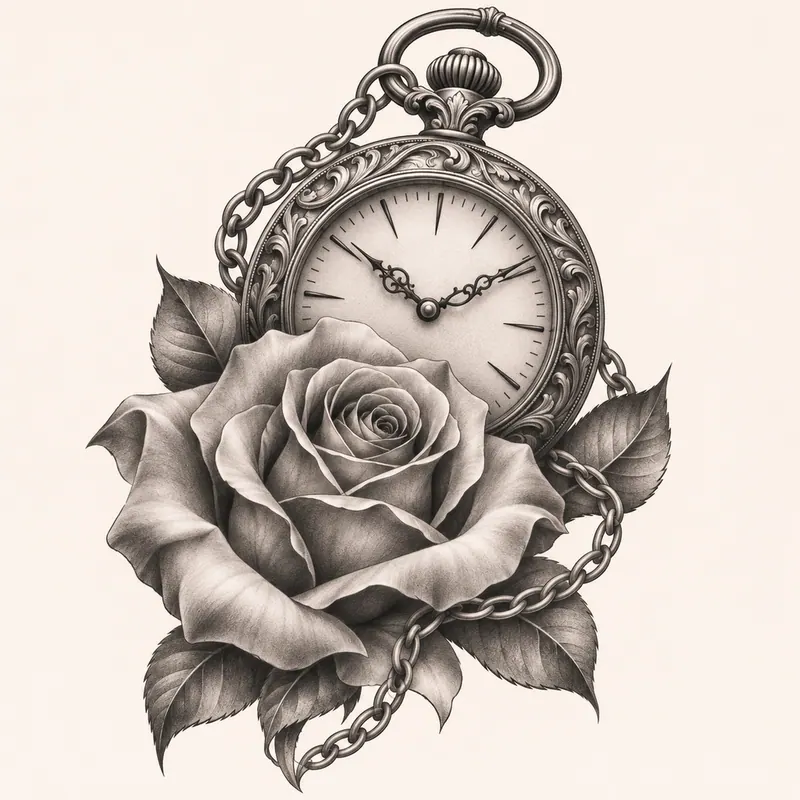
- Rose with an antique pocket watch. A black-and-grey forearm piece in the Chicano style, about time, memory and the people we hold on to.
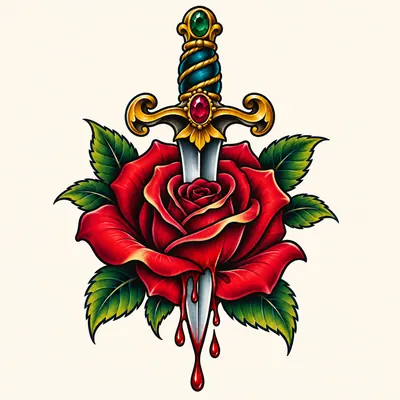
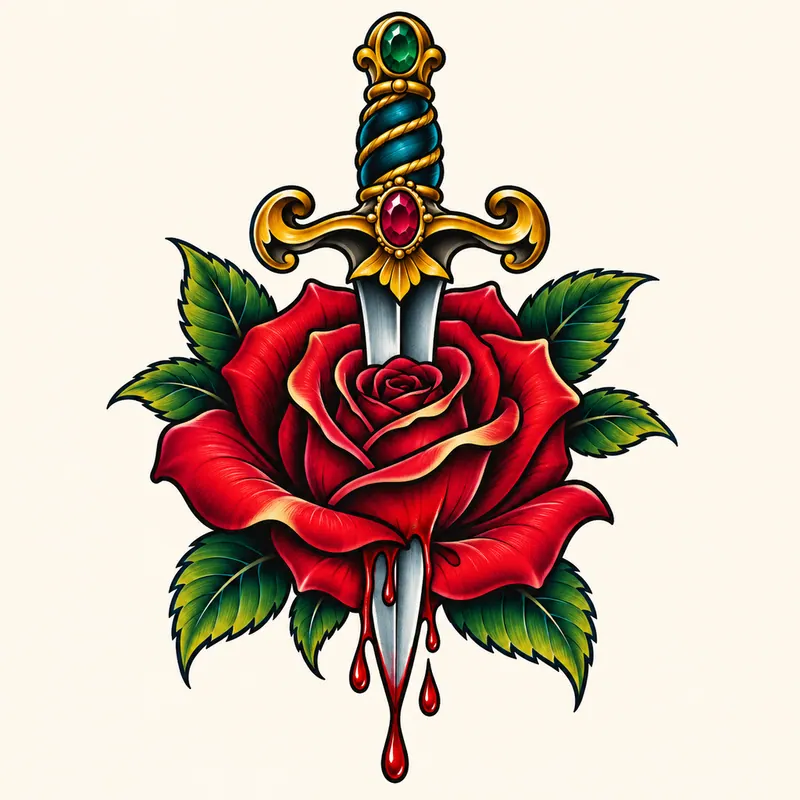
- Rose pierced by a dagger. A neo traditional calf piece about love and pain in the same image.
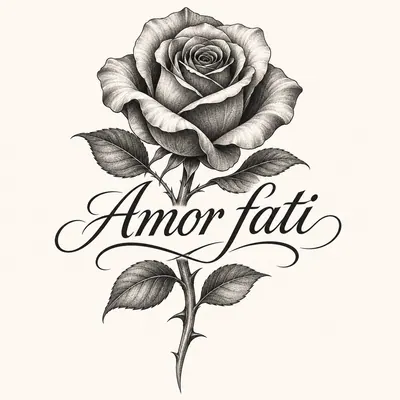
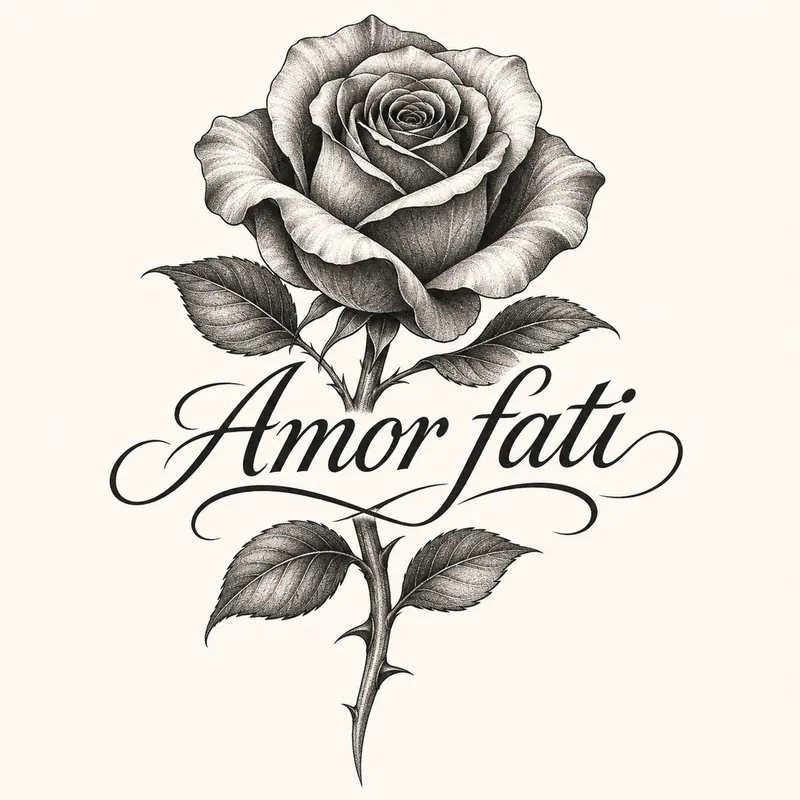
- Rose with “Amor fati.” Lettering turns the rose into a statement about accepting your fate, good and bad.
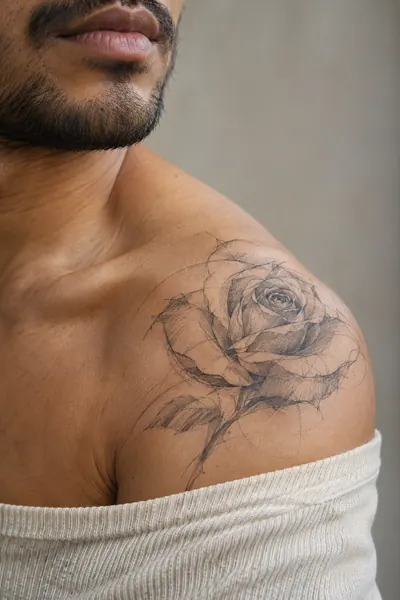
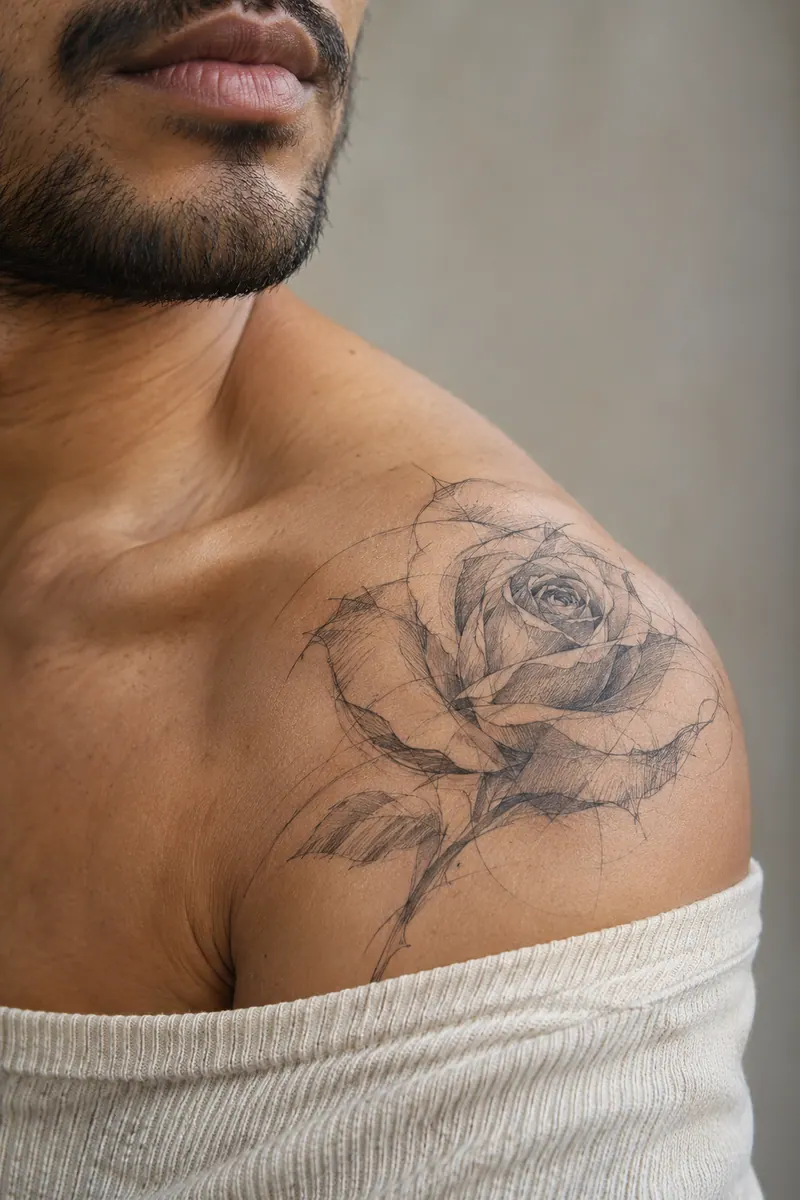
- Loosely drawn blooming rose. A sketch style shoulder piece with visible construction lines, like a page from a notebook.
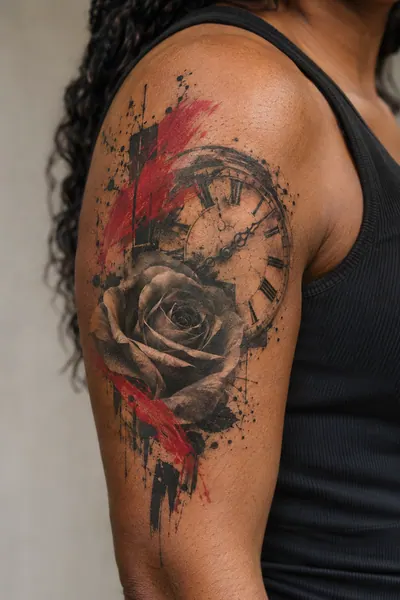
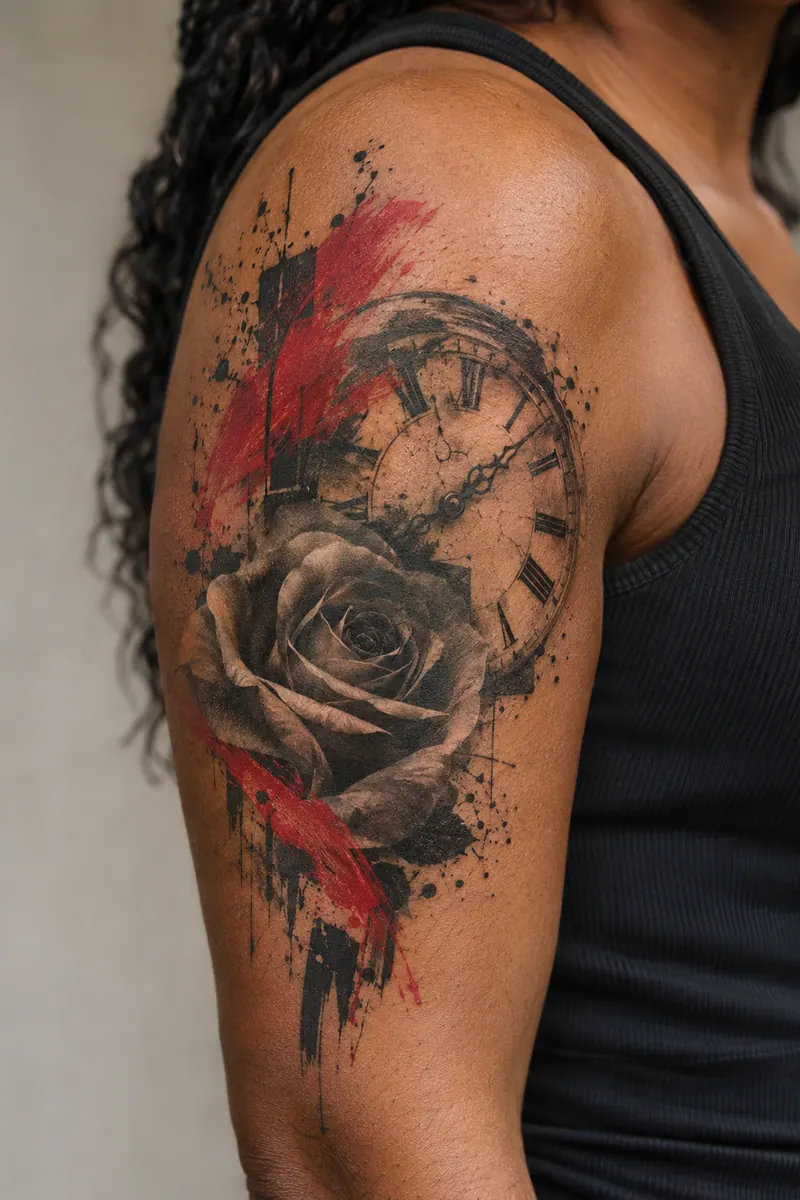
- Rose collage with a clock and paint smears. A trash polka upper arm piece that mixes realism and red-and-black chaos.
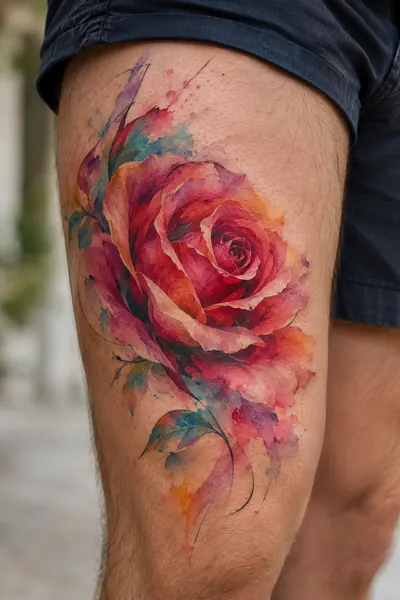
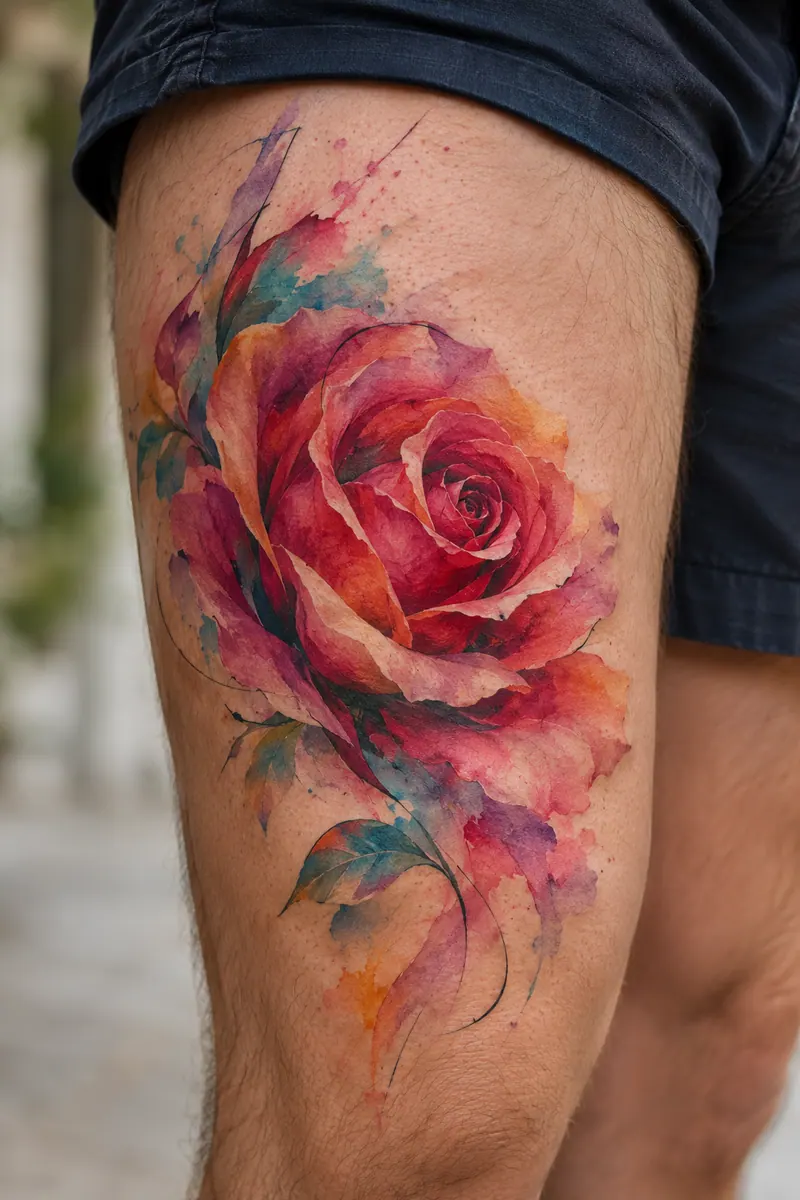
- Rose with flowing petals. A watercolor thigh piece where color drifts beyond the outlines.
A note on Chicano roses
Black-and-grey roses with clocks, rosaries, script and soft clouds are core imagery in Chicano tattooing, a tradition that grew out of Mexican American communities in Southern California and is tied to family, faith and lived experience. If you are drawn to the style, look for an artist who works in it seriously and learn a little about where it comes from; the imagery carries more weight than its popularity suggests.
Placement and size
The shape of your rose should match the space:
- Long stems follow vertical areas: the forearm, calf, spine or the side of the ribs.
- Round rose heads fit the upper arm, shoulder, chest, the back of the hand or the knee.
- Rose clusters with leaves and buds can fill gaps between other tattoos and are a common filler in sleeves.
Rose petals need room for their layers to stay distinct. A realistic or shaded rose under about 5 cm can turn into a dark blob over the years, so keep tiny roses simple and outline-based.
Pairing the rose with other symbols
The rose is the most adaptable companion in tattooing. It pairs with a skull for life and death, with a dagger for love and conflict, with a clock for time and loss, with a lion or wolf for strength with a softer side, or with a name in a banner as a tribute. Decide which side of the rose you want to show, the petals or the thorns, and build from there.
Small choices make a rose yours: the color, whether it is in bud or in full bloom, a stem bent at the angle of your arm, a single word in a ribbon. Describe it in InkForge, compare fine line, traditional and watercolor versions, and use Try-On to see the stem against a photo of your own forearm before you book.