InkForge
What defines a mandala tattoo
A mandala tattoo is organized around one point. Everything radiates from the center in concentric rings — petals, scallops, dots, arches and fine ornamental lines — and each ring repeats its motif evenly around the circle. The result has radial symmetry: it looks the same whichever way you rotate it.
Most mandala tattoos are black and gray, combining crisp linework with dotwork shading, which gives depth without heavy fills. Some are full circles; others are half mandalas or are woven into another subject.
Origins and meaning
The word mandala is Sanskrit and is generally translated as “circle.” In Hindu and Buddhist traditions — and in Jainism — mandalas are sacred diagrams representing the cosmos or a spiritual path, used in ritual and meditation. Tibetan Buddhist monks are known for creating intricate mandalas from colored sand and then ceremonially sweeping them away, a reminder of impermanence.
The mandala tattoo as most people know it is a modern, decorative interpretation of these forms. Many wearers choose it for balance, wholeness or a sense of calm, and that is a valid personal meaning. It is still worth remembering that, for millions of people, the mandala is a religious object. If your design includes specific deities, sacred syllables or a traditional ritual mandala, take time to learn what it represents, and consider asking someone from that tradition.
Visual characteristics
- A clear center — often a dot, small flower or lotus — that anchors the whole design.
- Concentric rings of repeating petals and patterns, usually alternating busy and calm bands.
- Dotwork shading that creates gradients and depth.
- Fine ornamental linework with occasional bolder outlines for structure.
- Integration with subjects: the mandala can become a frame, a mane or a pattern inside wings.
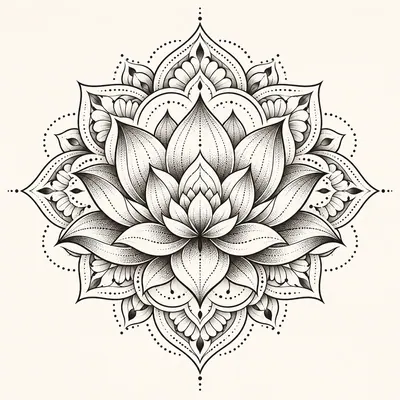
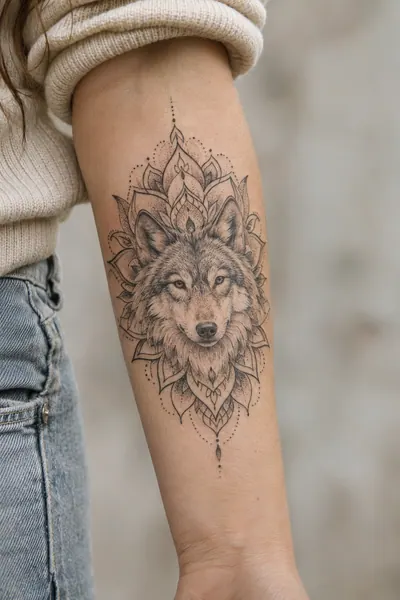
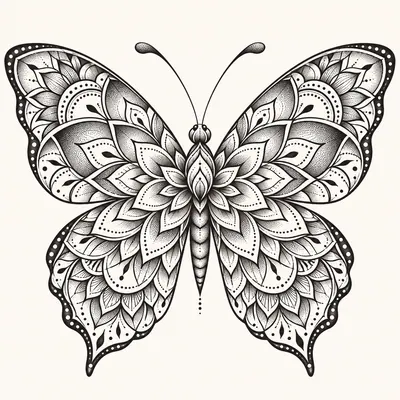
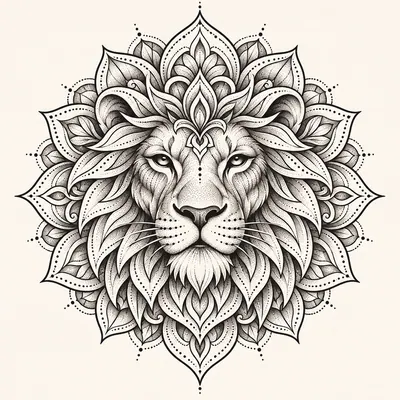
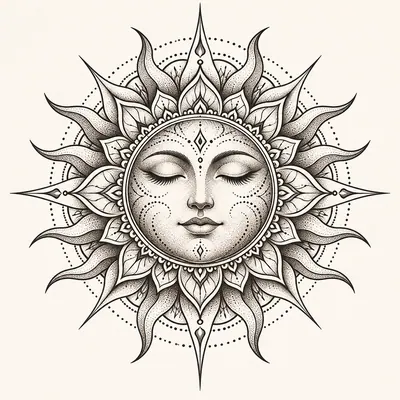
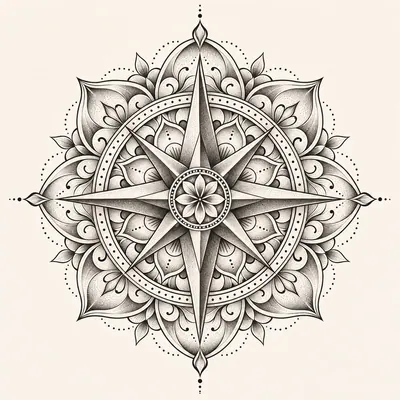
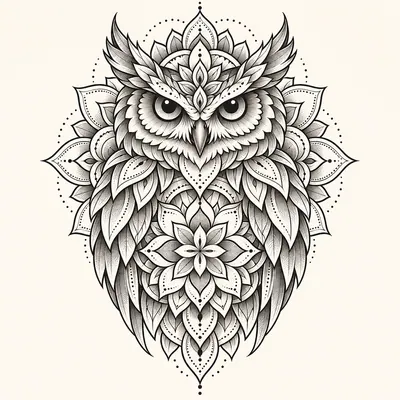
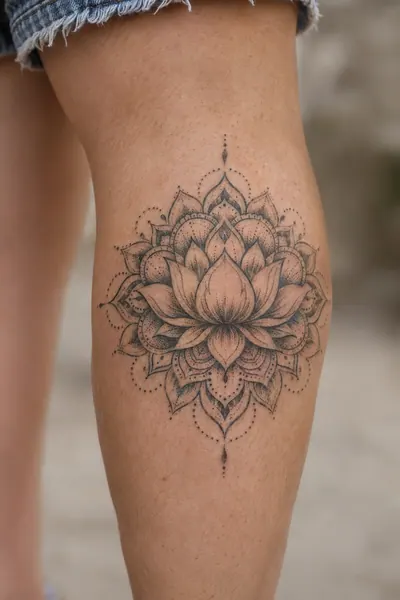
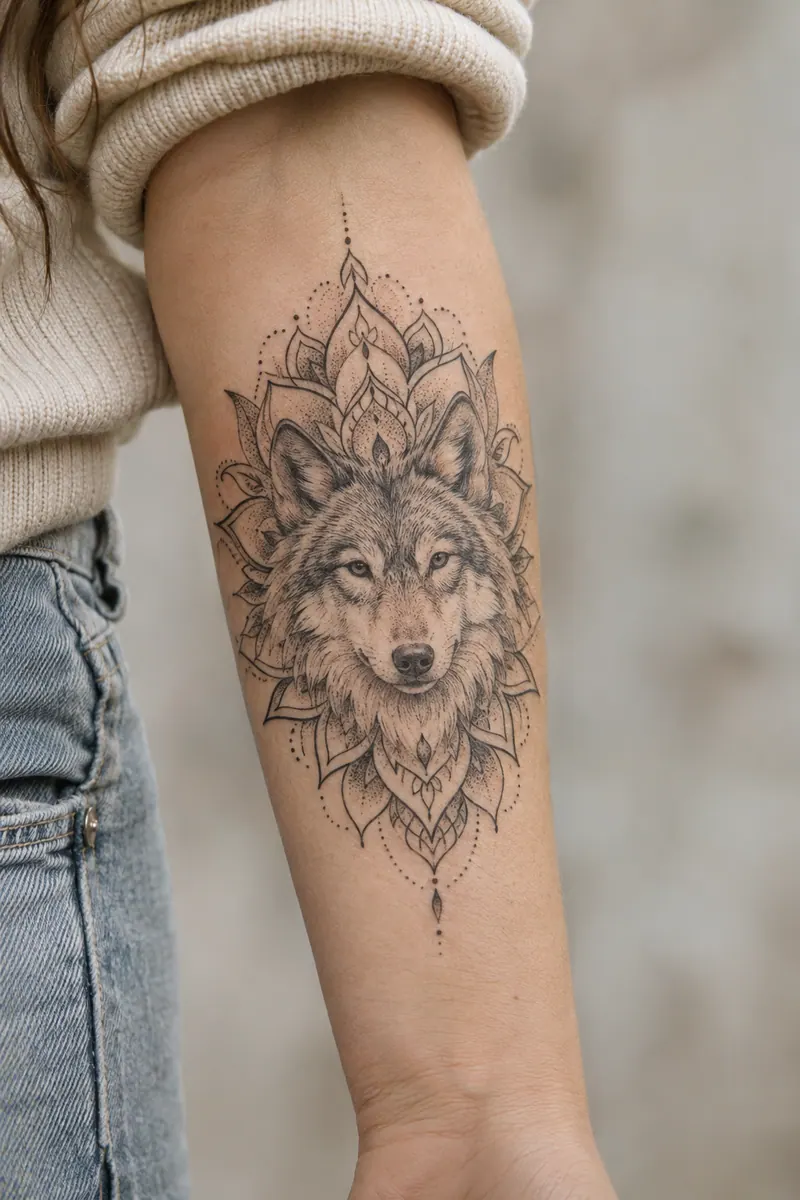
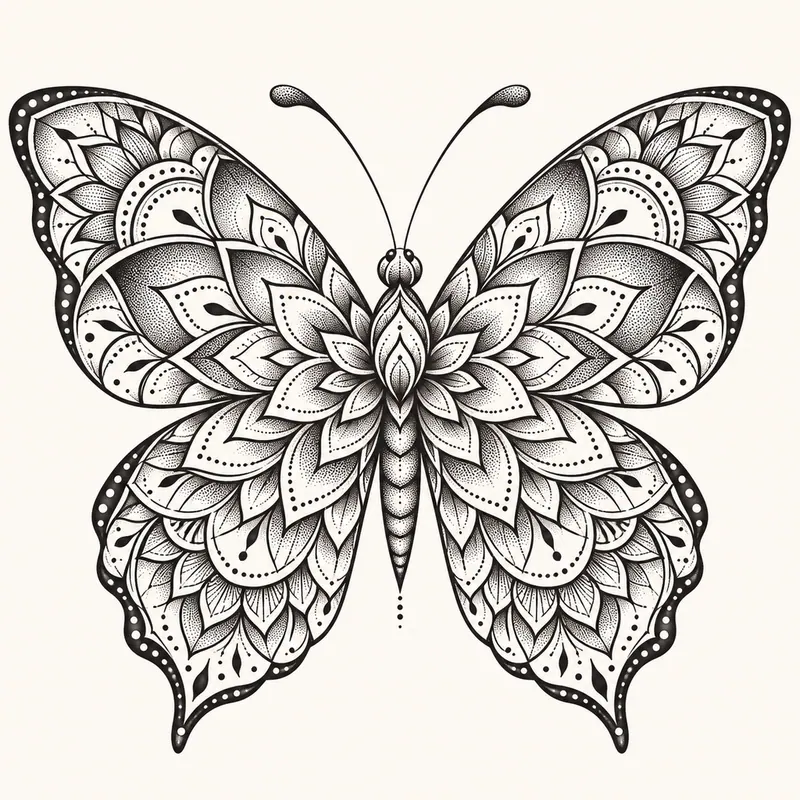
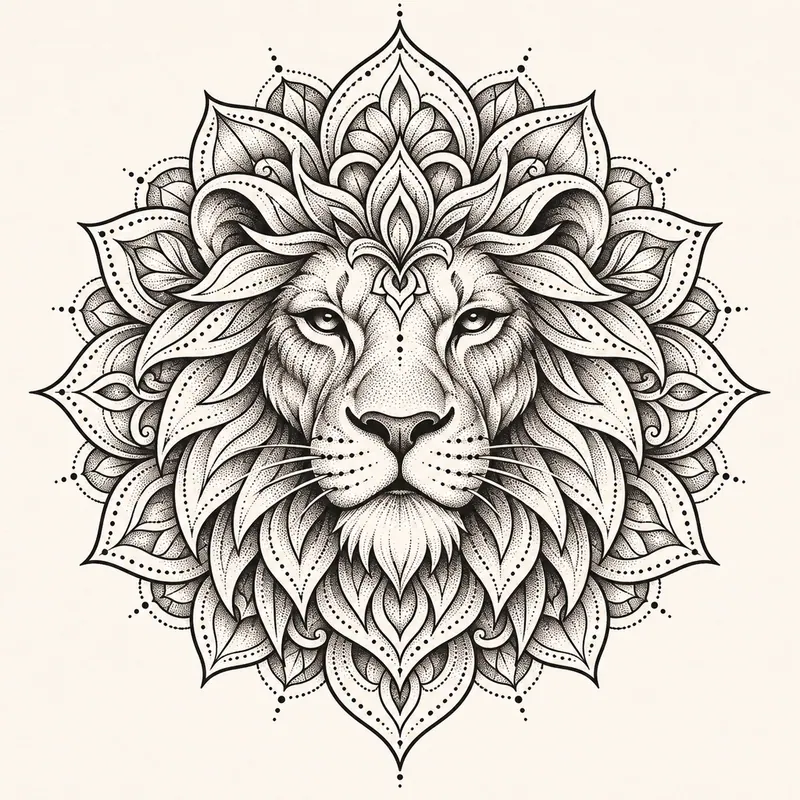
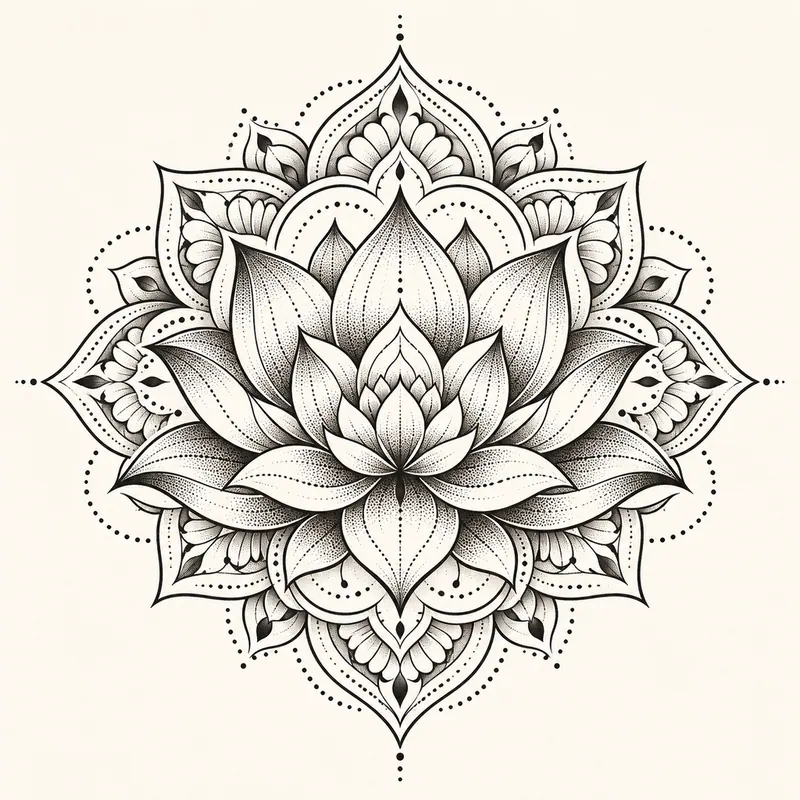
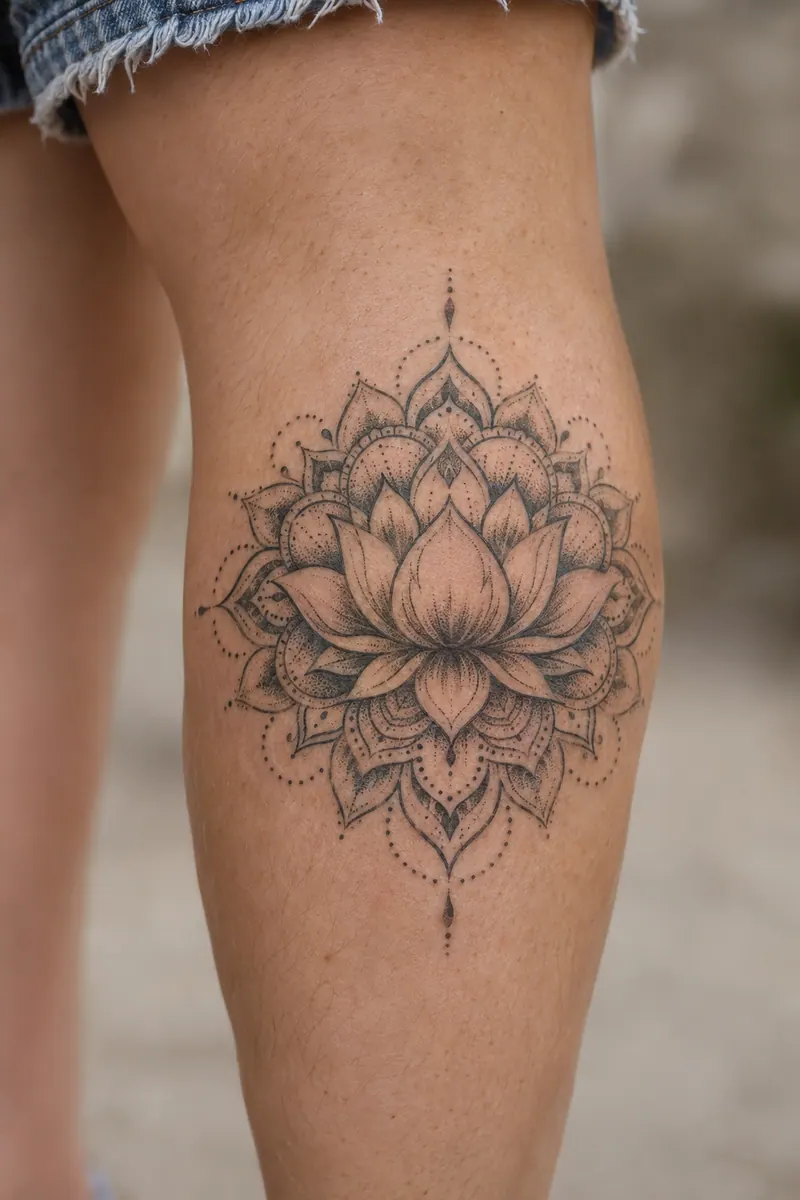
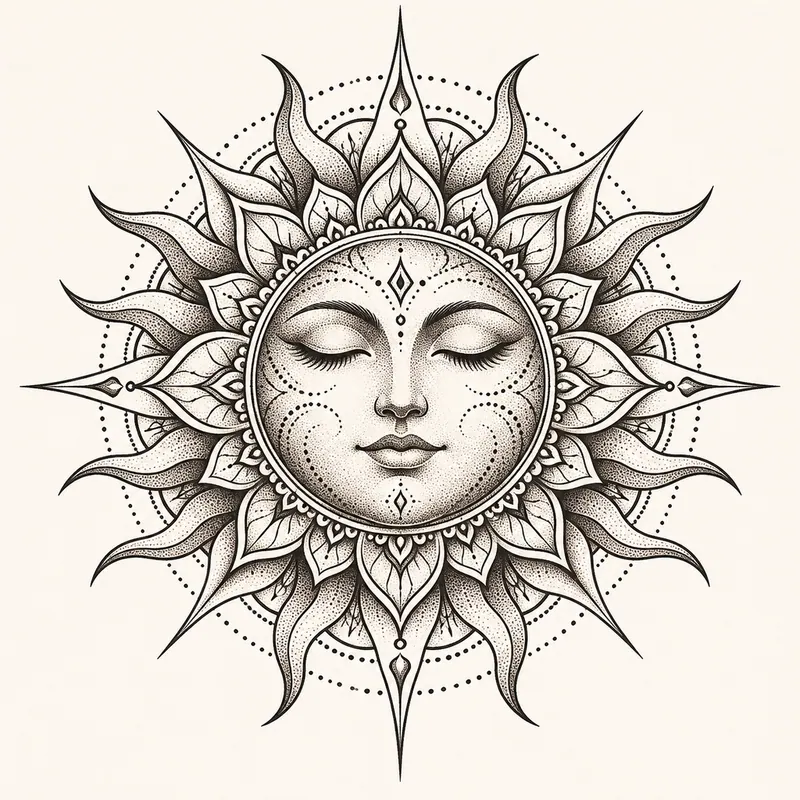
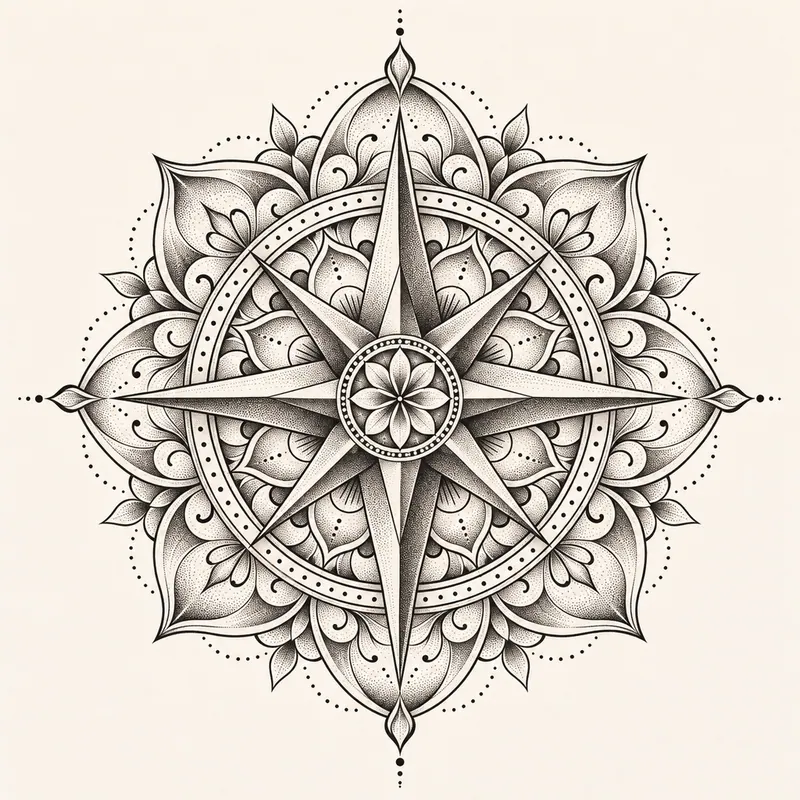
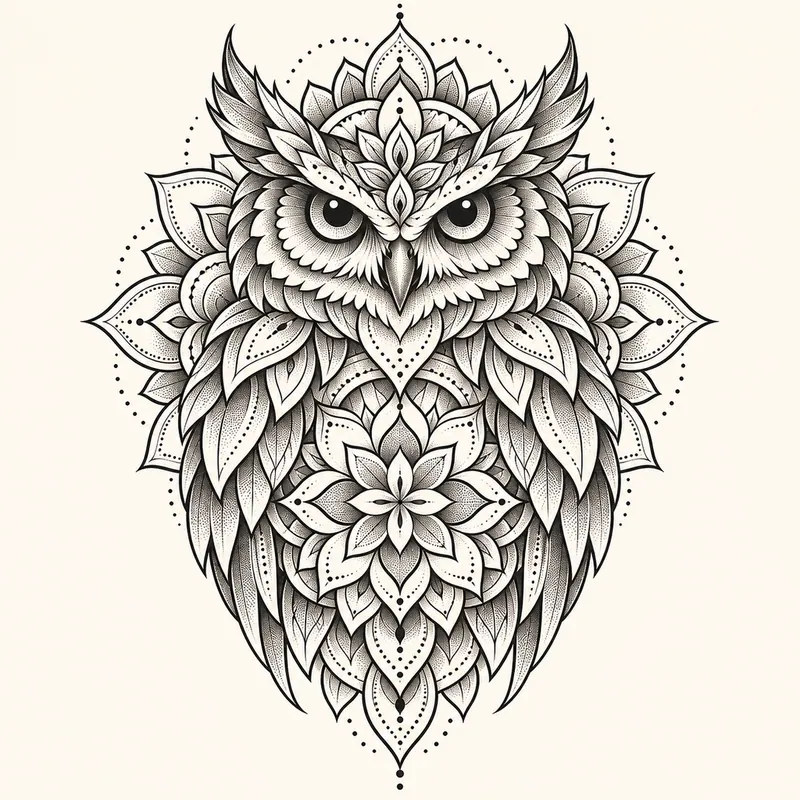
The gallery shows how adaptable the format is: a wolf face framed by a mandala, a lion whose mane becomes one, butterfly wings and owl feathers filled with mandala patterns, a lotus flower and a lotus mandala, a sun with radiating rays, and a compass rose shaped like a mandala.
How mandala tattoos age
Mandalas combine two things that age differently. Bold outlines and solid accents hold up well for decades. Very fine lines and tightly packed dots soften over time, and if the rings are too dense they can start to read as gray texture instead of pattern. A few habits help:
- Choose a size where each ring has breathing room.
- Keep some rings deliberately simple to give the eye a rest.
- Ask for a few heavier lines as a framework.
- Protect healed skin from the sun.
Best subjects and placements for mandala
The lotus is the most natural partner, since it already has radial petals and its own spiritual associations. Animals with a strong face — owls, lions, wolves — work well when the mandala frames the face or replaces the mane or feathers. Butterflies are a popular choice because the wings mirror each other.
Placement matters more than usual because a circle wants a center. Full mandalas sit well on the upper back, sternum, thigh, calf, shoulder cap and outer forearm. Half mandalas suit the spine, the elbow, the knee or the area under the collarbones. On areas that curve strongly, the circle may look oval from some angles — preview it before deciding.
Mandala vs. neighboring styles
- Geometric tattoos use shapes and symmetry in any arrangement; a mandala is specifically radial and ornamental.
- Ornamental work borrows from jewelry, lace and filigree and often flows along the body, while a mandala stays centered and circular.
- Dotwork is the shading technique most mandalas use, but dotwork can shade any subject.
Choosing a mandala tattoo artist
Look for an artist who regularly posts mandala, dotwork or ornamental pieces, and check healed photos for even spacing between rings and smooth dot gradients. Ask how they plan symmetry for your body part; many draw the mandala to your measurements or adjust the stencil on the skin. A good artist will also tell you honestly when a design has too many rings for the size you want.
Describe your center, your rings and any subject you want to combine — a lotus, an owl, a sun — and generate it in the Mandala style in InkForge. Compare it with Dotwork and Geometric versions, repaint one ring if it feels too busy, and use Try-On to position the design on a photo of your back or thigh, adjusting size and rotation yourself. Then share the version you like with your artist as a starting point.