 InkForge
The meaning of the phoenix
The phoenix is one of the clearest symbols in tattooing: you burned, and you came back. In the best-known version of the legend, the bird lives for centuries, dies in flames and rises again from its own ashes. That story makes the phoenix the go-to tattoo for marking survival and a fresh start.
People often get a phoenix after:
- recovering from illness or an injury,
- getting sober or leaving a destructive habit,
- the end of a relationship or a difficult family situation,
- a career or life change that felt like starting from zero.
Where the phoenix comes from
The legend has several roots, and the details changed over time.
Greek and Roman sources describe the phoenix as a unique, long-lived bird associated with the sun, returning after centuries. Ancient writers told different versions of how it was reborn, and the rising-from-the-ashes image is the one that stuck. Some scholars link the legend to the Egyptian Bennu, a sacred bird connected with the sun and creation, though how closely the two are related is debated.
Early Christian art adopted the phoenix as a symbol of resurrection and eternal life.
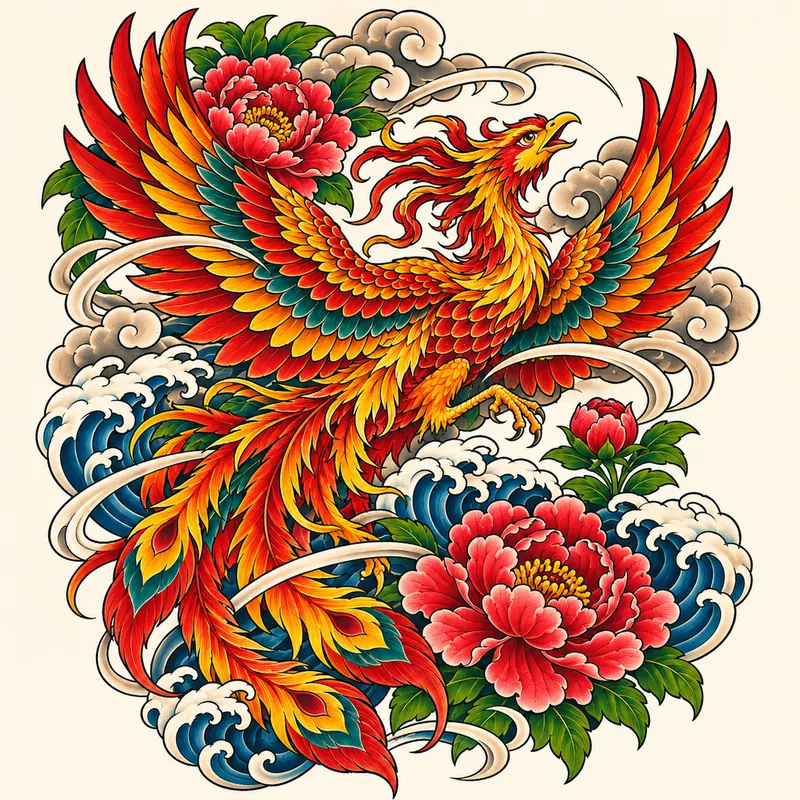
The East Asian phoenix is a separate creature that is usually translated as “phoenix.” The Chinese fenghuang and the Japanese hō-ō are not about fire and death at all. They are graceful birds of virtue, harmony and good fortune, traditionally associated with the empress and often paired with the dragon. In Japanese tattooing the hō-ō is commonly shown with peonies, as in the gallery’s thigh piece. If you choose this version, its meaning is closer to grace and good fortune than to rising from destruction.
Phoenix tattoo designs in the gallery
The variants above show the range:
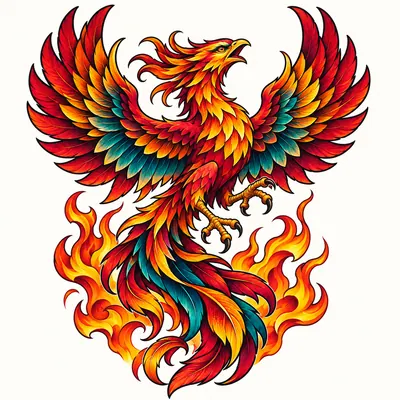
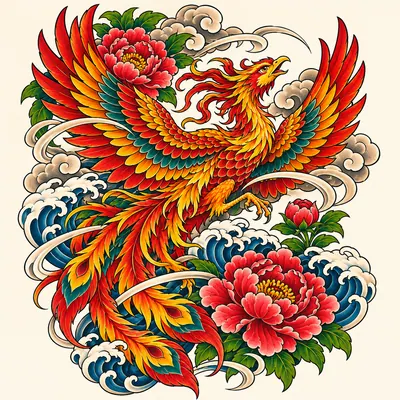
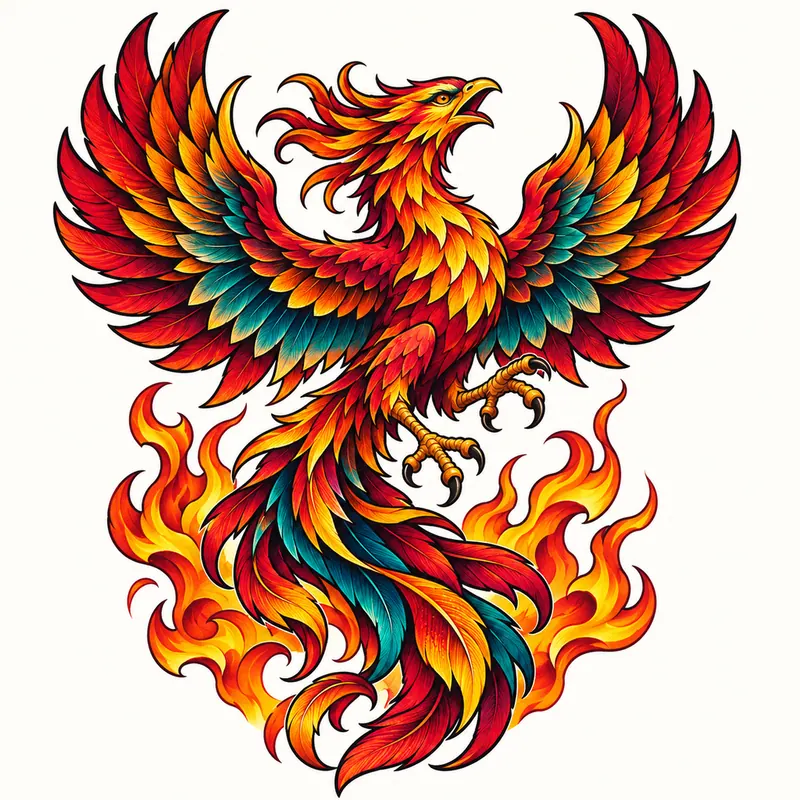
- Rising from flames. A neo traditional back piece with rich color and bold outlines. The classic rebirth composition.
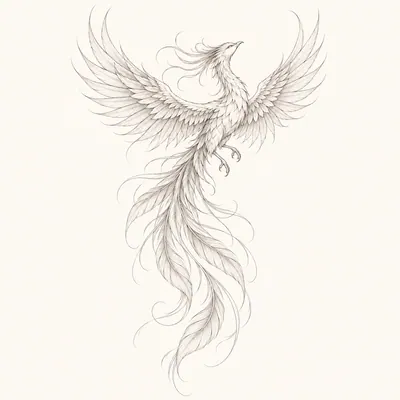
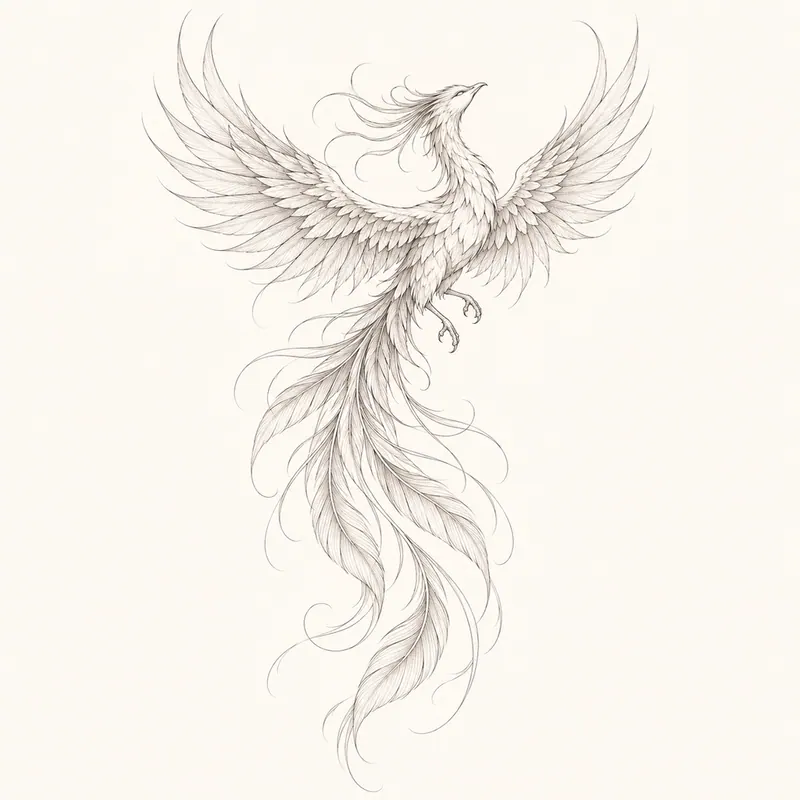
- Long tail feathers. A fine line forearm bird whose tail trails down the arm, elegant and understated.
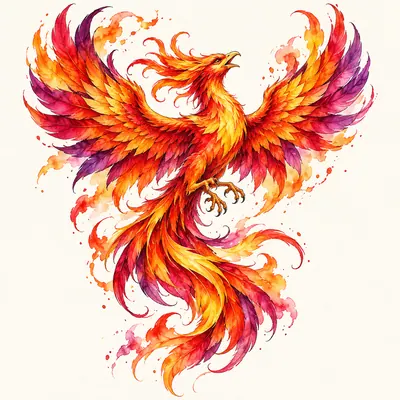
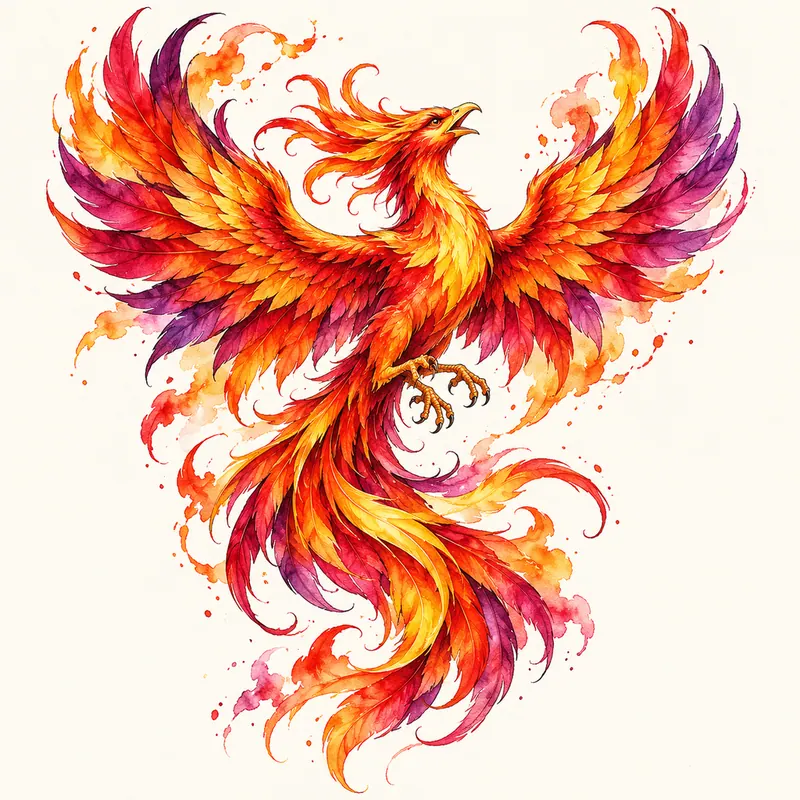
- Made of fire. A watercolor shoulder piece where the bird and the flames are one, with color spilling beyond the outline.
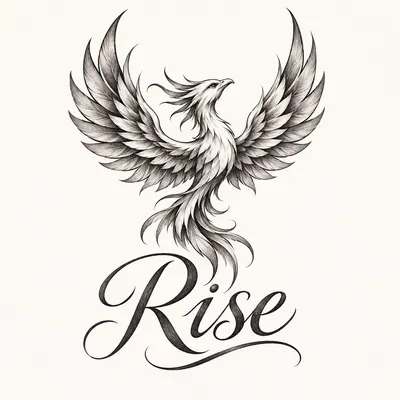
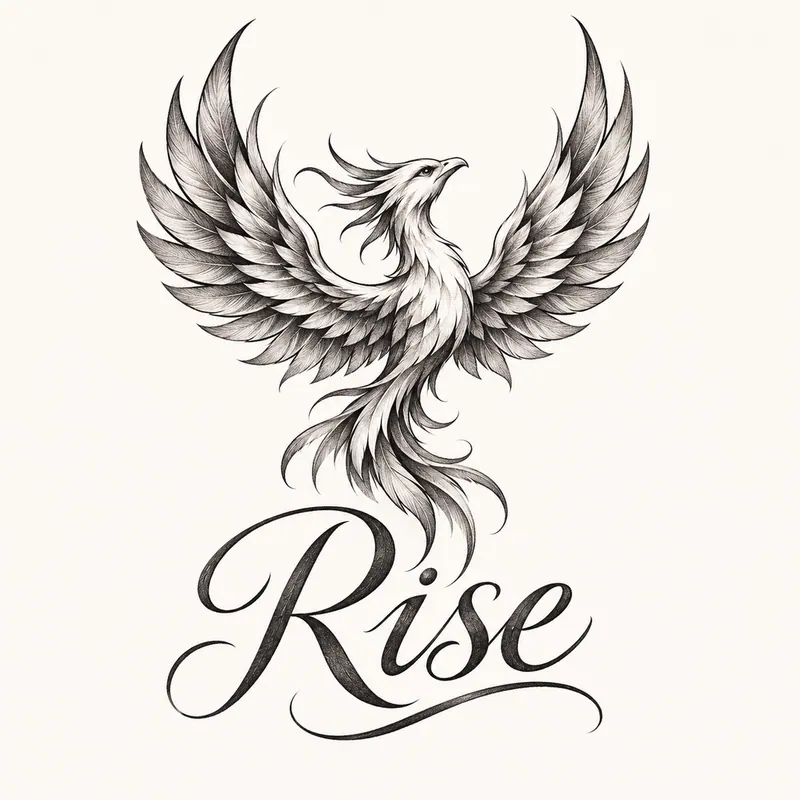
- Small phoenix above “Rise”. A lettering forearm piece that turns the meaning into a single word.
- Phoenix with peonies. A Japanese thigh piece built on the hō-ō tradition.
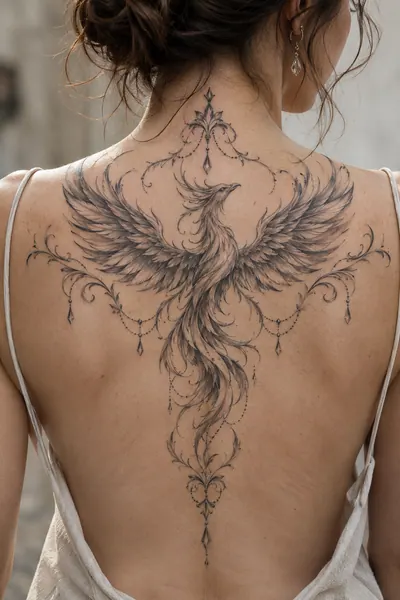
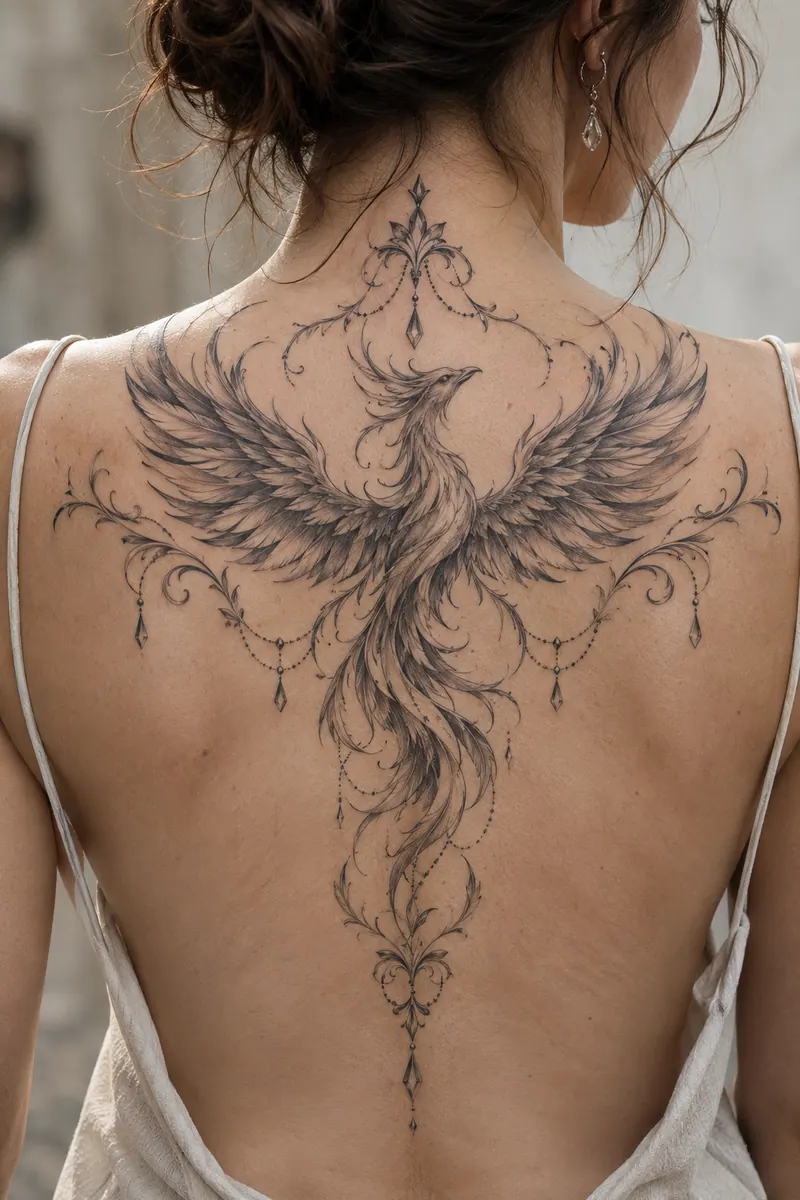
- Spread wings across the back. An ornamental upper back design with jewelry-like, symmetrical feathers.
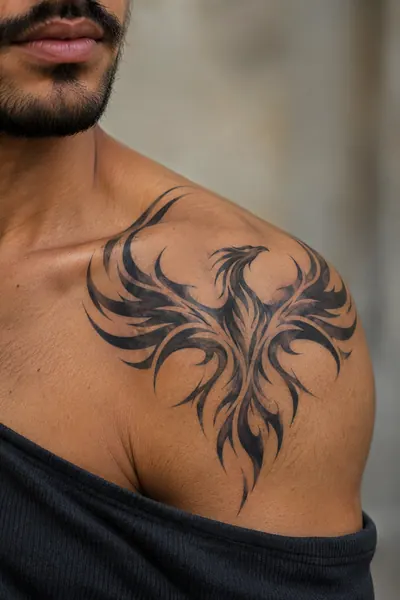
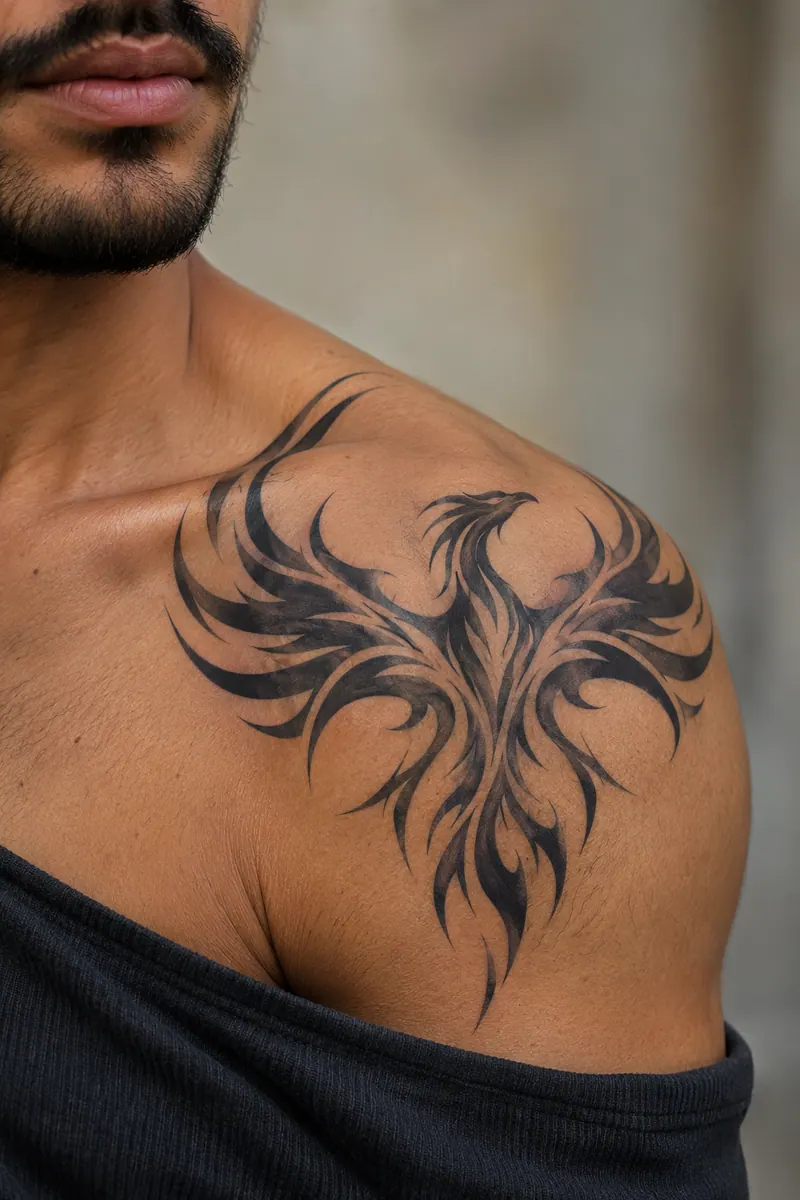
- Sharp flowing shapes. A modern tribal phoenix on the shoulder, all movement and black contrast.
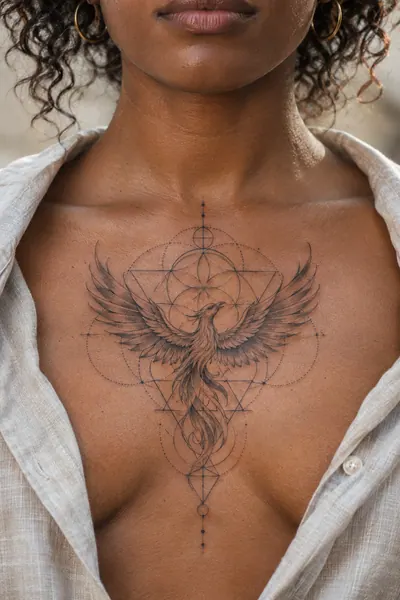
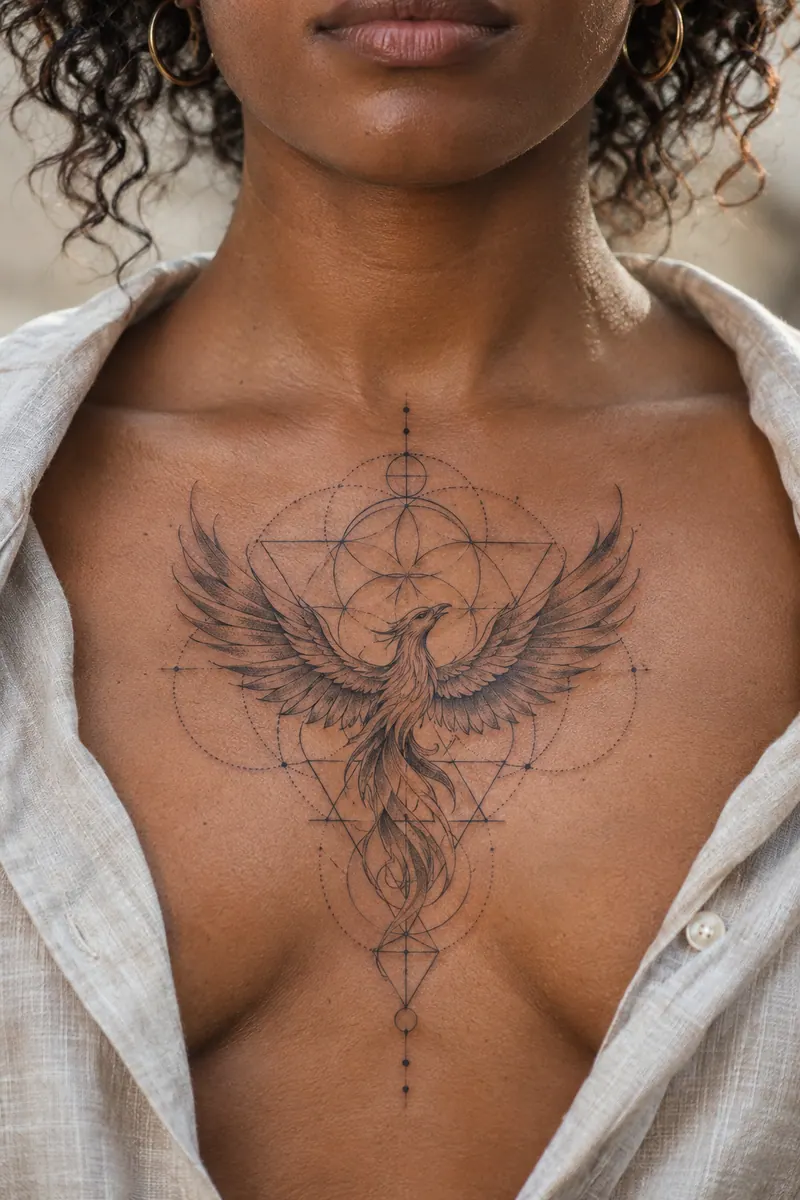
- Sacred geometry. A geometric chest piece where the bird is built from circles, lines and triangles.
Composition: wings, tail and flames
A phoenix has three elements that compete for space, and good designs choose which one leads:
- Wings make the tattoo wide and symmetrical, ideal for the back, chest or across the collarbones.
- The tail makes it long and flowing, ideal for the forearm, spine, ribs or a vertical thigh piece.
- Flames add movement and color. In black-and-grey or blackwork, use contrast and negative space to suggest fire instead of color.
Think about direction too. A phoenix flying upward reads as rising and hopeful, which is why most designs point the head toward the shoulder or the neck.
Where to place a phoenix tattoo
- Shoulder and upper back: a phoenix with spread wings can sweep over the shoulder blade or across both shoulders.
- Forearm: best for a vertical bird with a long tail, or a smaller phoenix with a word.
- Thigh and ribs: room for flames, flowers and a full tail.
- Sleeve: a phoenix can wrap the arm, possibly opposite a dragon on the other arm or shoulder.
Feather detail and fine flames are the first things to blur when a design is squeezed. Give detailed phoenixes room, or choose a simpler outline style for small placements.
Taking it to your artist
Your phoenix tells a personal story, so let the details carry it: the flowers of a birth month, the colors of a place, a date hidden in the flames. Describe it in InkForge, use Magic Idea if you want suggestions for what to add, and compare versions in different styles before you settle on one to bring to your artist.