InkForge
What defines blackwork
Blackwork is a style defined by its ink: only black, used boldly. Where other black-and-grey styles build soft gradients, blackwork leans on solid fills, crisp silhouettes and the contrast between saturated black and bare skin. Light areas are often created by leaving skin untouched — negative space — rather than by shading.
Blackwork is a broad family more than a single look. It includes illustrative pieces with heavy black shadows, ornamental and pattern work, graphic silhouettes, and large solid areas sometimes called “blackout” work.
Where the style comes from
Dense black tattooing is among the oldest forms of the craft; many cultures around the world developed tattoo traditions in black pigment, each with its own meaning and rules. Modern Western blackwork is something different: a contemporary style that grew especially in the 2000s and 2010s, influenced by woodcuts, engraving, graphic design and ornamental art. When you draw on a specific cultural tradition, learn about its significance rather than treating it as pure decoration.
Visual characteristics
- Solid black fills instead of tonal shading.
- High contrast between black areas and untouched skin.
- Silhouettes and negative space that create shapes inside shapes.
- Graphic, often symmetrical compositions.
- No color, and usually little or no grey wash.
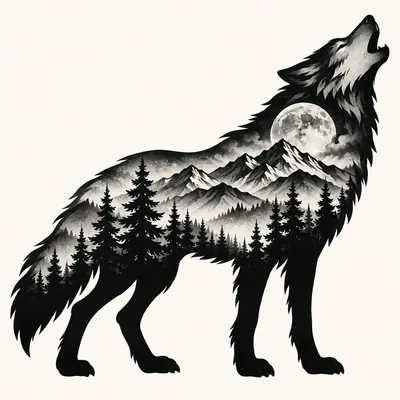
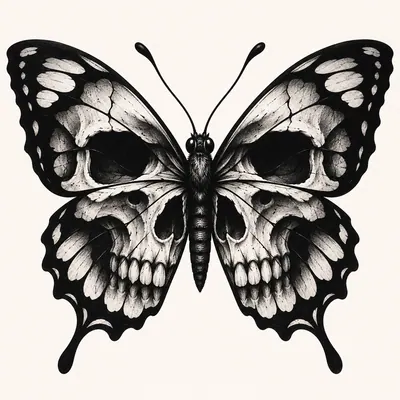
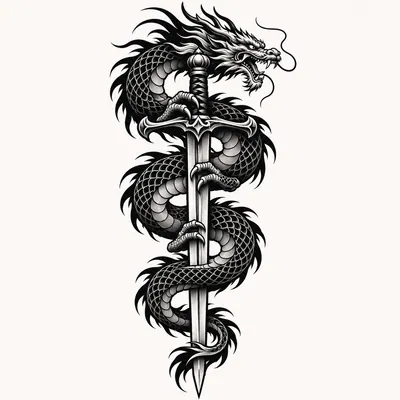
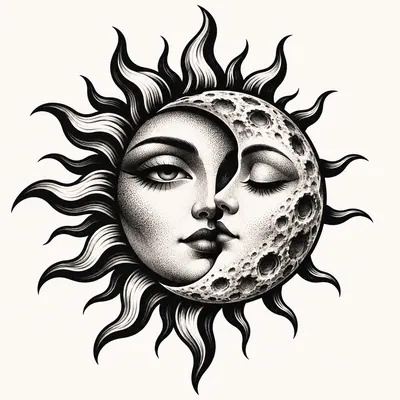
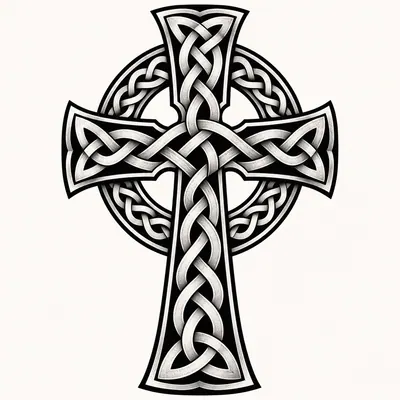
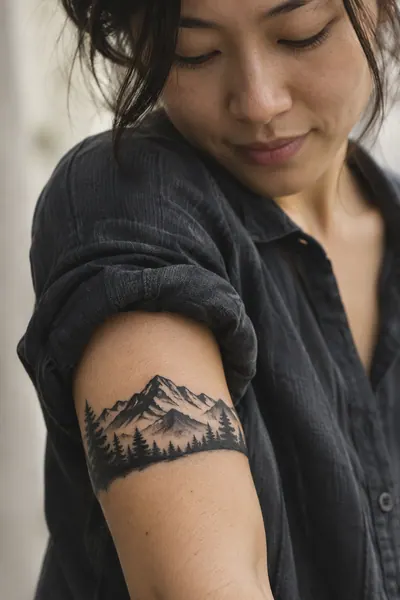
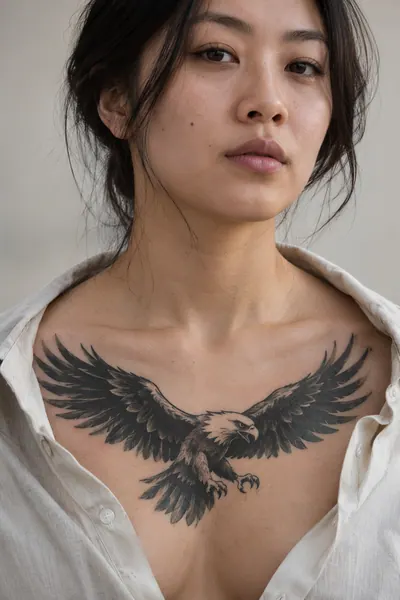
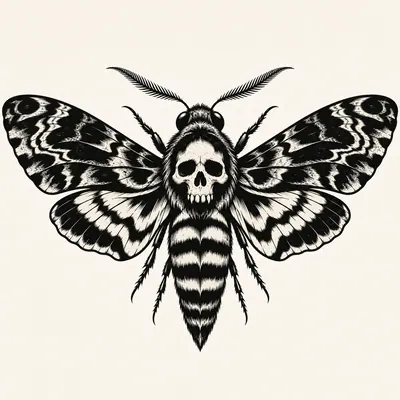
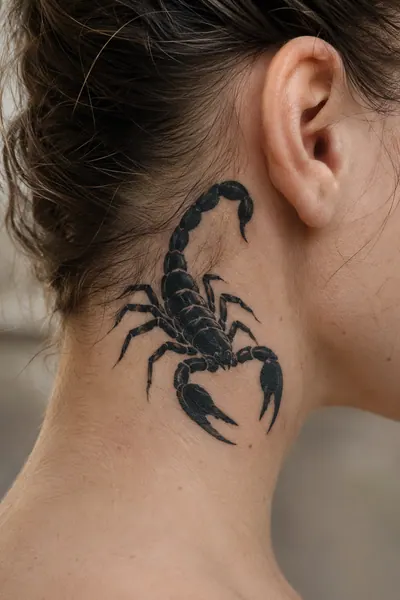
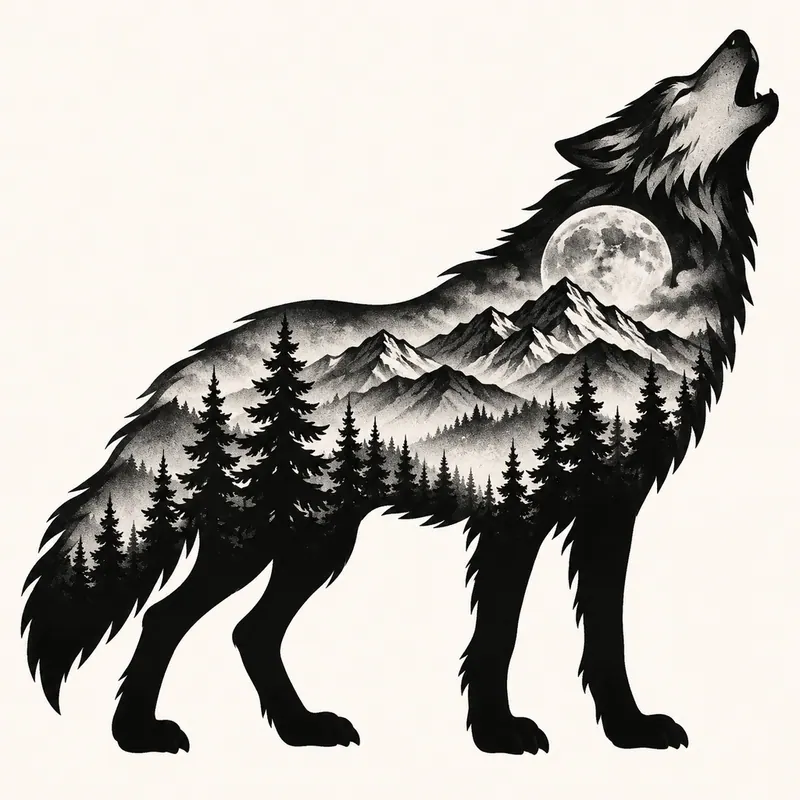
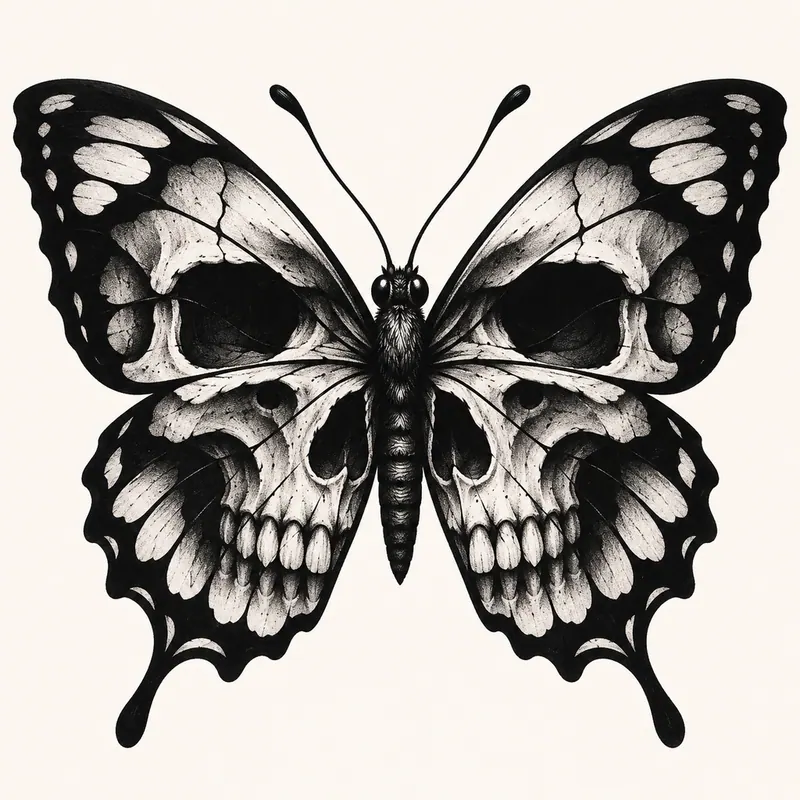
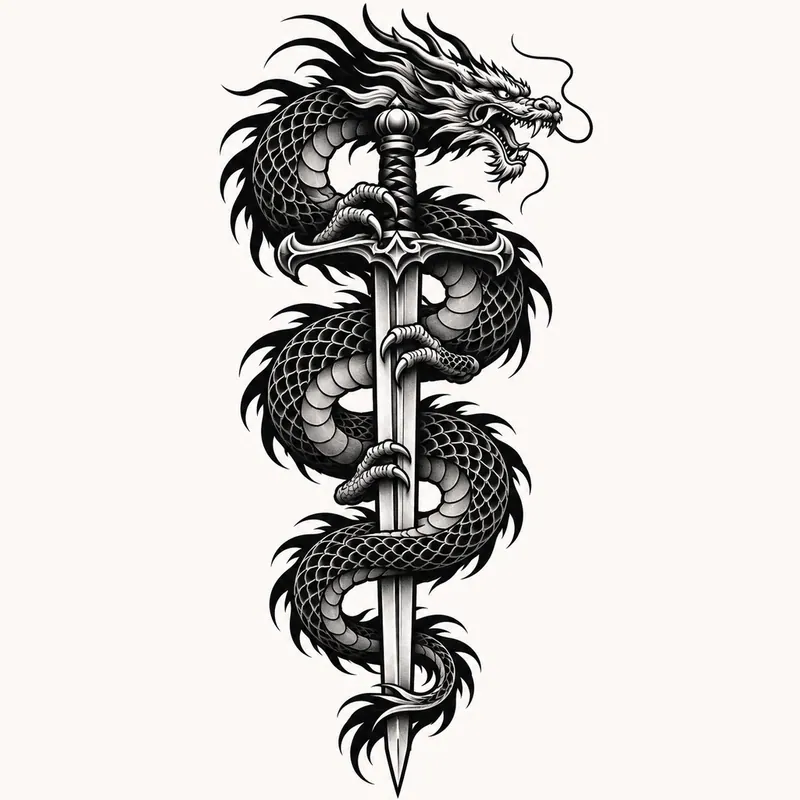
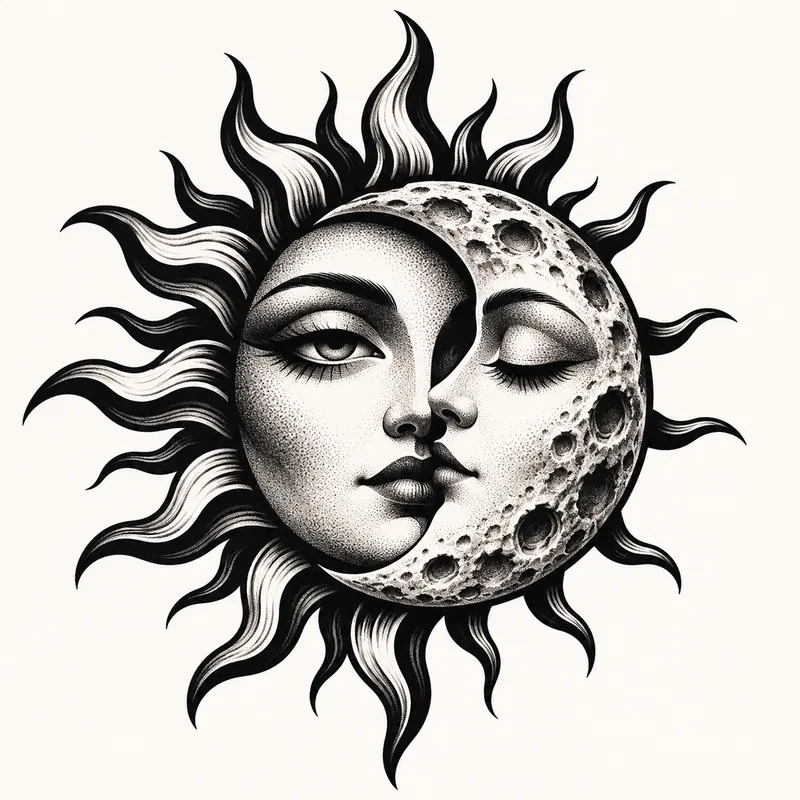
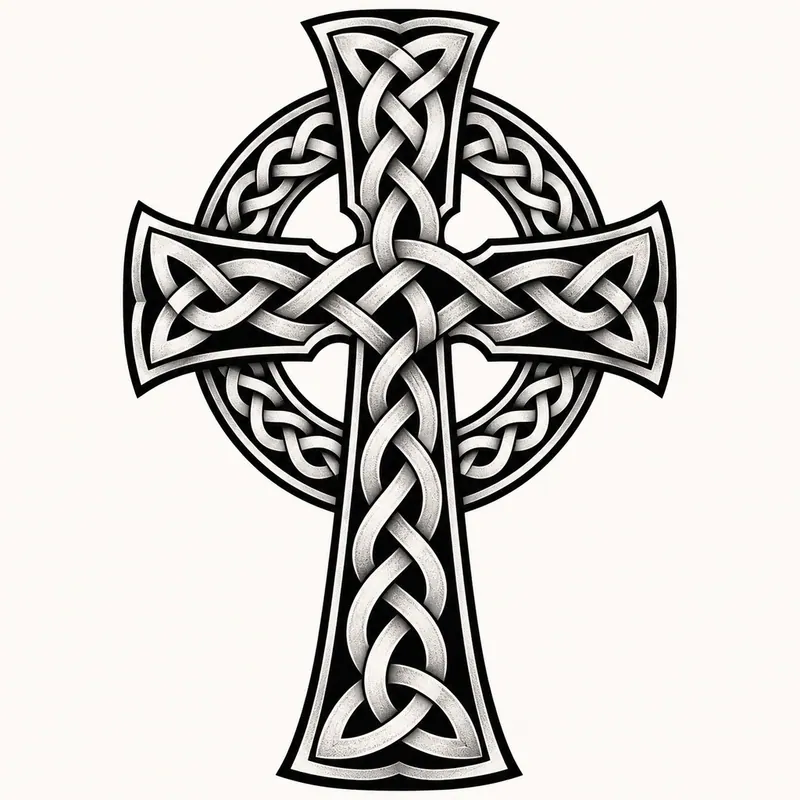
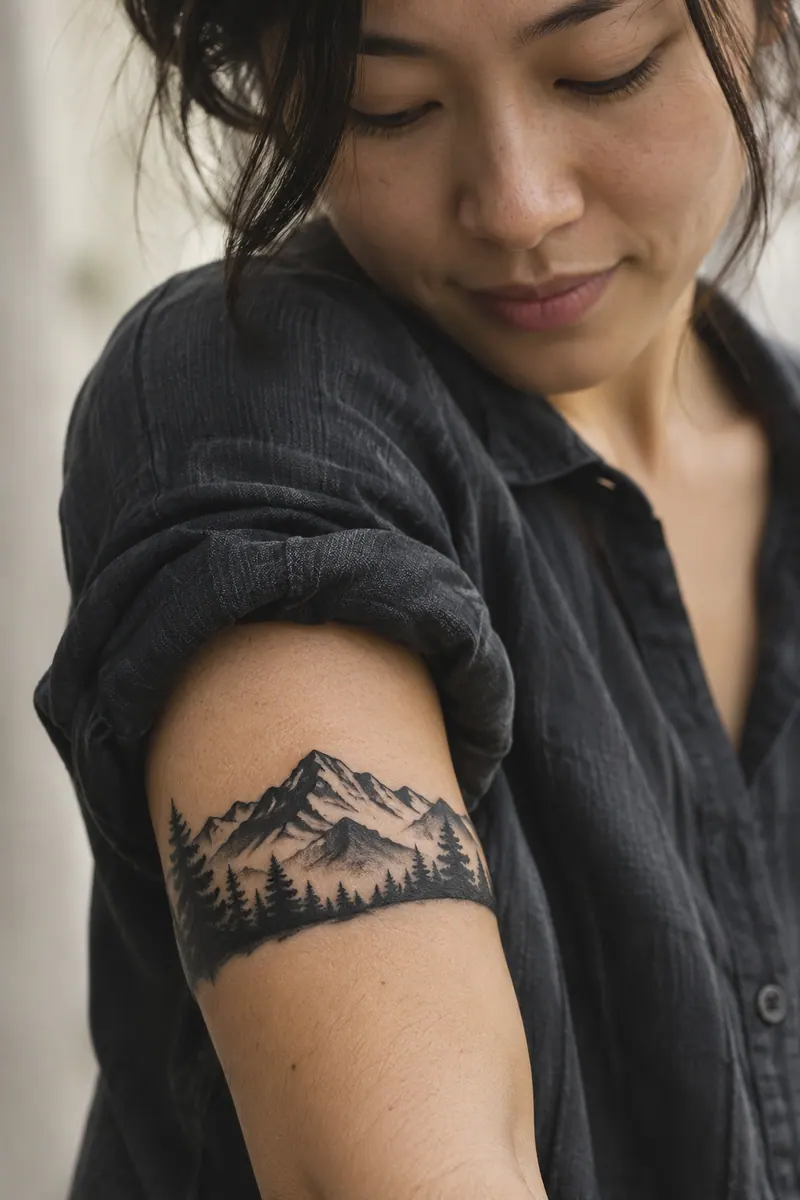
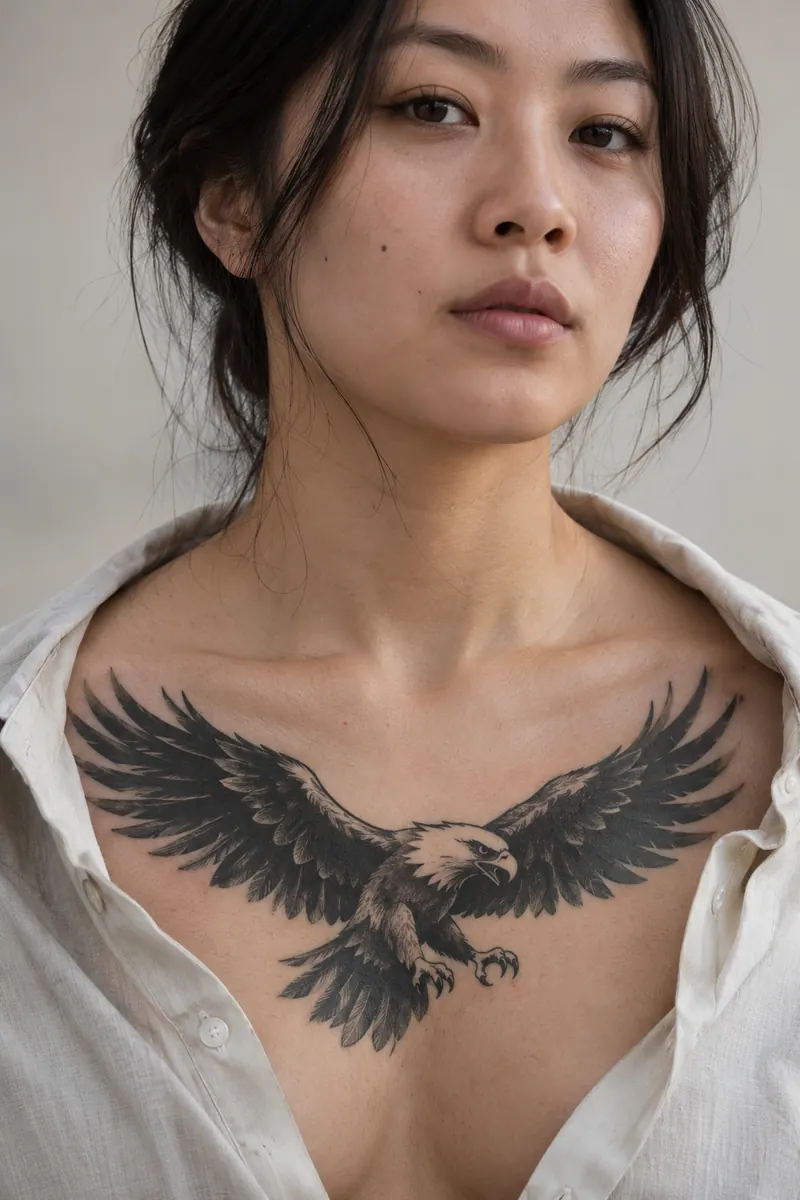
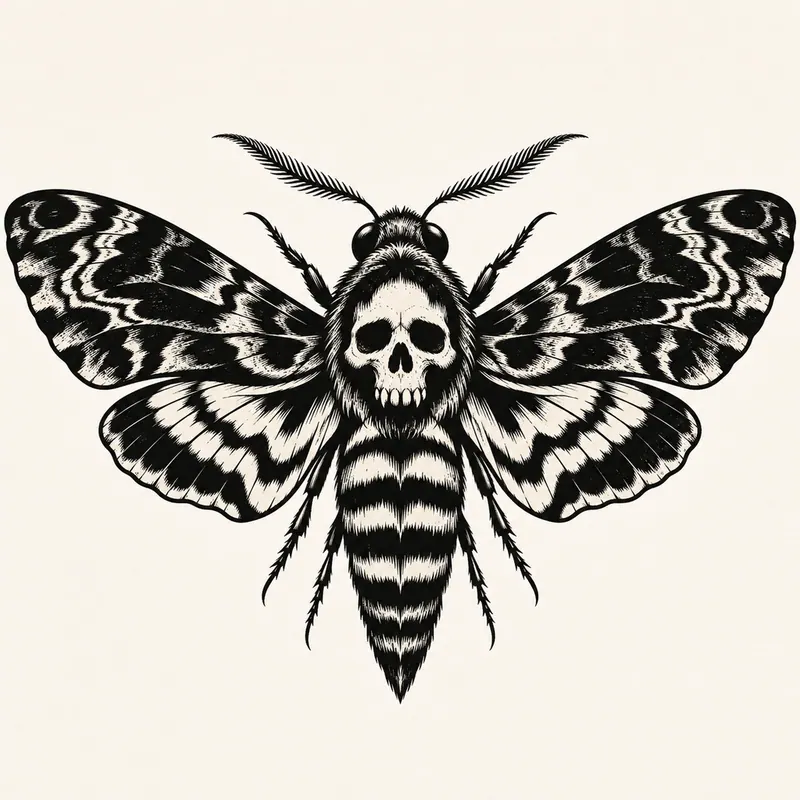
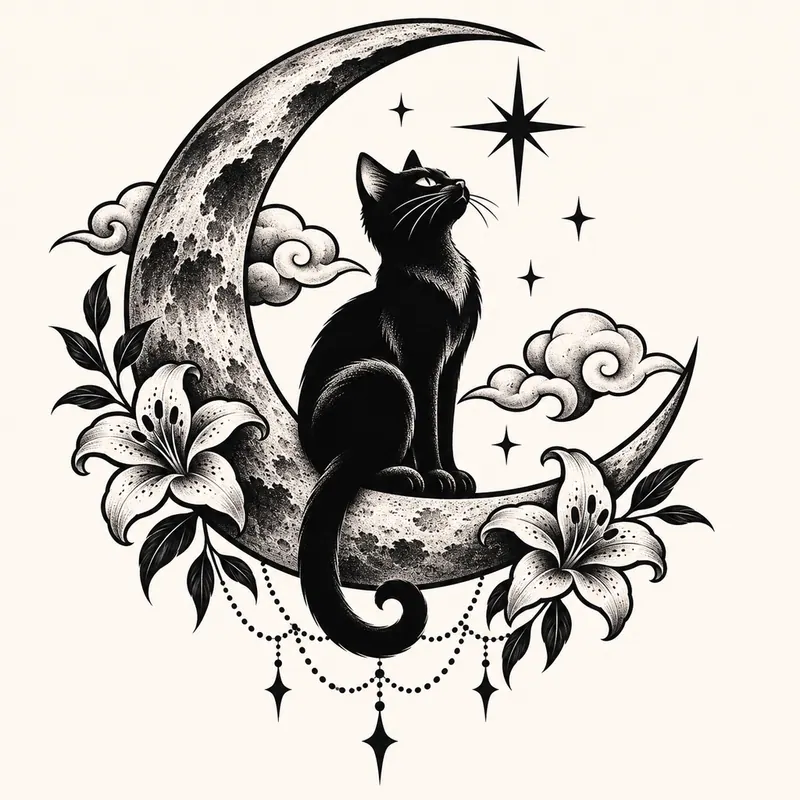
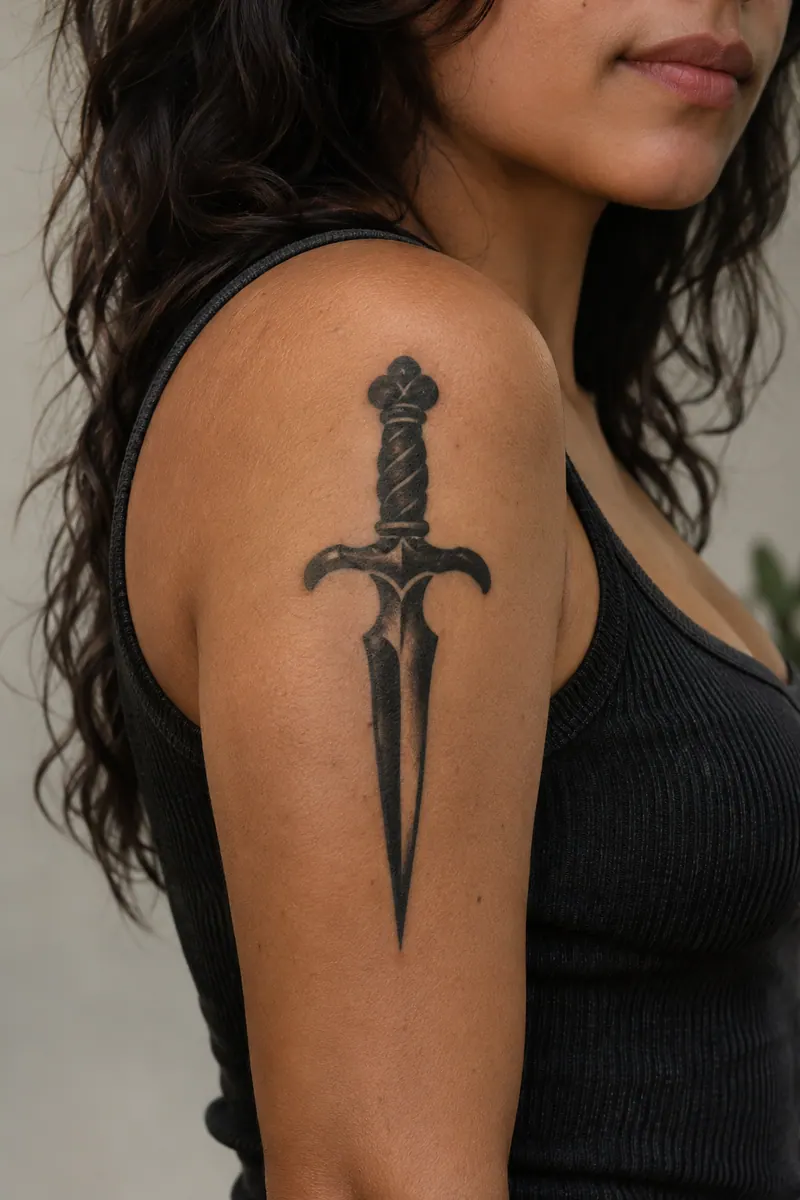
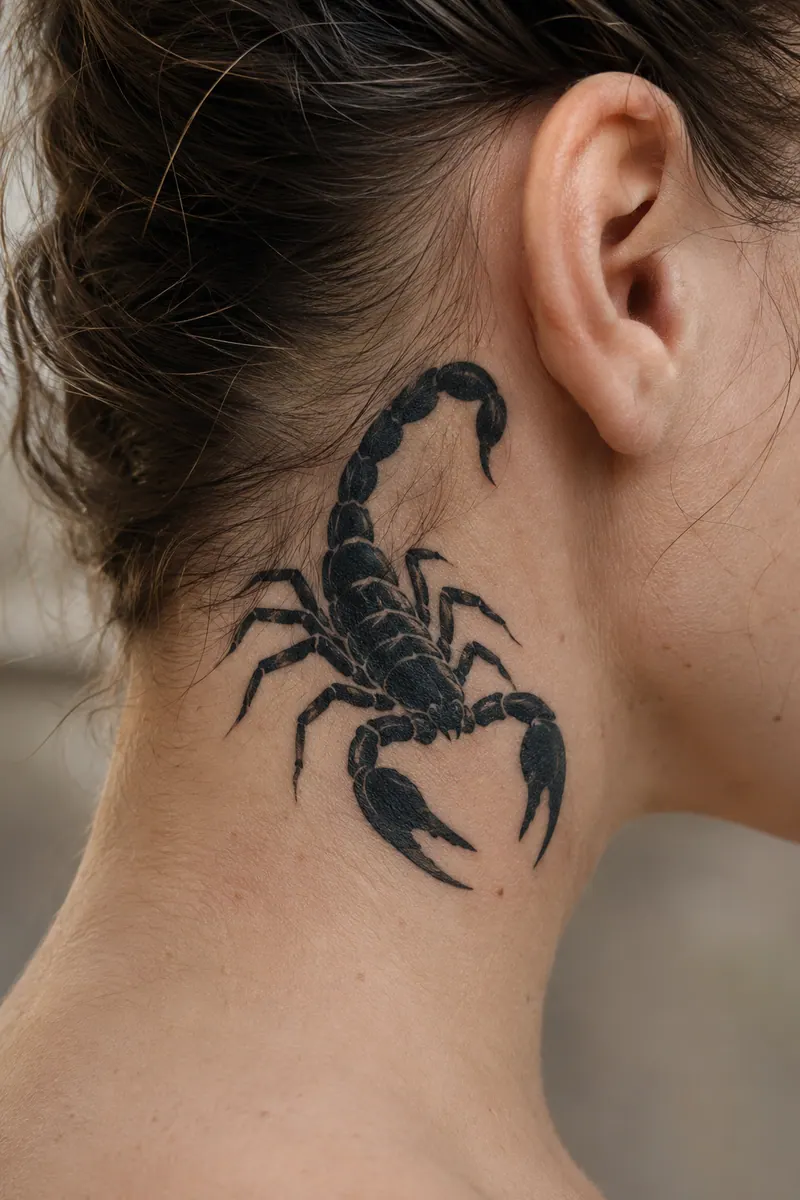
The gallery above shows how varied the style can be: a wolf silhouette with a pine forest inside its body, a dragon wrapped around a sword and a black cat sitting on a crescent moon on the forearm, a death’s-head moth, a butterfly with a skull pattern on its wings, a sun and moon combined into one face and an eagle with spread wings on the chest, a celtic knot cross and a bold dagger on the upper arm, a band of mountains and pine trees around the forearm, and a scorpion on the neck.
How blackwork ages
Black is generally considered the most stable tattoo pigment, so blackwork is usually among the longest-lasting styles. A few points to plan for:
- Slight spread. Black areas soften and spread a little over the years. Keep the gaps of bare skin inside a design wide enough that they won’t close up.
- Even saturation. Solid fills should heal evenly dark; patchy fills may need a touch-up session after healing.
- Healing. Large solid areas can be tender and may take a little longer to settle. Follow your artist’s aftercare closely.
- Sun. Even black fades to a softer tone with lots of UV exposure, so sunscreen still matters.
Best subjects and placements for blackwork
Blackwork suits subjects with a strong, recognizable outline: moths and butterflies, birds of prey like eagles, daggers, snakes, cats, scorpions, and landscapes that can become silhouettes, such as mountains and forests. Symmetrical subjects like a moth or a sun-and-moon face are especially striking.
On the body, blackwork works almost anywhere:
- Chest — symmetrical pieces like moths, eagles and butterflies.
- Forearm — bands, wraparounds and vertical silhouettes.
- Upper arm and calf — bold standalone pieces.
- Neck — small, high-contrast designs that read instantly.
Because black contrasts with every skin tone, blackwork is a strong option across a wide range of complexions.
Blackwork vs. neighboring styles
- vs. tribal. Modern tribal is a specific set of flowing, pointed black shapes; blackwork is the broader approach and often includes illustration.
- vs. dotwork. Dotwork builds tone with dots; blackwork builds it with solid fills. The two are frequently combined, with stippled gradients softening the edges of solid black.
- vs. fine line. Fine line is delicate and light; blackwork is heavy and graphic. Both are black, but they sit at opposite ends of the scale.
Choosing a blackwork artist
Look for even, saturated fills in healed photos — no patchiness or grey spots — and clean, sharp edges where black meets skin. If you want a cover-up, ask to see previous cover-up work. A good blackwork artist will also design with the gradual spread of black in mind, keeping negative space generous.
Before your consultation
Blackwork depends on silhouette, so testing the shape matters. In InkForge you can generate your idea in Blackwork in black and white and compare it with a dotwork or illustrative version. Then use Try-On to place it on a photo of your chest or forearm and adjust the size and position, so you can judge how heavy the black will feel on your body.