 InkForge

Why people choose the ankle
The ankle is one of the most popular spots for a small tattoo, and for good reason. It is easy to show with sneakers, sandals or cropped pants, and just as easy to hide with socks or boots. That makes it a low-pressure choice for a first tattoo or a meaningful symbol you don’t need everyone to see.
Ankle tattoos also have a light, playful feel. Small motifs here look a bit like jewelry, and the placement naturally pairs with a matching design on the other ankle or a connected piece on the calf.
Inner, outer and wraparound
Where exactly on the ankle you place a tattoo changes how it looks and how it ages.
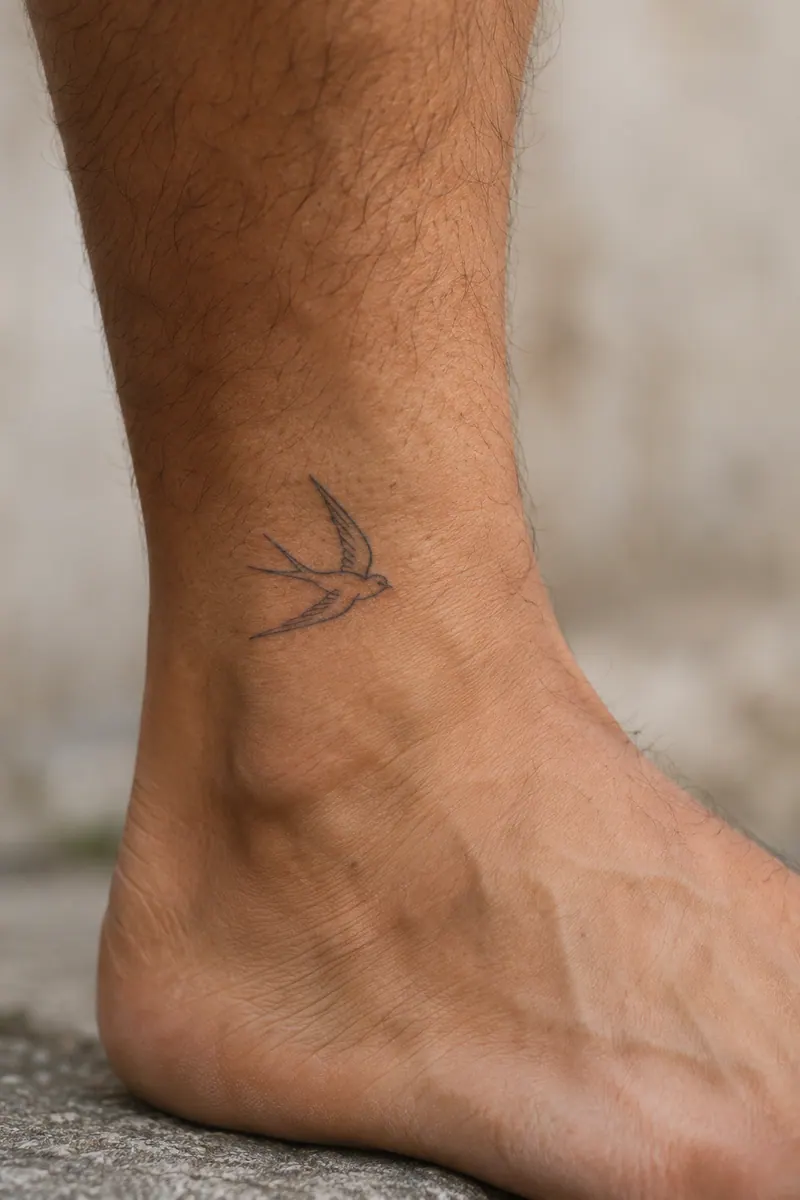
Outer ankle. The most common choice. It faces outward, so others see it when you walk or sit. It suits designs with a clear front view, such as a sun, a swallow or a short word.
Inner ankle. More private and seen mostly from your own point of view. It is a nice spot for something personal. It is also closer to the opposite foot, so it can catch a little more friction when you walk.
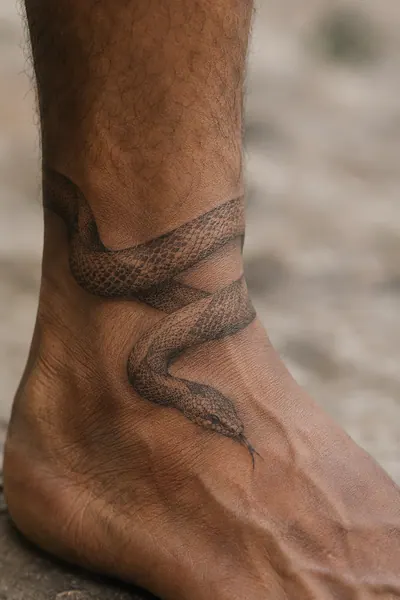
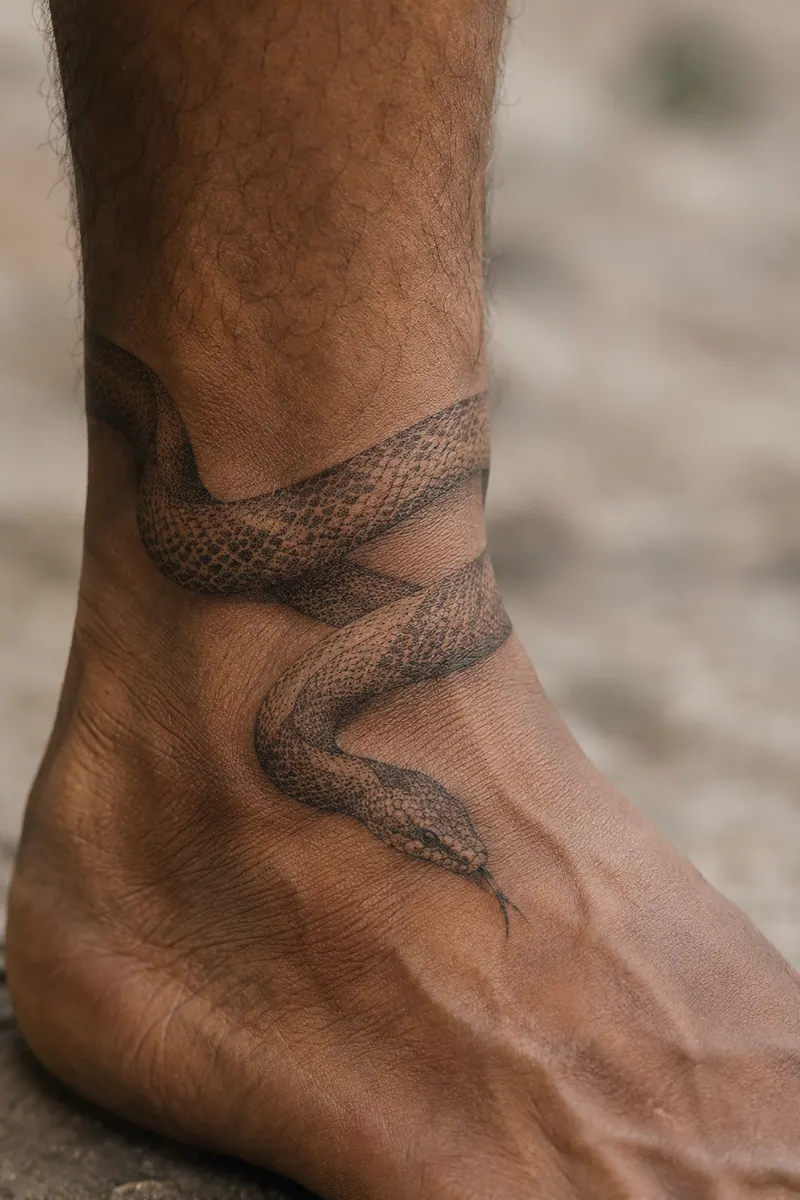
Wraparound and anklet designs. A snake coiling around the ankle, a ring of tiny butterflies or a band of waves circles the joint like a bracelet. These look striking from every angle but need more planning, because the ankle is not a perfect cylinder.
Just above the ankle bone. Slightly higher on the lower leg, the skin is flatter and moves less. If you want fine line work to stay sharp, many artists prefer this area to the top of the foot.
Do ankle tattoos hurt?
Ankle tattoos are known for stinging more than their size suggests. The skin is thin and there is little padding over the bone, so for most people it is in the moderate-to-high range. The most sensitive points are usually:
- The ankle bone itself.
- The Achilles tendon at the back.
- The top of the foot, if the design extends downward.
Because ankle tattoos are usually small, sessions are short. Many people find that the intensity is very bearable for the time it takes.
Designs and sizes that fit the ankle
Design ideas
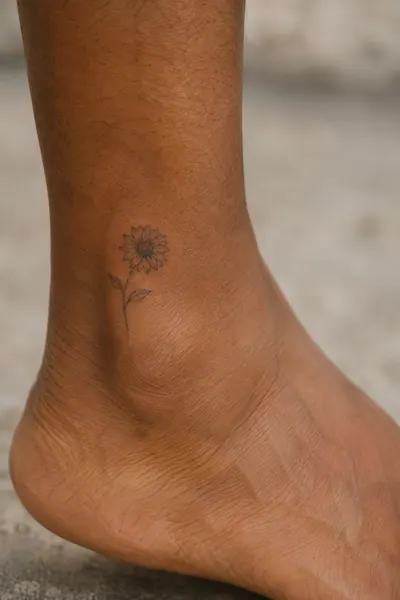
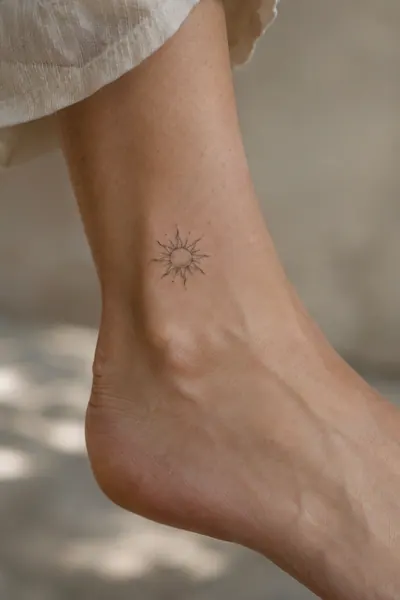
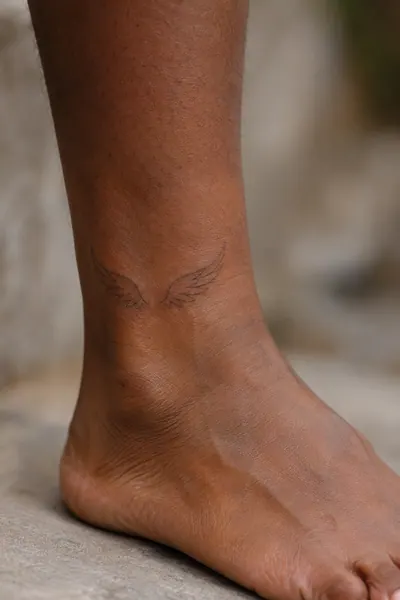
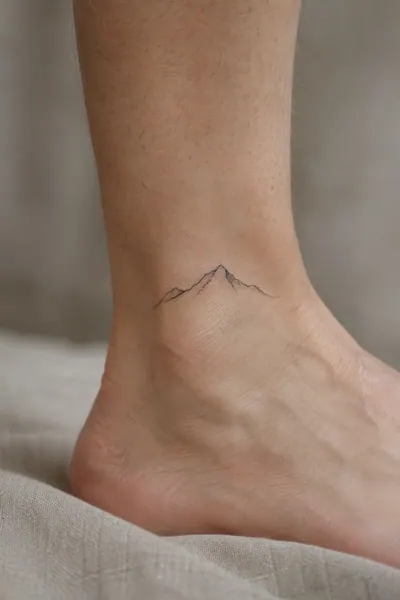
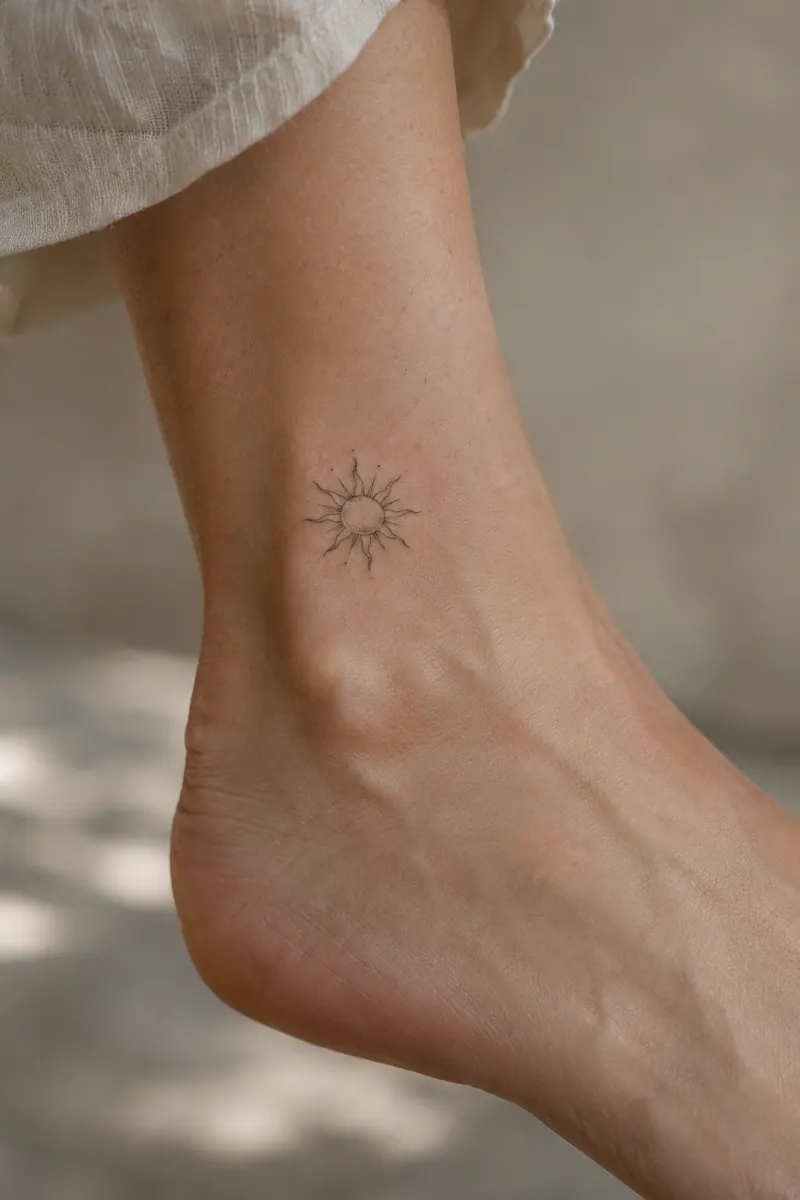
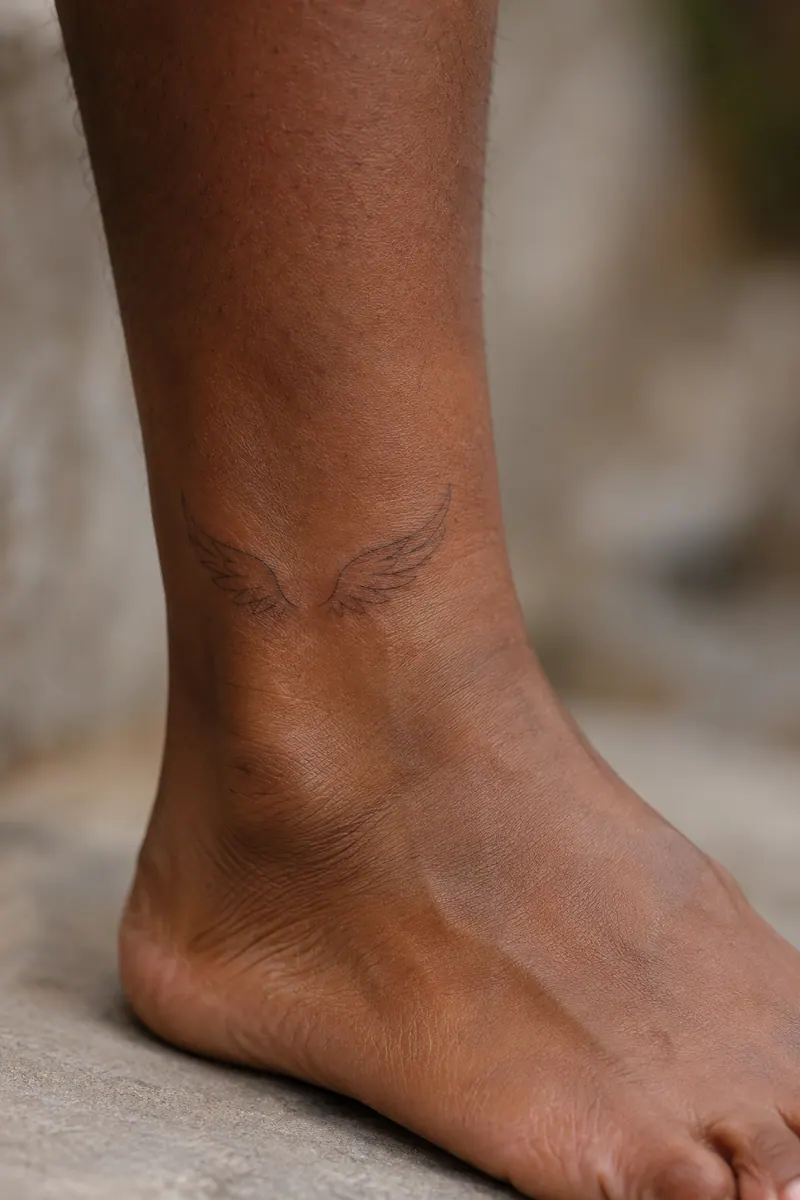
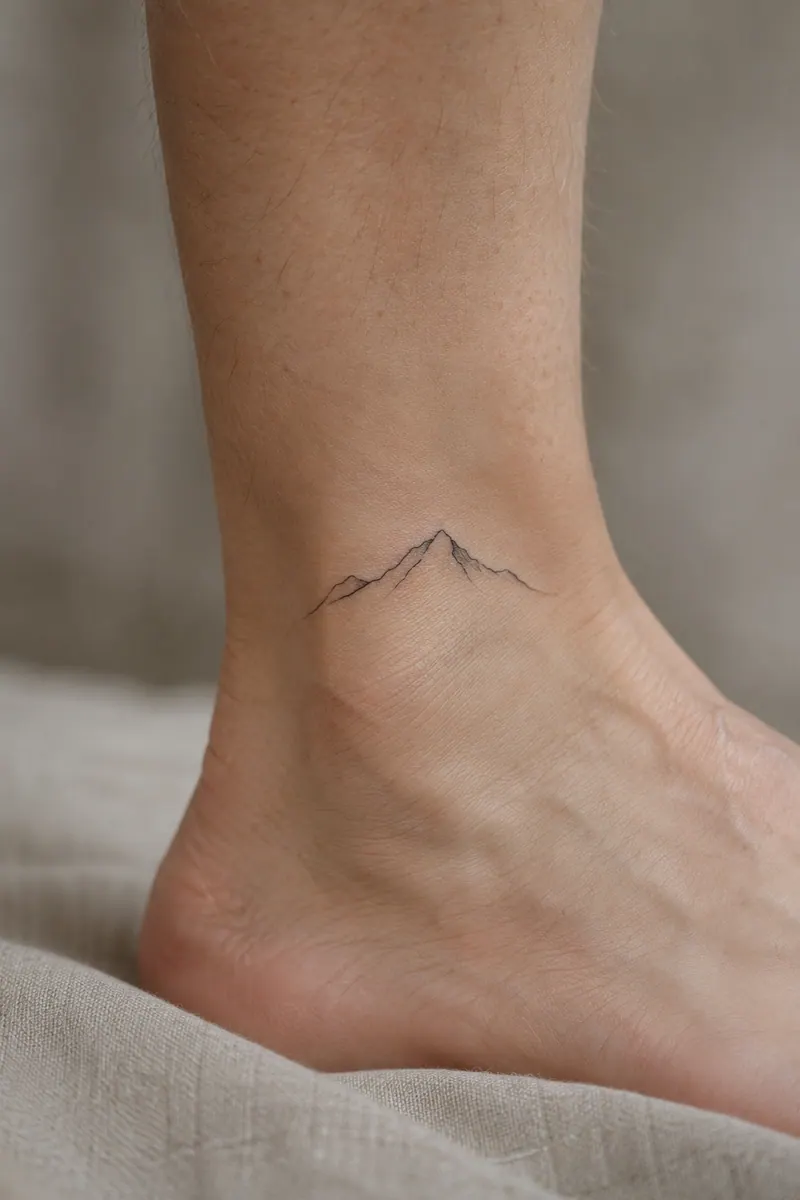
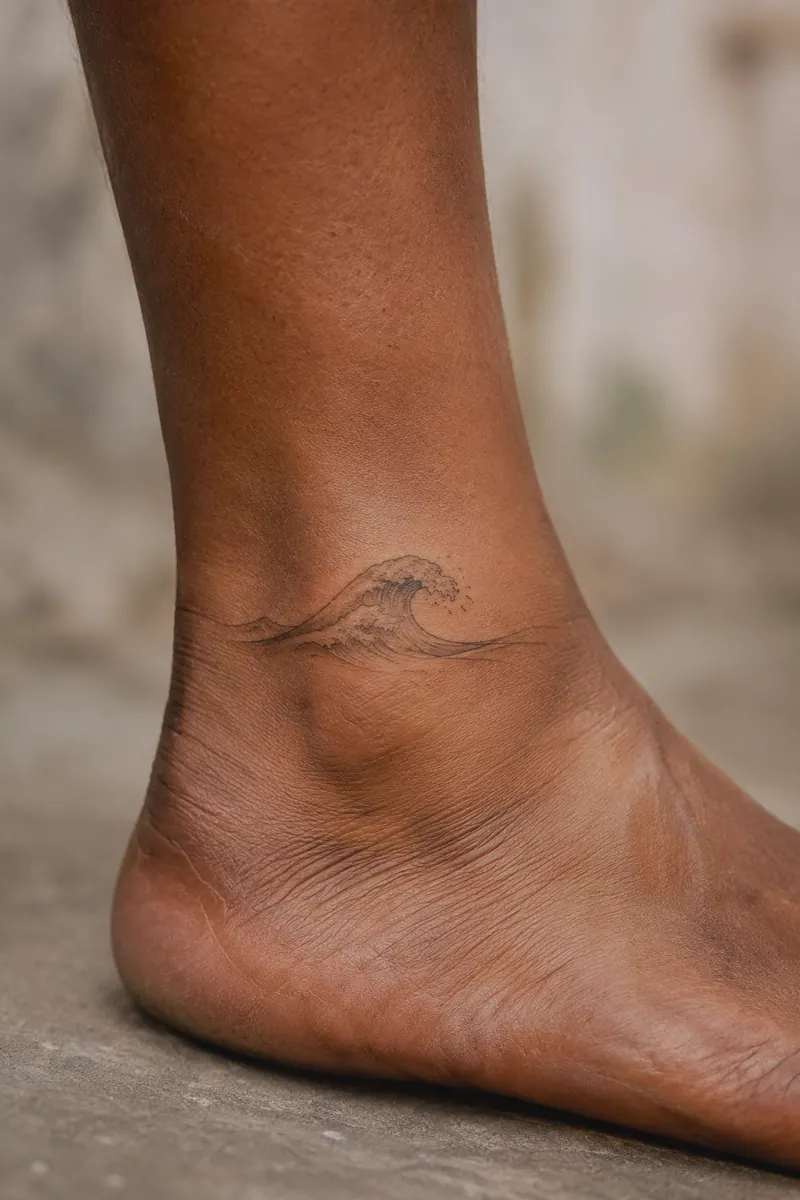
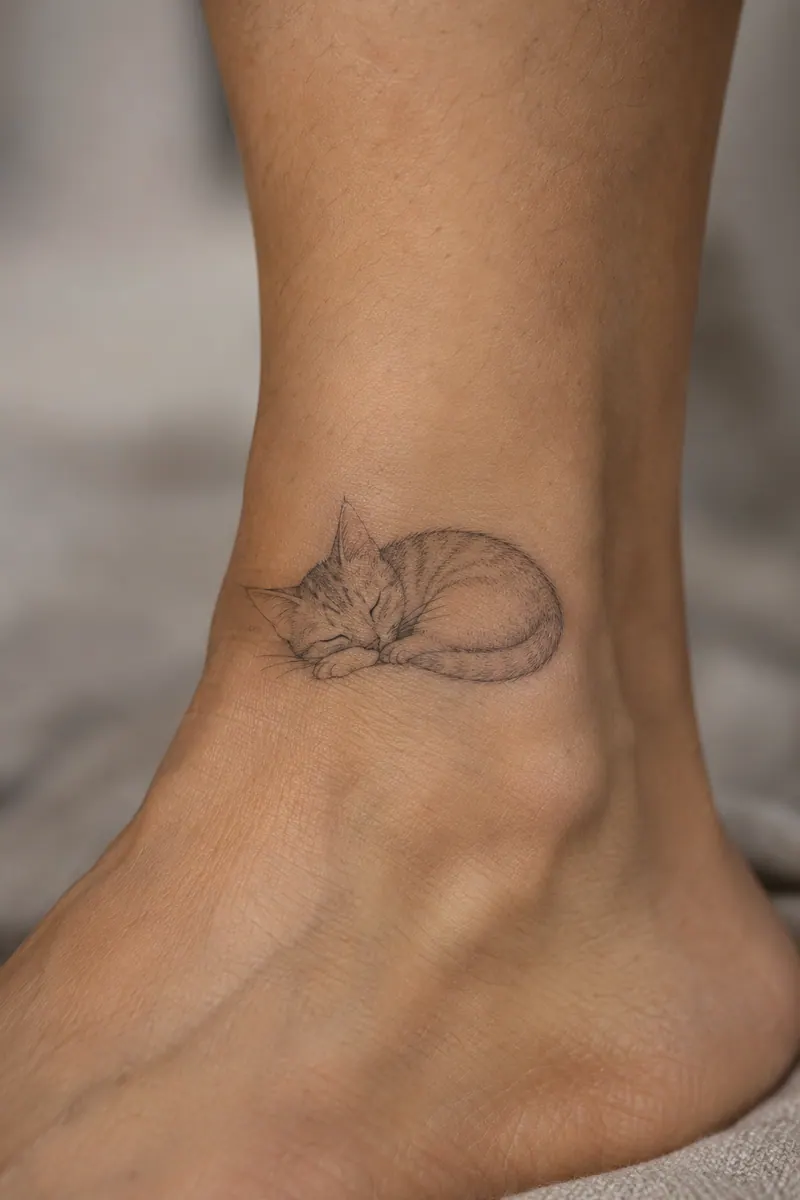
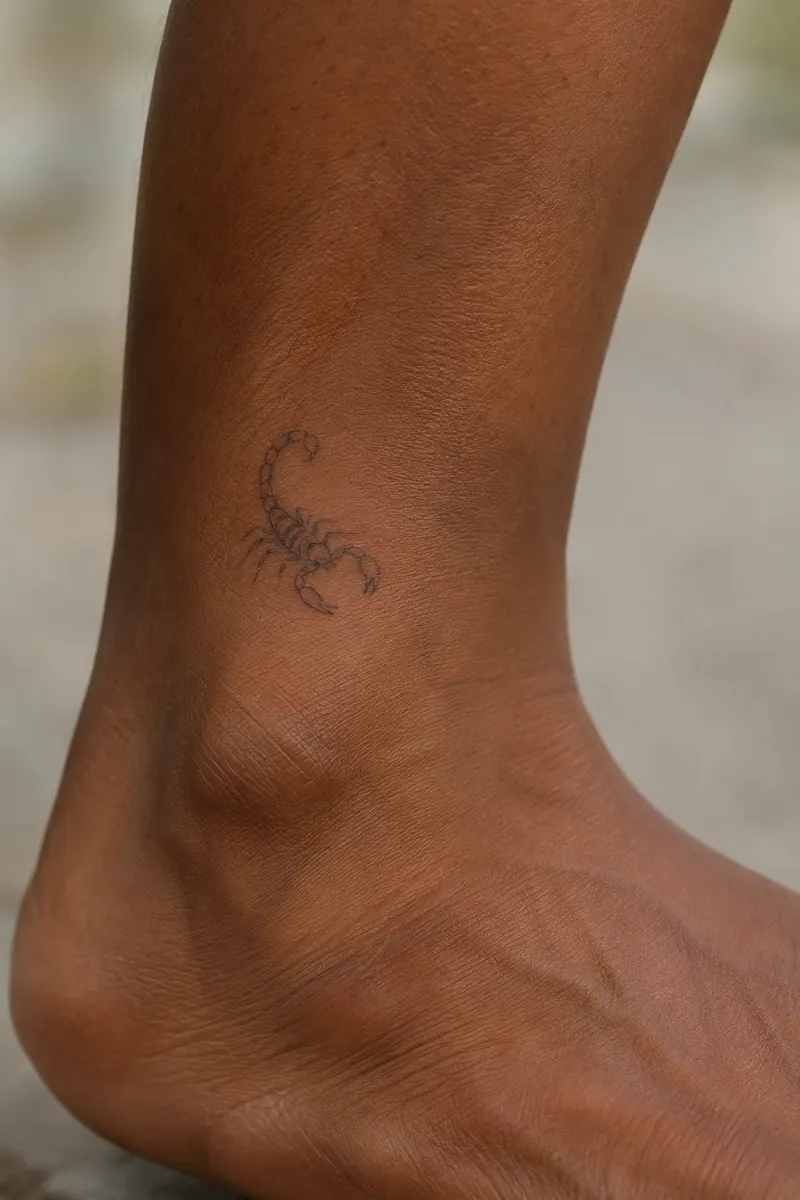
Small and simple is the rule. The gallery above shows how much variety fits in a tiny space:
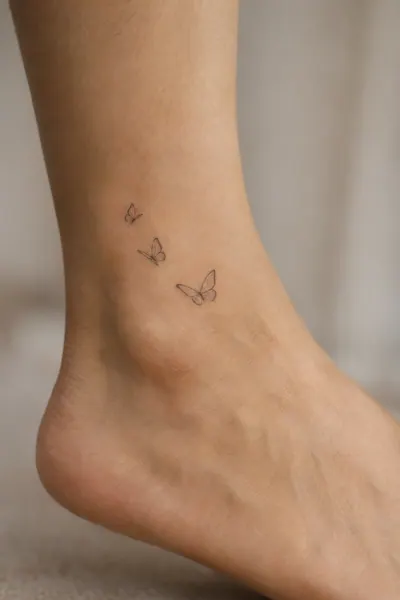
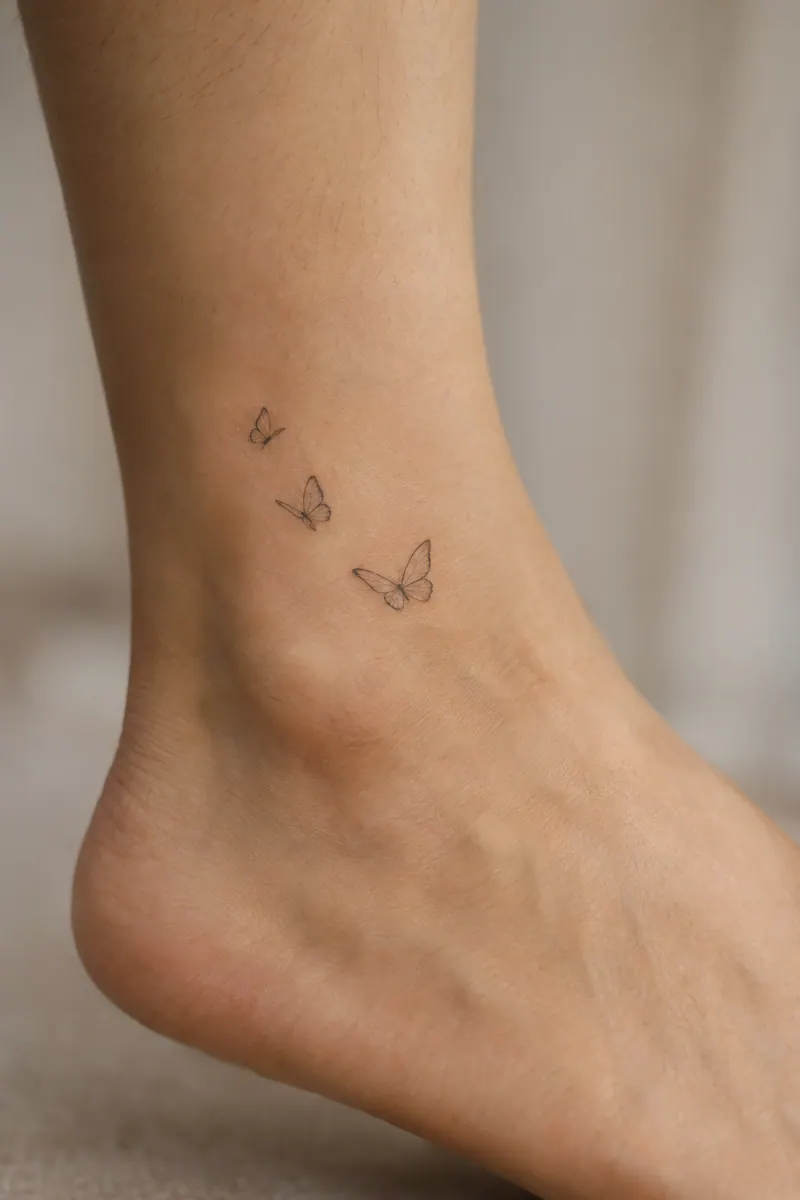
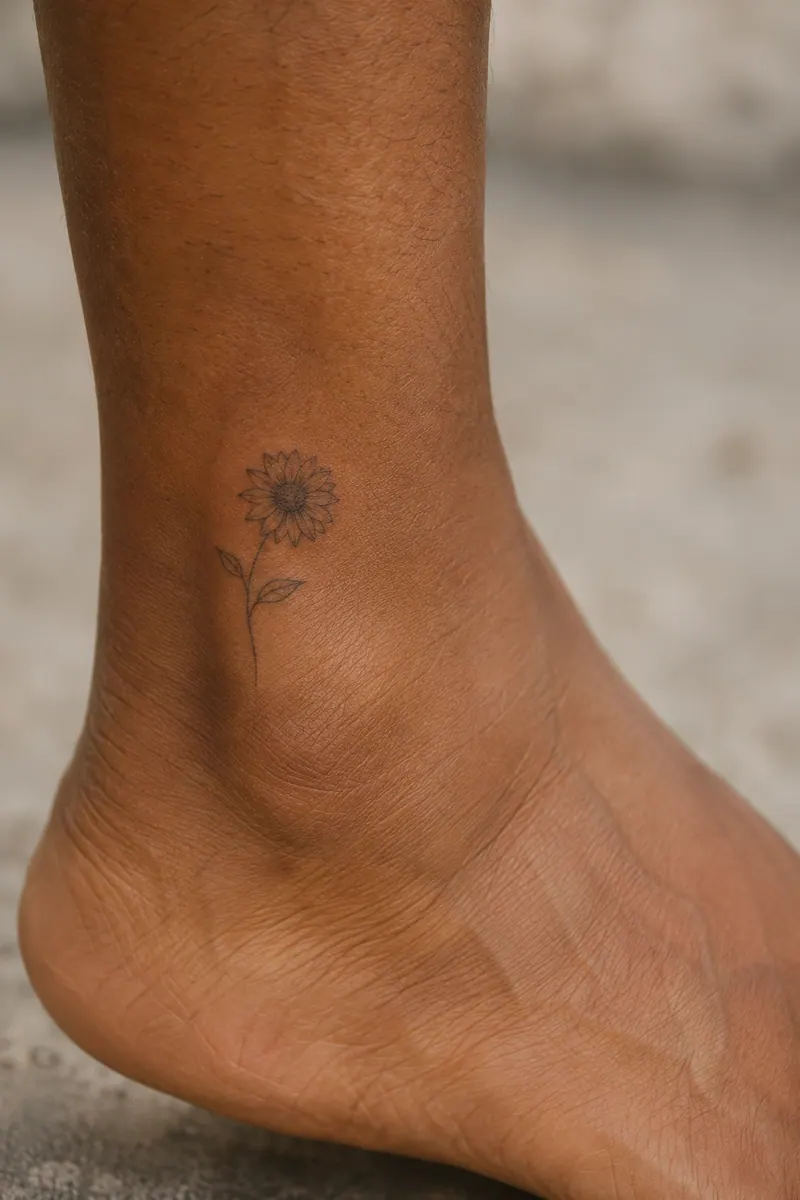
- Minimalist symbols. Minimalist sunflowers, mountains, a swallow, small wings and three butterflies in flight keep clean outlines that stay readable over time.
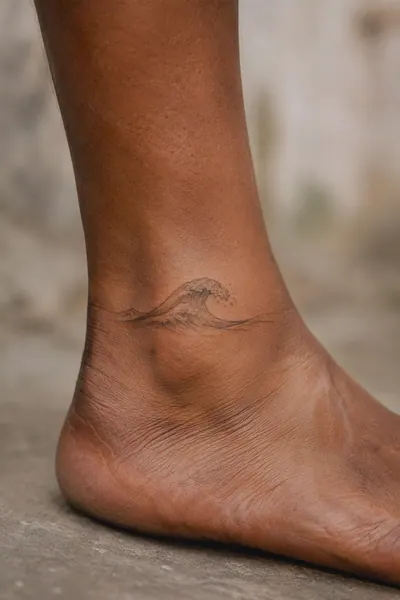
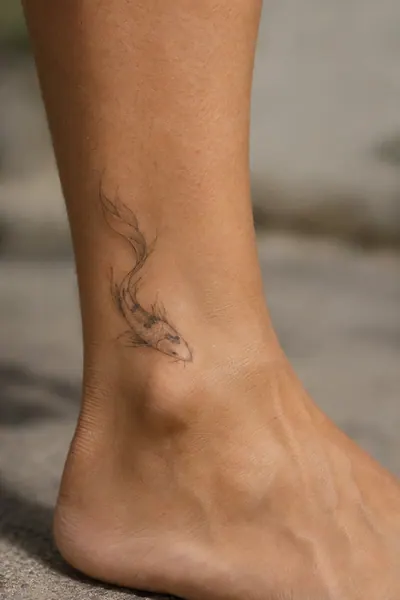
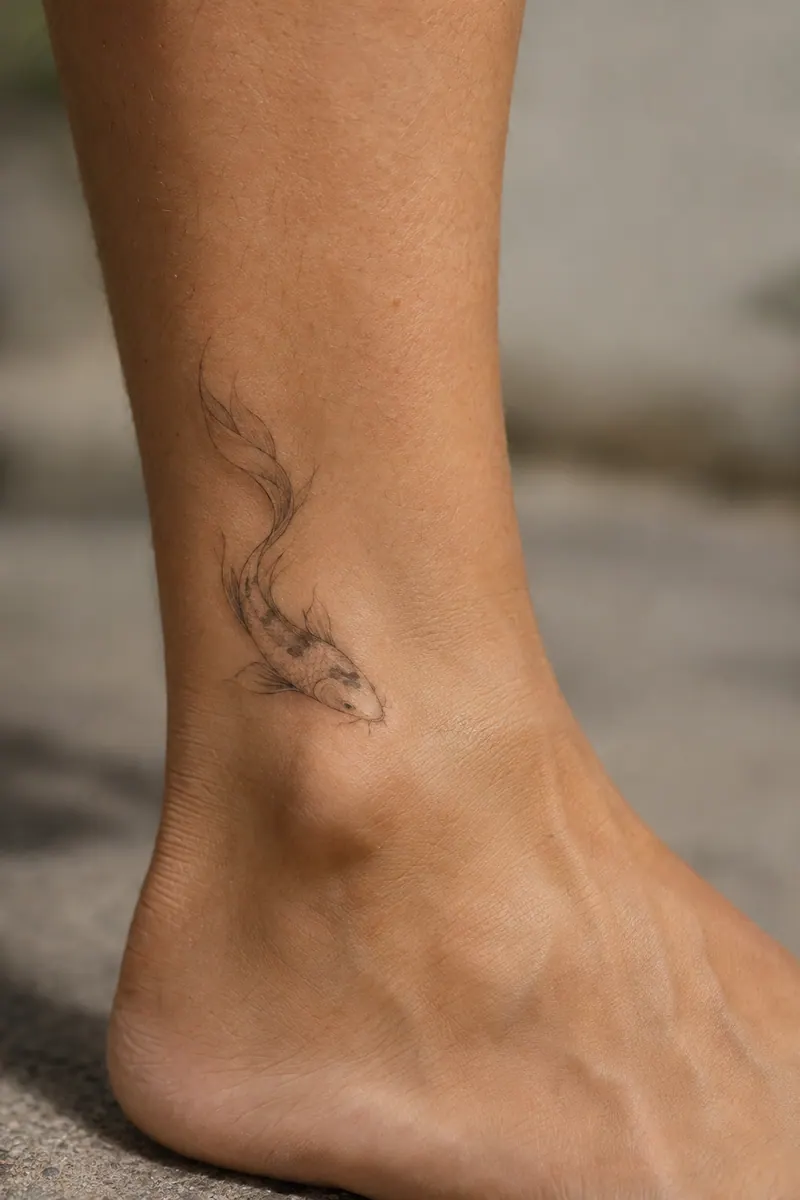
- Delicate fine line. A tiny sun, a small koi, a sleeping cat or a small wave in fine line feels soft and personal. Keep the details open so the lines don’t crowd each other.
- Lettering. A small wave with the word “Breathe” shows how a short word or name can follow the line of the ankle.
- Wraparound pieces. A dotwork snake coiling around the ankle uses stippled shading to wrap the joint and works from every angle.
- Tiny scorpions and other simple silhouettes hold up well, because their shape stays recognizable even as lines soften.
Size and shape
The ankle has limited flat space. Most designs here are a few centimeters across. Vertical shapes fit above the ankle bone, round ones sit beside it, and bands circle the joint. Avoid packing in fine details: on thin, high-friction skin, lines that sit very close together can blur together over the years. If your idea has a lot going on, either simplify it or move it a little higher up the leg.
Healing and aftercare on the ankle
The lower leg often swells more than other areas after a tattoo, and the ankle is constantly in shoes and socks. Always follow your artist’s aftercare, and plan around these points:
- Footwear. Tight shoes, boots and shoe edges can press on a fresh tattoo. Loose or open shoes are often easier while it heals.
- Socks. Choose soft, clean socks without tight elastic over the design.
- Swelling. Some swelling around the ankle is common. Many artists suggest resting with the leg raised and avoiding long periods on your feet for the first days.
- Water and dirt. Ankles pick up dust and splashes easily. Keep the area clean, and avoid soaking it in baths, pools or the sea while it heals.
- Sun. Once healed, sunscreen helps a lot, because ankles are often bare in summer.
On a spot this small, a few millimeters change everything. Photograph the inside and the outside of your ankle separately, then generate a few small designs in InkForge and use Try-On to place each one on both photos, adjusting size, position and rotation by hand. A flat overlay can’t show how a coil or band wraps around the joint, so for wraparound ideas use the two previews to agree on scale and starting point, and let your artist draw the wrap onto your skin.