InkForge
What a lotus tattoo means
Few flowers carry as much meaning as the lotus. It grows rooted in mud at the bottom of ponds, rises through murky water and opens its petals clean above the surface. That simple life cycle is the heart of its symbolism: growth through difficulty, purity, and renewal.
The lotus is sacred in several traditions, and it helps to know them before you wear it:
- Buddhism uses the lotus as a symbol of the mind rising from attachment and confusion toward enlightenment. The Buddha and other figures are often shown seated on or holding a lotus.
- Hinduism links the lotus to divinity, beauty and creation; deities such as Lakshmi and Brahma are frequently depicted with it.
- Ancient Egypt featured the water lily (often called the Egyptian lotus) in art associated with the sun and rebirth.
Because the flower has real religious weight, a lotus tattoo is best approached with some care. On its own it is widely worn and broadly accepted, but take time to learn what it represents, and be cautious about pairing it with images of deities or the Buddha. In some Buddhist communities, placing sacred imagery low on the body, especially on the feet, is seen as disrespectful.
Popular lotus tattoo designs
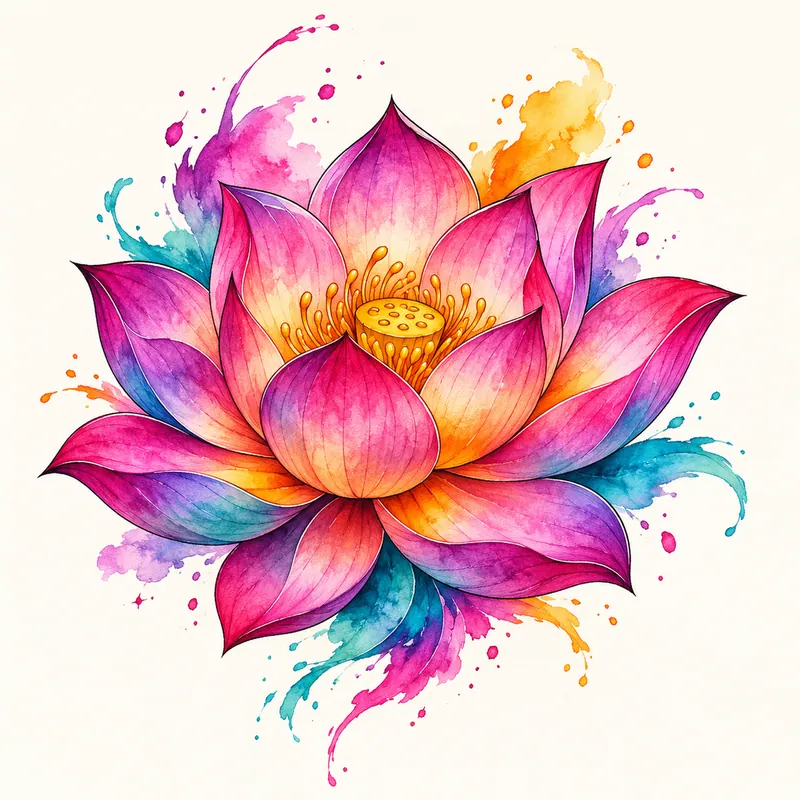
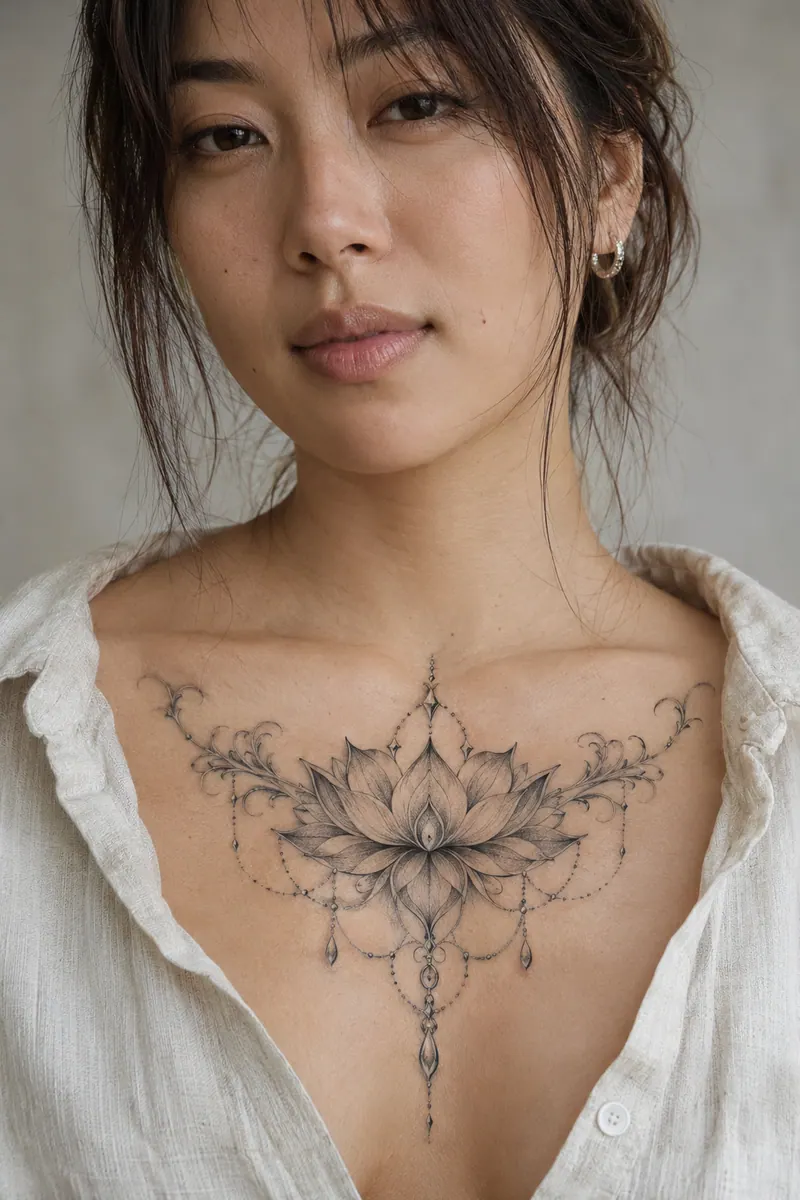
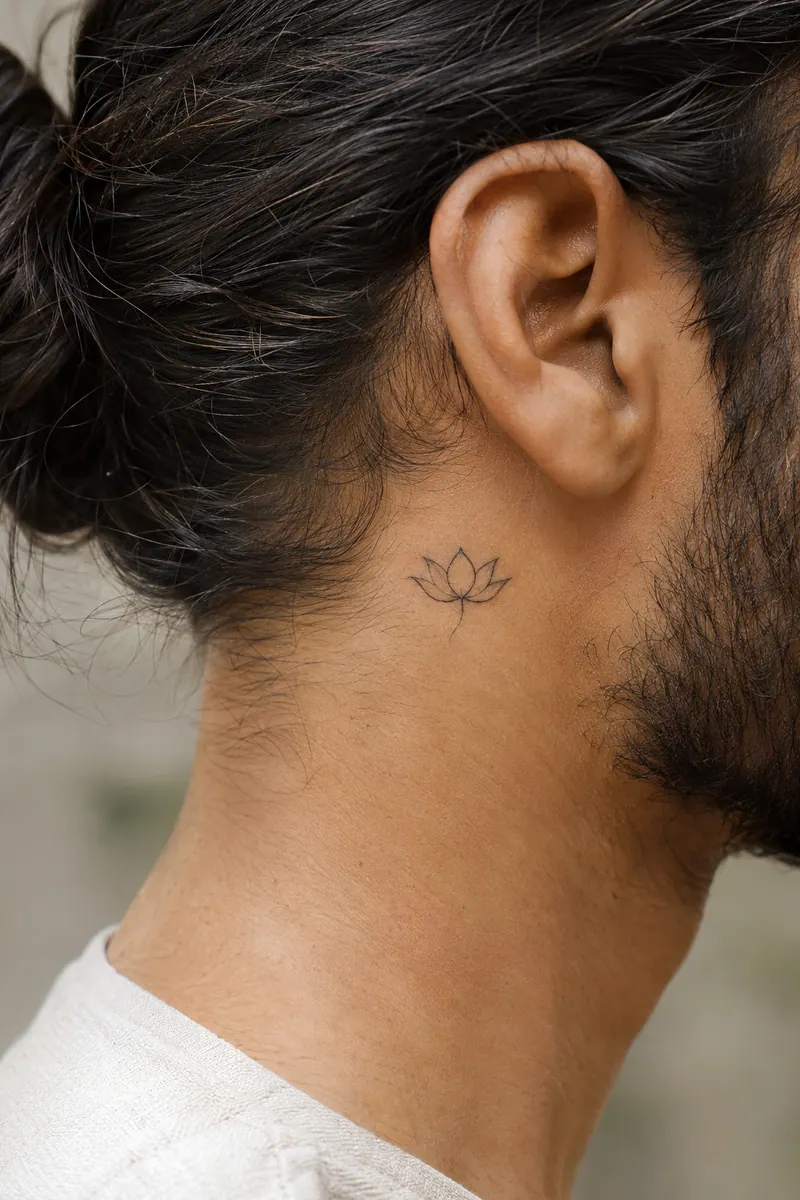
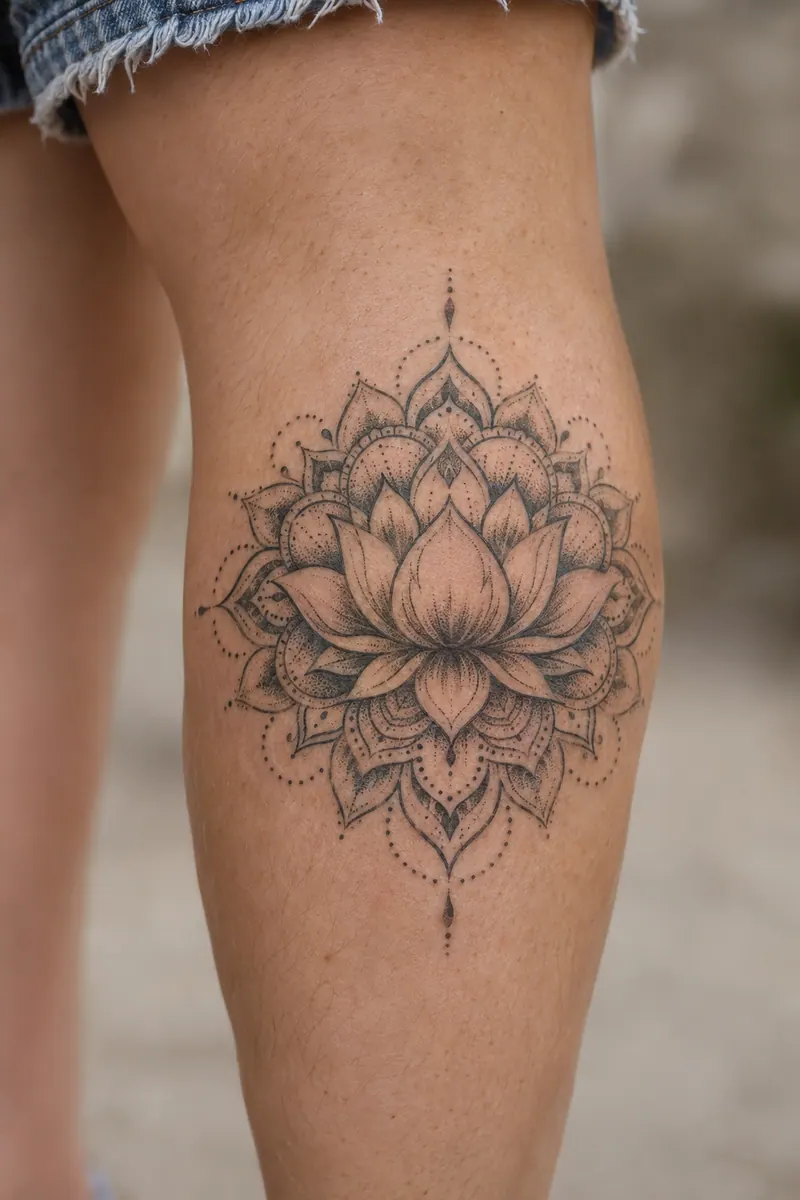
The gallery above shows how differently a single flower can be drawn:
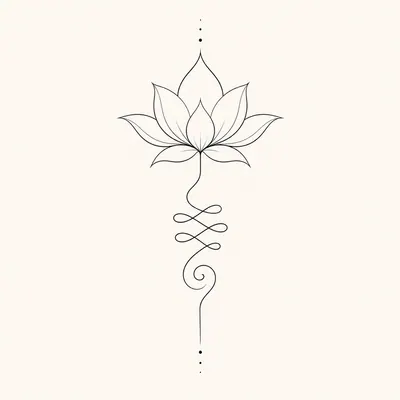
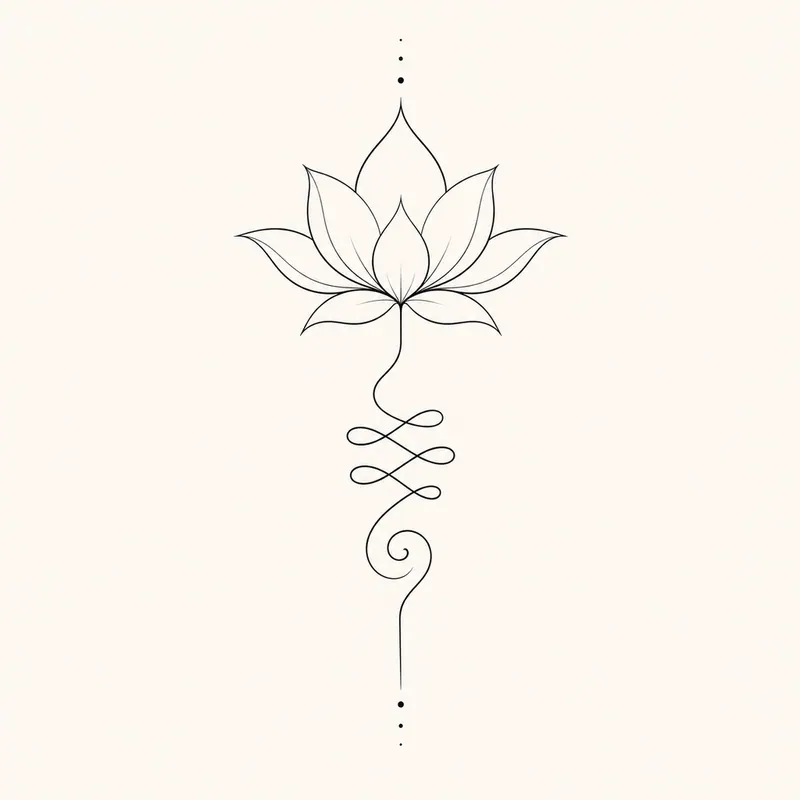
- Lotus with an unalome. A minimalist chest design. The unalome comes from Thai Buddhist tradition and is often explained as a path: a winding spiral for life’s confusion, a line that straightens as understanding grows, and dots for clarity. If you choose one, learn its background rather than using it purely as decoration.
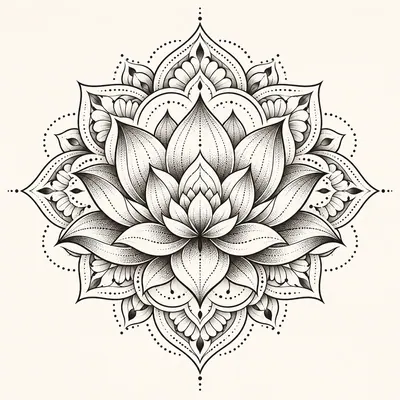
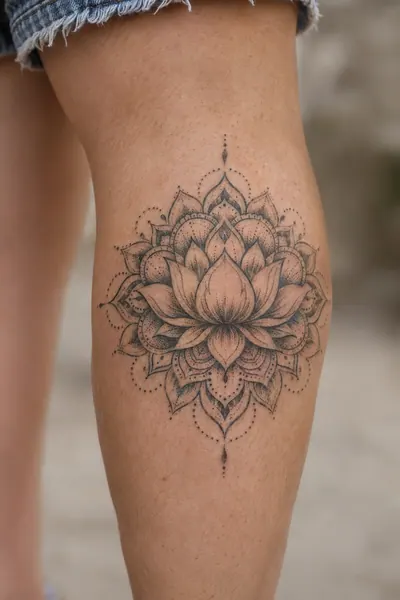
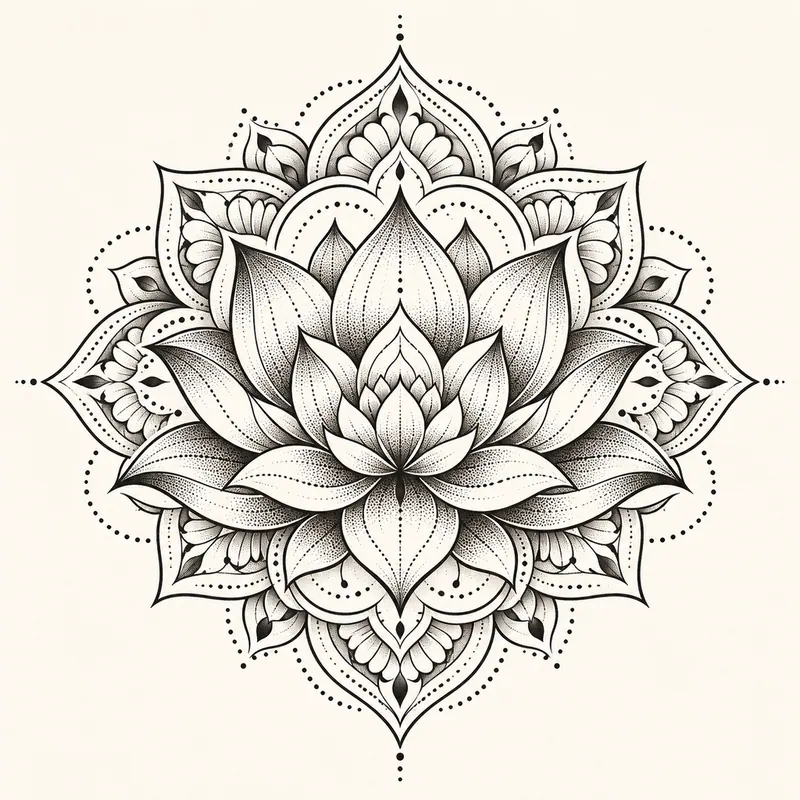
- Lotus mandala. Mandala designs on the upper arm and calf turn the petals into rings of radial symmetry, adding the idea of wholeness and balance.
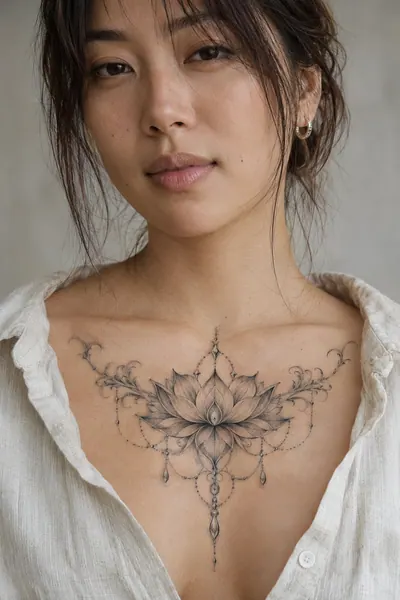
- Lotus with hanging jewel ornaments. An ornamental sternum piece where the flower sits at the center and strings of beads drop below, framing the chest like jewelry.
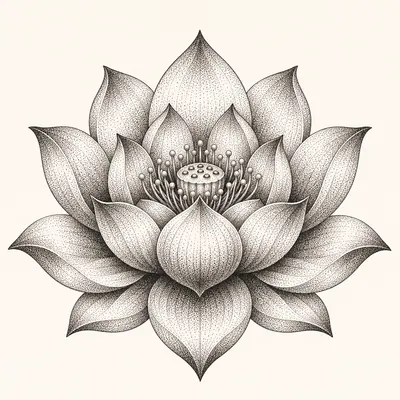
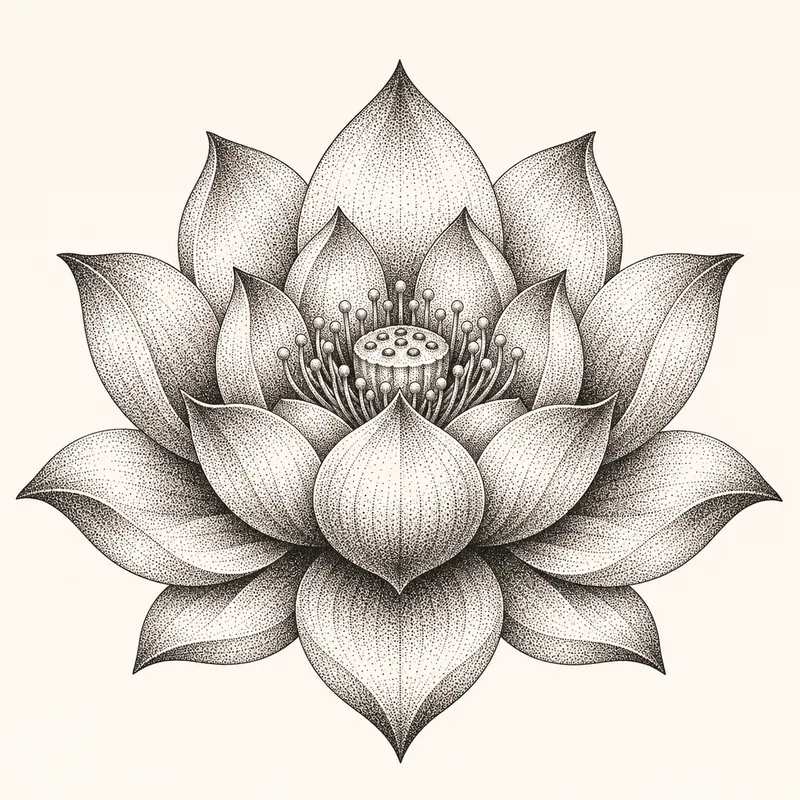
- Lotus with stippled petals. A dotwork thigh design that builds soft shading entirely from dots.
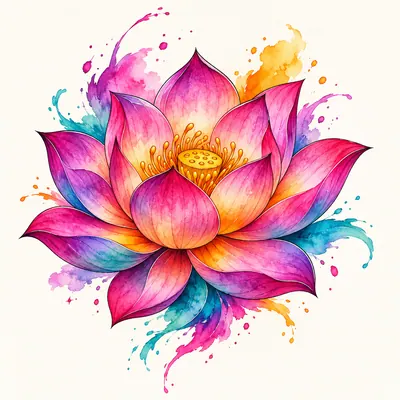
- Watercolor lotus. Soft pinks and purples on the forearm give the flower a painterly glow.
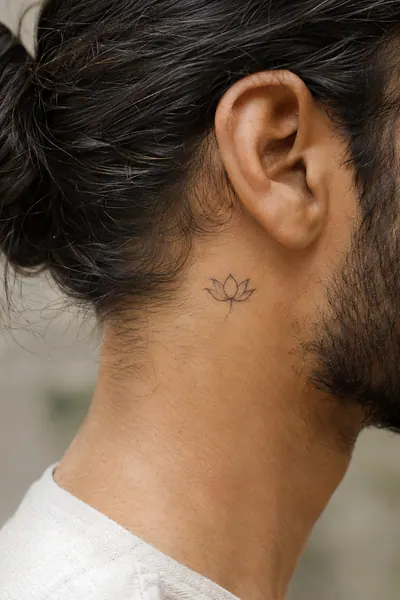
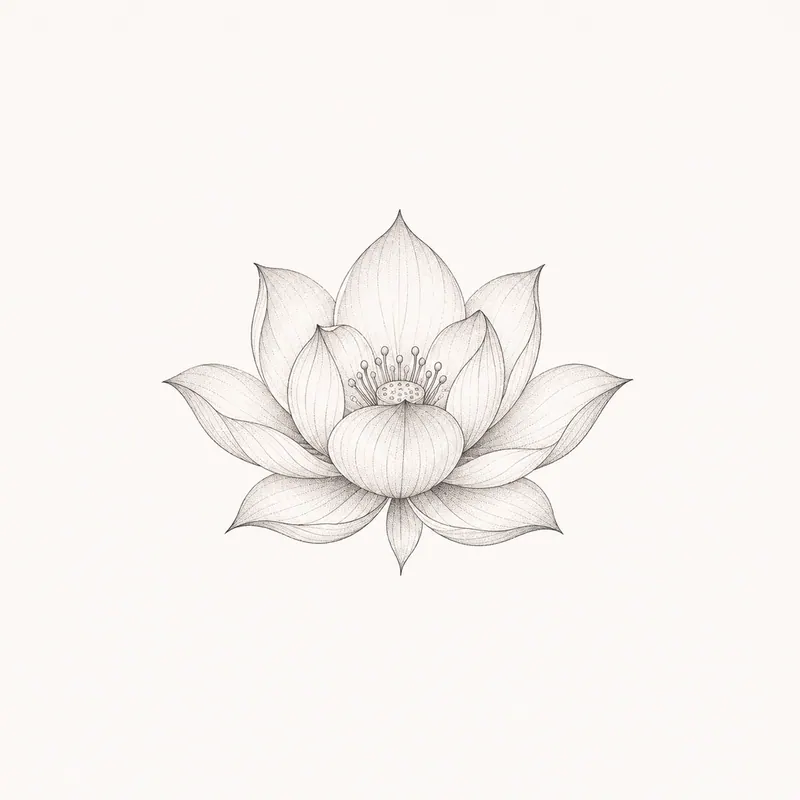
- Small and tiny lotuses. A fine line wrist lotus and a minimalist one on the neck show how the shape still reads at small sizes.
Lotus flowers also pair naturally with other water and growth symbols, such as a koi fish, a moon or a crescent above the bloom.
Choosing a style for your lotus
Mandala is the most popular choice because the lotus already has radial symmetry. Ask your artist about line weight so the inner petals stay distinct over time.
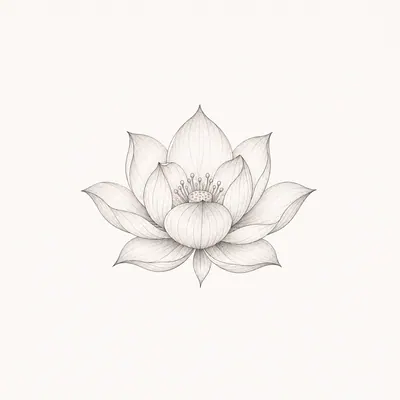
Fine line and minimalist lotuses are quiet and personal. A few clean petals and a waterline are enough to tell the story.
Dotwork gives the petals depth and texture without heavy black fills and ages softly.
Ornamental designs suit the sternum, spine and back of the neck, where symmetry can be centered on the body.
Watercolor is the option for people who want color; adding some line structure helps it hold its shape.
Where to place a lotus tattoo
The lotus is symmetrical and roughly as wide as it is tall, so it looks best on placements with a natural center line:
- Sternum and chest: a lotus centered between the collarbones or under the chest, often with ornaments hanging below.
- Upper back or back of the neck: a classic spot for a lotus with an unalome running down the spine.
- Wrist, neck and ankle: small outline lotuses of a few centimeters, kept simple.
- Upper arm, thigh and calf: room for full mandala or dotwork lotuses.
Keep the respectful-placement point in mind if the design includes explicitly religious elements. When unsure, choose a spot above the waist.
A lotus tattoo is often about a personal turning point, so let the design reflect it: the number of petals, a bud versus a full bloom, a waterline showing how far the flower has risen, or a date worked into the stem. In InkForge you can describe your lotus, compare mandala, fine line and dotwork versions, and try the design on a photo of your chest or wrist to check its size and position before you see your artist.