InkForge
What modern tribal tattoos are
When people say “tribal tattoo” today, they usually mean a recognizable Western style: solid black shapes that sweep, curl and end in sharp points, arranged in flowing, often symmetrical compositions. Designs follow the body — around an arm, across the shoulders, down the calf — and the skin between the shapes is as important as the ink.
It helps to be clear about the name. “Tribal” is a broad label applied to a modern style, not a tradition belonging to any single people. Many of the cultures it drew inspiration from have tattoo practices that are much older, more specific and, in many cases, sacred.
Where the style came from
The modern tribal look took shape in the United States and Europe in the late 1970s and 1980s, when some Western tattoo artists became interested in historical tattooing from the Pacific and Southeast Asia — especially the bold black work of Borneo and Polynesia. They reinterpreted those forms into a new, freely drawn style. By the 1990s tribal armbands and back pieces had become one of the most popular tattoo looks in the West.
That popularity also brought criticism. Some designs copied or blended Indigenous motifs without understanding their meaning, and tattoo culture has since become more aware of the difference between inspiration and appropriation.
Tribal is not Polynesian, Māori or Borneo tattooing
These are living cultural traditions, each with its own identity:
- Polynesian tattooing — the English word “tattoo” itself comes from the Polynesian tatau — uses motifs that carry information about lineage, status and personal history, and traditional pieces such as the Samoan pe’a have deep cultural significance.
- Māori tā moko in Aotearoa New Zealand is tied to genealogy (whakapapa) and identity. Facial moko in particular is a taonga (treasure) belonging to Māori, and wearing it without that heritage is widely considered inappropriate.
- Borneo, including the tattoo traditions of peoples such as the Iban, has its own motifs and rites with specific meanings.
If you are drawn to one of these traditions, the respectful path is to learn about it and, ideally, be tattooed by a practitioner from that culture who can design something appropriate for you. Modern tribal, by contrast, is a decorative style anyone can wear — as long as it doesn’t imitate specific sacred motifs.
Look, placement and aging
Visual characteristics
- Solid black fills with no shading or gradients.
- Sharp, tapered points and smooth, flowing curves.
- Strong negative space that defines the shapes as much as the ink does.
- Symmetry in many designs, especially armbands and center-back pieces.
- Body flow: shapes are drawn to wrap muscles and follow limbs.
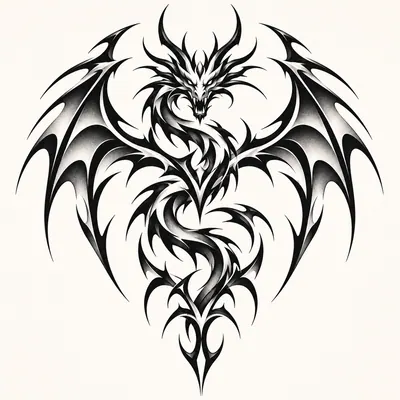
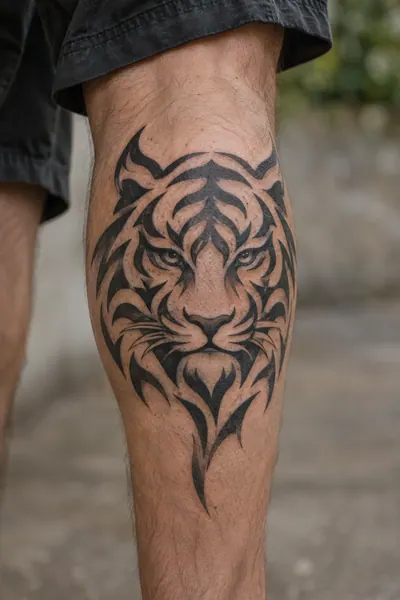
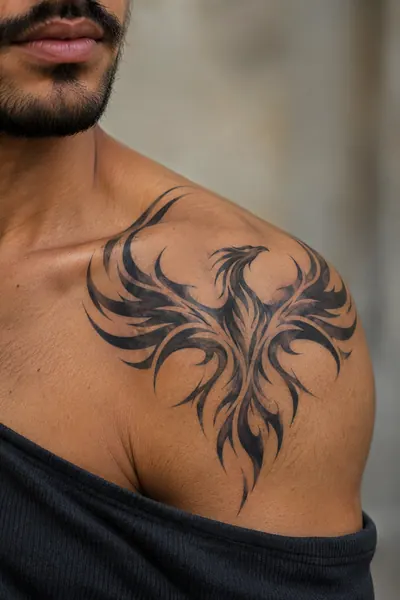
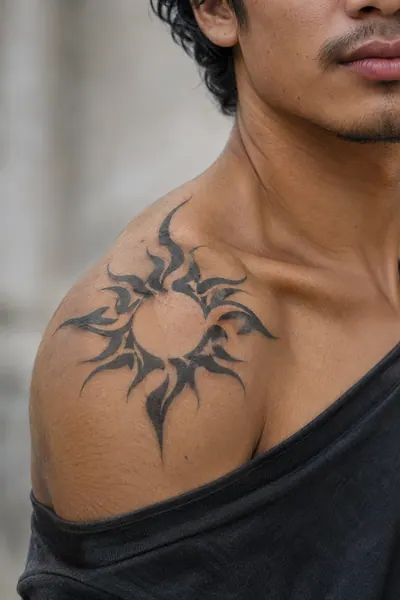
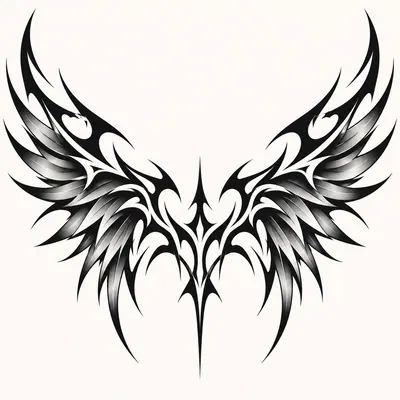
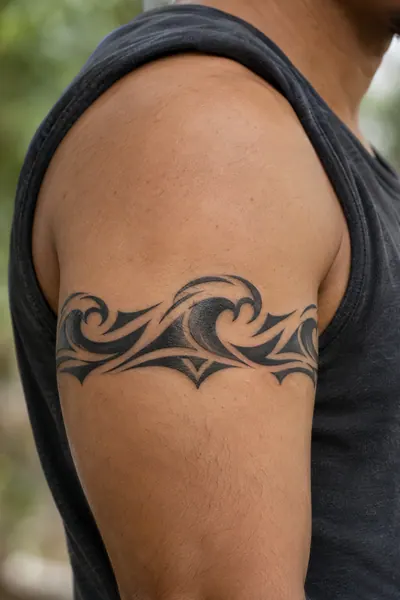
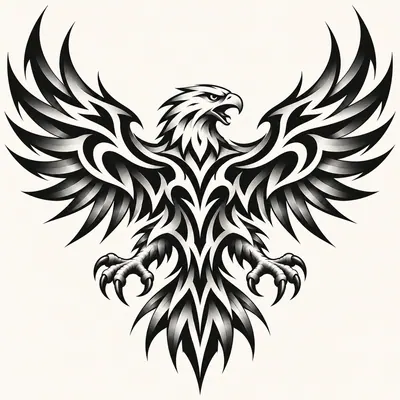
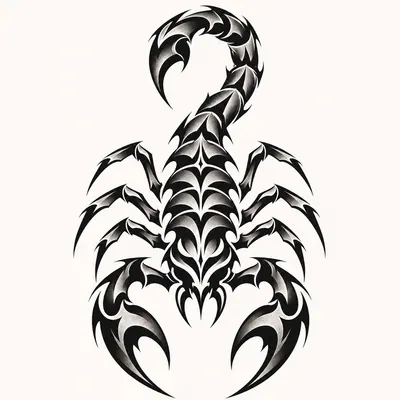
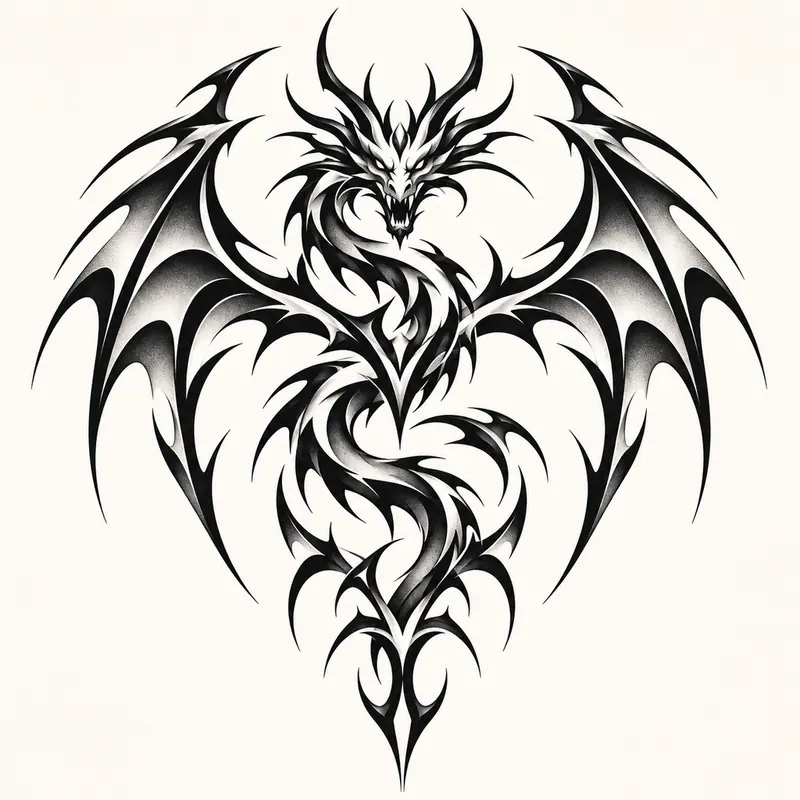
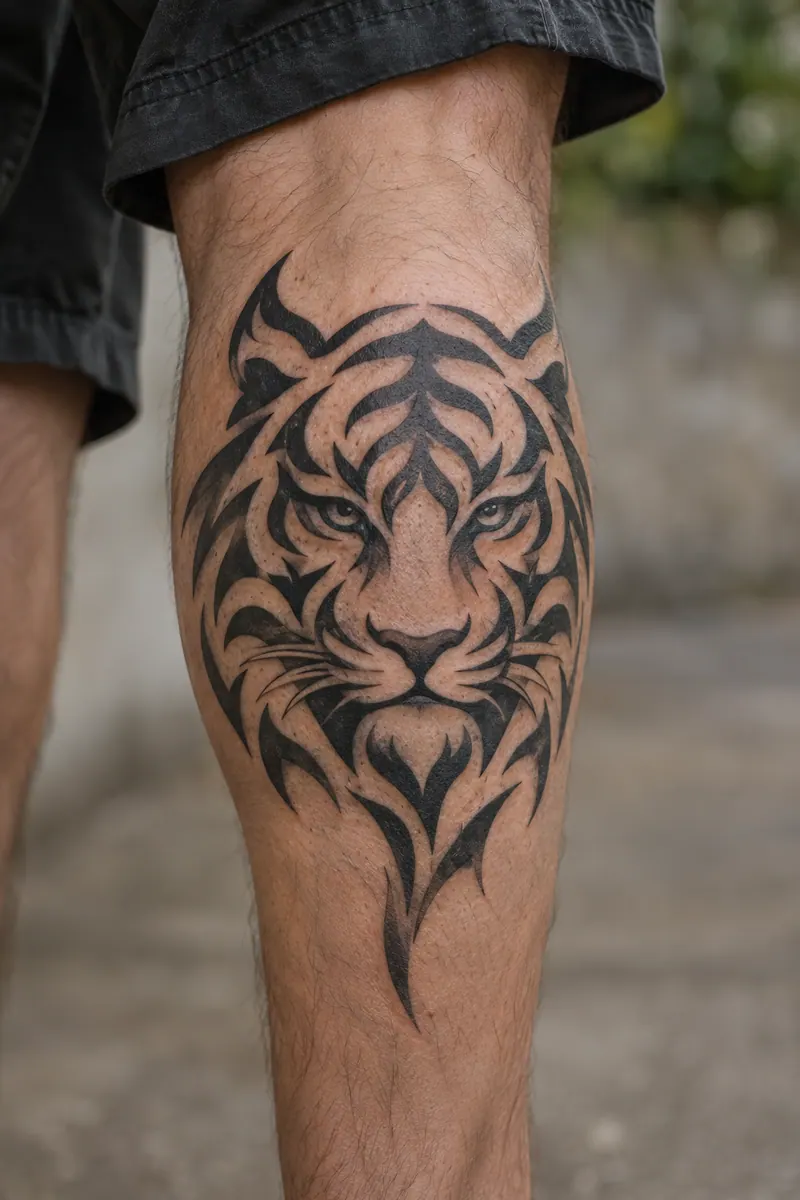
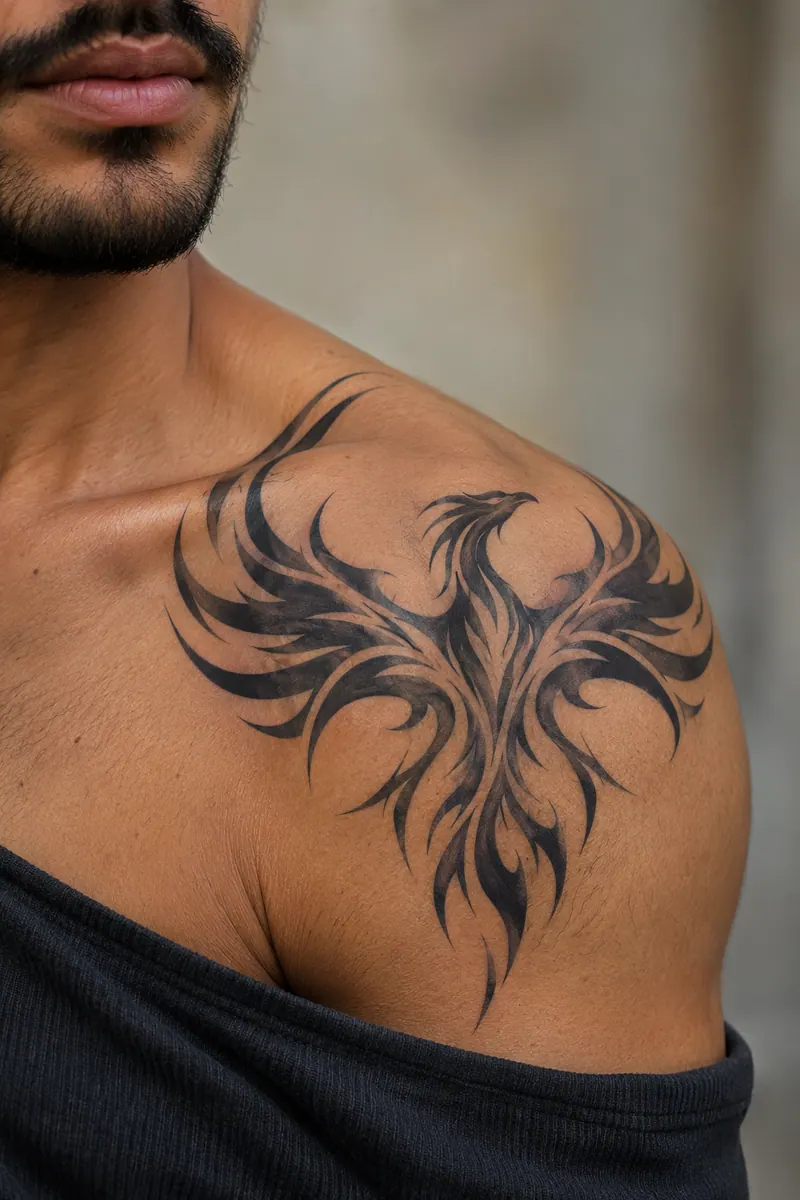
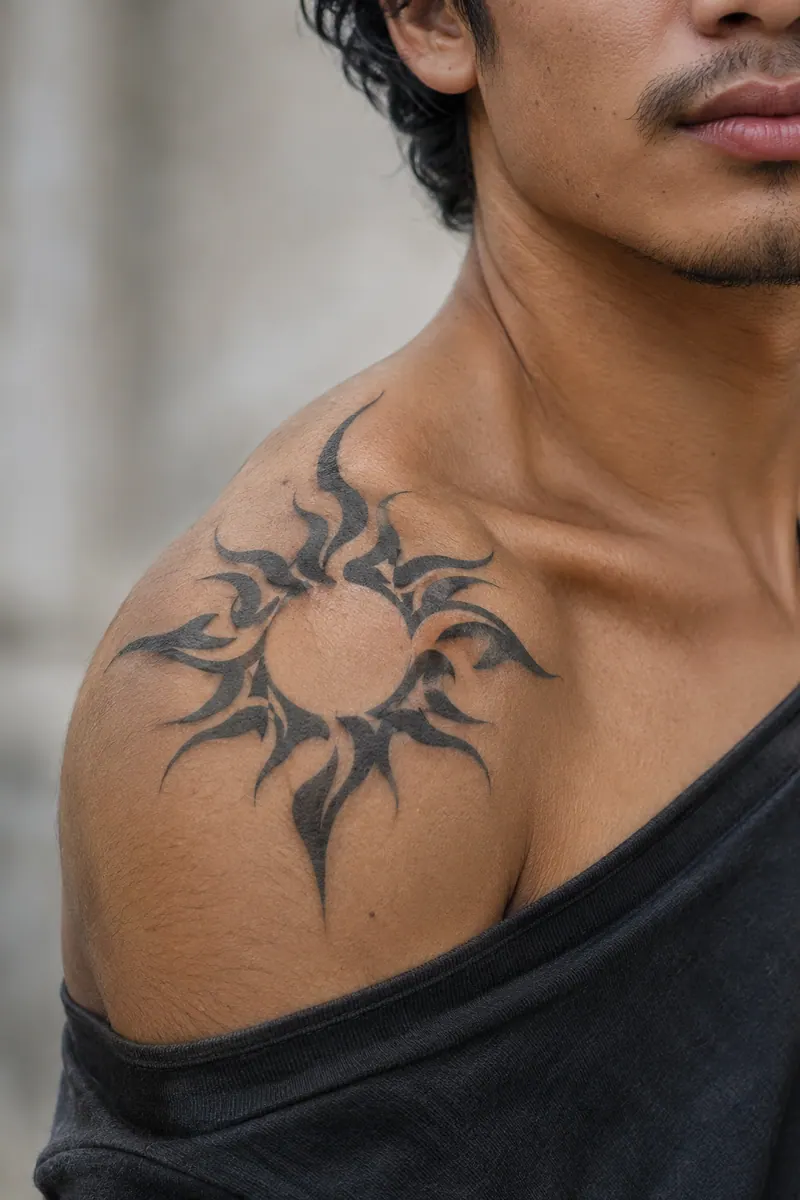
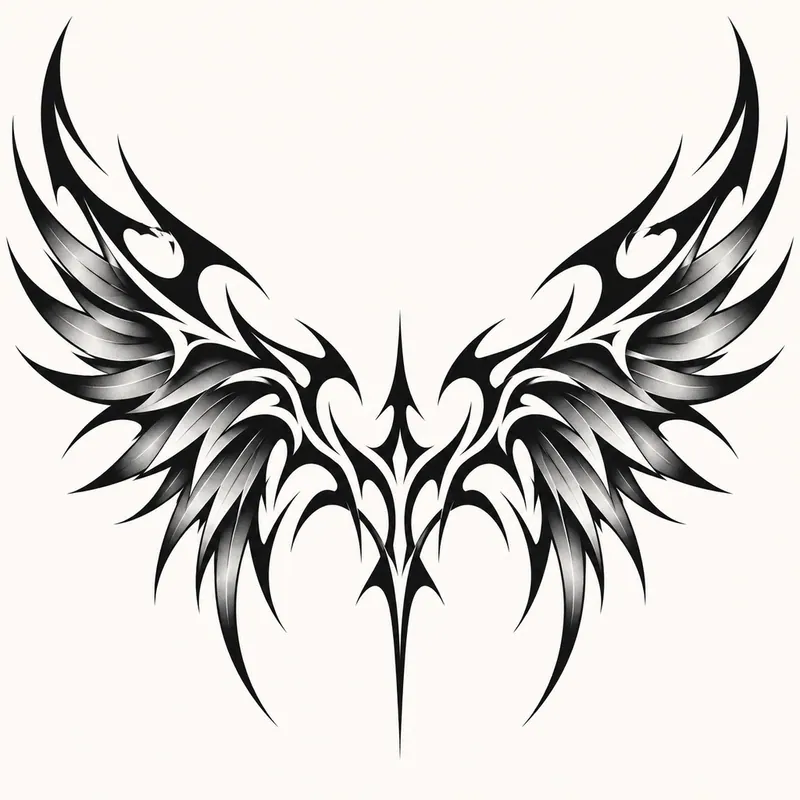
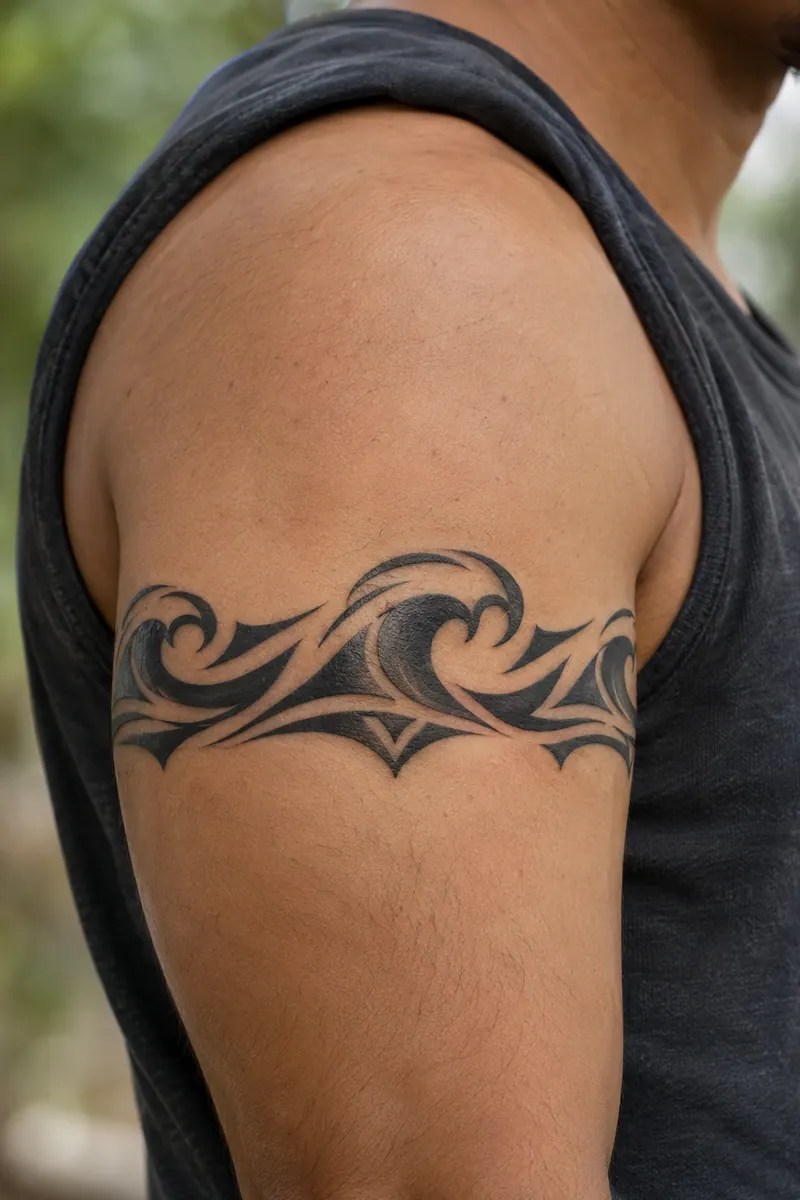
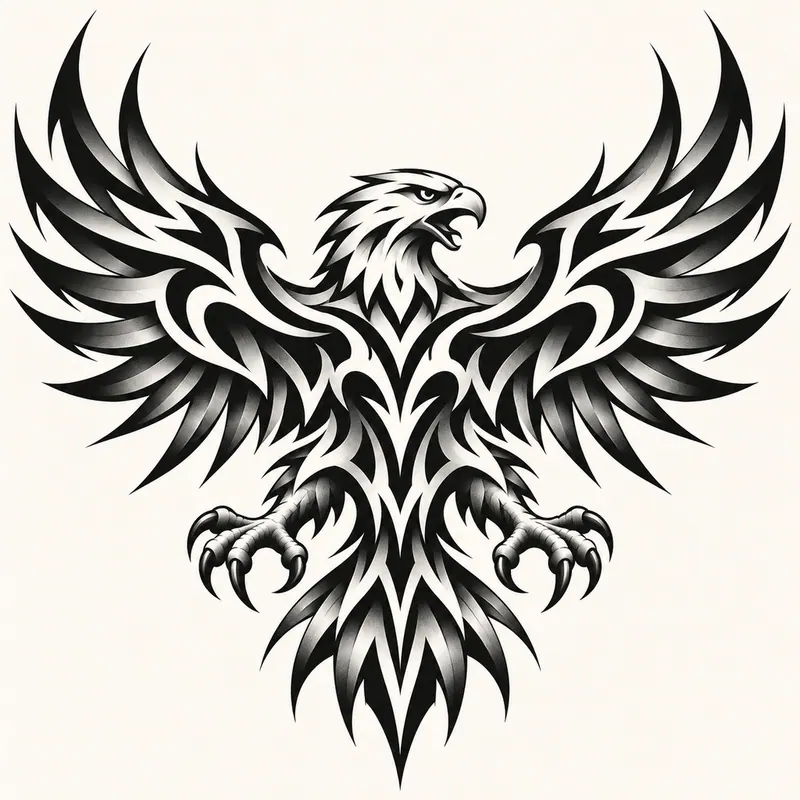
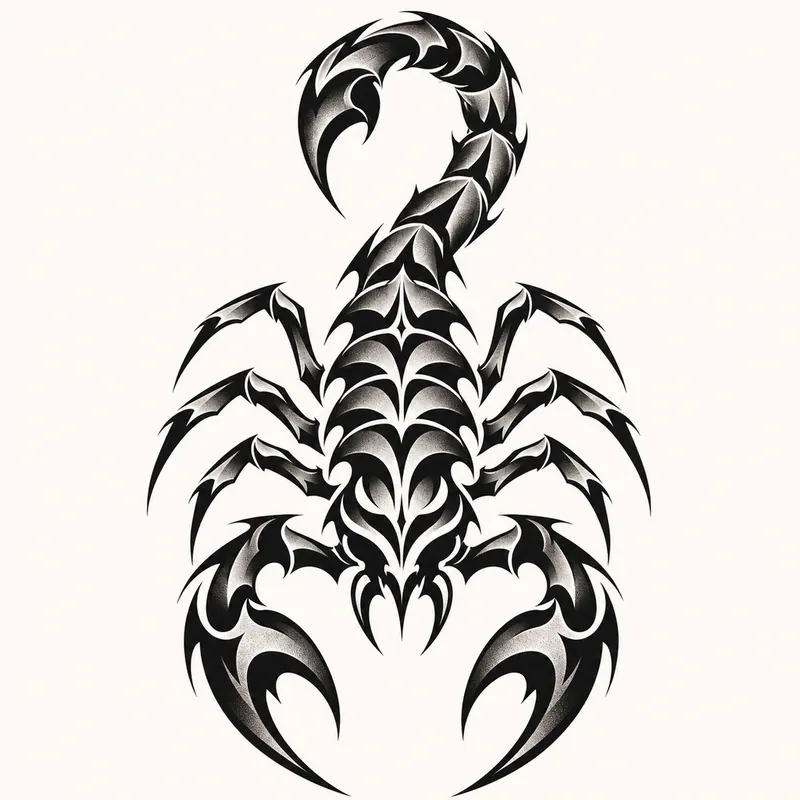
The gallery shows how the style can build recognizable subjects from those sharp shapes: a tribal dragon, a tiger head, a phoenix, an eagle, a scorpion, a sun made of flames, a pair of wings across the back, and an armband of curling waves.
How tribal tattoos age
Solid black is one of the most durable things you can put in skin, so tribal tattoos generally stay bold for decades. The weak spots are the details: very thin tips and narrow gaps between shapes can fill in as ink spreads. Ask for a size where the negative space stays generous, and protect the piece from the sun so the black stays deep instead of turning slightly blue-gray.
Best placements and sizes
Tribal is made for movement and muscle. The upper arm and shoulder are classic, as are the calf, the back and the chest; armbands wrap the upper arm or forearm. Wings and symmetrical pieces suit the upper back. Small tribal pieces are possible, but the style reads best at medium to large sizes, where the curves have room to flow.
Tribal vs. neighboring styles
- Blackwork also uses heavy black but covers many approaches — illustrative, botanical, geometric. Tribal is one specific, curvilinear look within that family.
- Cyber sigilism borrows tribal’s sharp, flowing points but uses thinner, spikier, more glyph-like lines.
- Neo-tribal is a contemporary update that mixes tribal shapes with fine line, dotwork or ornamental elements.
Choosing a tribal tattoo artist
Look for clean, even fills with no patchiness and crisp, sharp points in healed photos. Ask the artist to draw the design to your body — good tribal work flows with your anatomy rather than sitting on it like a sticker. If you want culturally specific work, choose a practitioner from that culture instead.
Testing it before you commit
You can describe a subject — an eagle, a sun, a wave — and generate it in the Tribal style in InkForge, then compare it with Blackwork or Cyber Sigilism versions. Use the brush edit to reshape a point or open up a gap, and place the design on a photo of your arm or shoulder with Try-On, adjusting size and rotation by hand before you share it with your artist.