InkForge
What a wolf tattoo means
The wolf is one of the most layered symbols in tattooing because people relate to it in two opposite ways. As a pack animal, it stands for loyalty, family and protecting the people you love. As a lone wolf, it means independence, self-reliance and surviving on your own. Many wolf tattoos are really about which of these two sides the wearer identifies with.
Different cultures add their own meanings:
- Norse mythology gives wolves a double role: Odin’s companions Geri and Freki are loyal guardians, while the giant wolf Fenrir is a force of chaos. Norse-inspired wolf tattoos often pair the animal with runes, ravens or knotwork.
- Ancient Rome traced its founding to a she-wolf who nursed Romulus and Remus, so the wolf there is a protective, nurturing mother.
- Many Native American nations regard the wolf as a teacher, pathfinder or family figure, with meanings that differ from nation to nation. If you draw on these traditions, learn about the specific culture first rather than mixing sacred symbols as decoration.
- In Japan the wolf (ōkami) was once revered as a guardian of farmland and still appears as a protector at some shrines.
Popular wolf tattoo designs
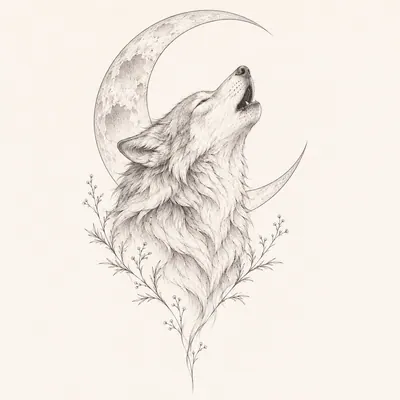
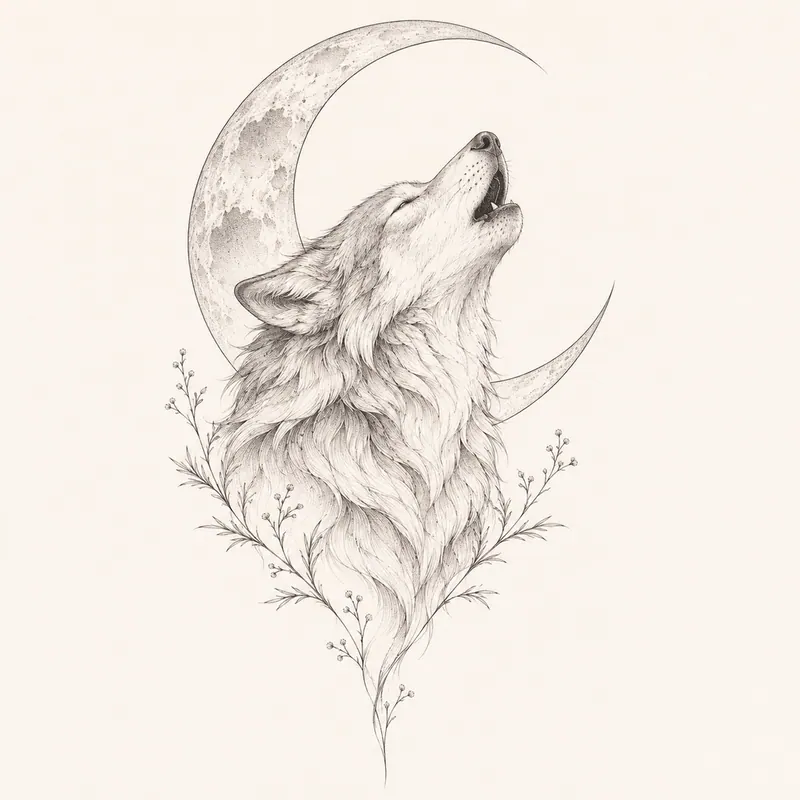
Wolf and moon. The most requested combination — see also our moon tattoo ideas. The moon adds intuition, cycles and the mystery of the night. Fine line and dotwork versions look elegant; blackwork gives a striking silhouette.
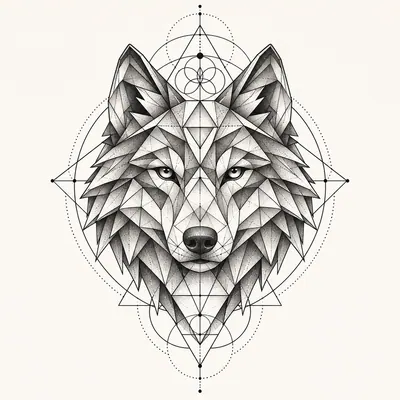
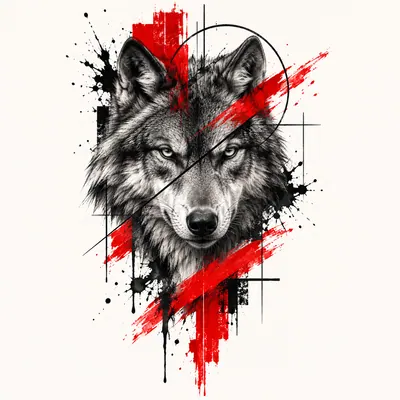
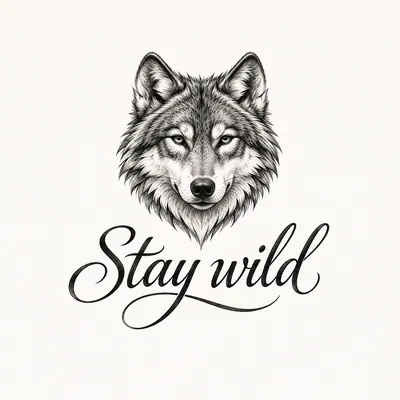
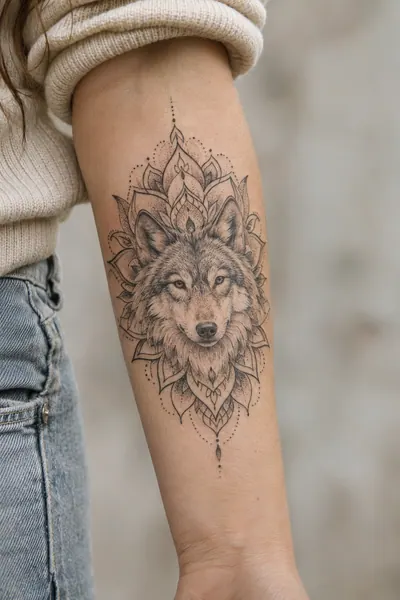
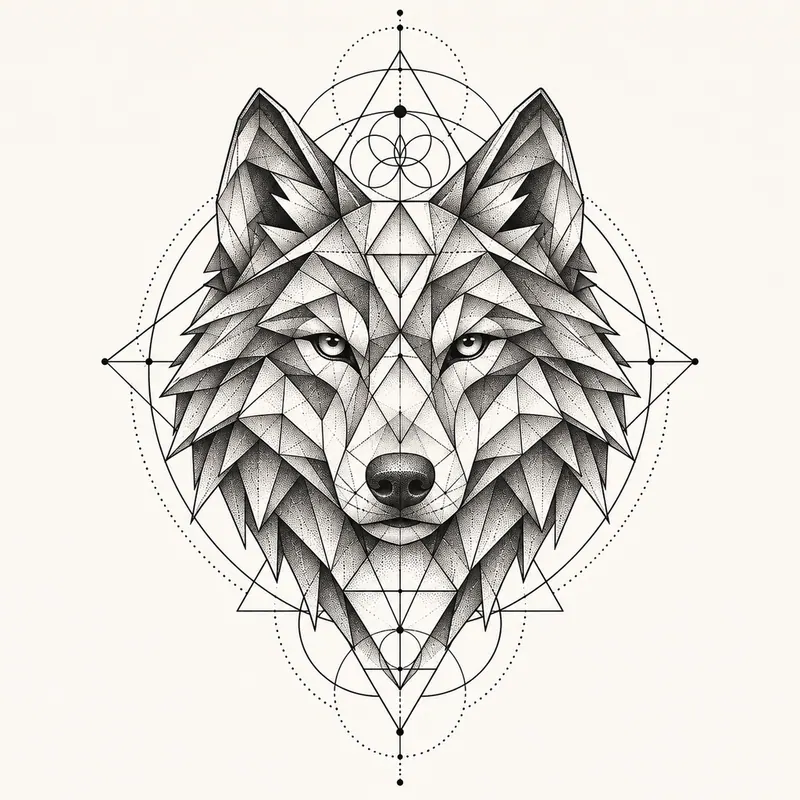
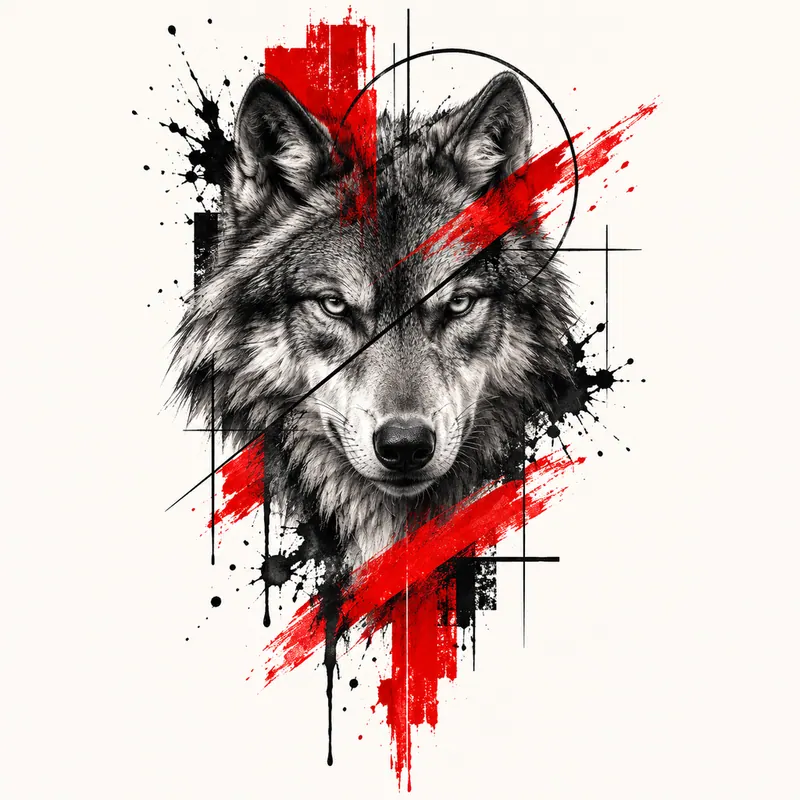
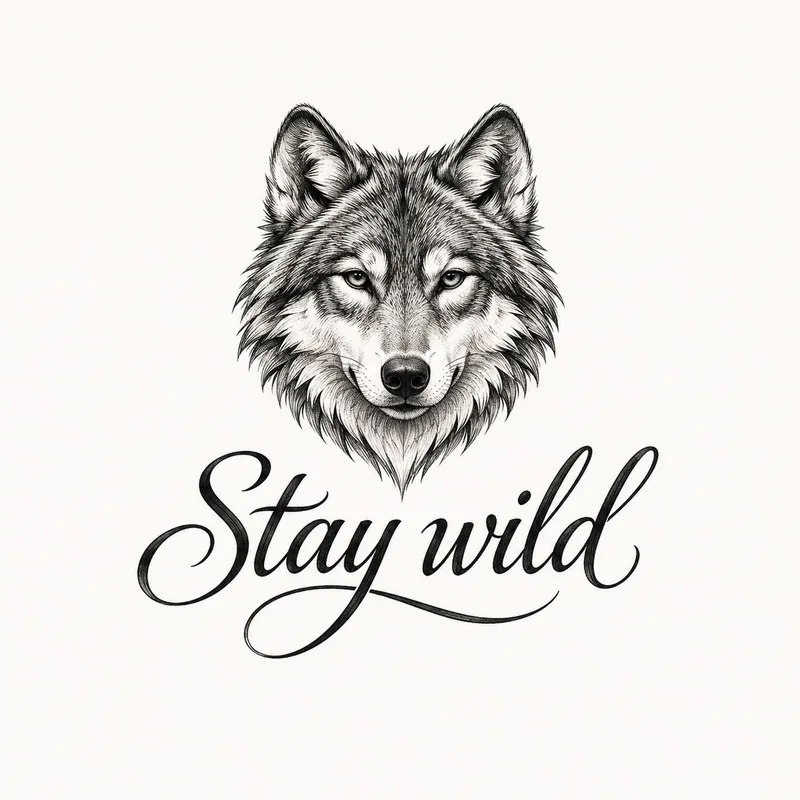
Wolf head or portrait. A front-facing head with intense eyes is a classic for realism and black-and-grey. Geometric versions split the face into facets for a modern, graphic look.
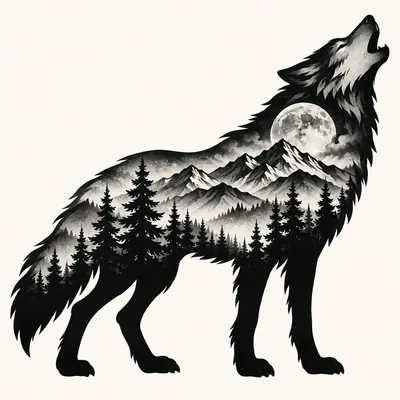
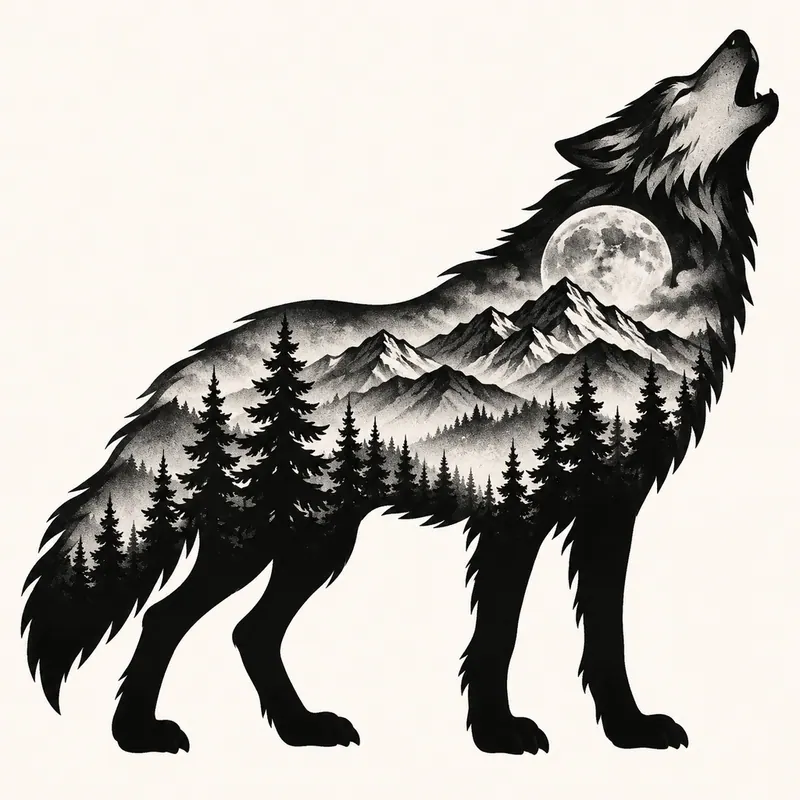
Wolf with forest. A double-exposure wolf filled with pine trees connects the animal to the wild and to home. It works especially well in blackwork and on the forearm or calf.
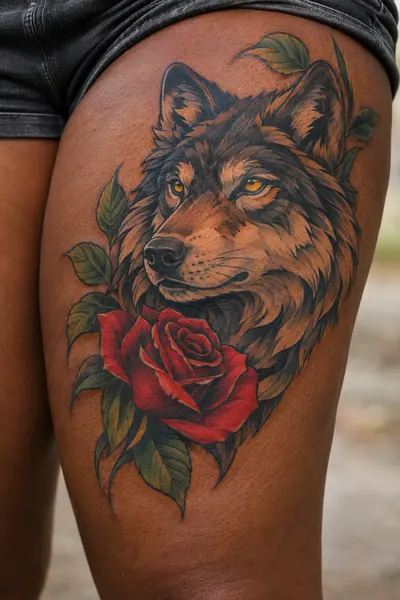
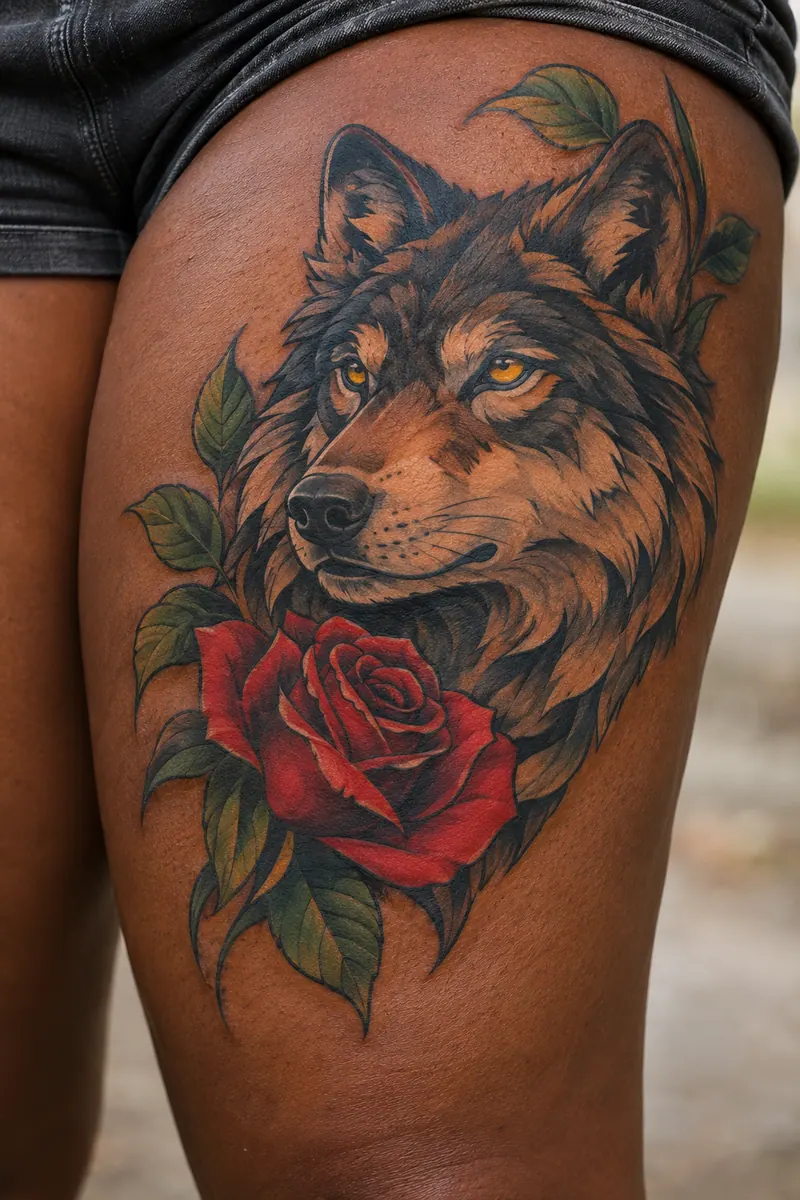
Wolf and rose, wolf and dagger. Neo traditional and traditional flash often pair the wolf with roses (love, loss) or daggers (courage, conflict) for bold, colorful pieces.
Pack or family wolves. Two or more wolves can represent a partner, children or siblings — a popular choice for matching or family tattoos.
Choosing a style for your wolf
Your style decides how the tattoo reads from a distance and how it ages:
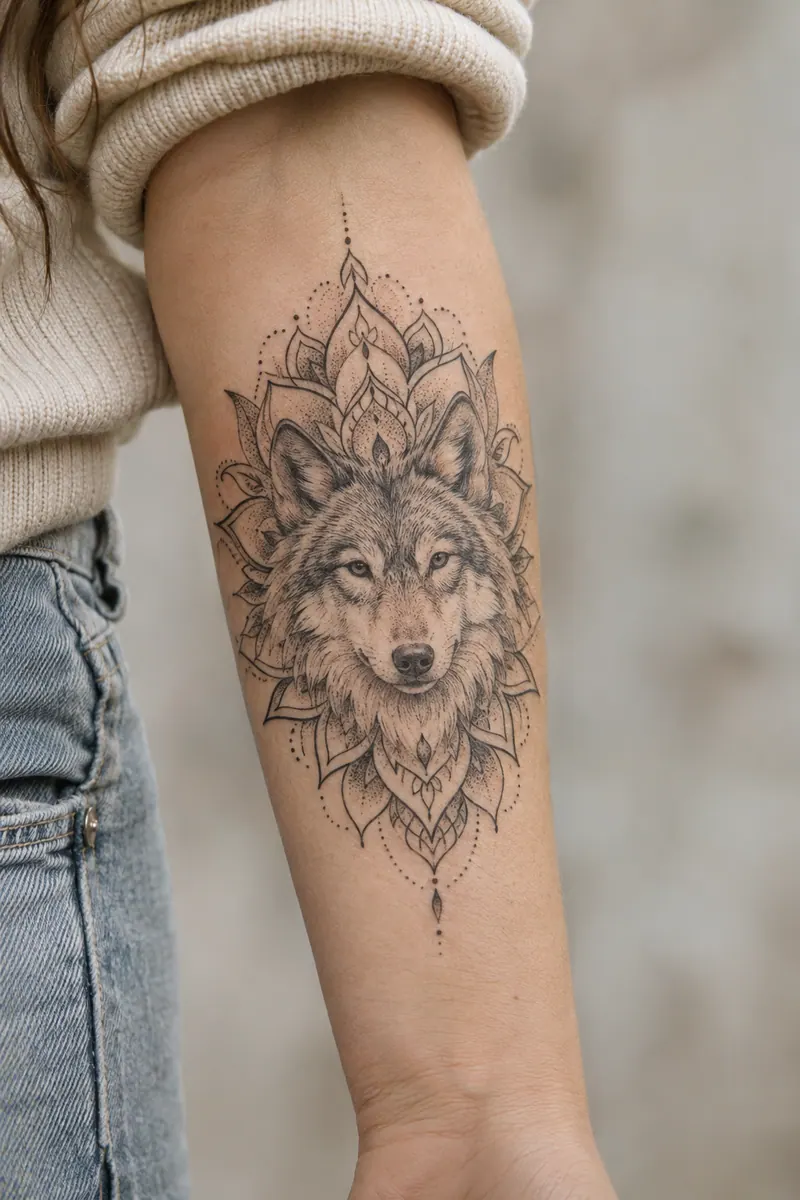
- Fine line and minimalist wolves are subtle and elegant but need enough size for the fur and eyes not to blur over the years.
- Realism and black-and-grey capture fur texture and an intense gaze; they need a larger canvas and an experienced artist.
- Geometric and dotwork suit people who want a modern, symbolic look rather than a lifelike animal.
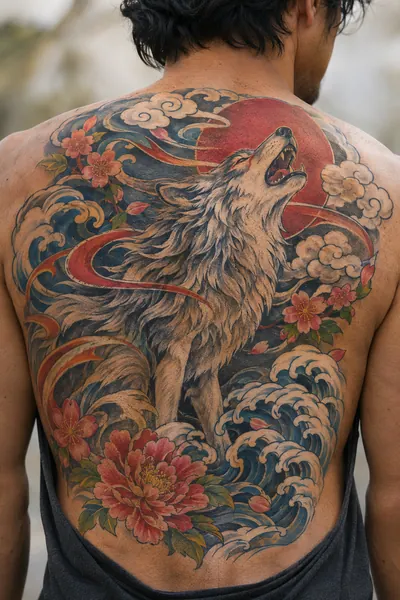
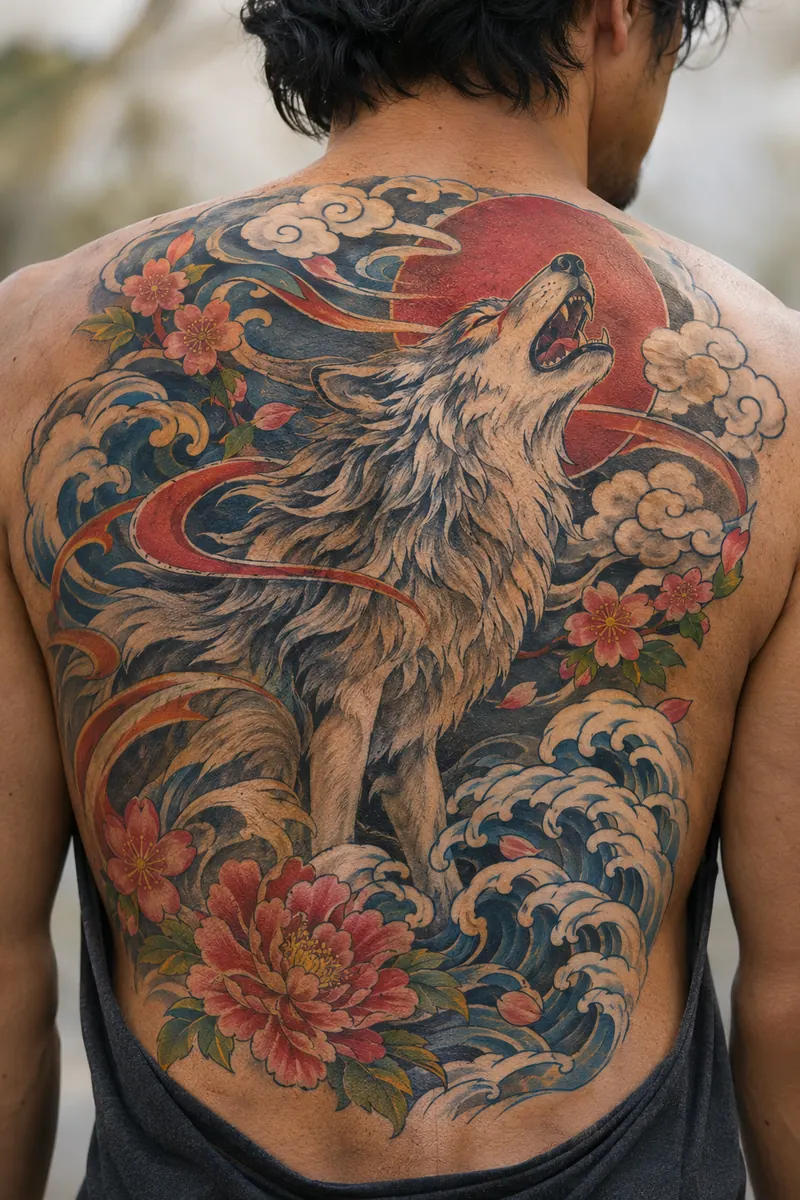
- Japanese and neo traditional turn the wolf into a dynamic, colorful piece that can grow into a sleeve or back piece.
Where to place a wolf tattoo
A wolf head fits naturally on the forearm, upper arm, shoulder or calf. Howling wolves are tall, so a vertical area like the outer forearm or the side of the thigh lets the pose breathe. Full scenes with trees and a moon need room — think back, chest or half sleeve.
Before you book, try the design on a photo of your own arm or leg to check the size. It is the easiest way to avoid the most common regret: a detailed wolf squeezed into a space that is too small.
Trying variations first
The best wolf tattoos carry a detail that only makes sense to the wearer: the number of wolves in a pack, a birth flower, coordinates of a place, the phase of the moon on an important date. Describe those details in InkForge and generate variations until it feels like yours — then take your favorite to your artist as a reference.