InkForge
What makes a tattoo geometric
A geometric tattoo is built from shapes rather than from freehand drawing. Straight lines, circles, triangles, hexagons and repeating patterns do the heavy lifting, and symmetry is usually planned with the precision of a technical drawing. Some pieces are entirely abstract — a sacred geometry figure, a pattern band, a set of nested polygons. Others use geometry as structure: an animal head broken into facets, or a natural scene enclosed in a triangle or circle.
What ties these together is intention. Every line looks placed on purpose, and negative space is part of the design. That precision is the appeal, and it is also what makes the style demanding to tattoo.
A short history
People have decorated skin with geometric patterns for thousands of years, and many traditional tattoo cultures use lines, triangles and repeating motifs. The contemporary geometric style, though, grew mostly out of the 2000s and 2010s alongside blackwork and dotwork, as artists began borrowing from graphic design, architecture and sacred geometry diagrams such as the Flower of Life. Stencil technology and digital drawing tools made perfectly symmetrical designs far easier to plan and transfer, which helped the look spread.
Visual characteristics
- Clean linework, from single-needle lines to heavier outlines, usually in black.
- Symmetry and repetition — mirrored halves, radial arrangements, tiling patterns.
- Shapes as structure: facets, triangles and circles that build or frame the subject.
- Dotwork shading or solid fills to add depth without breaking the graphic look.
- Generous negative space, so the shapes can be read at a glance.
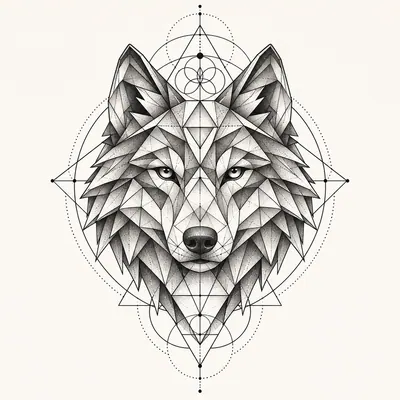
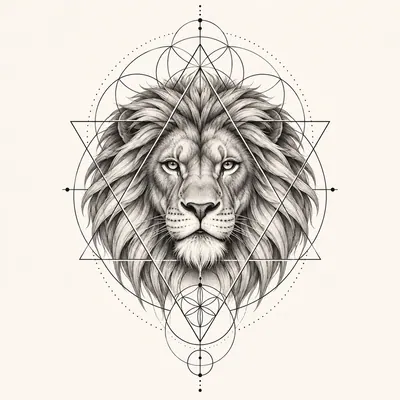
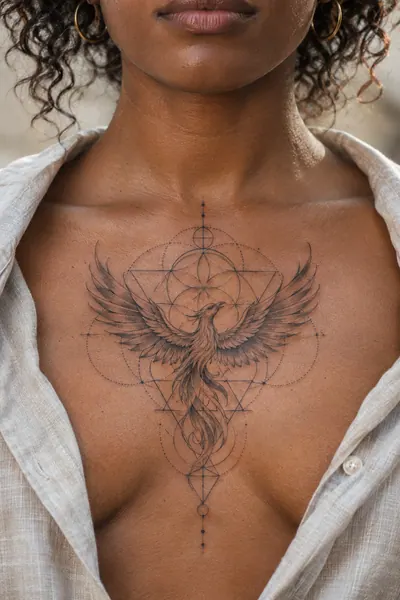
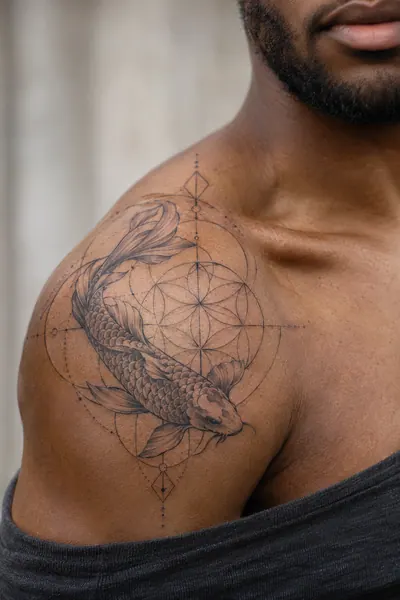
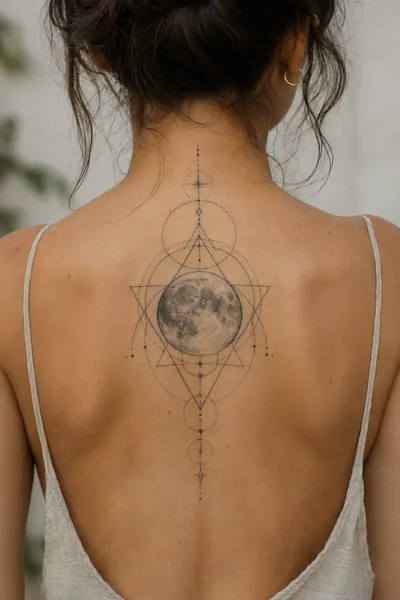
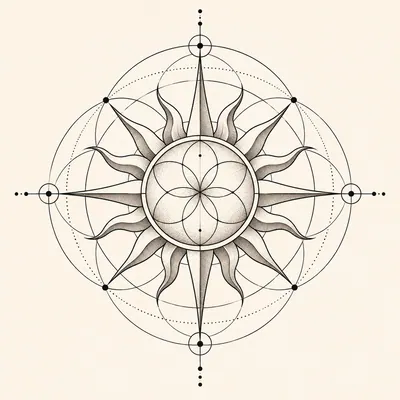
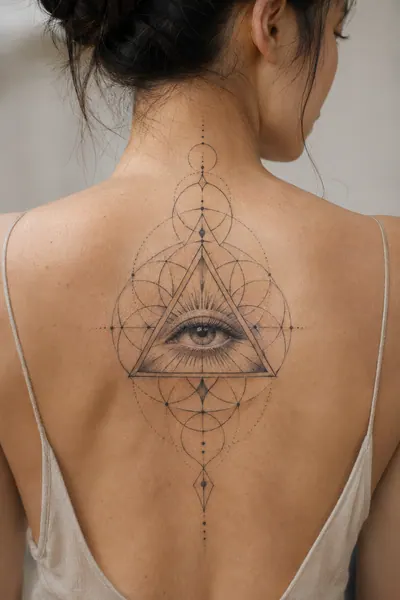
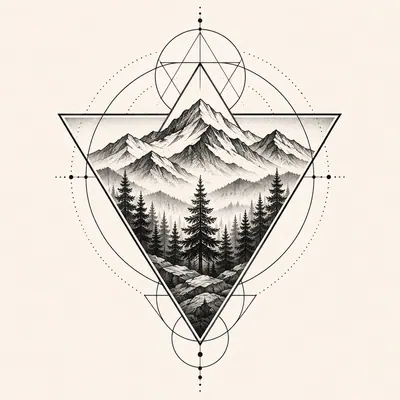
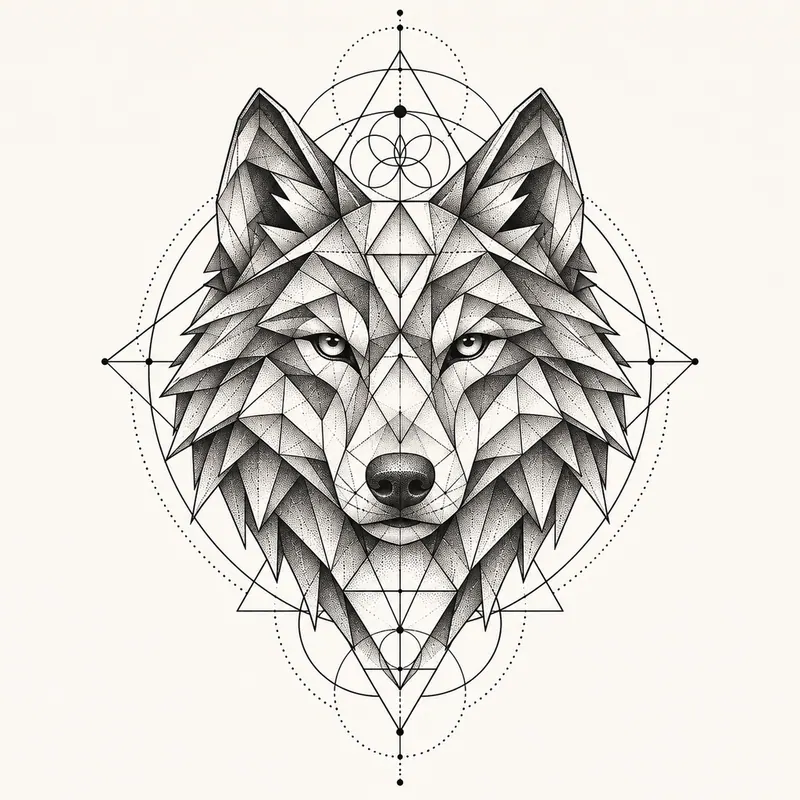
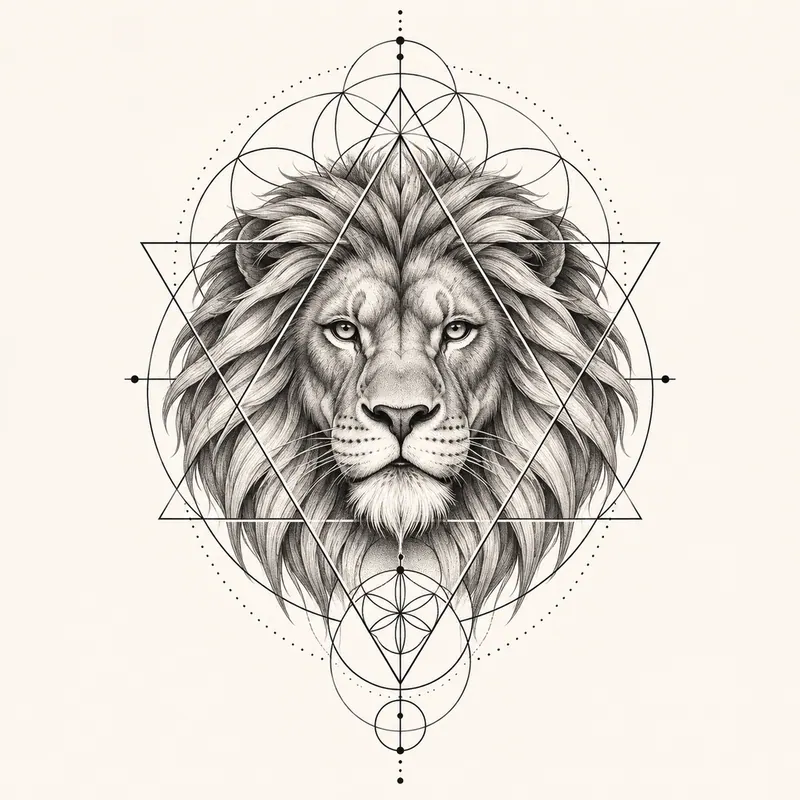
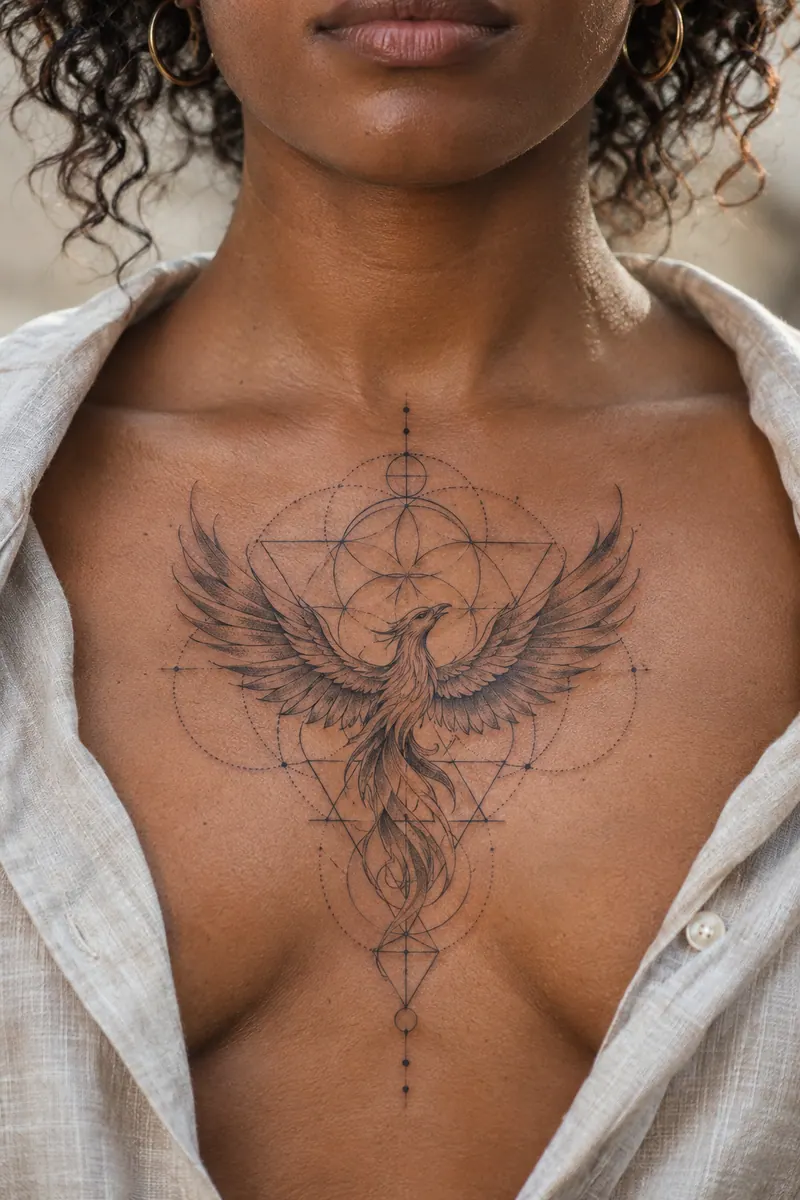
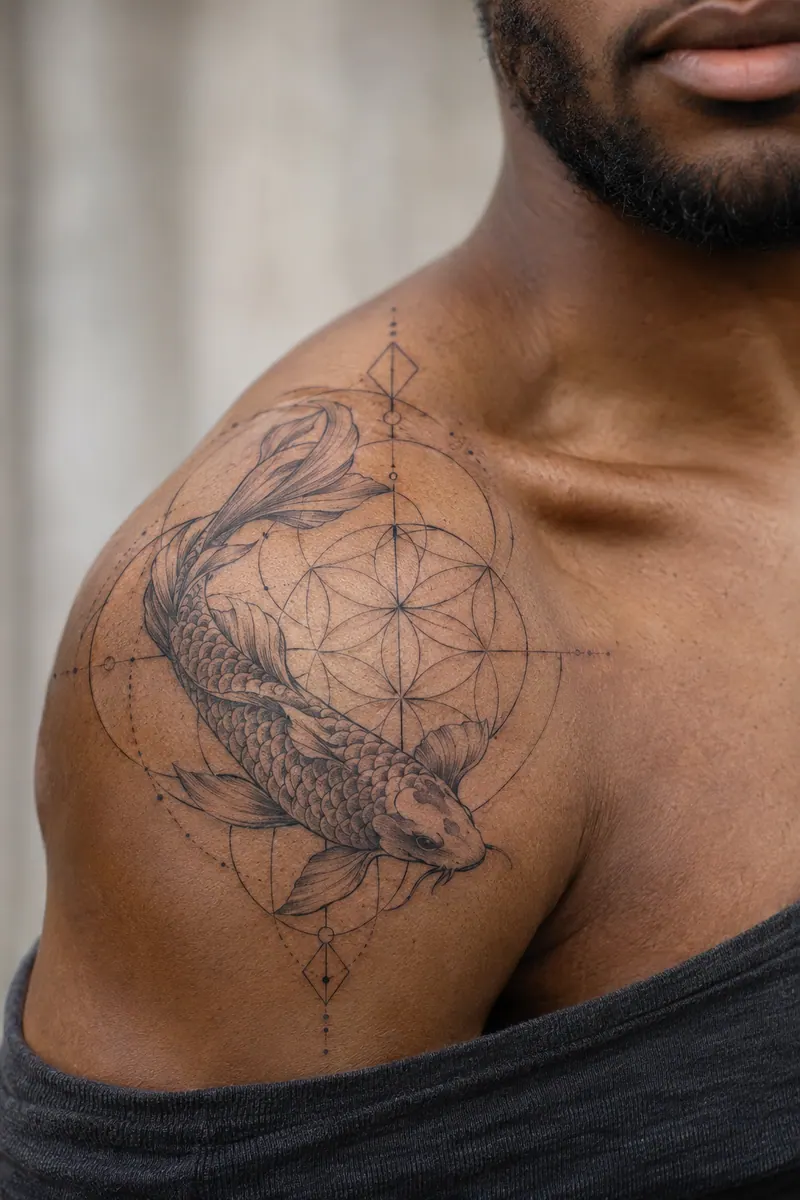
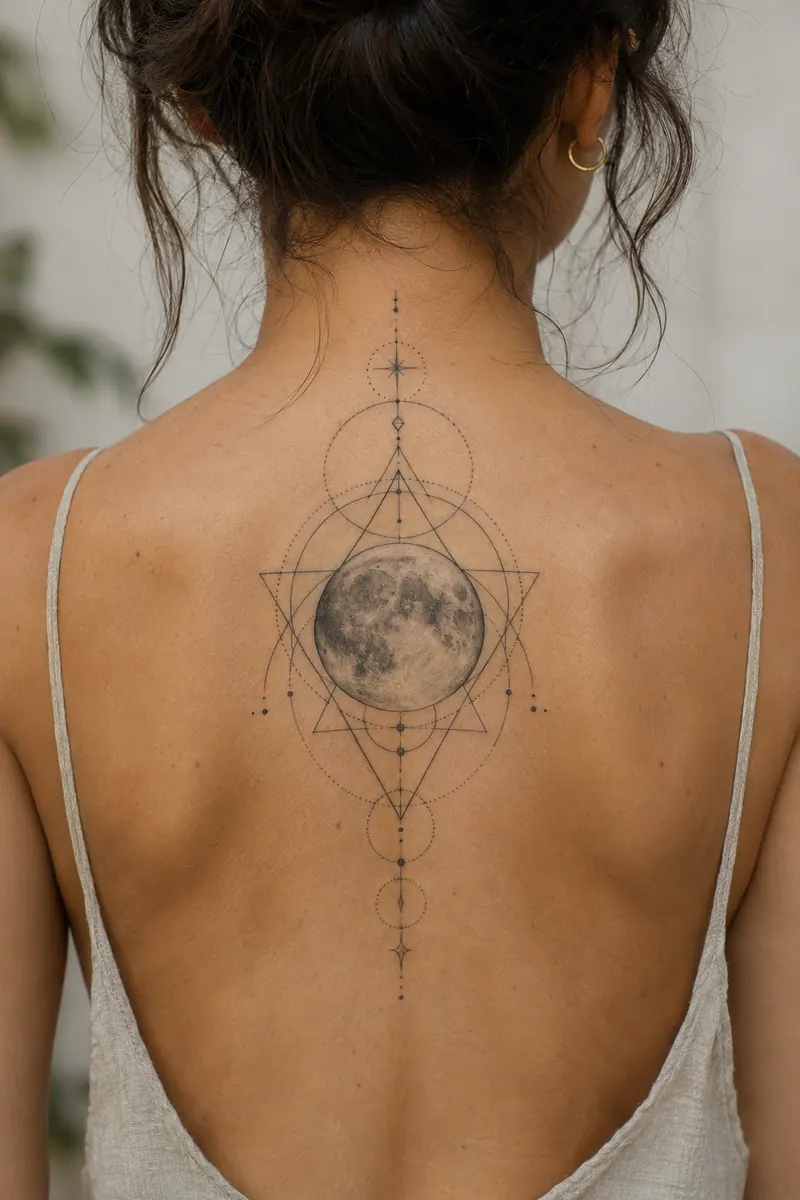
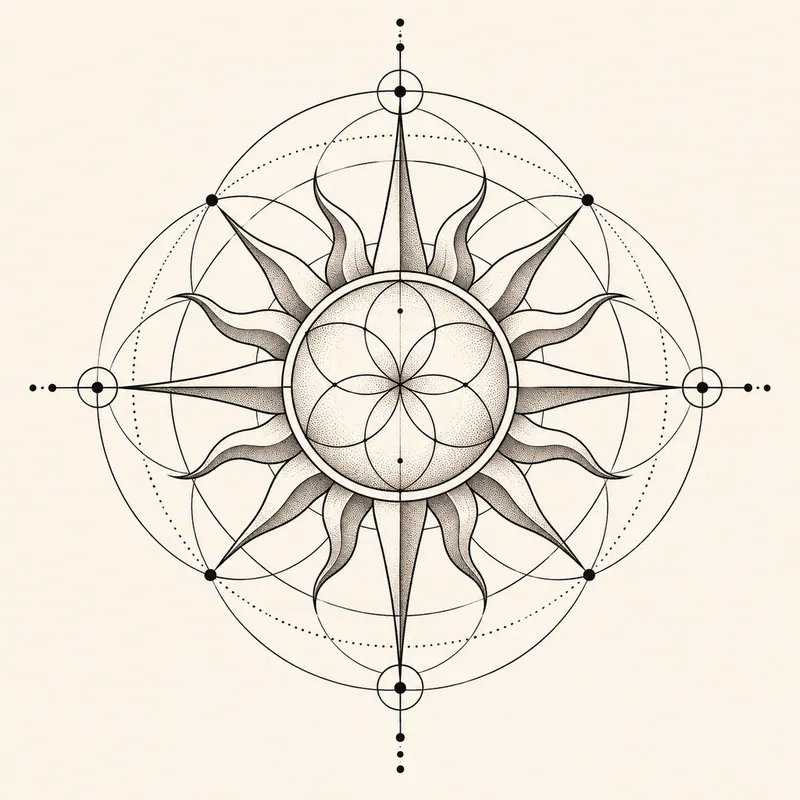
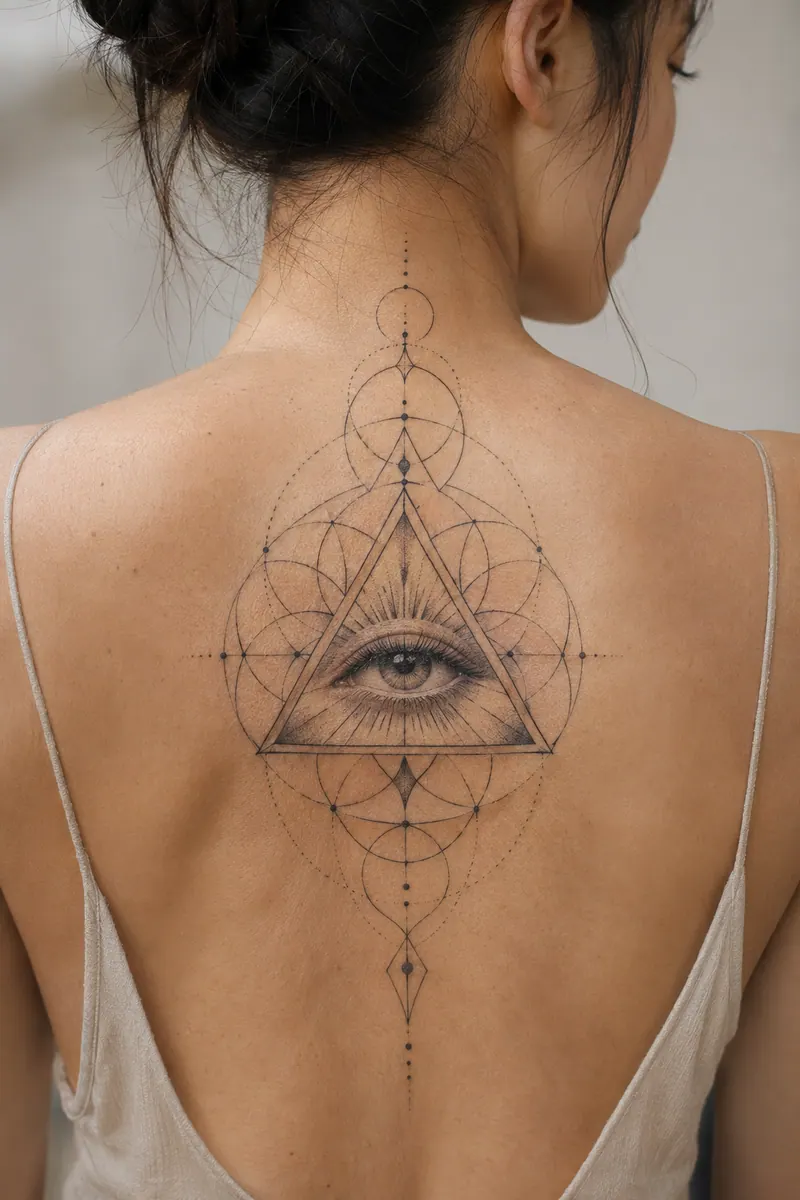
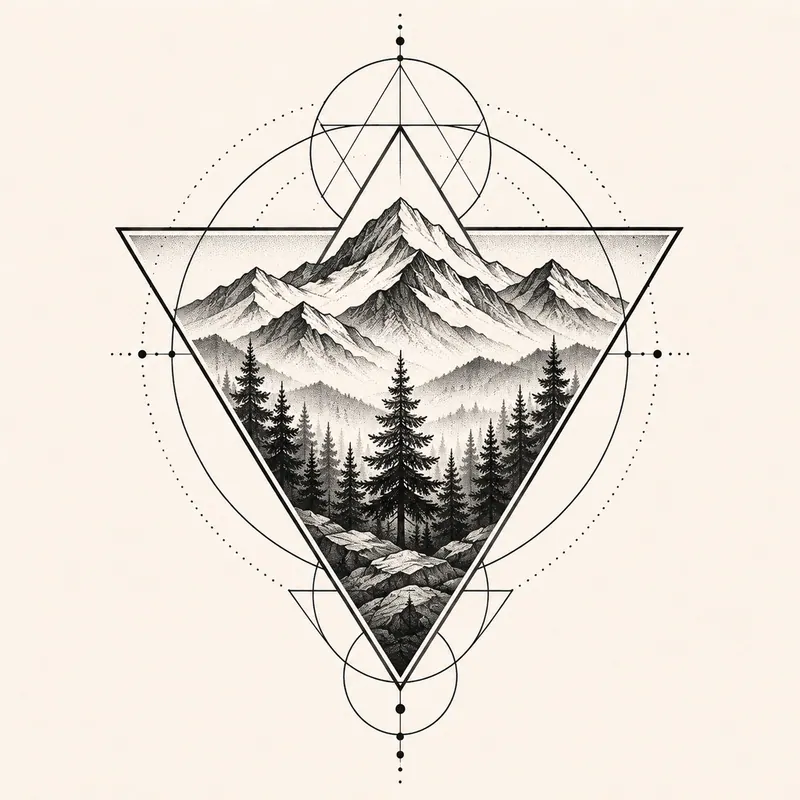
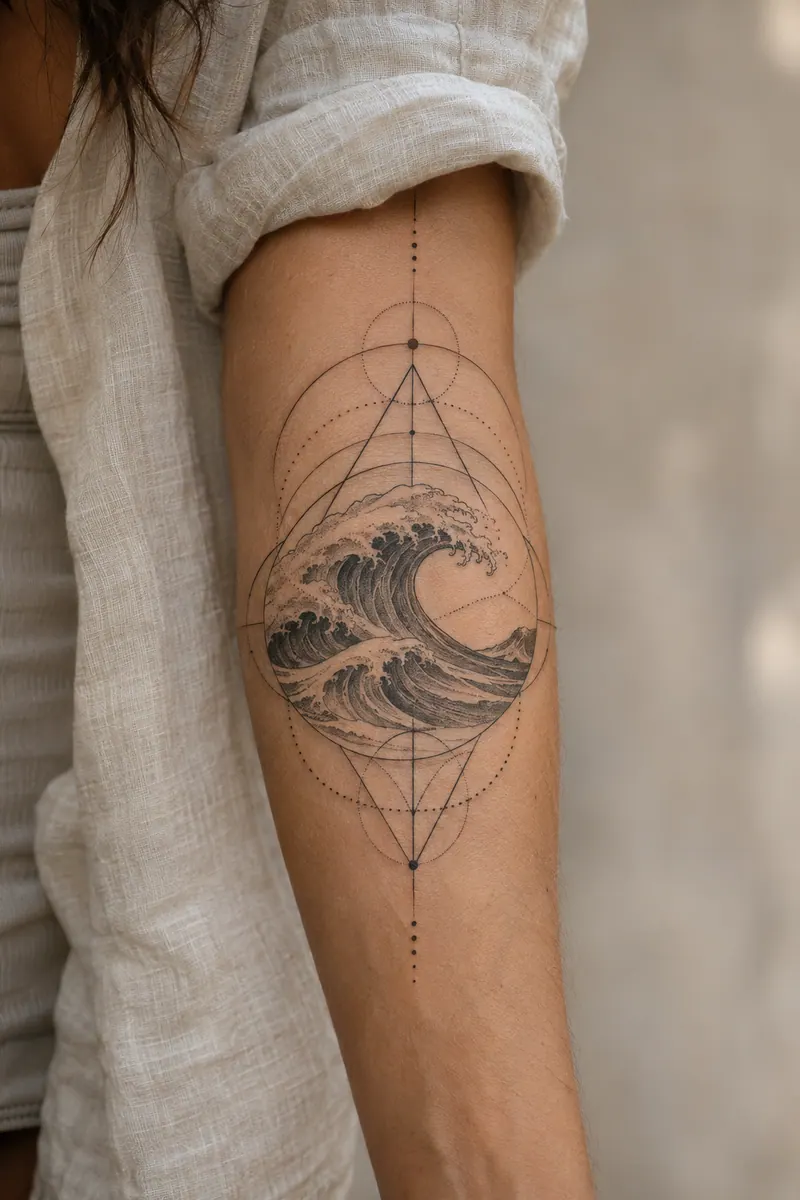
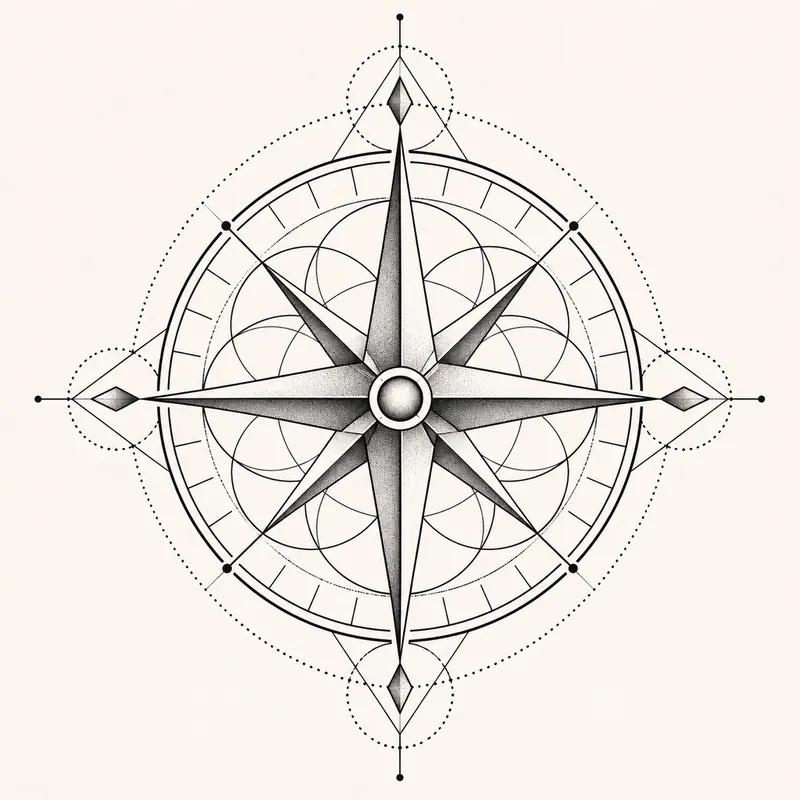
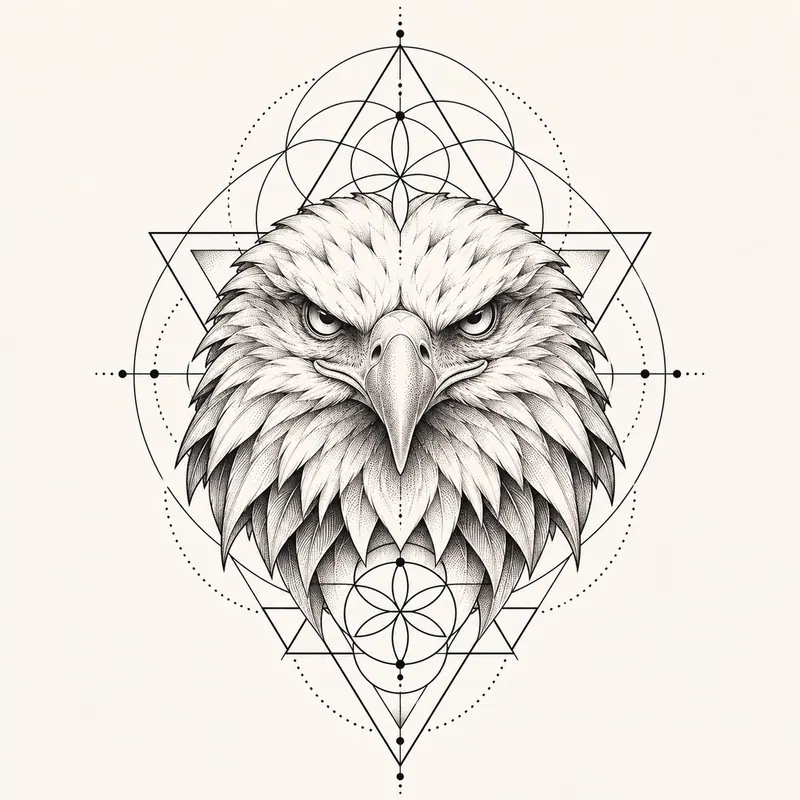
In the gallery above you can see how flexible this is: a wolf head made of facets and triangles, a lion head with line overlays, a phoenix and a moon built from sacred geometry, a third eye inside layered shapes, a compass and a sun drawn with clean lines and circles, mountains and pines inside a triangle, plus a koi, a wave and an eagle head with geometric accents.
How geometric tattoos age
Ink spreads slightly under the skin over the years, so lines gradually thicken and soften. In a loose style that is barely noticeable. In geometric work it shows, because the eye expects crisp edges. To keep the design sharp:
- Space the lines. Parallel lines that sit very close will eventually read as one blurred band.
- Size for the detail. A complex pattern needs room; shrink it too far and it will close up.
- Mix line weights. A few bolder lines give the design a backbone that survives even as fine details soften.
- Protect healed skin from the sun, which is the main cause of fading.
Best subjects and placements for geometric
Geometry suits subjects with strong, recognizable silhouettes. Geometric wolves, lions and eagles work because their outline still reads when the inside becomes facets. Celestial subjects like the moon and sun fit circles naturally, and compasses are geometric by nature.
For placement, think flat and stable. The forearm, upper arm, calf, chest and upper back keep straight lines straight. Symmetrical designs look best centered on a symmetrical area — the sternum, between the shoulder blades, down the spine. Curved areas are possible, but a perfect circle on a rounded shoulder will never look perfectly circular from every angle, so discuss it with your artist.
Geometric vs. neighboring styles
- Dotwork is a shading technique; geometric is a design approach. They often appear together, with dots shading geometric shapes.
- Mandala is a specific radial, ornamental composition. Every mandala is somewhat geometric, but most geometric tattoos are not mandalas.
- Ornamental leans decorative and flowing, closer to jewelry or filigree, while geometric stays angular and structured.
- Blackwork is about heavy black fills; a geometric piece may use them, or may be nothing but fine lines.
Choosing a geometric tattoo artist
Look for an artist who lists geometric or blackwork as a specialty and posts healed photos, not only fresh ones. Zoom in on their circles and long straight lines: are they even, and do parallel lines stay parallel? Ask how they plan symmetry on a curved body part, and whether they will adjust the design to your measurements. Expect the stencil stage to take longer than usual — that care is a good sign.
Geometric designs are easy to tweak and hard to fix later, so plan before you book. In InkForge you can describe your idea, generate it in the Geometric style, compare it with a Dotwork or Mandala version, and repaint a single area that doesn’t sit right. Then place it on a photo of your arm or back with Try-On, adjusting size and rotation by hand to check that the lines have room, and share the result with your artist.