 InkForge
What a koi fish tattoo means
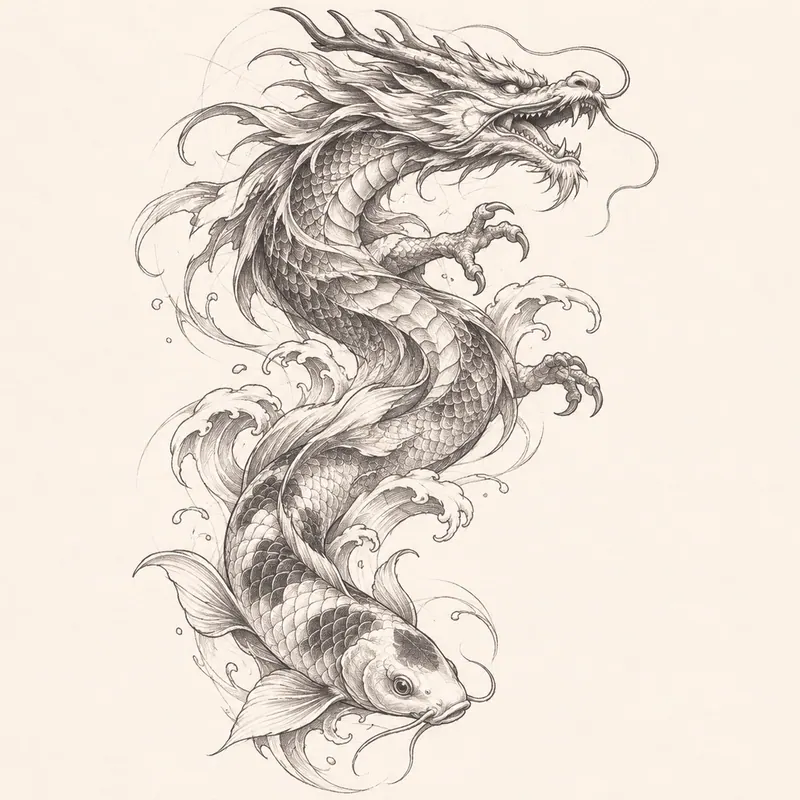
The koi is a symbol of perseverance. Its best-known story comes from China: carp swimming up the Yellow River reach a waterfall called the Dragon Gate, and the few that manage to leap it are transformed into dragons. The tale became a metaphor for working hard and rising through difficulty, and it traveled with Chinese culture to Japan.
In Japan the koi took on its own life. Ornamental koi were bred for their colors and patterns, and carp-shaped streamers (koinobori) are still flown for Children’s Day as a wish for children to grow up strong. Over time the koi also became one of the classic subjects of Japanese tattooing, where it often appears beside water, flowers and dragons.
As a tattoo, a koi usually stands for one or more of these ideas:
- Determination: fighting against the current rather than drifting with it.
- Transformation: becoming something greater through effort.
- Good fortune and prosperity, especially in East Asian traditions.
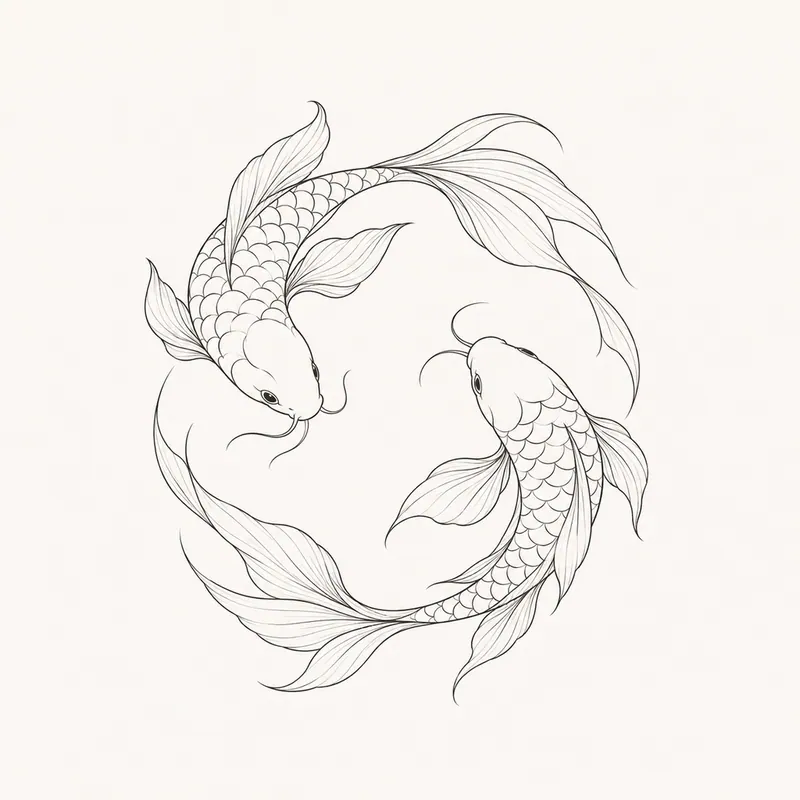
- Balance and partnership, when two koi are shown together.
Tattoo culture adds its own conventions. A koi swimming upstream is often read as a struggle still underway, a koi swimming downstream as one already overcome. Some people also assign meanings to koi colors. Treat these as shared folklore rather than strict rules; what matters most is that the direction and color mean something to you.
Popular koi fish tattoo designs
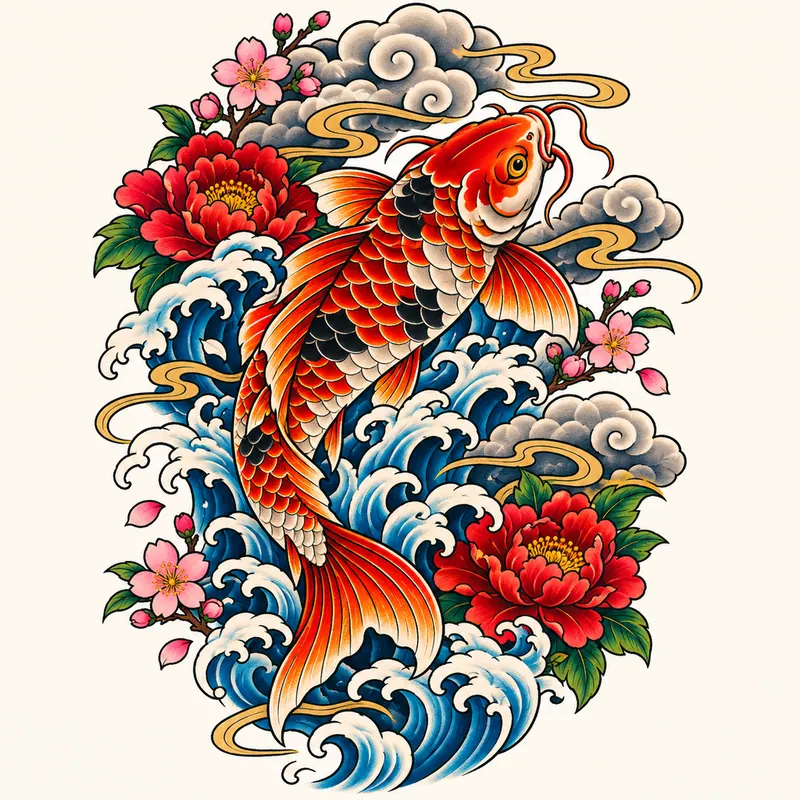
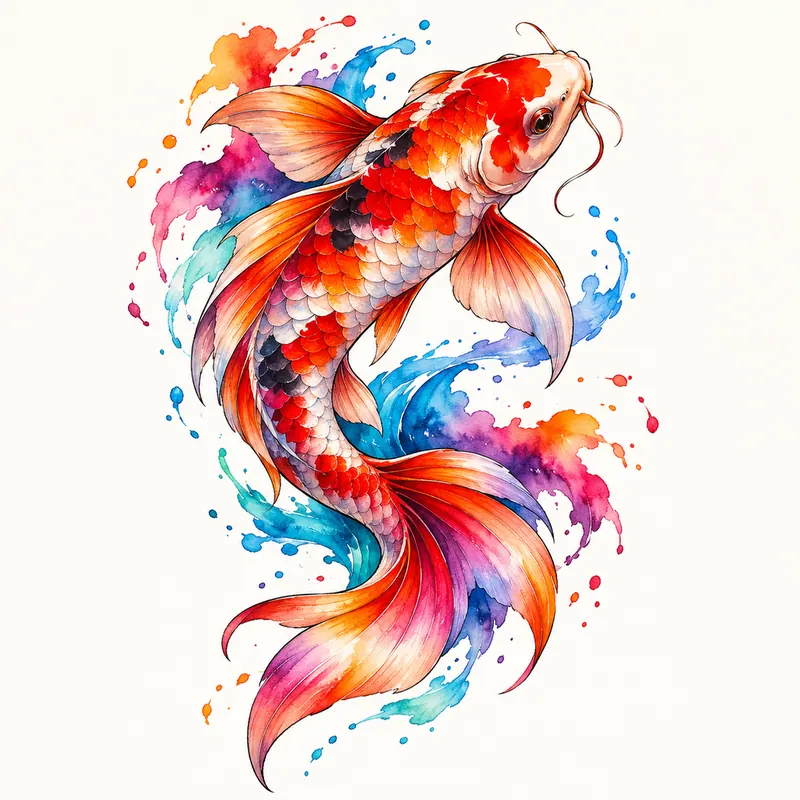
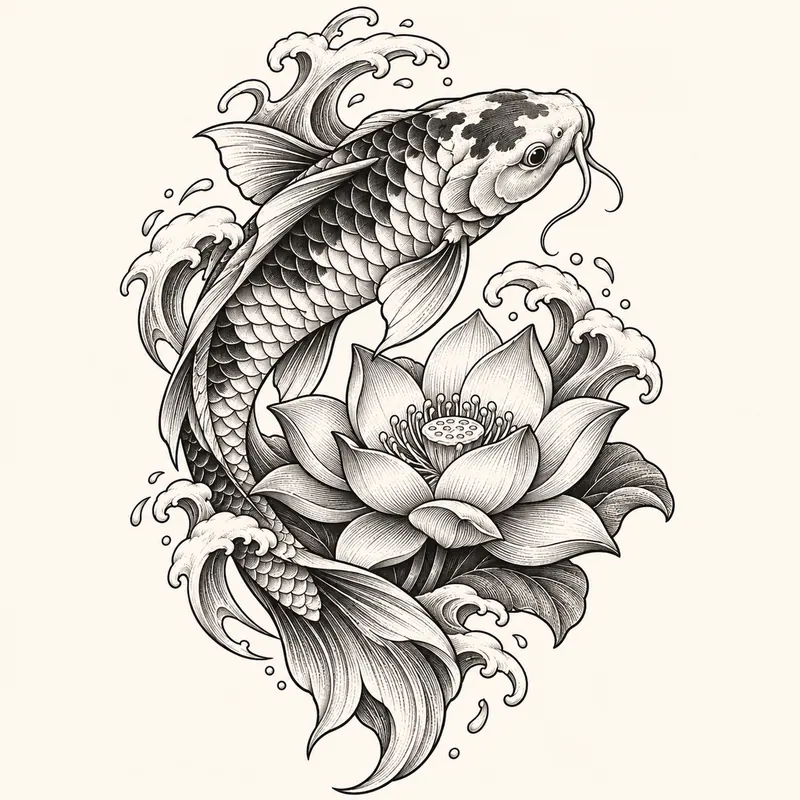
The gallery above covers the main directions koi tattoos take:
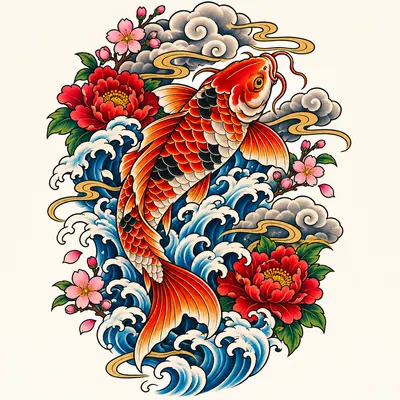
- Koi swimming upstream through waves. The classic Japanese composition, here on the forearm. Bold outlines and stylized water make the struggle feel physical.
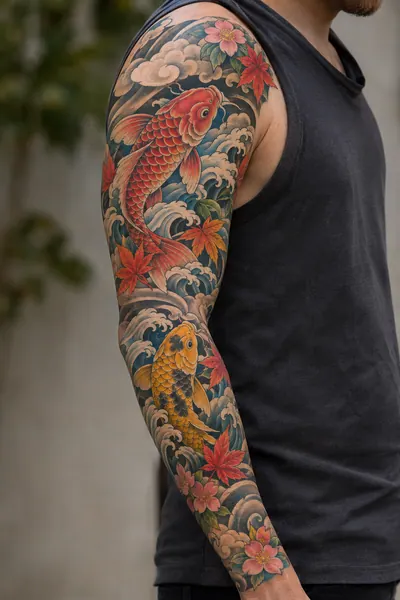
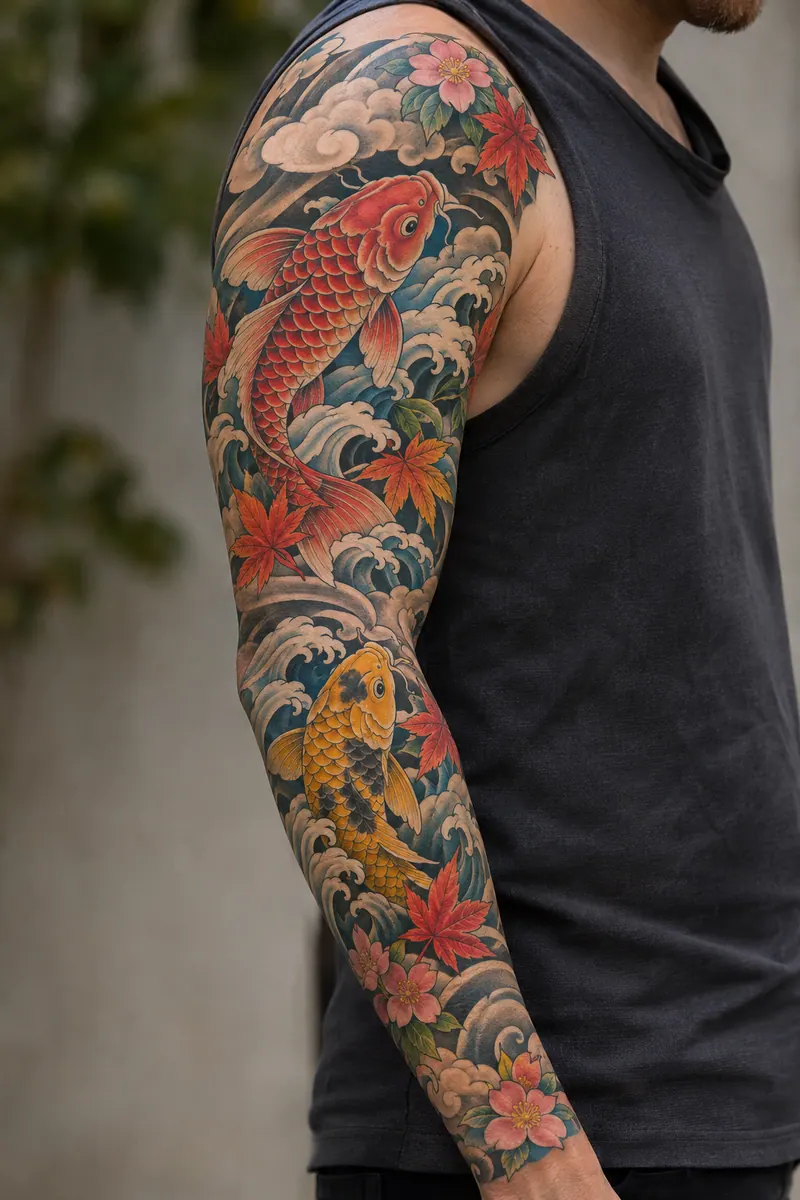
- Koi with waves and maple leaves. A full Japanese sleeve where the koi is part of a larger scene. In Japanese art, maple leaves often signal autumn and the passing of time, and the background ties the whole arm together.
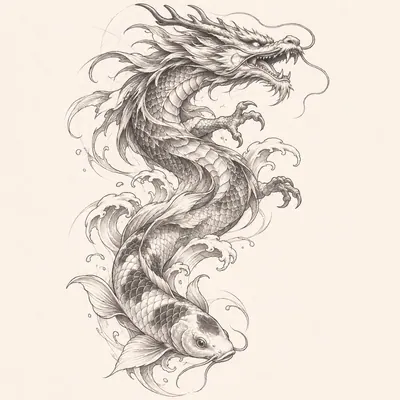
- Koi transforming into a dragon. A sketch-style back piece showing the moment of change, half fish and half dragon. If the dragon side appeals to you, see our dragon tattoo ideas.
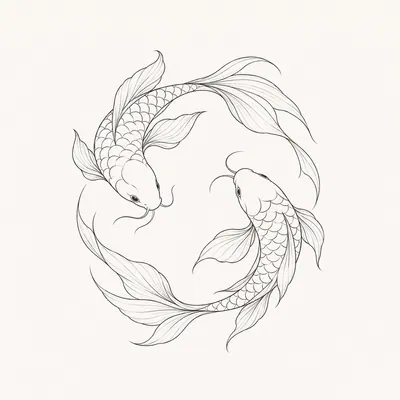
- Two koi as a yin yang. A minimalist upper-arm design that turns the Taoist symbol of complementary forces into two fish chasing each other.
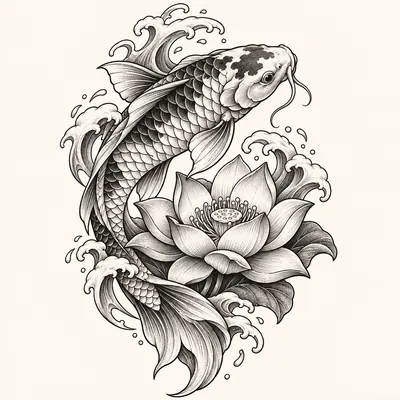
- Koi with a lotus. An illustrative thigh piece pairing two water symbols: the koi’s struggle and the lotus rising clean from muddy water.
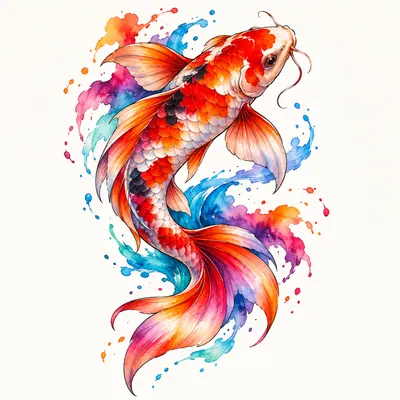
- Koi with splashes of color. A watercolor calf design that lets the fish’s orange and white blur into soft washes.
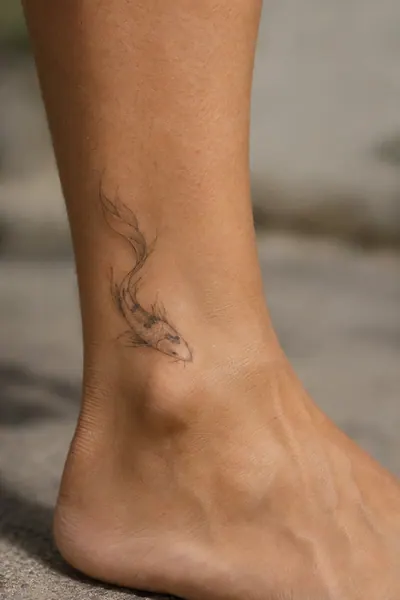
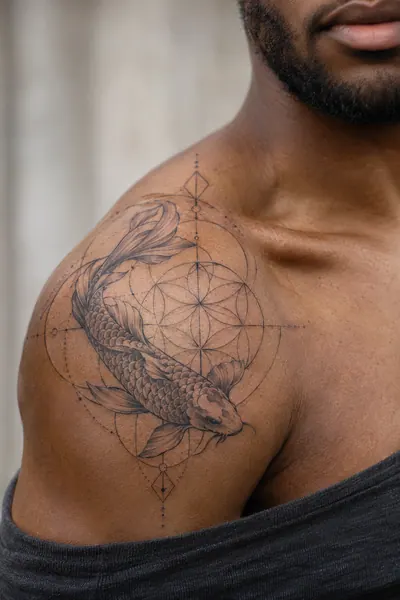
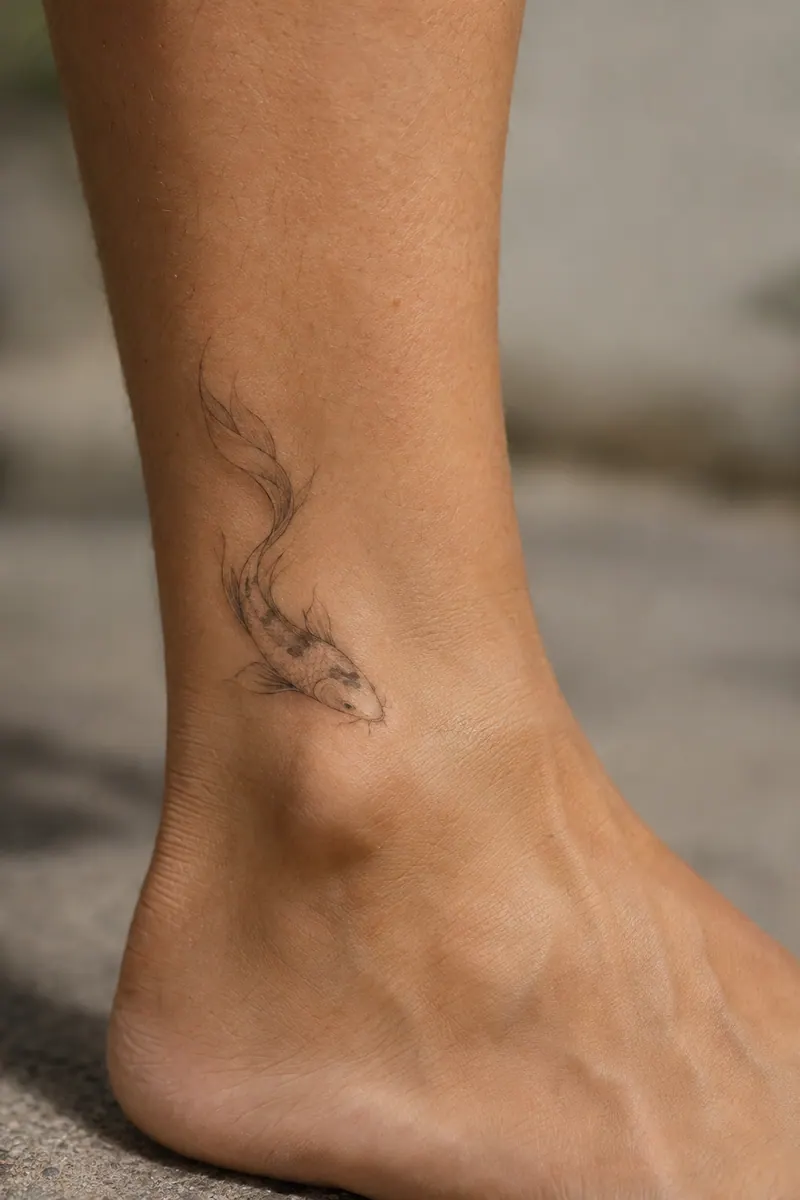
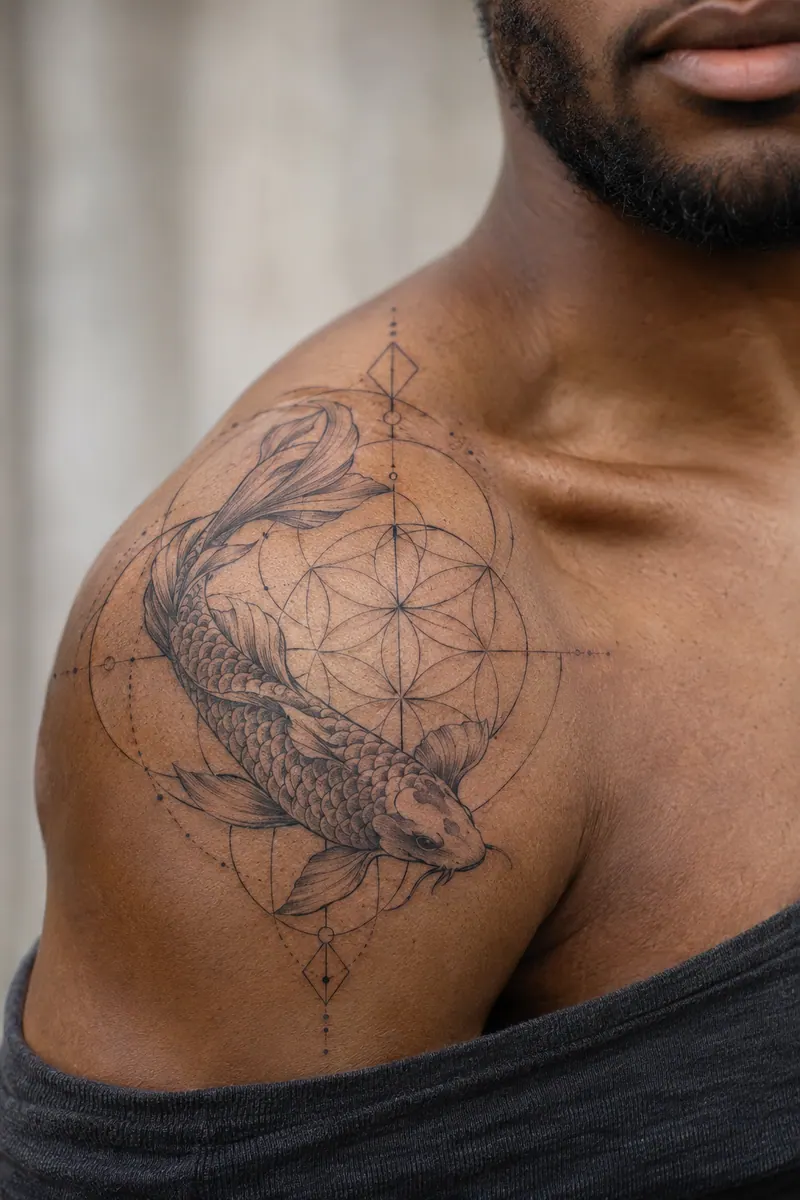
- Koi with geometric line accents and a small fine line koi on the ankle show how the fish works in modern, minimal looks too.
Choosing a style for your koi
Japanese is the natural home of the koi. Traditional Japanese work uses strong outlines, a limited but rich palette and a background of wind, water or clouds that connects the piece to the body’s shape. If you want this style, look for an artist who specializes in it; the rules of composition and background are a craft of their own.
Watercolor emphasizes the colors of koi and feels lighter and more fluid. Ask for some black structure in the design so it stays readable as it ages.
Fine line and minimalist koi are understated and elegant, ideal for a first tattoo or a small personal reminder. Keep the scales and fins simple at small sizes.
Geometric and sketch versions suit people who like the symbolism but want a more contemporary look than traditional Japanese.
Where to place a koi fish tattoo
A koi’s body naturally forms an S-curve, which is exactly why it fits the body so well. Let the curve follow the limb rather than fight it:
- Forearm and calf: a single koi swimming lengthwise, about 12 to 20 cm long.
- Shoulder and thigh: room for a koi with a lotus, a splash of water or a curled tail.
- Sleeve or back: full Japanese scenes with waves, leaves and sometimes a second koi or a dragon.
- Ankle or wrist: a small outline koi, ideally kept to a clear silhouette.
Think about direction early. Whether your koi points up or down the arm changes its meaning in tattoo folklore and also how it reads when your arm hangs at your side.
A koi becomes personal through small choices: its direction, the number of fish, the season shown in the background, or a lotus or dragon that marks where you are on your own journey. In InkForge you can describe that scene, generate it in Japanese, watercolor or fine line, and place it on a photo of your arm or leg to judge the size. Save the version that feels right and bring it to your artist as a starting point.