 InkForge
What a skull tattoo really means
It is easy to read a skull as purely dark, but most skull tattoos are closer to the opposite: a reminder that life is short, so live it well. The skull is one of the oldest symbols in human art, and its meaning has always depended on context.
The main threads:
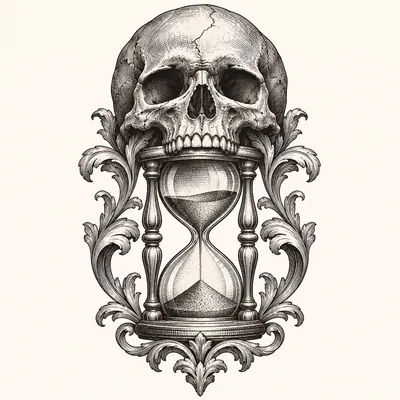
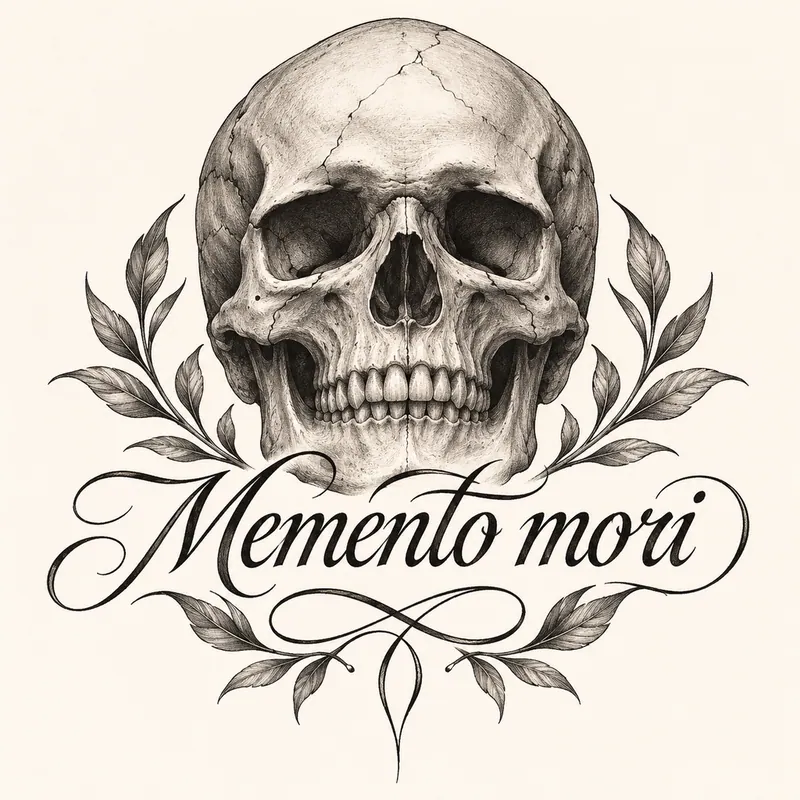
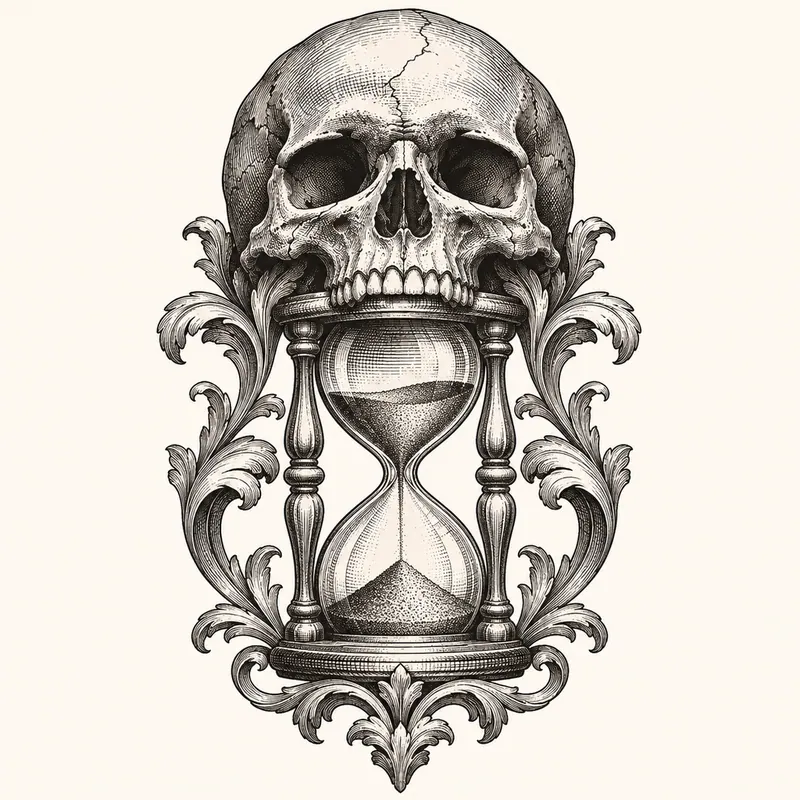
- Memento mori. Latin for “remember that you will die.” In 16th- and 17th-century European still-life painting, especially the vanitas tradition, skulls appeared alongside hourglasses, candles and flowers to remind viewers that wealth and beauty fade.
- Remembrance and celebration. In Mexico’s Día de los Muertos, decorated skulls honor deceased family members with color and affection.
- Protection and defiance. Sailors, soldiers, bikers and punks have long worn skulls as a sign of fearlessness, of having faced danger and come back.
- Equality. Under the skin, everyone has the same skull. Some people wear it as a reminder that status means little in the end.
Sugar skulls and Día de los Muertos
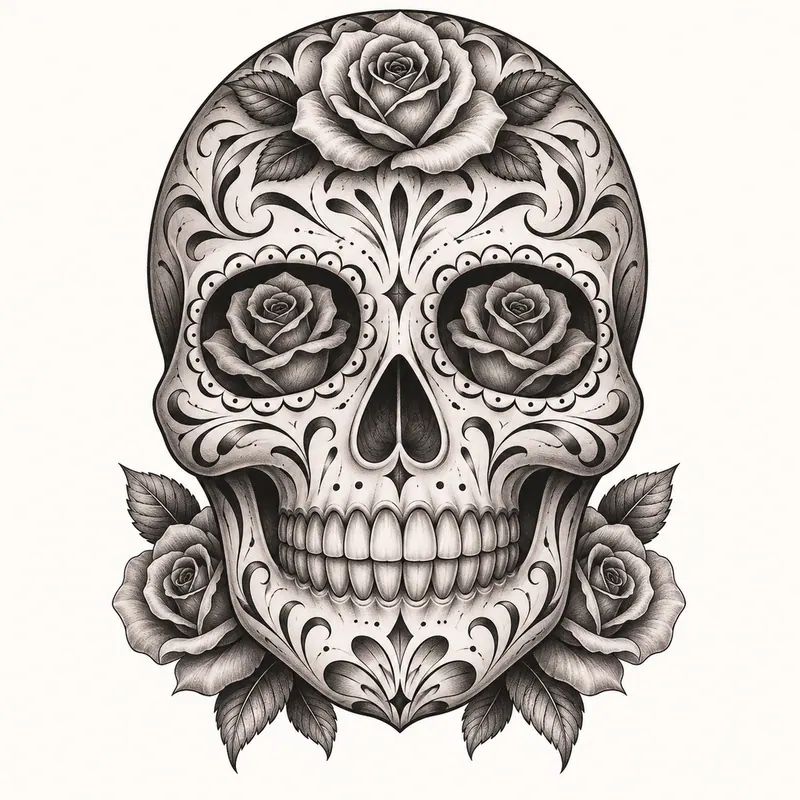
The decorated calavera deserves its own note. Sugar skulls are placed on ofrendas, home altars built during Día de los Muertos to welcome back the spirits of loved ones, often with the person’s name written across the forehead. The elegant skeleton lady La Catrina comes from the work of the printmaker José Guadalupe Posada and later Mexican artists.
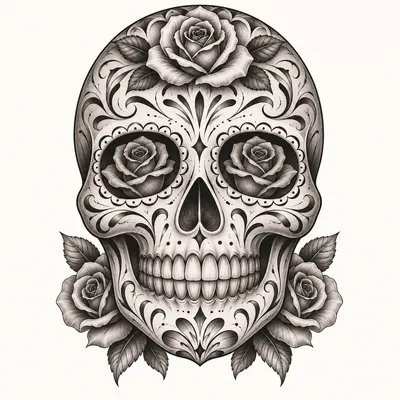
A sugar skull tattoo in the Chicano black-and-grey style, like the one in the gallery, is usually a tribute to family and memory. If this tradition is not your own, take time to understand it, and consider making your design personal with names, flowers or dates rather than copying a generic version.
Skull tattoo designs in the gallery
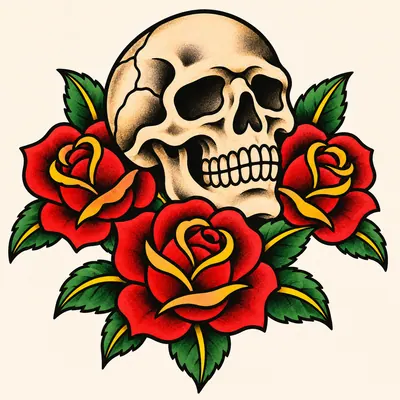
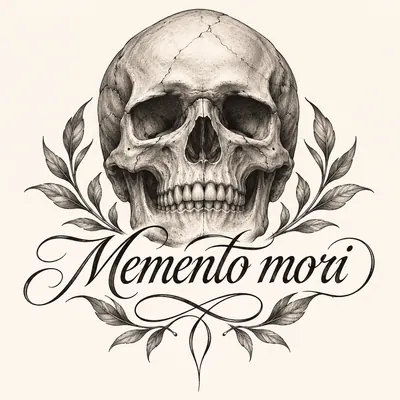
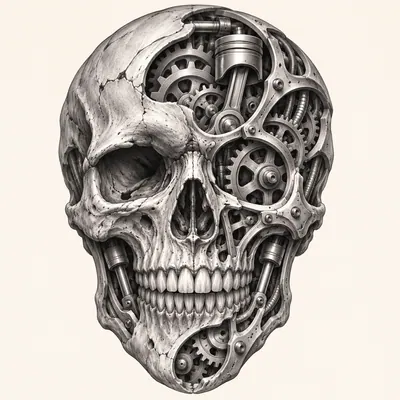
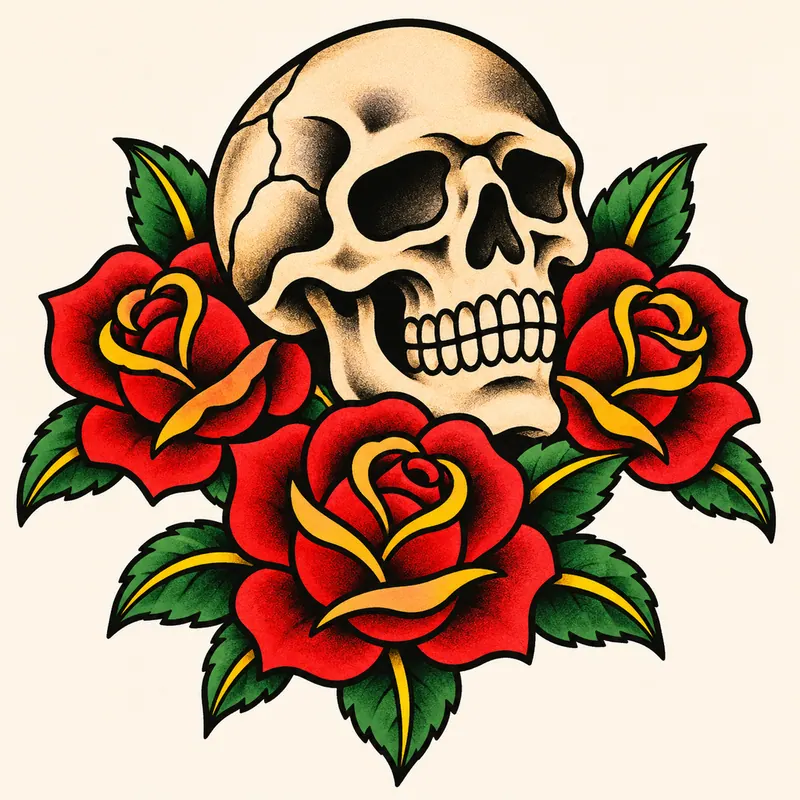
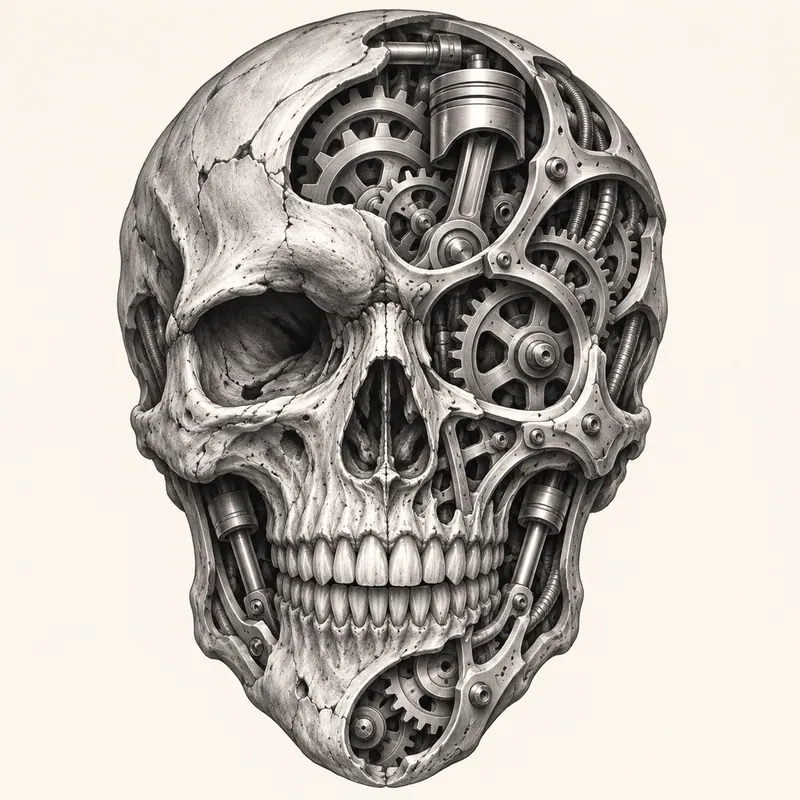
The eight variants above show how much companion elements change a skull’s message:
- Skull with roses. The traditional forearm classic: life and death, love and loss, in bold outlines.
- Skull with “Memento mori.” A lettering forearm piece that states the meaning outright.
- Sugar skull (calavera). A Chicano upper arm piece honoring the dead with ornament and flowers.
- Skull with mechanical gears. A biomechanical upper arm design where the mind becomes machinery.
- Skull with an hourglass. An engraving calf piece that looks like a page from an old book, straight out of the vanitas tradition.
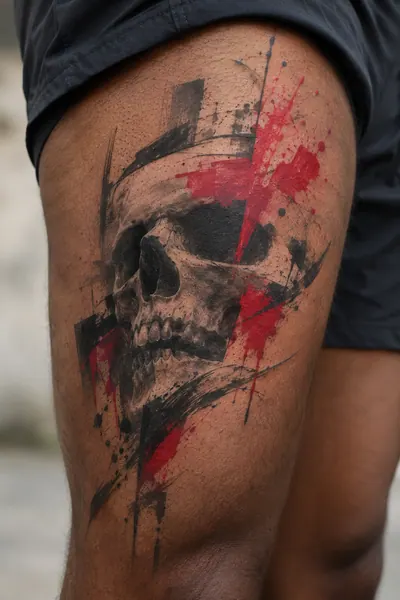
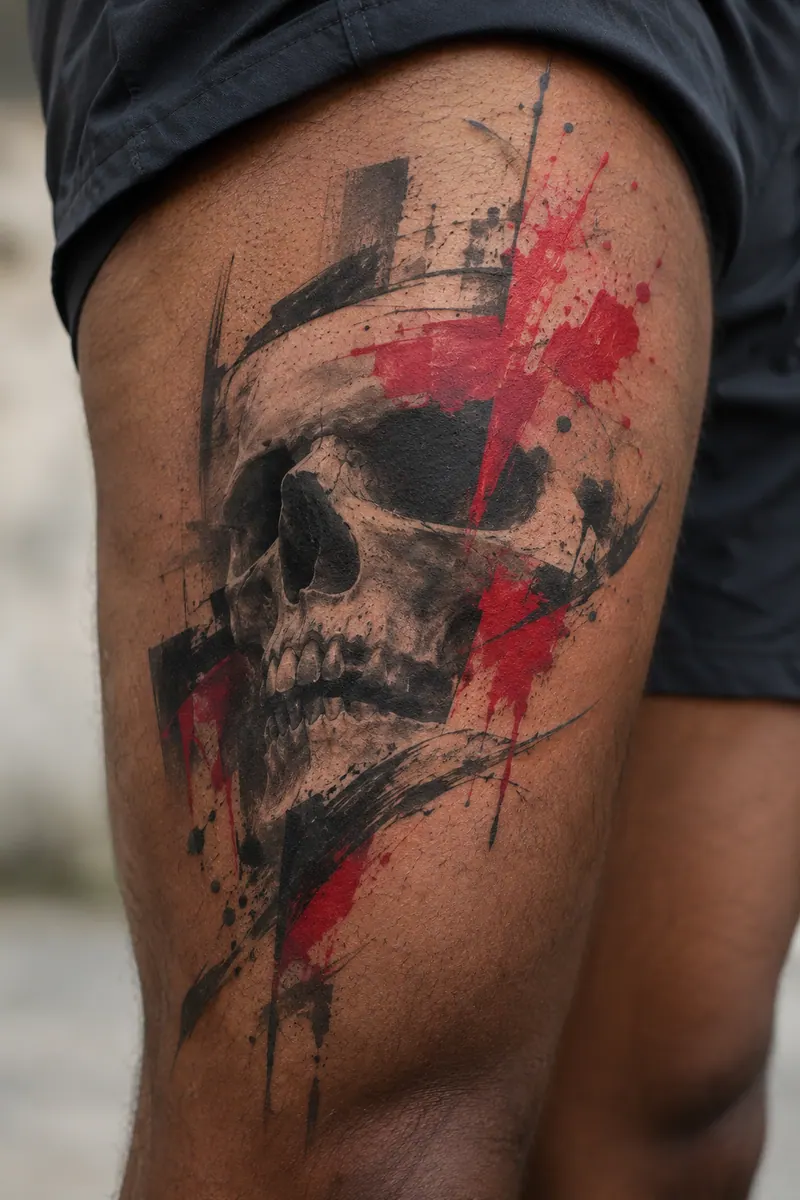
- Skull with paint splashes. A trash polka thigh piece mixing realism with red-and-black chaos.
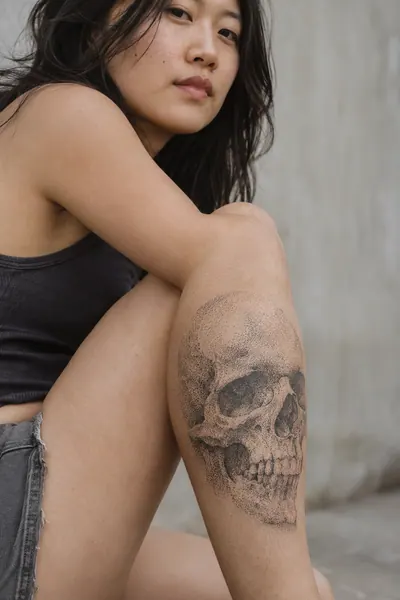
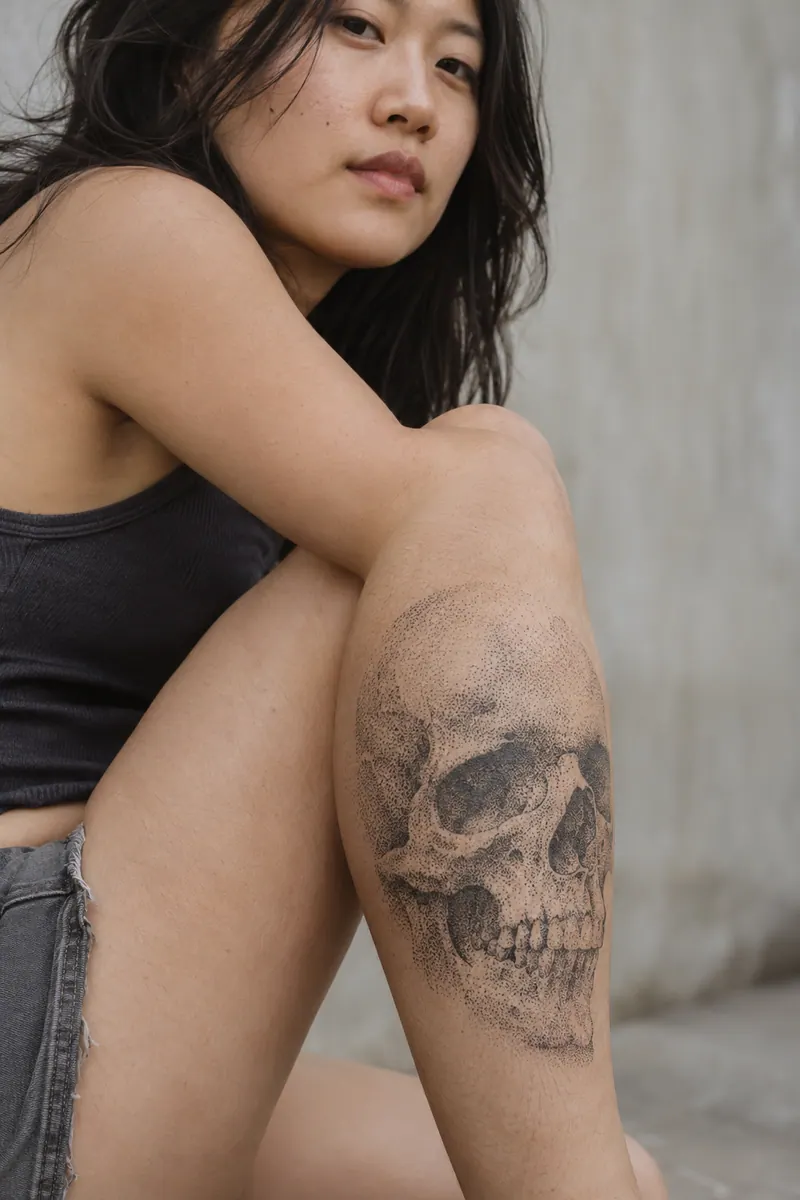
- Stippled skull. A dotwork calf design built from thousands of dots for soft, grainy shading.
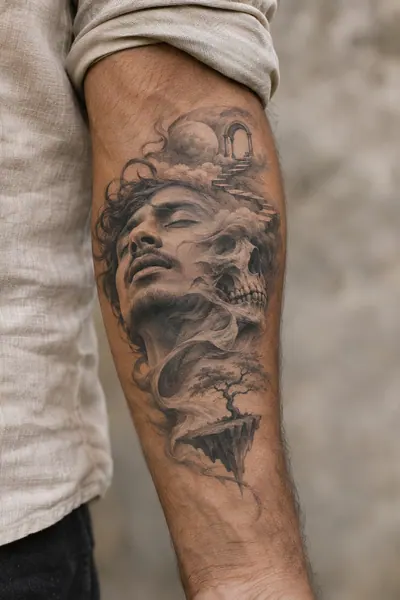
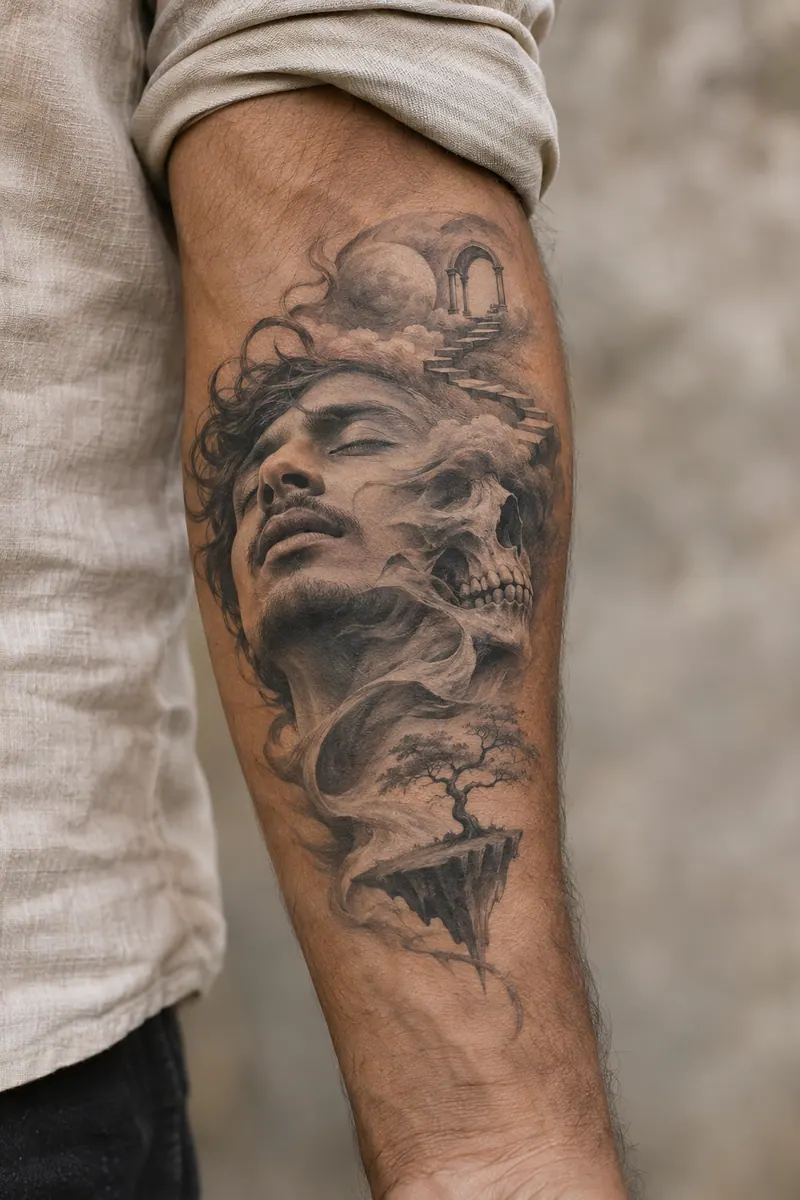
- A face dissolving into a skull. A surreal forearm piece showing the skull beneath the skin, life and death in one image.
Choosing the right style
The style decides whether your skull feels playful, dark, elegant or eerie:
- Traditional and neo traditional skulls are bold, colorful and age extremely well.
- Black-and-grey and realism give an anatomical, serious look. Realistic skulls need enough size for the cheekbones, teeth and eye sockets to read.
- Engraving and dotwork create an antique or textured feel that suits memento mori themes.
- Surreal and trash polka let you break the skull apart and combine it with other images.
Where to place a skull tattoo
A skull is compact and roughly oval, which makes it one of the easiest subjects to place:
- Forearm, upper arm and calf for a single skull or skull with roses.
- Knee or elbow for a round skull that wraps the joint, a traditional favorite, though these areas are usually more painful and harder to heal.
- Thigh, back or sleeve for scenes with flowers, clocks, candles or banners.
Teeth and eye sockets are the details that define a skull. Keep the teeth simple at small sizes so they do not merge into a dark band over time.
Skulls also rarely appear alone, and the companion changes the story. Pair yours with a snake for rebirth, a moth for transformation, a crown for victory over death, a dagger for danger survived, or a clock or hourglass for the passing of time.
Ask yourself whether your skull is a warning, a tribute or a celebration, then build the details around that answer. In InkForge you can describe your idea, generate it in several styles at once, and use the Edit brush to rework just the flowers or the eyes until the balance feels right. Export your favorite and share it with your artist.