InkForge
The meaning behind wings
Wings are one of the oldest ways humans have pictured something beyond ordinary life. Because they belong to birds, angels and gods at once, a wing tattoo can be spiritual, mythological or completely personal.
- Freedom and escape. The most common reading: leaving behind a place, a relationship or a version of yourself.
- Protection. Ancient Egyptian art often shows protective goddesses, such as Isis, with outstretched wings sheltering the person or pharaoh beneath them.
- Speed and travel. In Greek and Roman myth, Hermes (Mercury) wears winged sandals as messenger of the gods, which is why small winged feet or ankles suggest movement and a restless spirit.
- Victory and ambition. The Greek goddess Nike is shown winged. The story of Icarus adds a warning: reach high, but know your limits.
- Memory and faith. In Christian art, angels are traditionally painted with feathered wings, and a pair of angel wings is one of the most common memorial tattoos.
Angel wings, memorial wings and halos
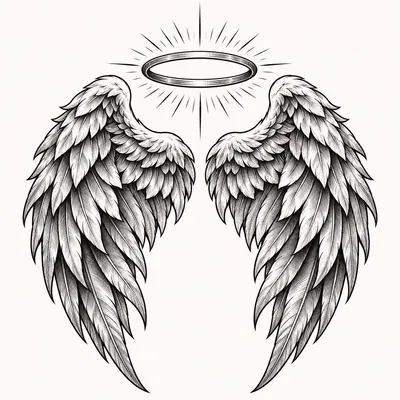
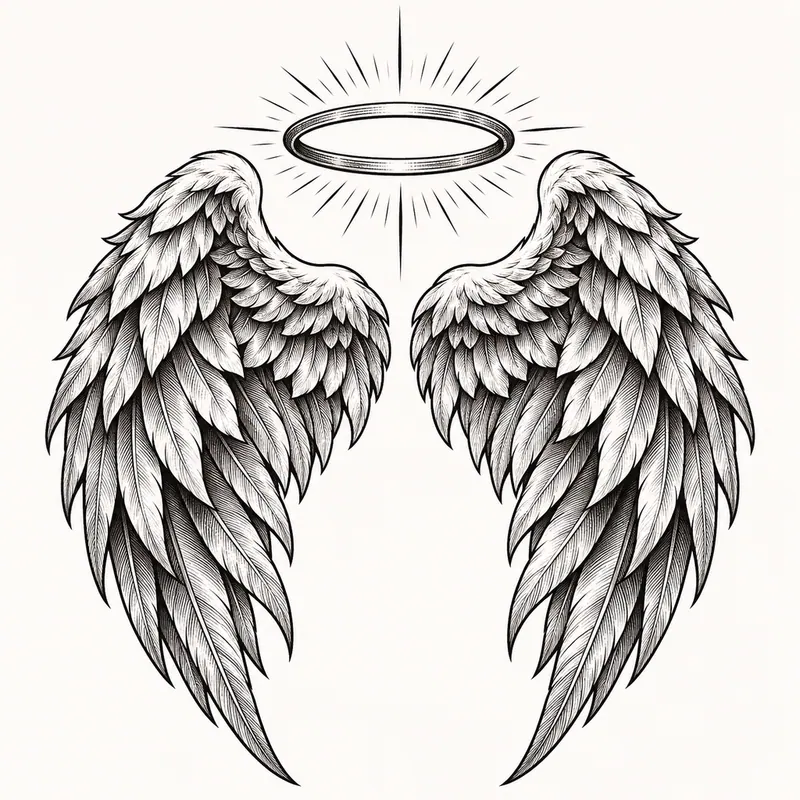
Angel wings carry a gentle, protective feeling that is hard to get from any other image. A full pair spread across the shoulder blades turns the wearer into the figure being protected, while a halo above a single pair, like the illustrative shoulder design in the gallery, makes the religious or memorial meaning explicit.
Many people add a name, initials or a date between the wings, or place a small heart at the center. If you are curious about that combination, our winged heart ideas cover it in depth. Whatever you add, keep it small so the wings stay the main subject.
Wing designs from the gallery
The eight concepts above show how far the same subject can travel:
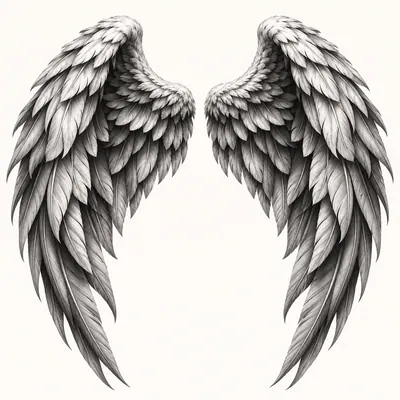
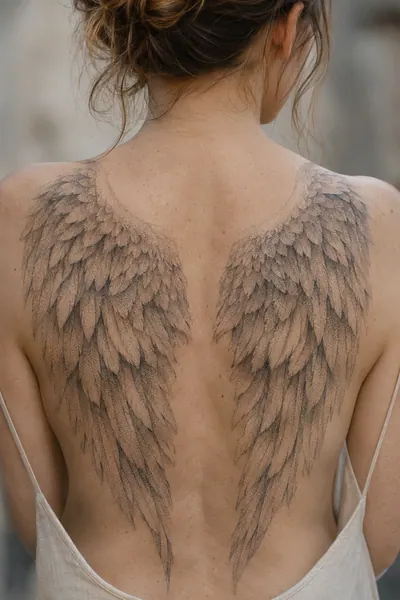
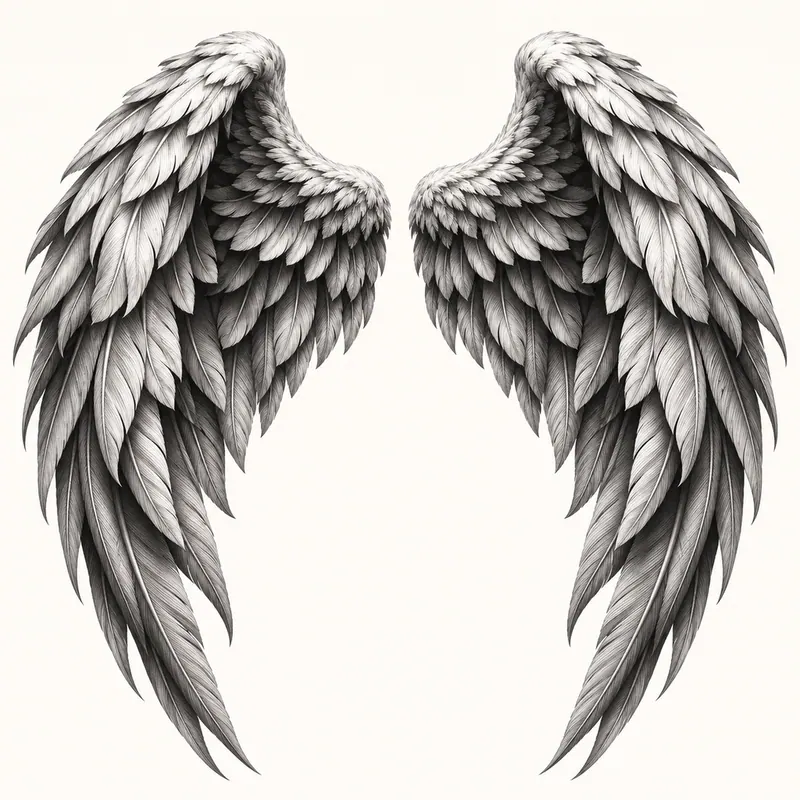
- Realistic angel wings on the back. Realism captures individual feathers and soft shadow, and needs the scale of the upper back to do it.
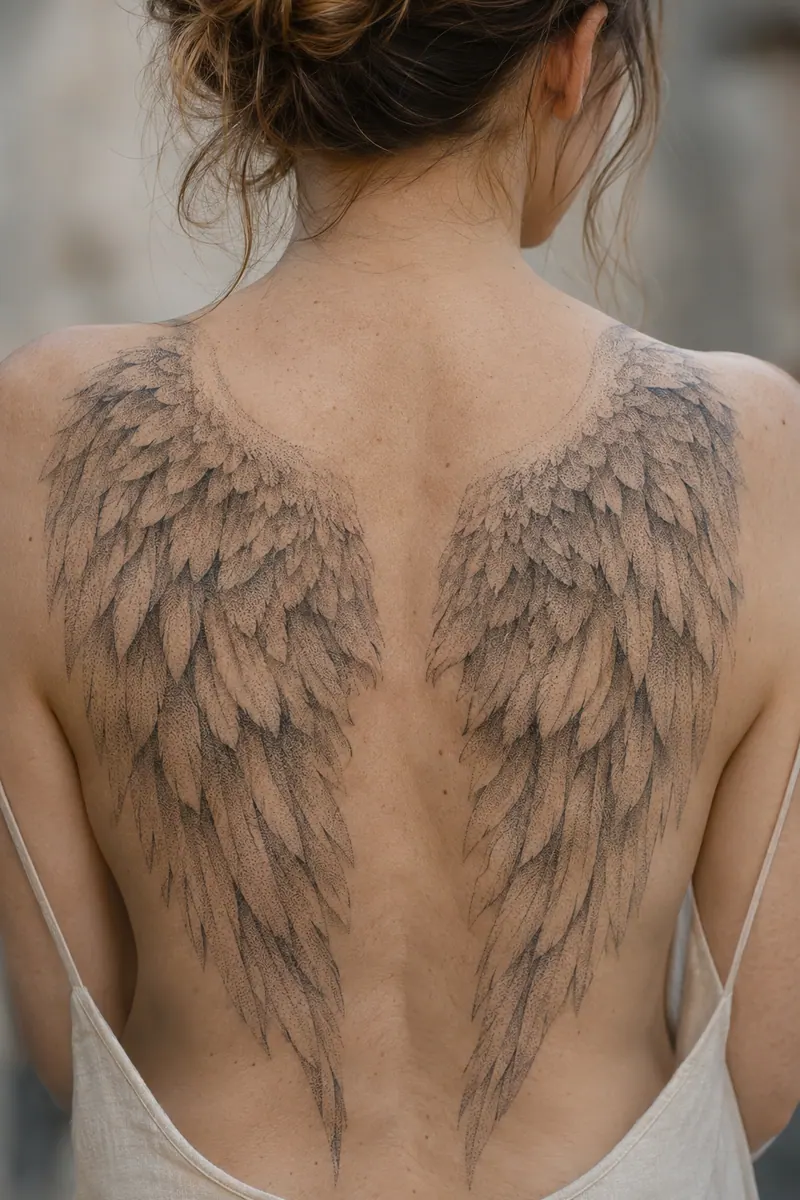
- Full-back angel wings in dotwork. Dotwork builds feathers from stippling, giving a softer, grainier texture than smooth shading.
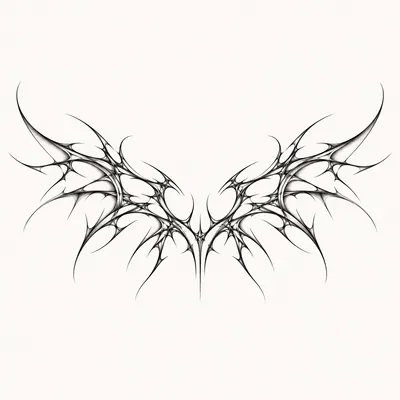
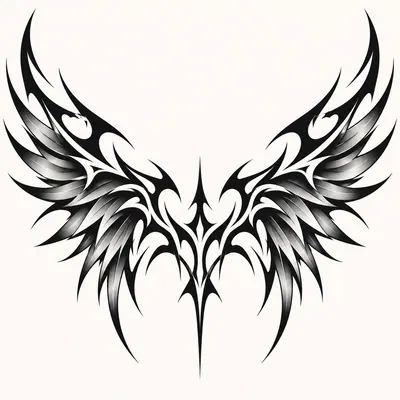
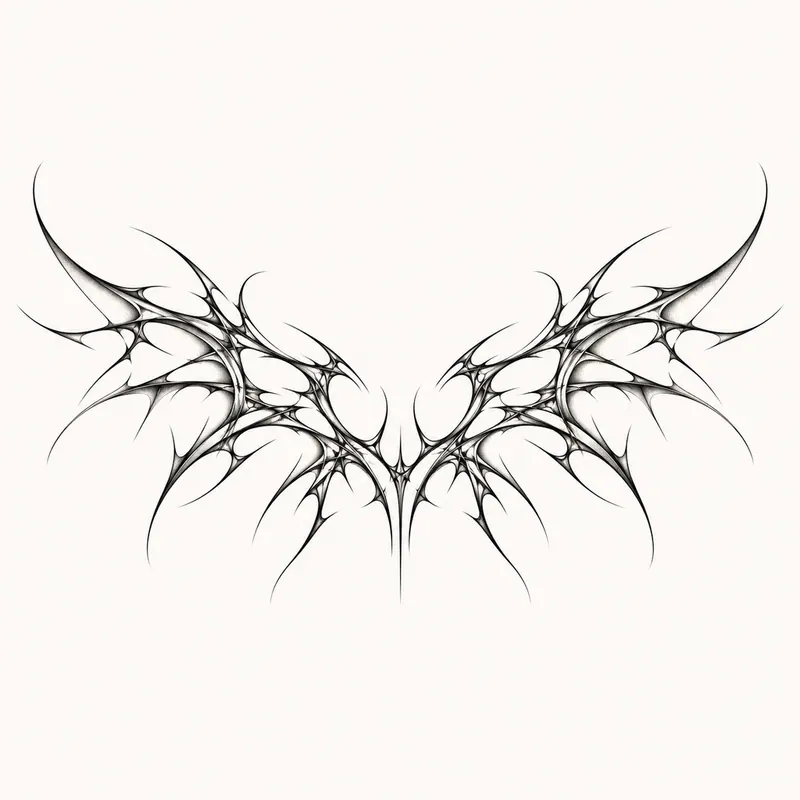
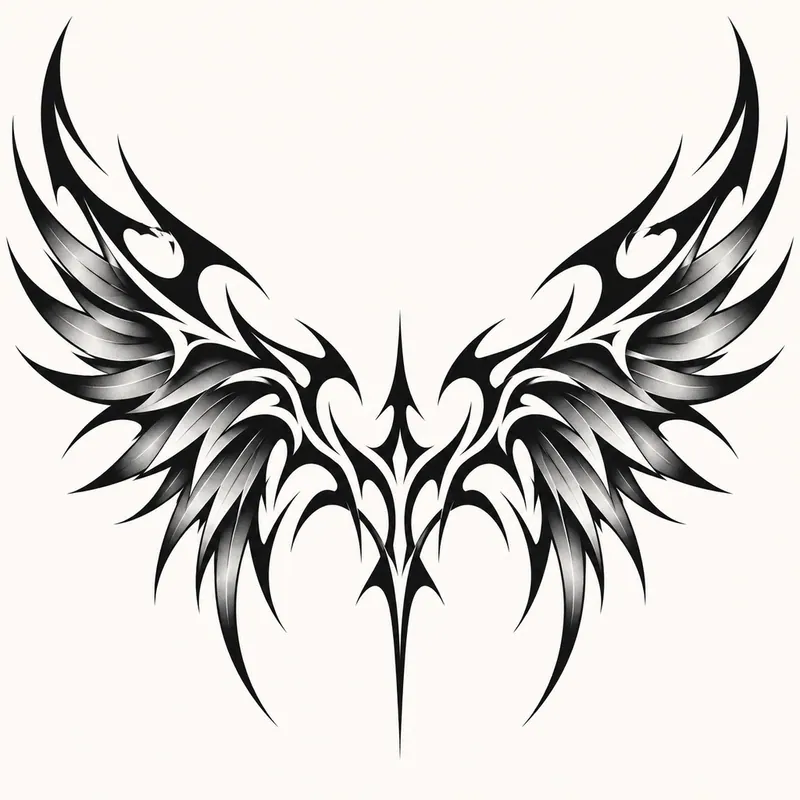
- Tribal wings on the back. Sharp black shapes turn feathers into bold blades. This is the modern Western tribal style, not a specific cultural tradition; Polynesian and other Indigenous tattooing have their own meanings and practitioners.
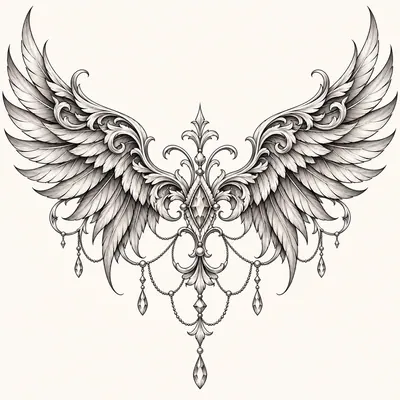
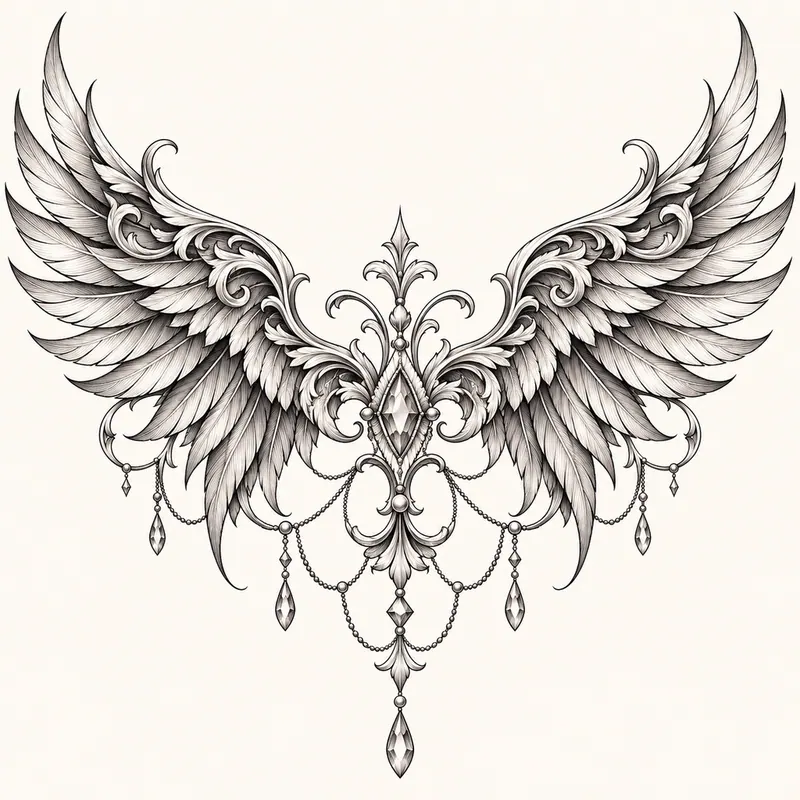
- Ornamental filigree wings on the chest. Jewelry-like scrolls replace feathers and frame the sternum symmetrically.
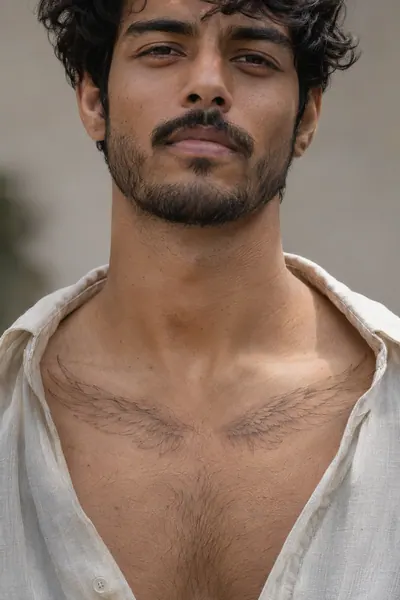
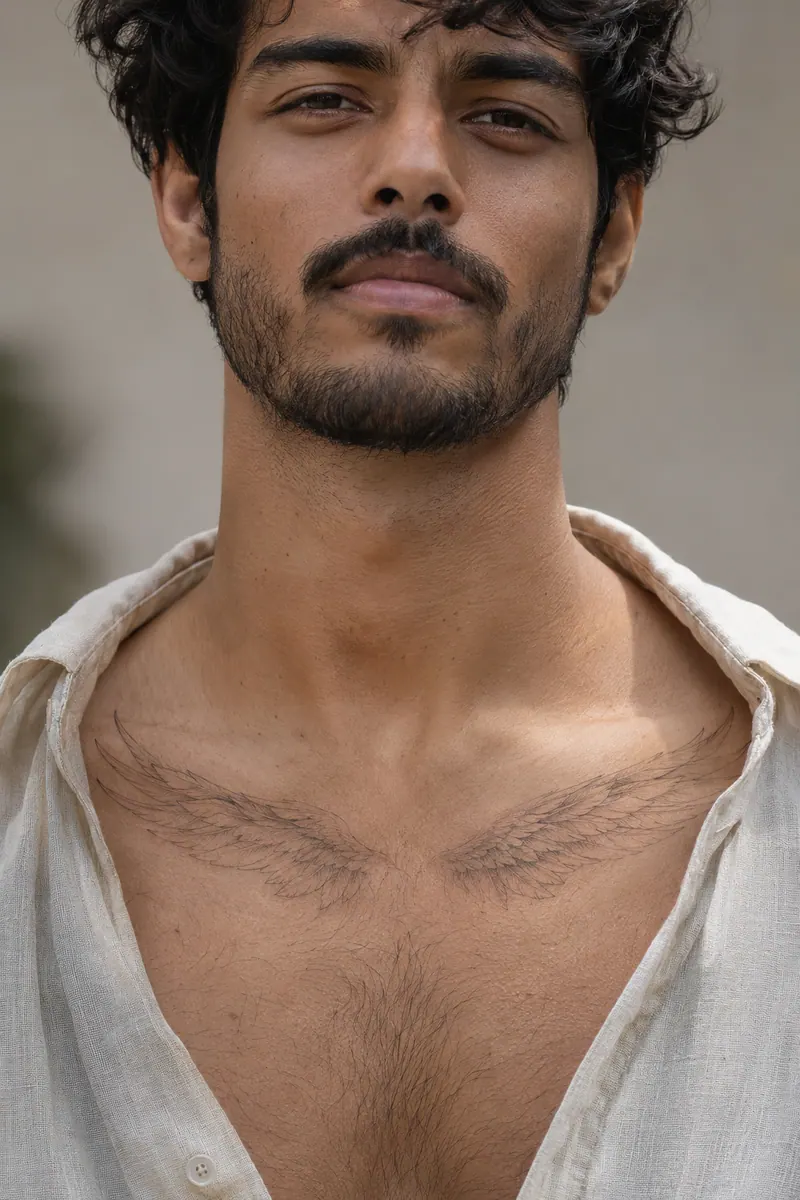
- Fine line wings across the collarbones. One wing follows each collarbone, so the design looks like it is opening out from the center of the chest. Fine line keeps it airy.
- Glyph wings on the neck. Cyber sigilism reduces wings to thorny, flowing lines, perfect for a small spot behind the ear.
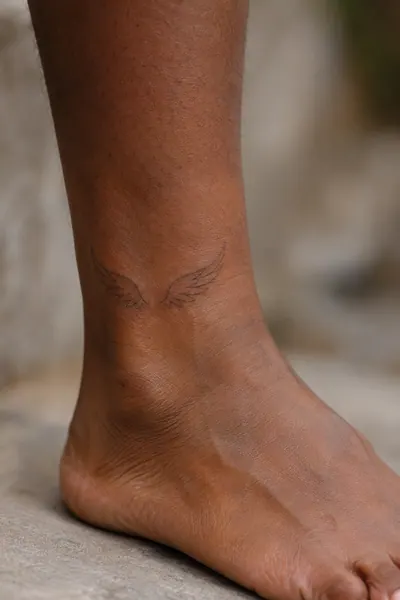
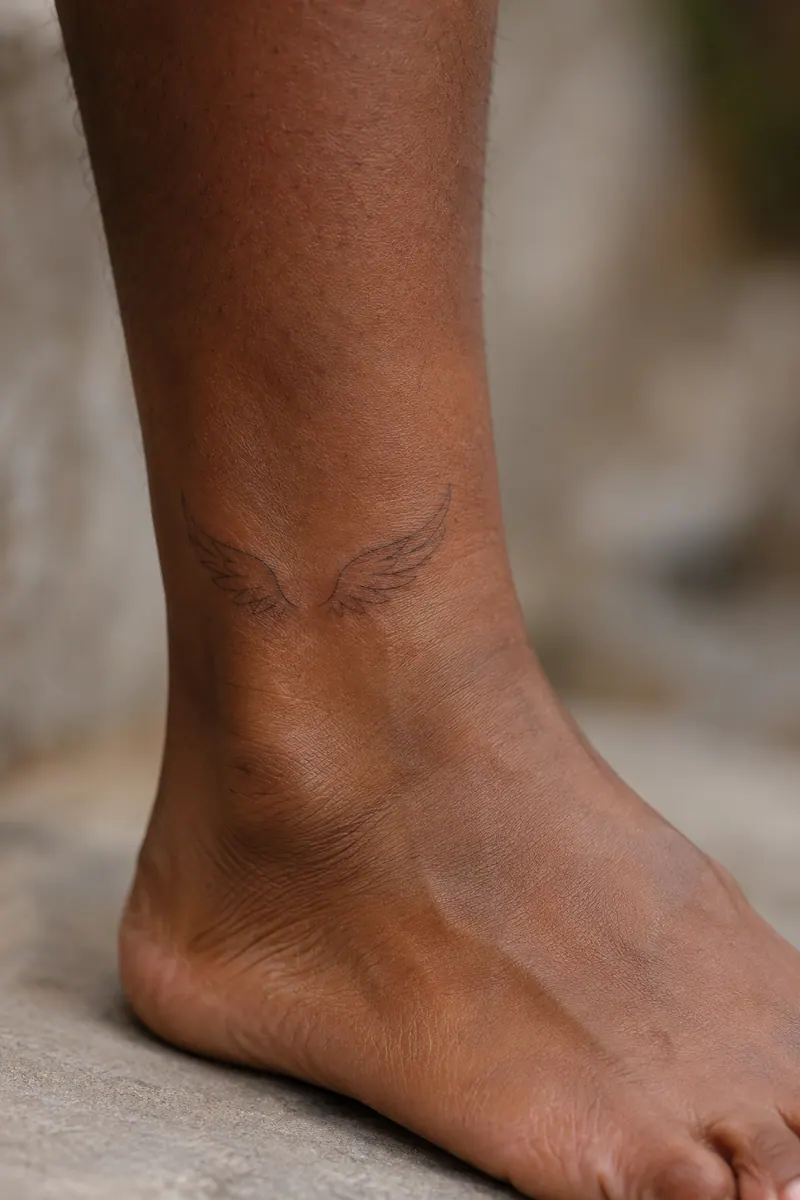
- Minimalist winged ankle. A nod to Hermes: two tiny wings at the ankle bone for a traveler or runner.
Symmetry, scale and getting the pair right
Wings are unforgiving of asymmetry. A pair that is a few millimeters off is very noticeable on a back or chest, so they need careful stenciling while you stand naturally, not while you lean over a table.
- Measure the space. Back wings usually start near the spine and stretch toward the shoulders or down to the waist. Decide on the height before the design is drawn.
- Plan for movement. Shoulder blades shift as you move your arms. Ask your artist to check the stencil with your arms relaxed, raised and crossed.
- Simplify small wings. At ankle or ear size, each wing needs only a handful of feather shapes. More detail will merge as the tattoo ages.
- Consider one wing. A single wing on the shoulder or ribs can stand for someone who is missing, and avoids the symmetry challenge entirely.
Where wings fit best
The back is the classic home for full wings because the shoulder blades already suggest where wings would grow. The chest and collarbones suit horizontal, open designs. For something private, the ankle, behind the ear and the inner wrist work for tiny pairs. Calves and the outer thigh suit a single vertical wing or a winged figure.
Design wings that are truly yours
Think about what the wings are carrying: a name, a birth flower, a feather from a bird that meant something to you, or a halo for someone you miss. In InkForge you can describe that idea, try it in different styles, and use the brush edit to rework a single wing without starting over. Then place the pair on a photo of your back or chest with Try-On, adjusting size, position and rotation by hand to judge the spread before you book.