InkForge
What a heart tattoo means
The heart shape is one of the most recognized symbols in the world, standing for love, emotion and life. Its exact origin is debated, but by the late Middle Ages it was already appearing in European art as a symbol of love, and it has never really gone away.
In tattooing, the heart covers a wide range of meanings:
- Family love: a heart with a parent’s or child’s name.
- Romantic love: matching hearts, a lock and key, two names joined.
- Self-love and healing: a small heart as a quiet reminder to be kind to yourself.
- Memory: a heart for someone who has passed, often with wings or a date.
- Faith: the sacred heart in Catholic tradition.
- Life and survival: anatomical hearts and heartbeat lines.
The heart’s flexibility is its strength. Before choosing a design, decide which of these you mean, and let the style and details carry it.
Popular heart tattoo designs
The gallery above shows eight very different hearts:
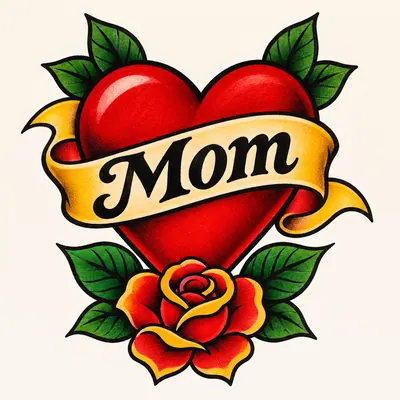
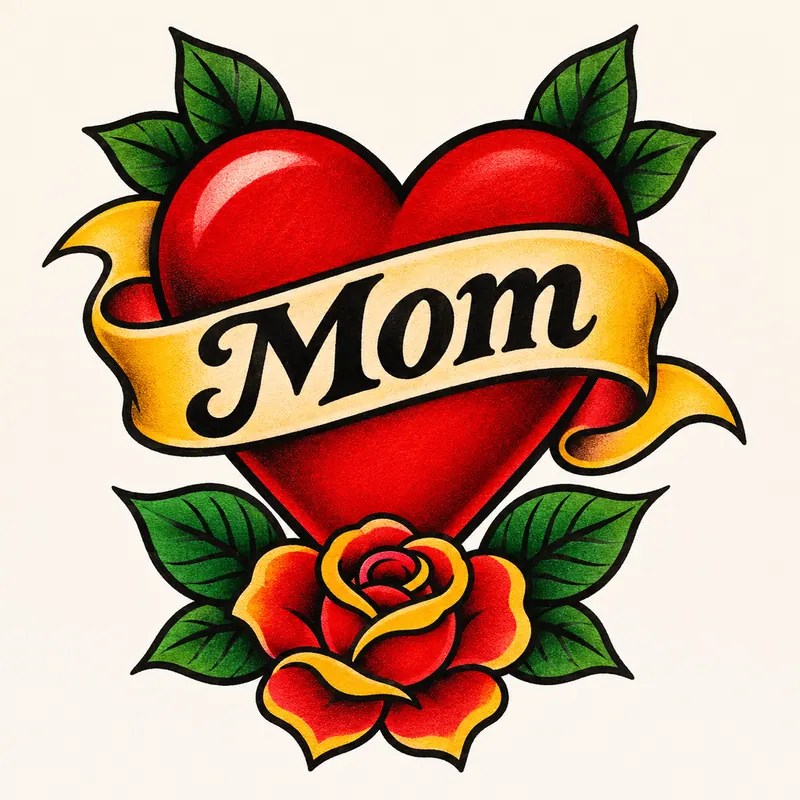
- Heart with a “Mom” banner. The most iconic piece of American traditional flash, here on the upper arm. Bold outlines, a red heart and a ribbon banner have made it a classic for generations.
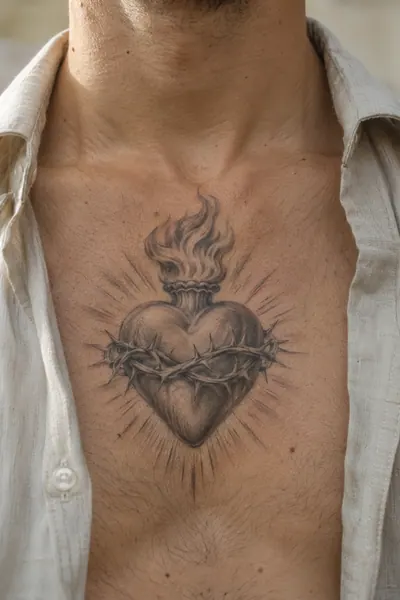
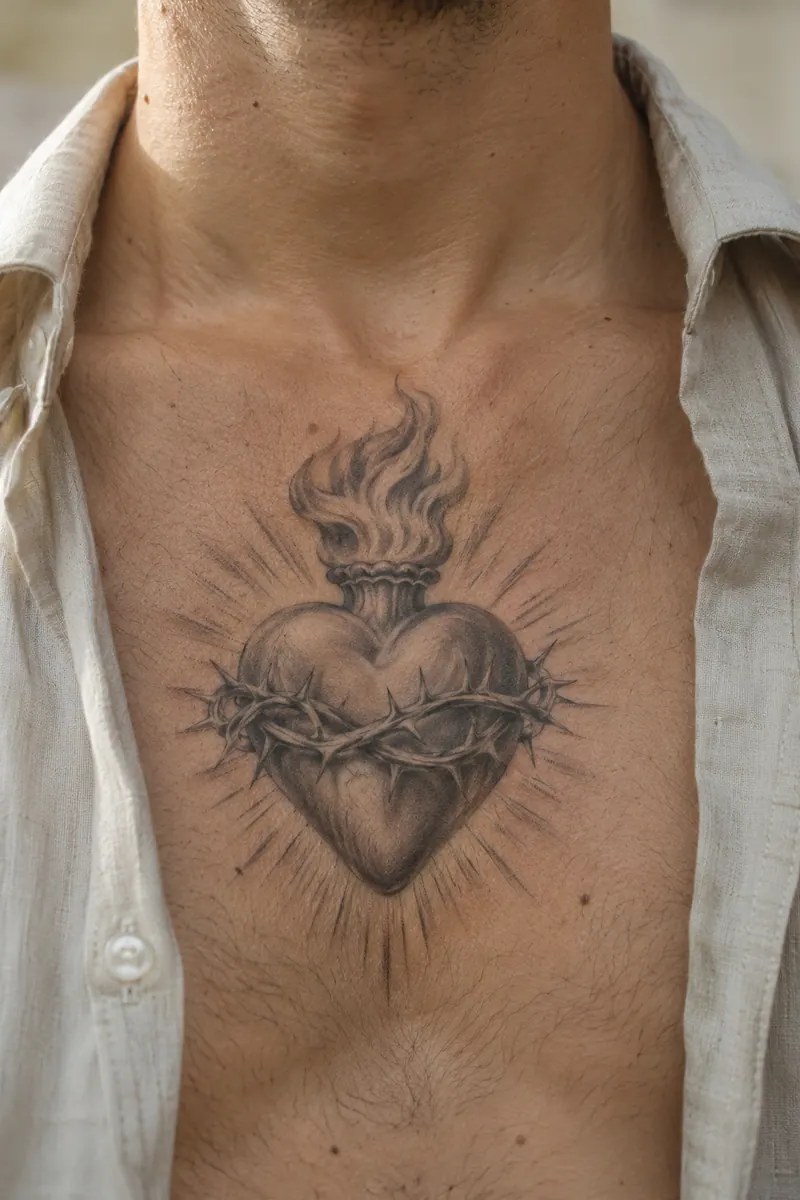
- Sacred heart with flames and a crown of thorns. A Chicano-style chest piece in smooth black and grey. The sacred heart is a Catholic devotional image of divine love and sacrifice; it is deeply rooted in Mexican religious art and has a long history in Chicano tattooing. Wear it with respect for that meaning.
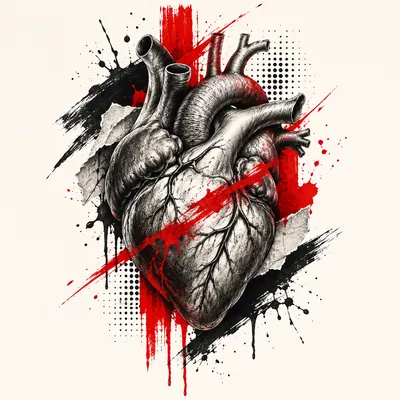
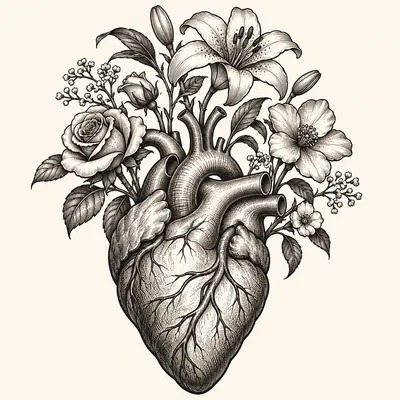
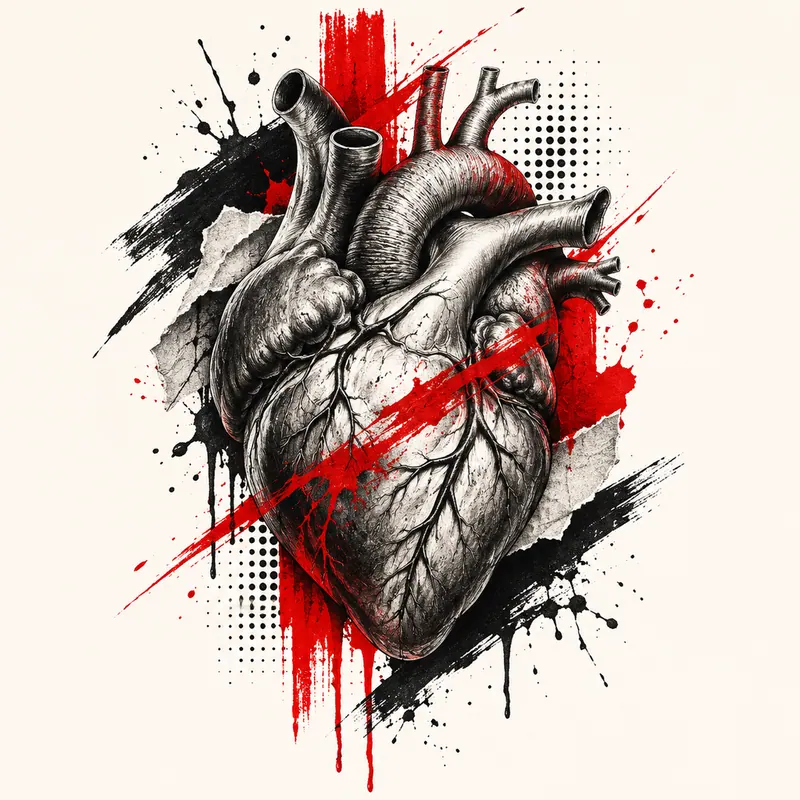
- Anatomical heart. A trash polka chest design that mixes a realistic heart with red and black brush strokes for a raw, graphic look.
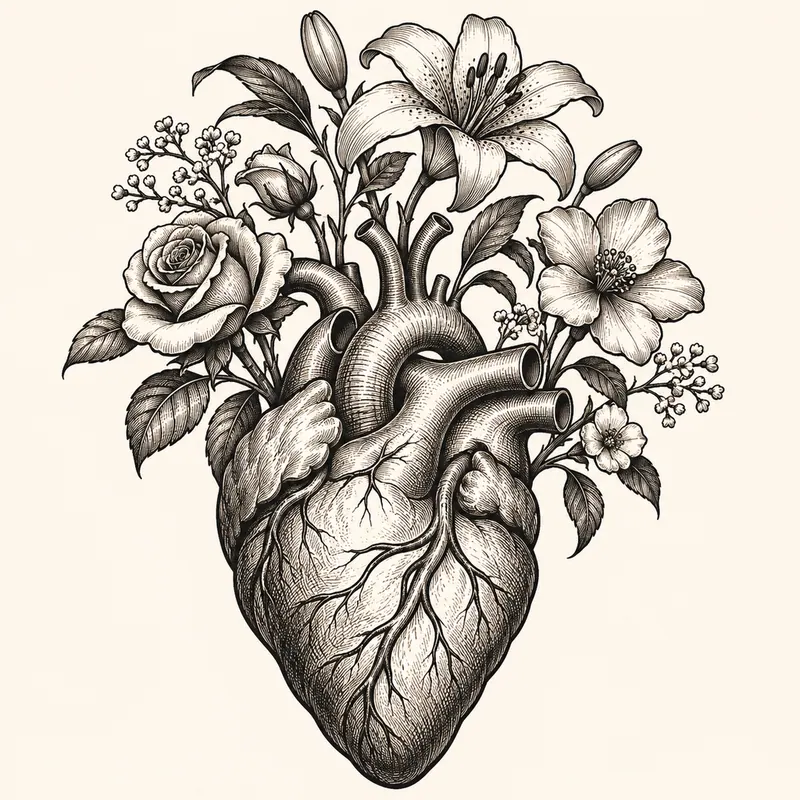
- Anatomical heart with flowers growing out of it. An illustrative forearm piece about growth after pain, or love that keeps blooming.
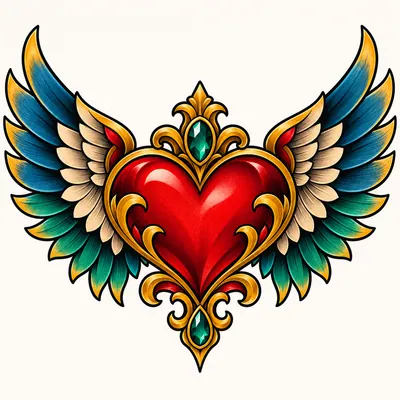
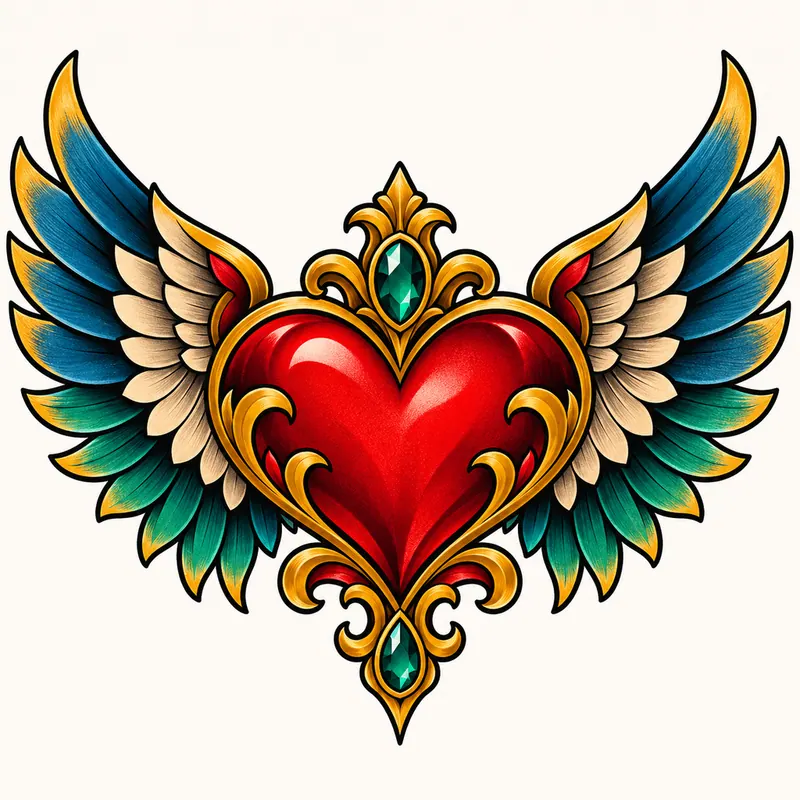
- Heart with wings. A neo traditional chest design, often chosen as a memorial or to express love that feels free.
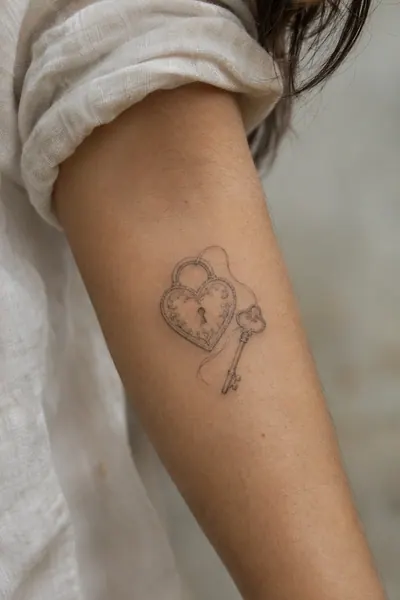
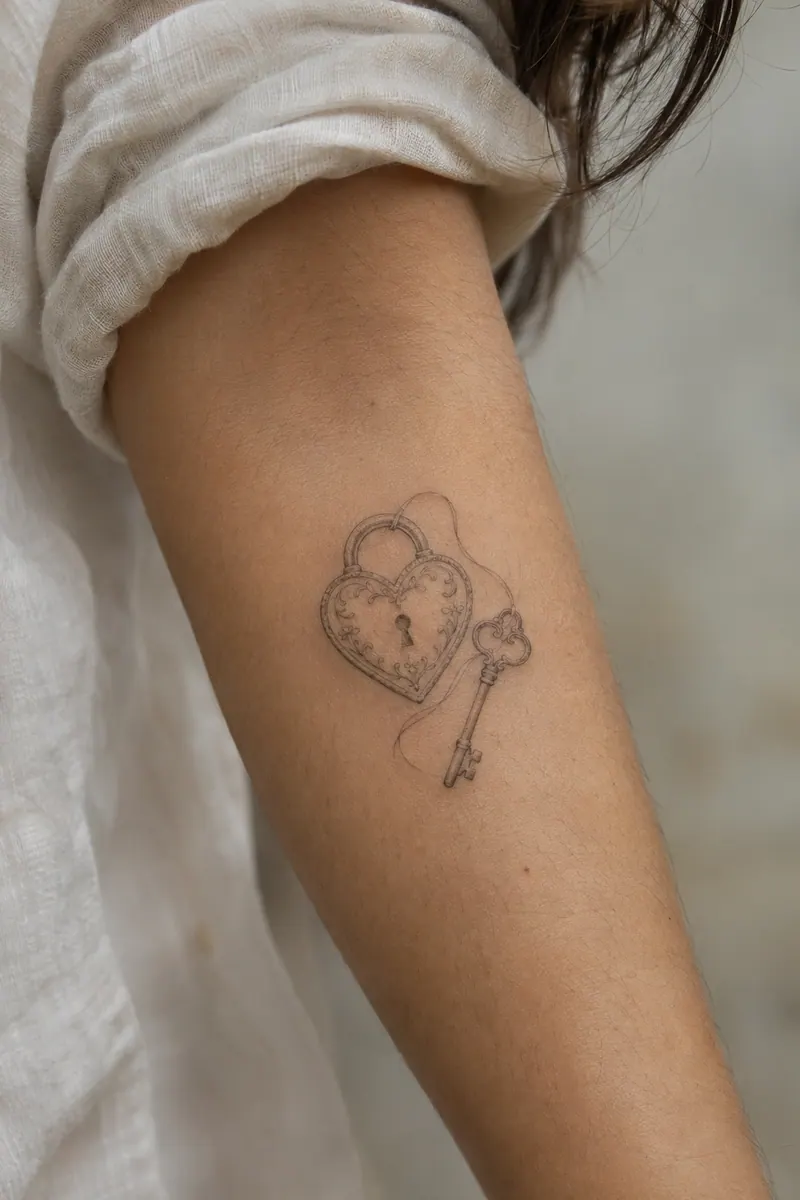
- Heart-shaped lock with a key. A fine line forearm piece, popular for couples.
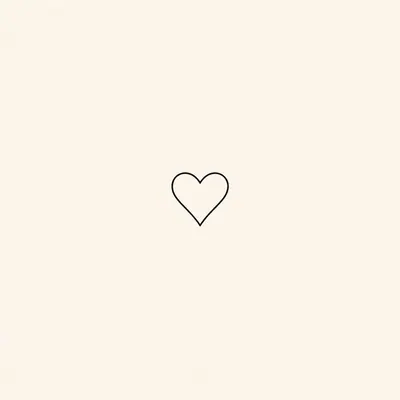
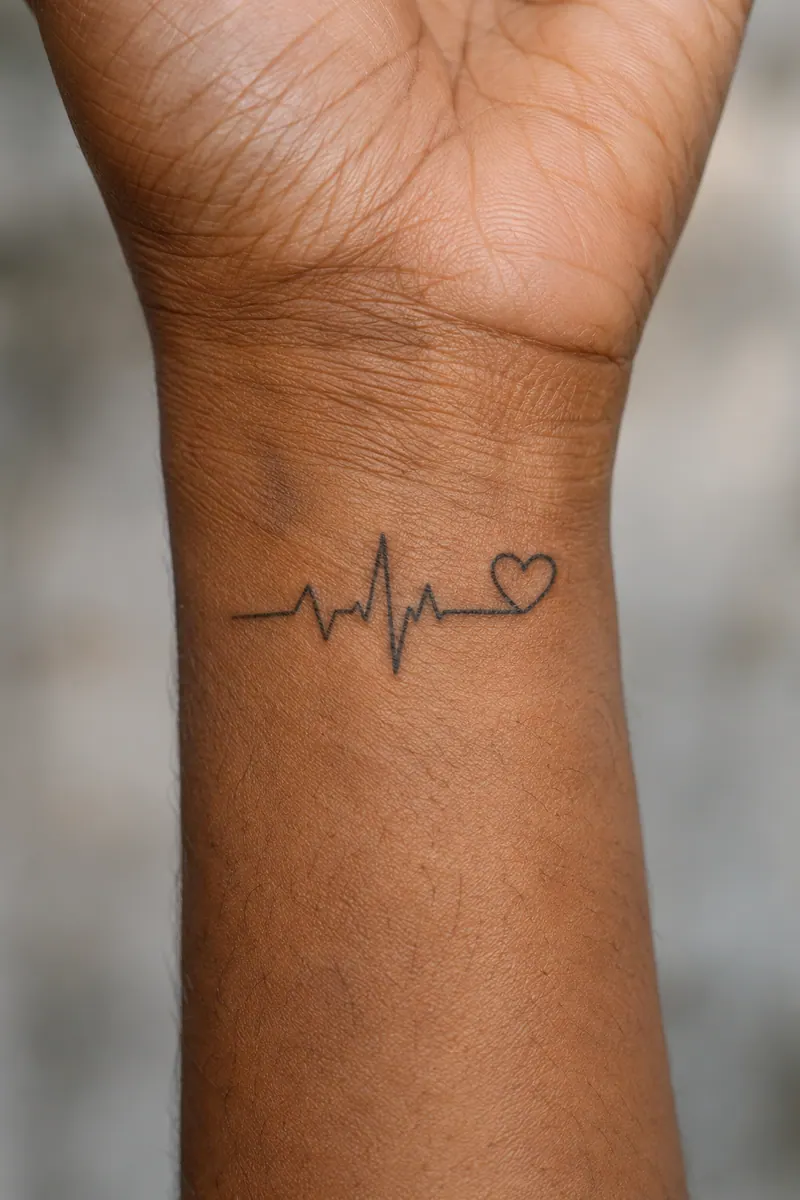
- Tiny outline heart and heartbeat line ending in a small heart. Two minimalist wrist designs, among the most common first tattoos.
Hearts also combine with roses, daggers for heartbreak and courage, and swallows for love and loyalty in traditional flash.
Choosing a style for your heart
Traditional hearts are bold, simple and built to last. They are ideal for names and banners.
Chicano black and grey suits sacred hearts and devotional pieces, with soft shading and fine detail.
Neo traditional adds richer color, ornate details and more depth, great for winged hearts or hearts with flowers.
Illustrative and trash polka styles work for anatomical hearts, where texture and contrast matter.
Minimalist and fine line hearts keep things small and personal: an outline, a pulse line or a lock and key.
Where to place a heart tattoo
Where you place a heart often depends on how private its meaning is:
- Chest: the obvious choice for sacred and anatomical hearts, close to the real thing.
- Upper arm: the classic spot for a traditional heart with a banner.
- Forearm: anatomical hearts with flowers or lock-and-key pieces, visible to you every day.
- Wrist, finger and ankle: tiny hearts and heartbeat lines, usually a few centimeters.
- Behind the ear or collarbone: discreet spots for a small outline heart.
For heartbeat lines, keep the waveform simple. Very small peaks and valleys can blur together as the tattoo ages.
Personal details turn a common symbol into your own: a name in the banner, the initials of your kids in a lock, a real heartbeat recording, or flowers that meant something to someone you love. In InkForge you can describe your heart, generate it in traditional, Chicano or fine line, refine one area with the edit brush, and preview it on a photo of your chest or wrist. Save the version you love and bring it to your artist.