 InkForge
Why people choose the neck
A neck tattoo is a confident choice. Even a small piece draws the eye, because the neck frames the face and moves with every turn of the head. For some people that visibility is exactly the point: it is a tattoo they want to live with in plain view, not something saved for summer.
Others choose the neck because they can control how much it shows. A tiny design behind the ear or on the nape disappears under loose hair and reappears with a ponytail. That flexibility makes these two spots surprisingly popular as first or second tattoos.
Side, behind the ear and nape
The neck is really several placements, each with its own character.
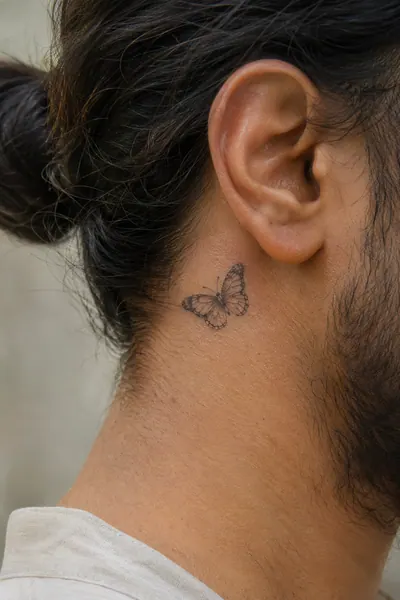
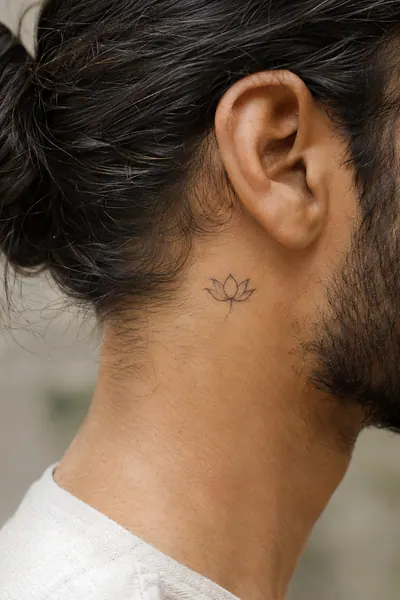
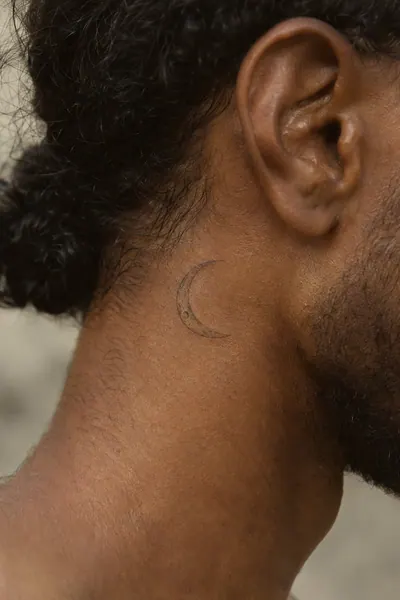
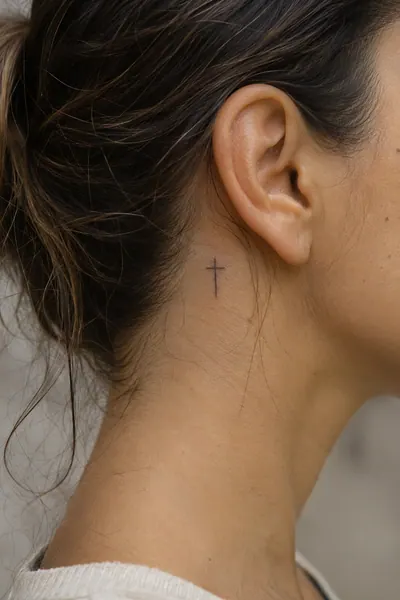
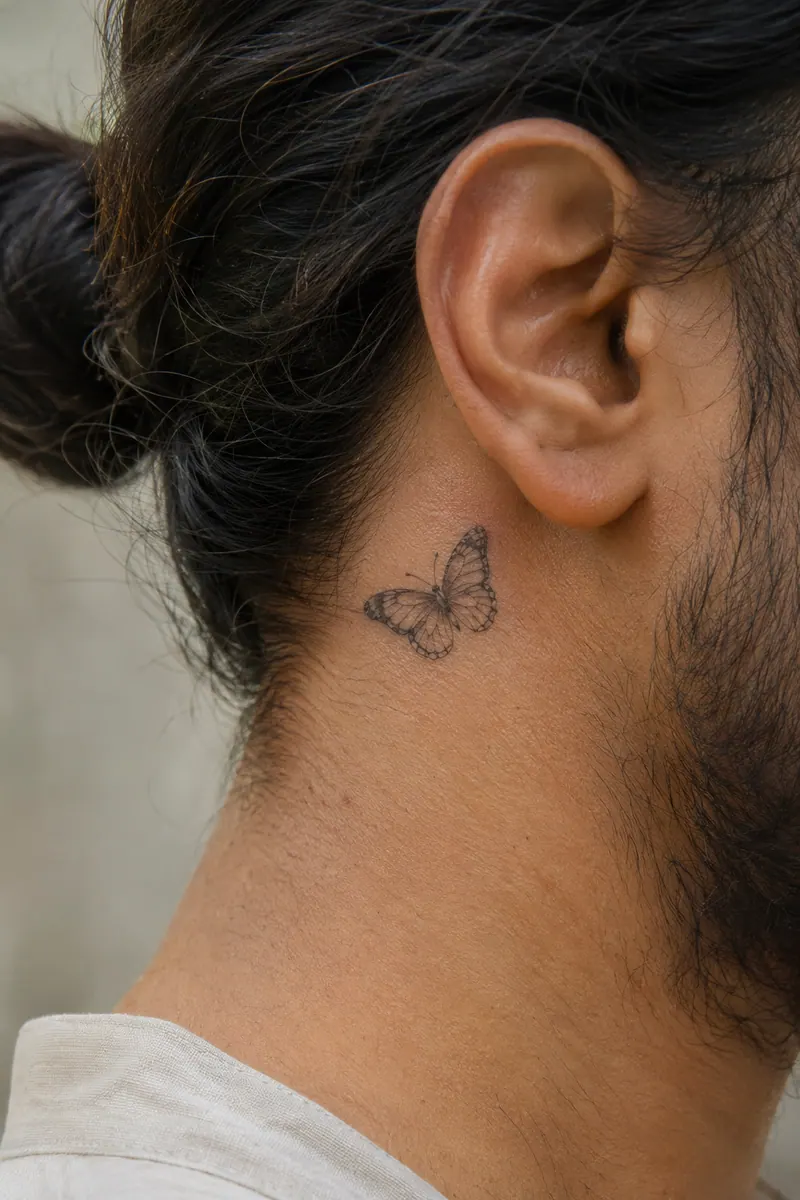
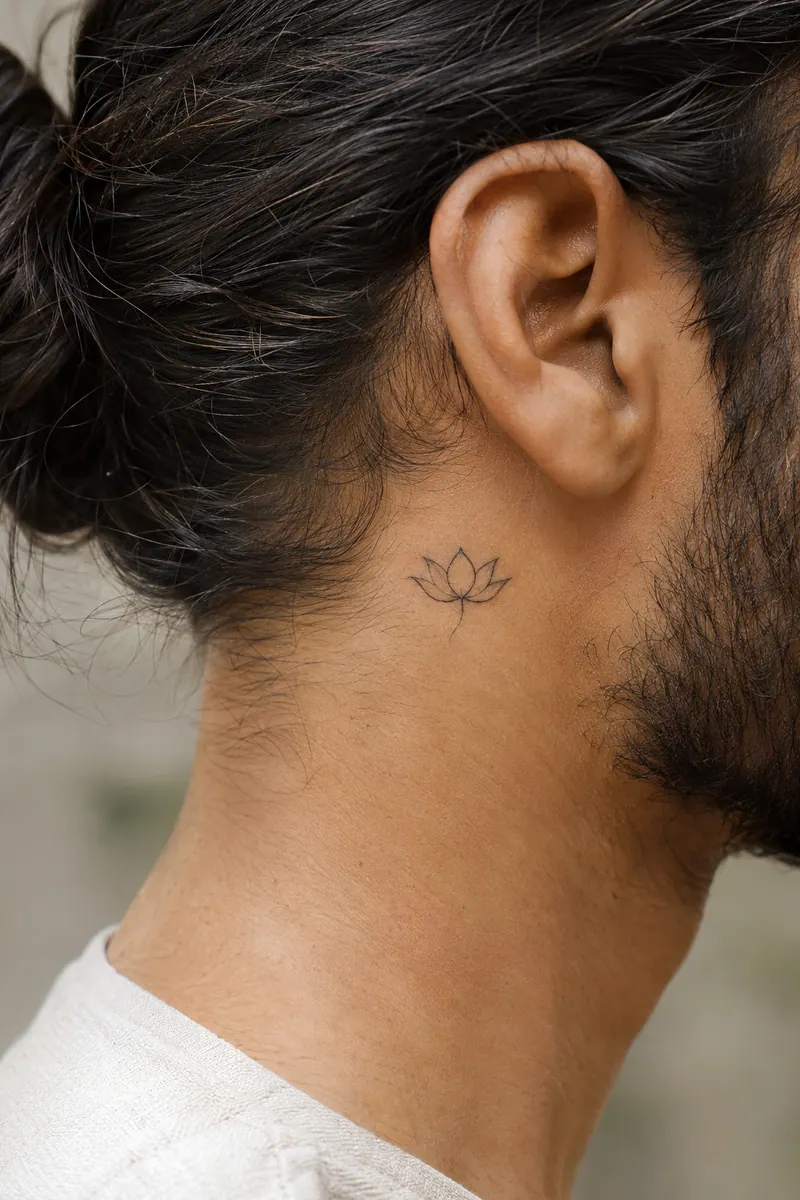
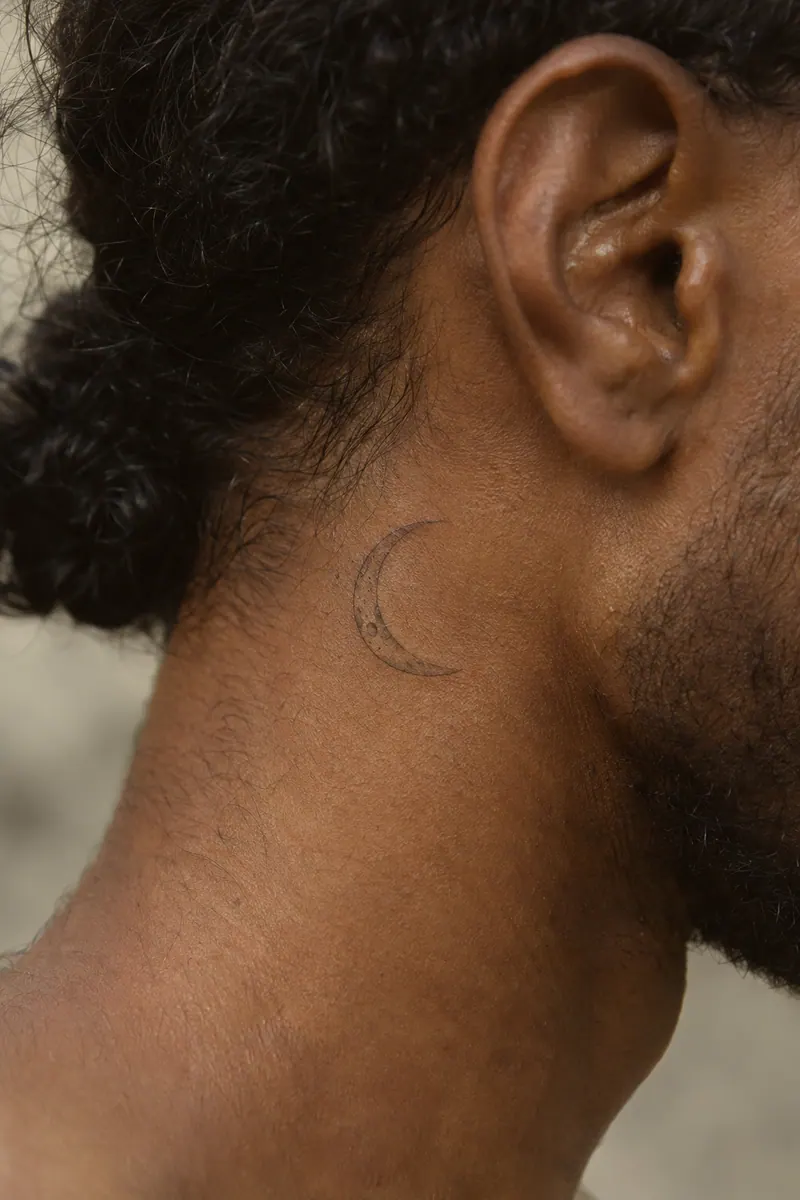
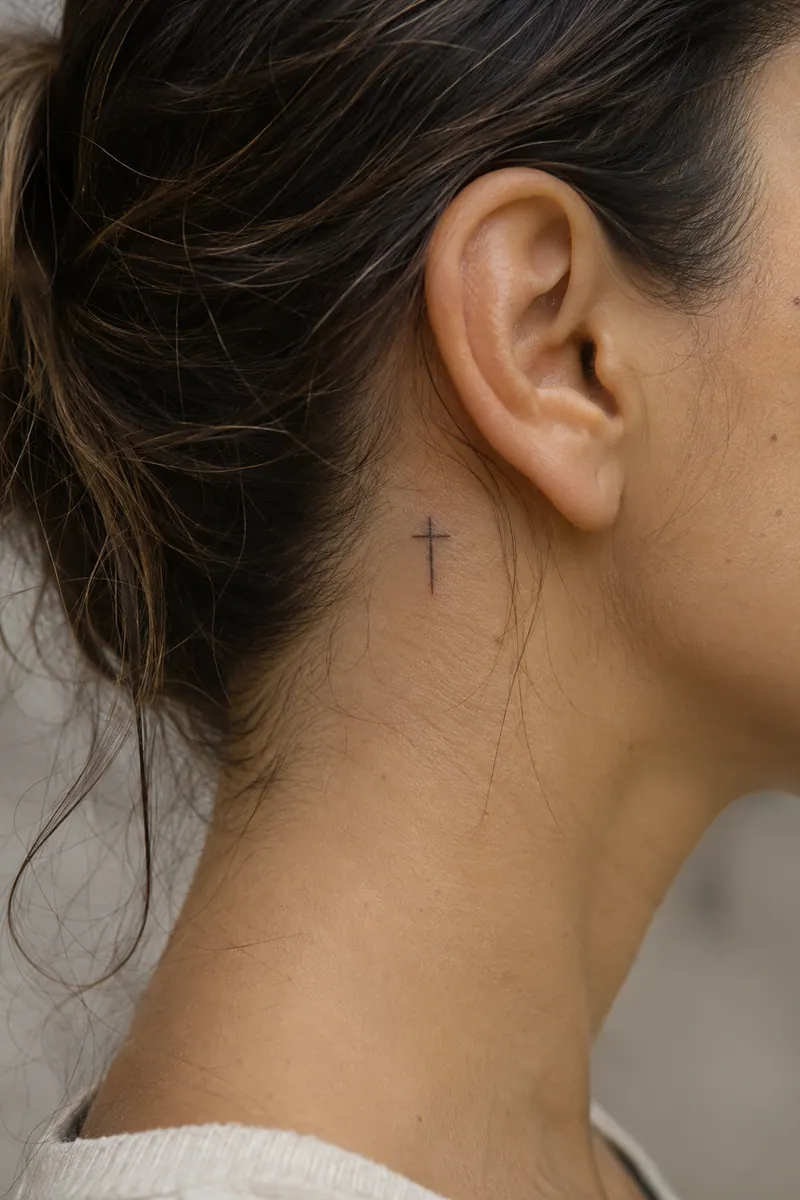
Behind the ear. A small, almost hidden spot on the bone just behind the earlobe. It suits tiny, simple motifs: a crescent moon, a butterfly, a lotus, a cross. It is intimate and easy to cover with hair, but the skin is thin over bone and the area is fairly sensitive.
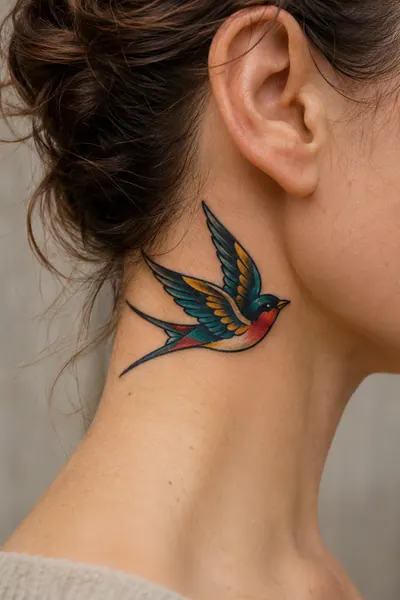
The side of the neck. The most visible option and the one with the most room for a slim, vertical design. Flowing lines that follow the muscle from below the ear toward the collarbone look natural here, which is why glyph-like designs work so well.
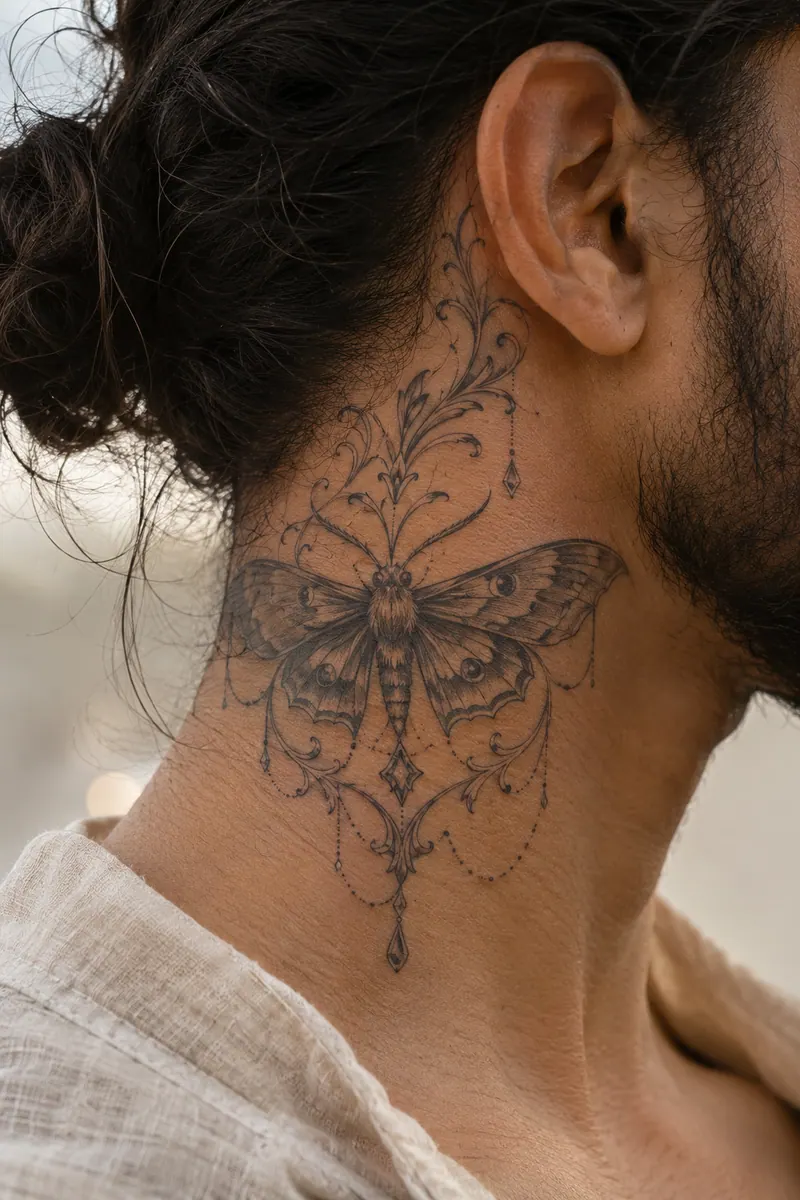
The nape. The back of the neck, just below the hairline. Centered, symmetrical designs fit best, and it is easy to hide with hair or a collar. A small piece here can later connect to an upper back design along the spine.
The throat is also part of the neck, but it is the most visible spot of all and is usually described as one of the more sensitive areas, so it tends to be a choice for people who are already well tattooed.
Pain and visibility, honestly
On pain, the neck usually sits in the moderate-to-high range. The muscle on the side of the neck tends to be more bearable than the bony spot behind the ear or the soft skin of the throat. The good news is that most neck tattoos are small, so sessions are short.
On visibility, it helps to be practical. The side of the neck and the throat are very hard to cover without a high collar or scarf. Some employers and industries have dress codes that cover visible tattoos, while many others do not mind at all. If it matters for your job or plans, a spot behind the ear or on the nape gives you the option to show or hide it.
Designs and sizes that suit the neck
Design ideas
Neck tattoos work best when they are simple enough to read at a glance:
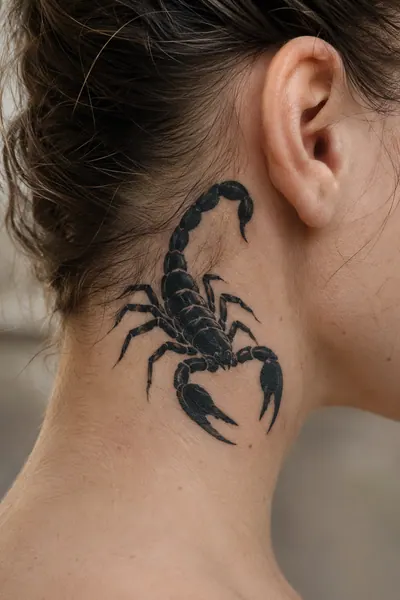
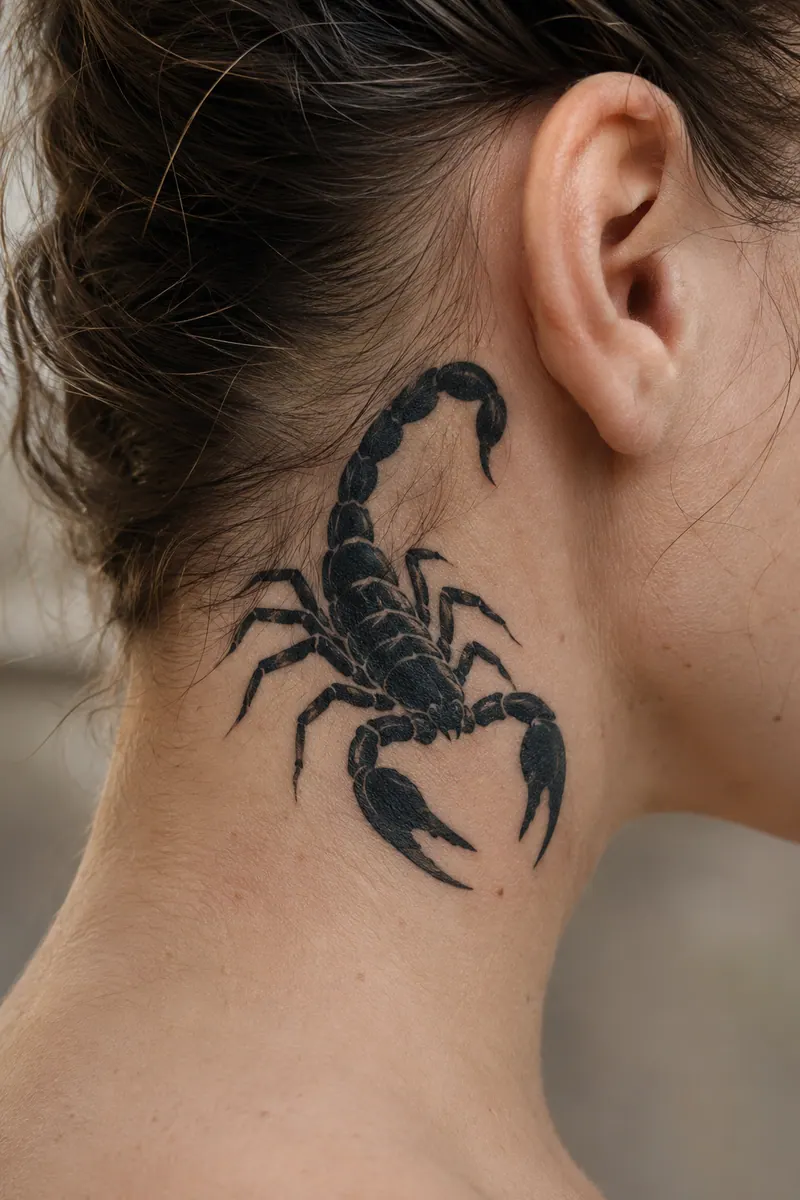
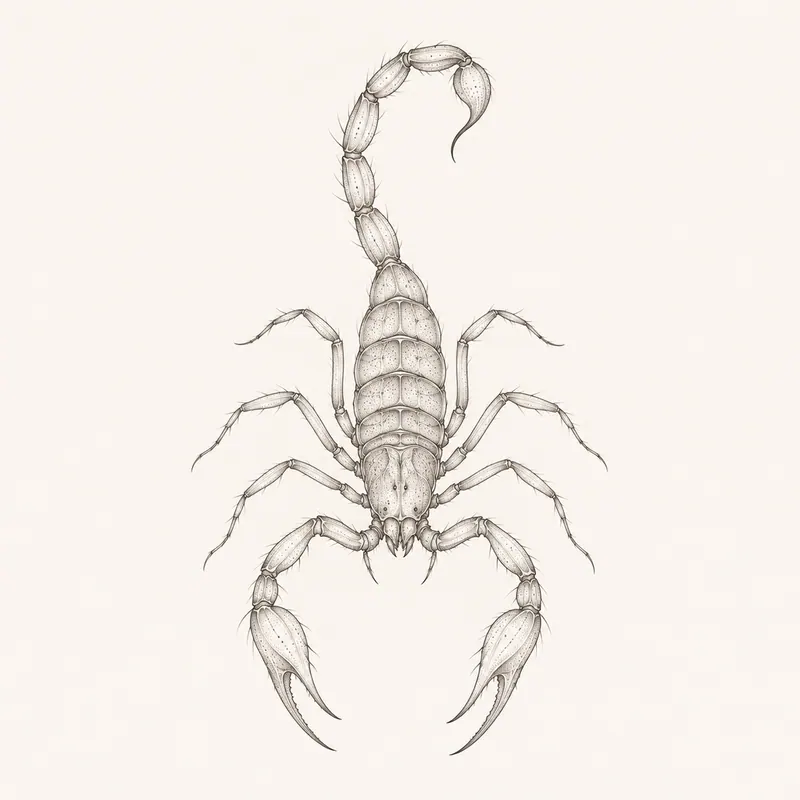
- Tiny fine line symbols. Fine line moons, crosses, butterflies and a thin scorpion stay delicate behind the ear without overwhelming it.
- Minimalist shapes. A tiny lotus or a single outline keeps the area clean and lets the placement do the talking.
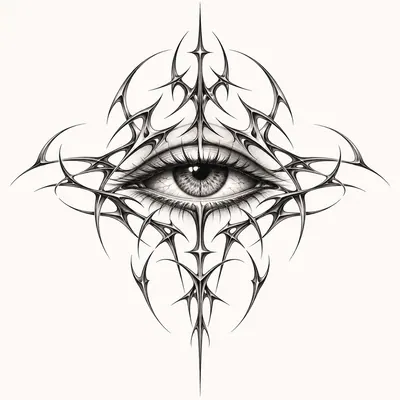
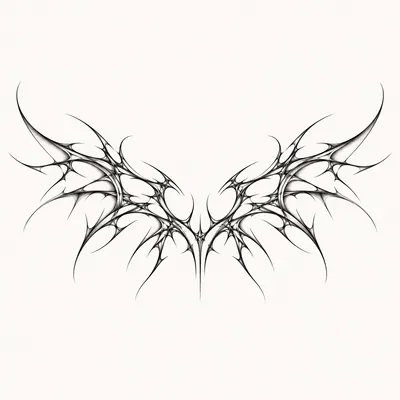
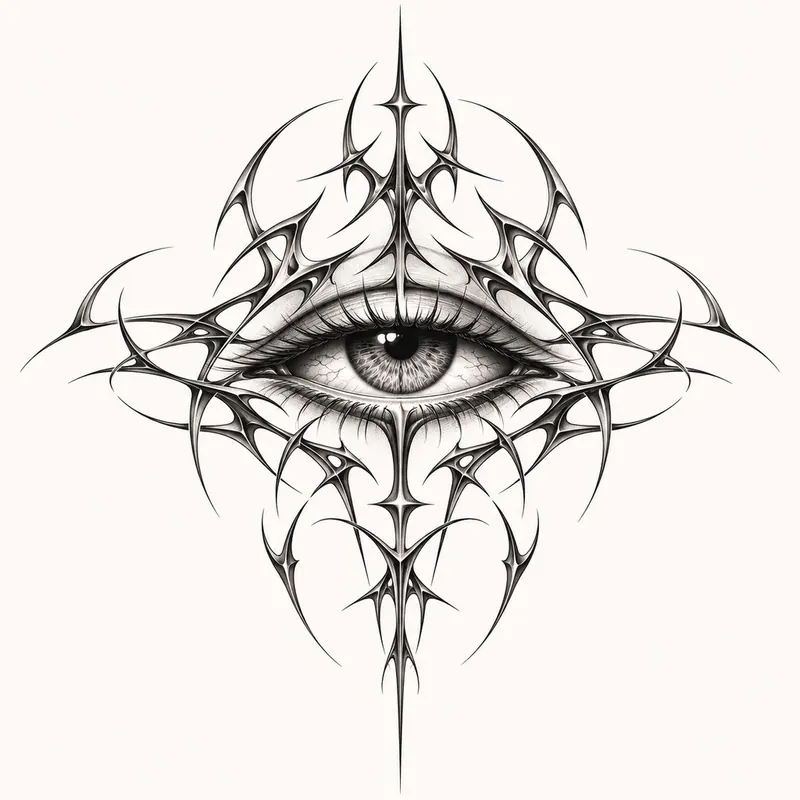
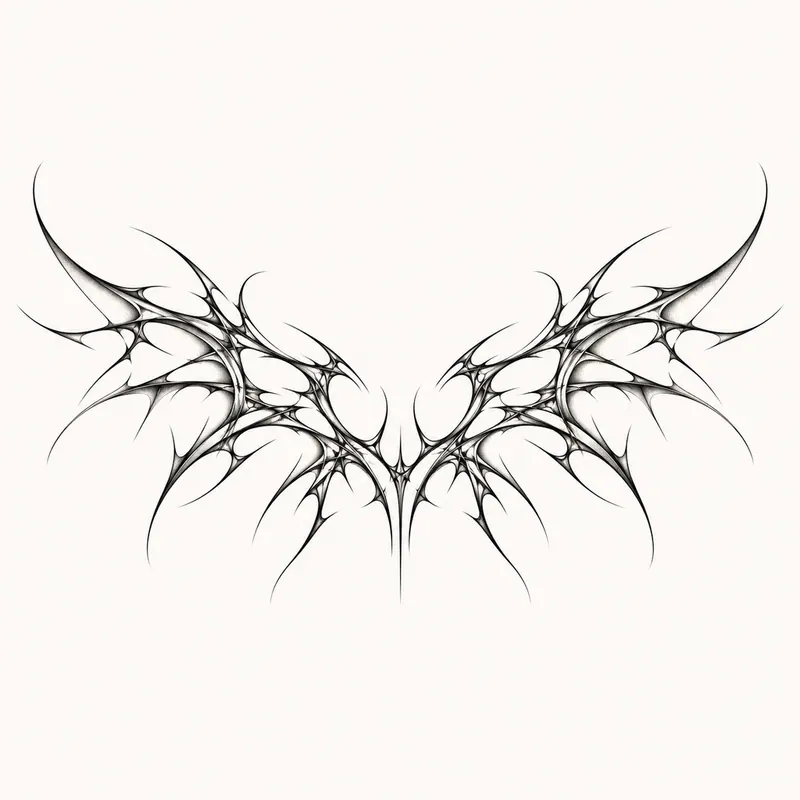
- Glyph lines. Cyber sigilism designs, such as an eye surrounded by glyph lines or small wings made of glyphs, follow the long muscles of the neck with sharp, flowing strokes.
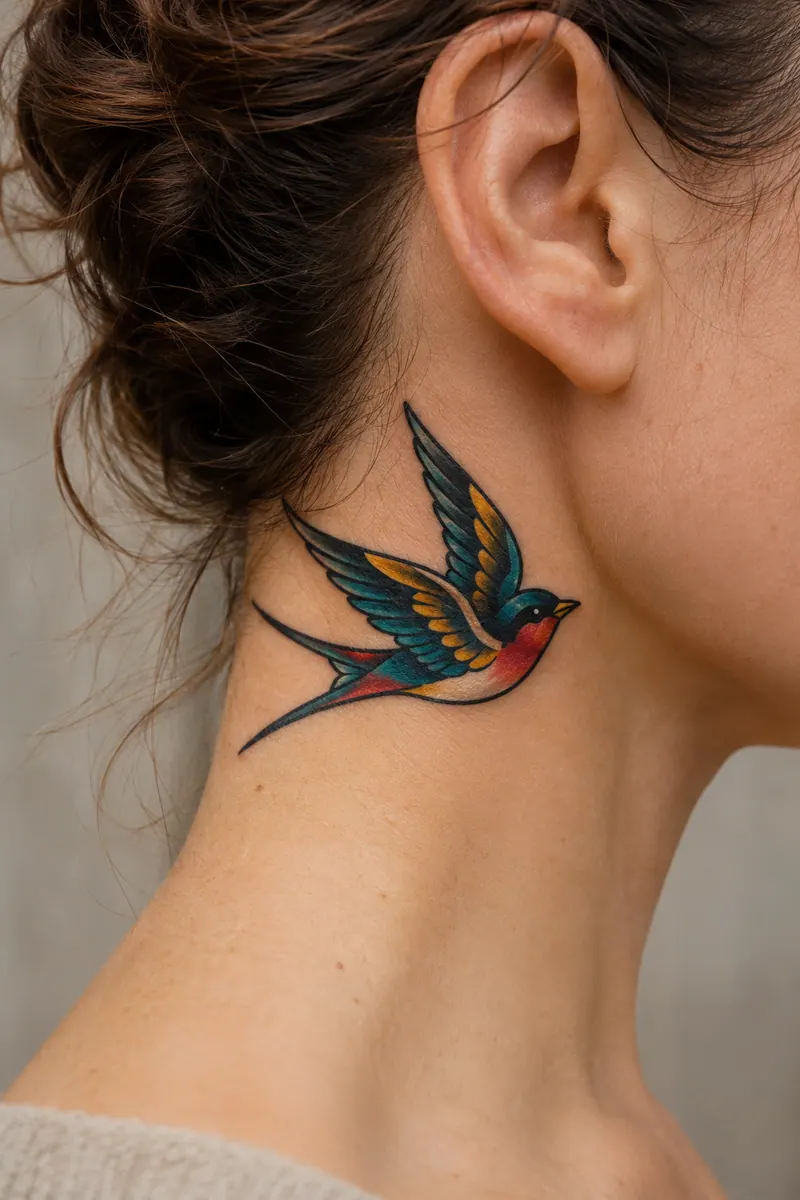
- Bolder small pieces. A neo traditional swallow or a blackwork scorpion gives a classic, punchy look in a compact size.
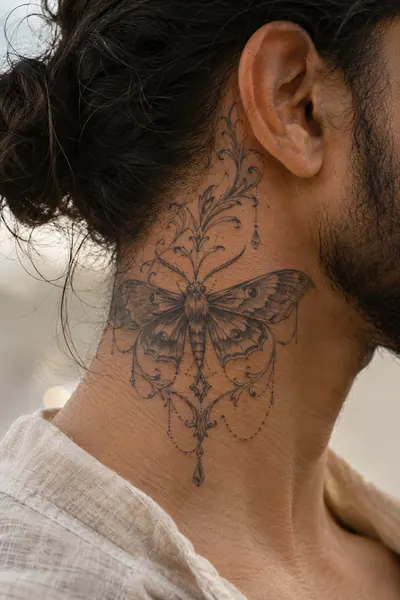
- Ornamental motifs. An ornamental moth is a symmetrical shape that suits the nape or the side of the neck.
Size and shape
Because the neck is narrow and curved, scale matters more than almost anywhere else. Behind the ear, keep designs small and avoid fine details that sit close together, since tiny lines on thin skin can soften over time. On the side of the neck, choose slim, vertical or gently curved shapes rather than wide, square ones. On the nape, symmetry looks most balanced from behind.
Healing and aftercare on the neck
The neck is constantly moving and in contact with hair and clothing, so healing needs a little extra attention. Always follow your artist’s instructions; these are the usual neck-specific points:
- Hair and products. Long hair, hairspray, dry shampoo and dye can irritate a fresh tattoo. Many people tie hair back loosely and pause products near the area.
- Collars and scarves. Stiff collars, hoodies and scarves can rub. Open necklines and soft fabrics are easier.
- Perfume and makeup. The neck is where many people apply fragrance. Keep it away from the tattoo while it heals.
- Hard to see. Behind the ear and the nape are difficult to check yourself, so use a hand mirror when you clean the area.
- Sun. Once healed, sunscreen helps keep thin neck linework crisp.
A neck tattoo looks different depending on your hair, so test it the way you’ll actually wear it. Take one photo with your hair up and one with it down, plus a close side angle if you’re considering the spot behind the ear. Then generate a few small designs in InkForge and use Try-On to place them on each photo, adjusting size, rotation and opacity by hand. Try-On is a flat overlay, not a 3D fit, so treat it as a way to judge visibility and scale; your artist will adapt the stencil to the curve of your neck.