InkForge
What defines Japanese tattooing
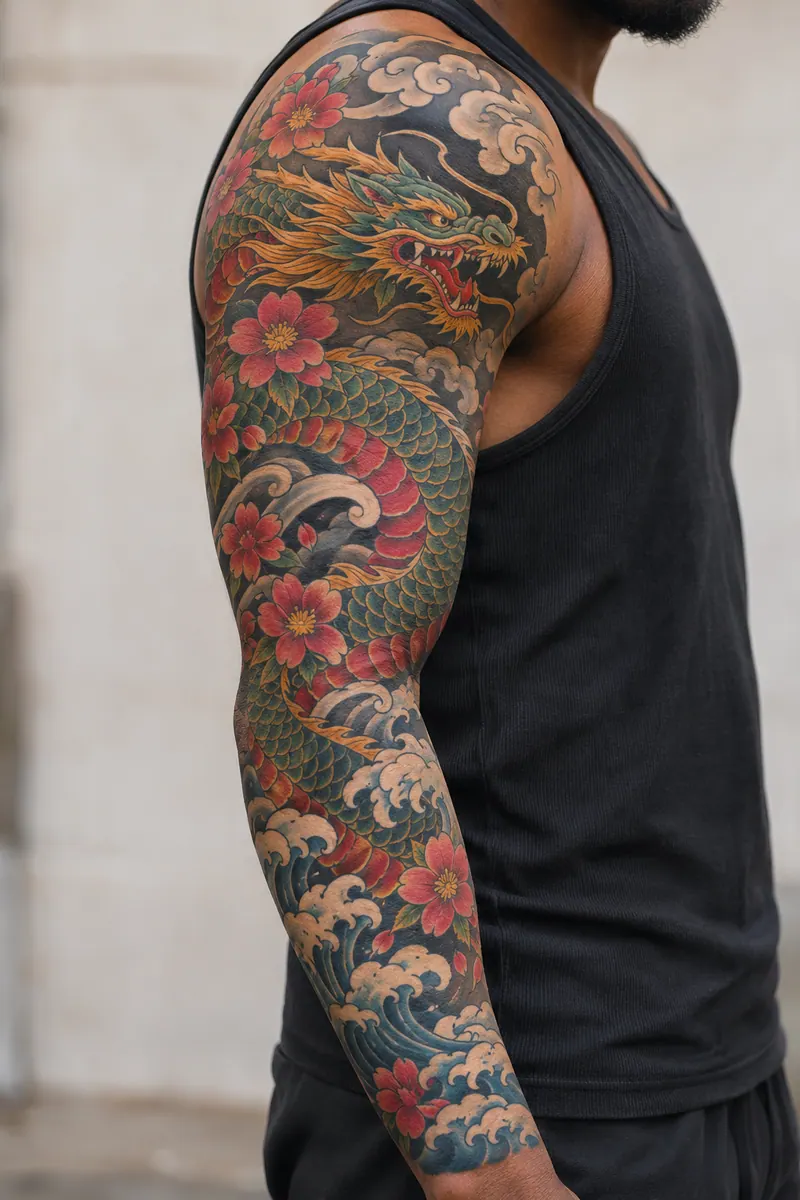
Traditional Japanese tattooing is built around large, flowing compositions designed for the body as a whole. A single subject — a dragon, a koi, a tiger — moves across the skin, and a background of wind bars, waves, clouds or rocks ties everything together. Bold black outlines, strong contrast and a limited, saturated palette make the design readable from a distance, while the background lets several pieces connect into a sleeve, back piece or full body suit.
In Japanese, irezumi is a general word for tattooing, and the traditional pictorial style is sometimes called horimono. A traditional tattoo artist is a horishi, and some still work by hand with a technique called tebori.
A brief history
Tattooing in Japan has a long and complex history. The pictorial style known today flourished in the Edo period, when woodblock prints (ukiyo-e) of heroes, gods and legendary creatures were hugely popular. Prints illustrating the Chinese novel Water Margin (Suikoden), with its heavily tattooed heroes, were especially influential on tattoo imagery.
Tattooing was officially banned during the Meiji era and only became legal again after World War II. Despite the ban, the craft survived, and its association with outsiders and organized crime still shapes how tattoos are viewed in Japan today. Outside Japan, the style has been admired and adopted by artists worldwide, giving rise to Japanese-inspired work that follows the tradition’s imagery with varying degrees of faithfulness.
Classic motifs and their meanings
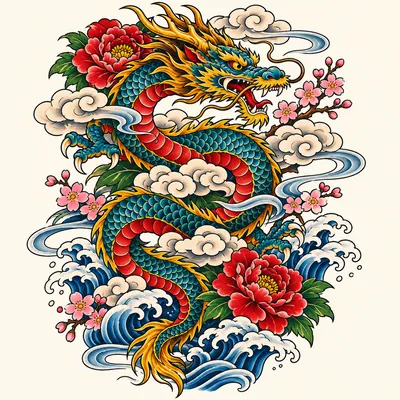
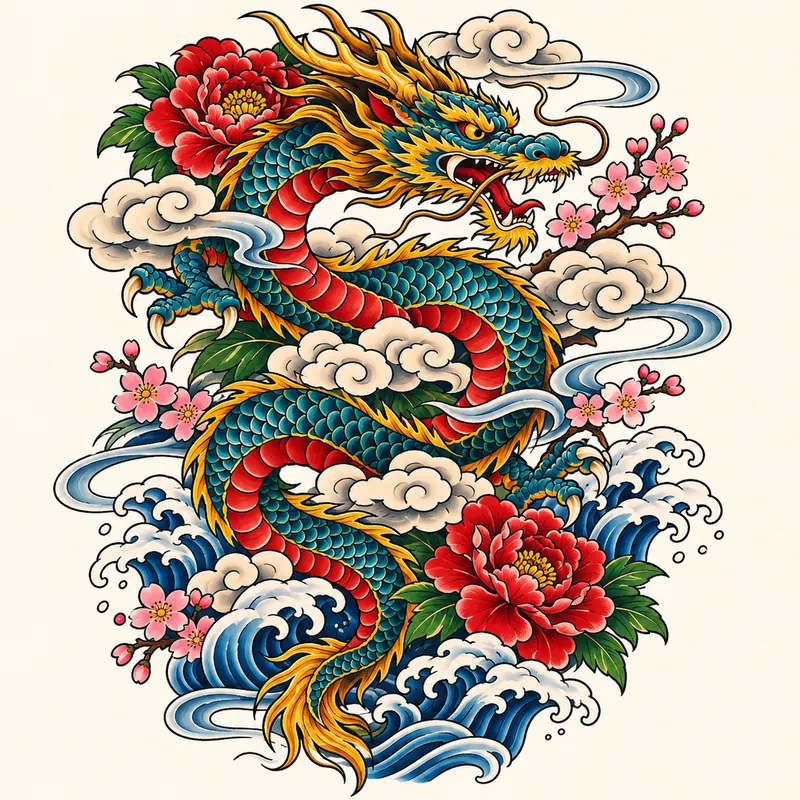
- Dragon — wisdom, strength and protection; often paired with clouds or water.
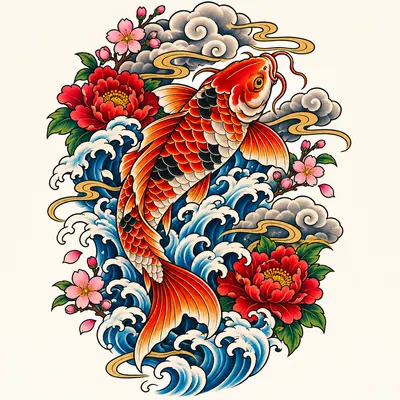
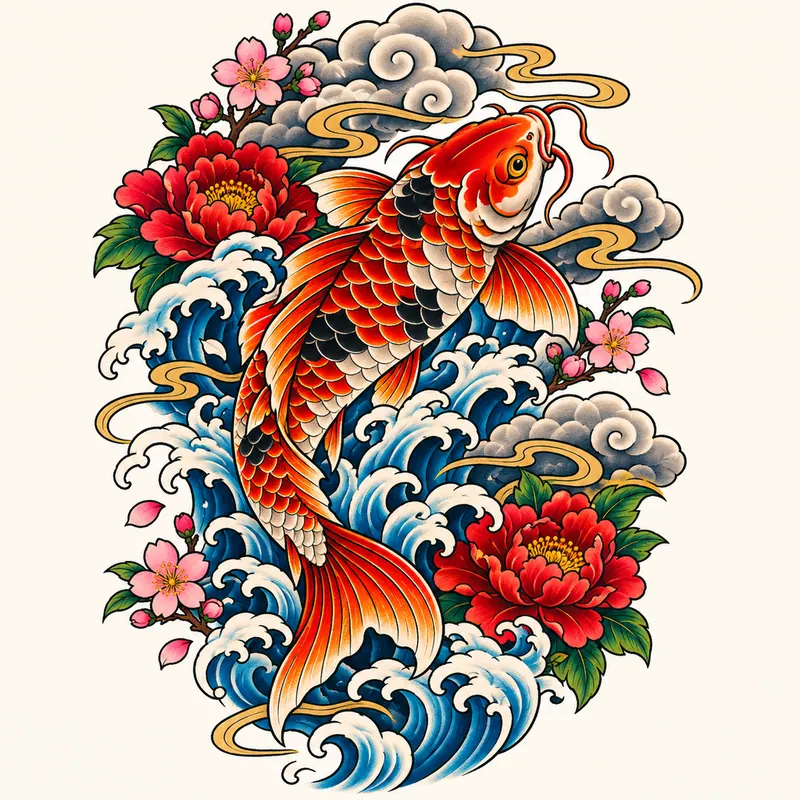
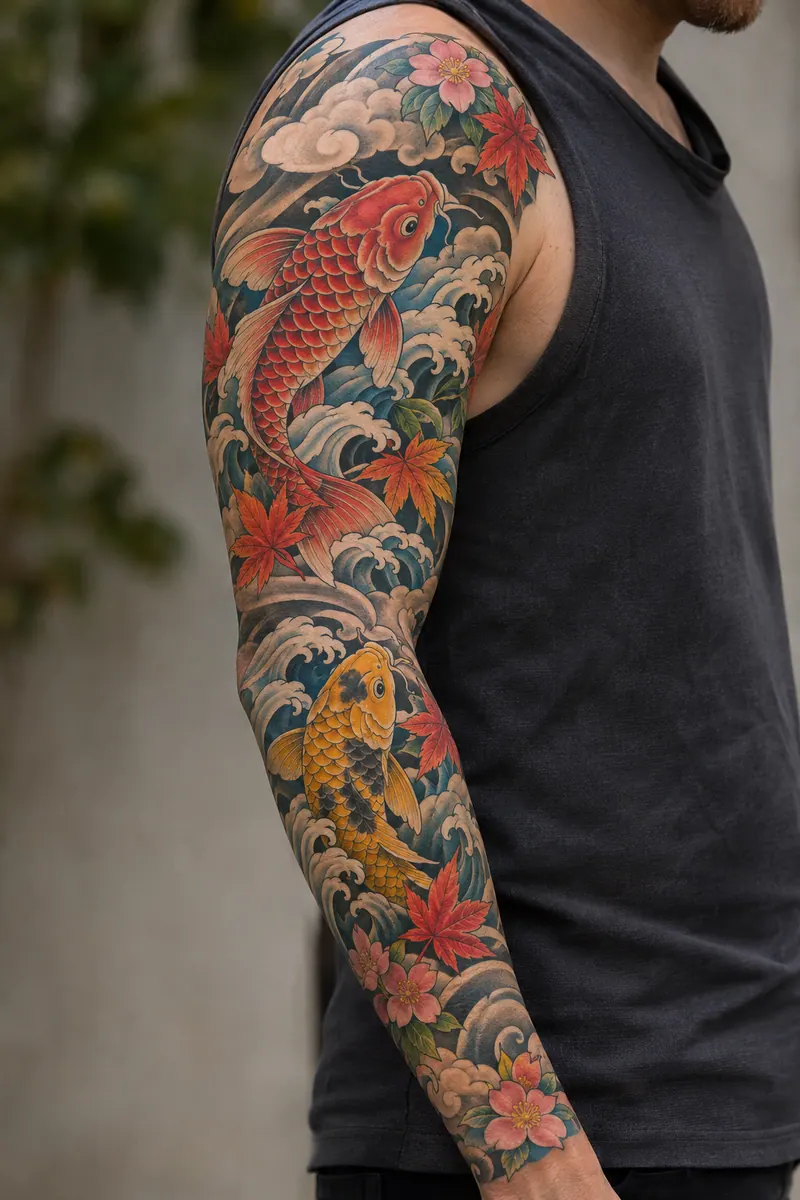
- Koi — perseverance; legend says a koi that swims up a waterfall becomes a dragon.
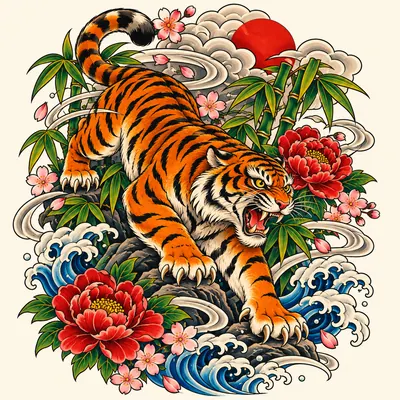
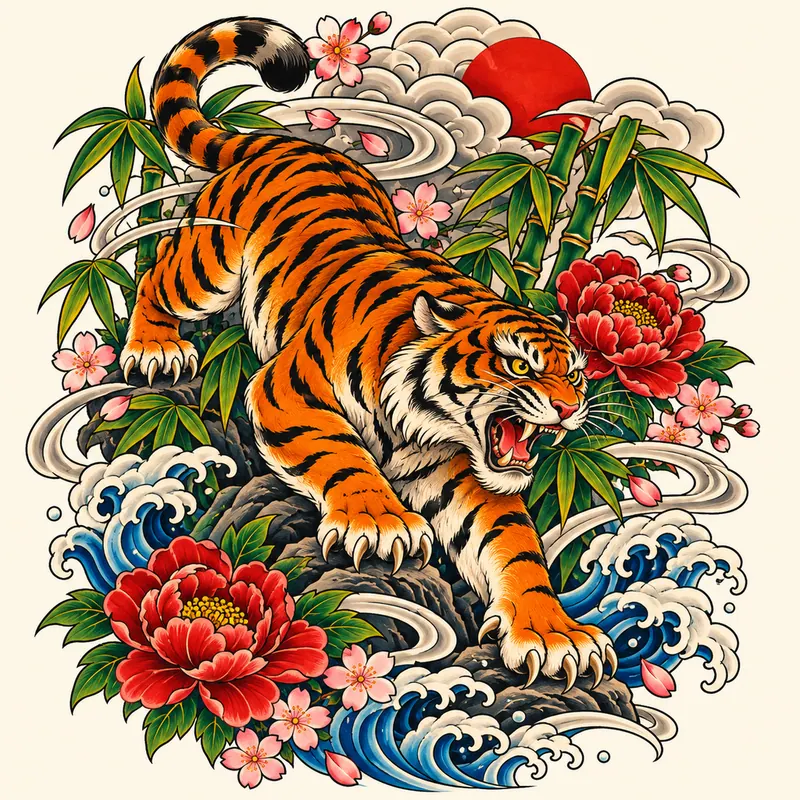
- Tiger — courage and protection from evil; traditionally shown with bamboo.
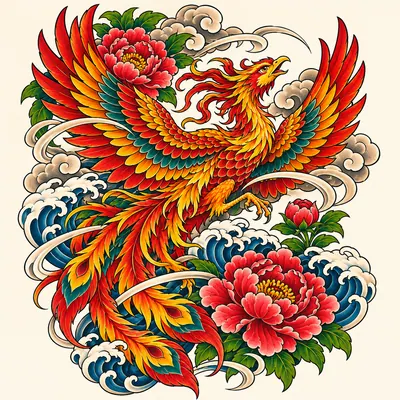
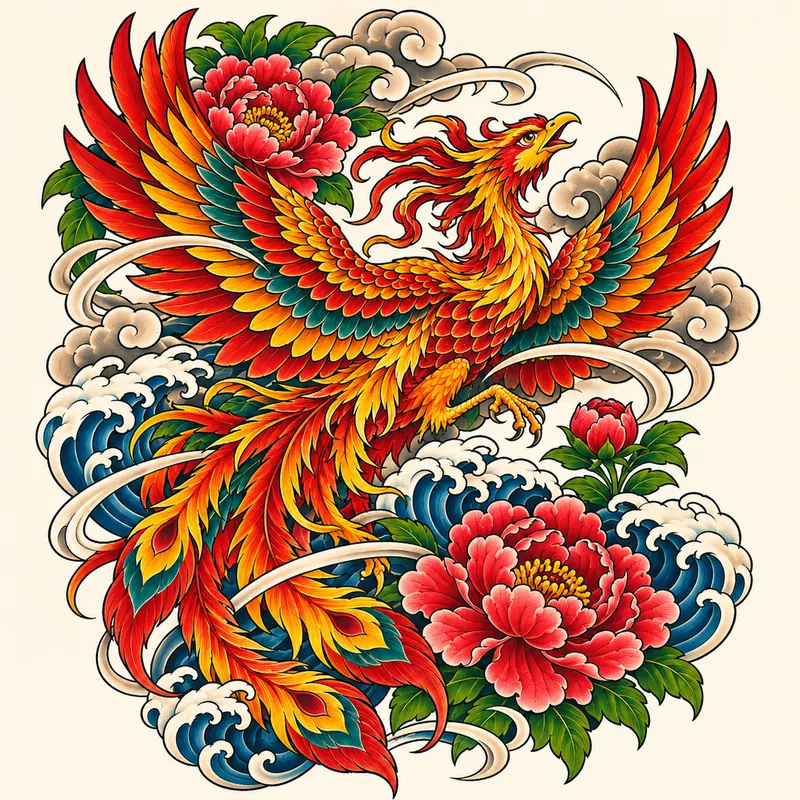
- Phoenix (hō-ō) — rebirth and good fortune, frequently with peonies or paulownia.
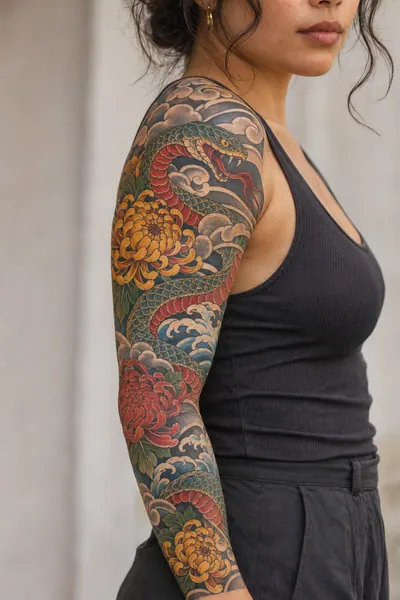
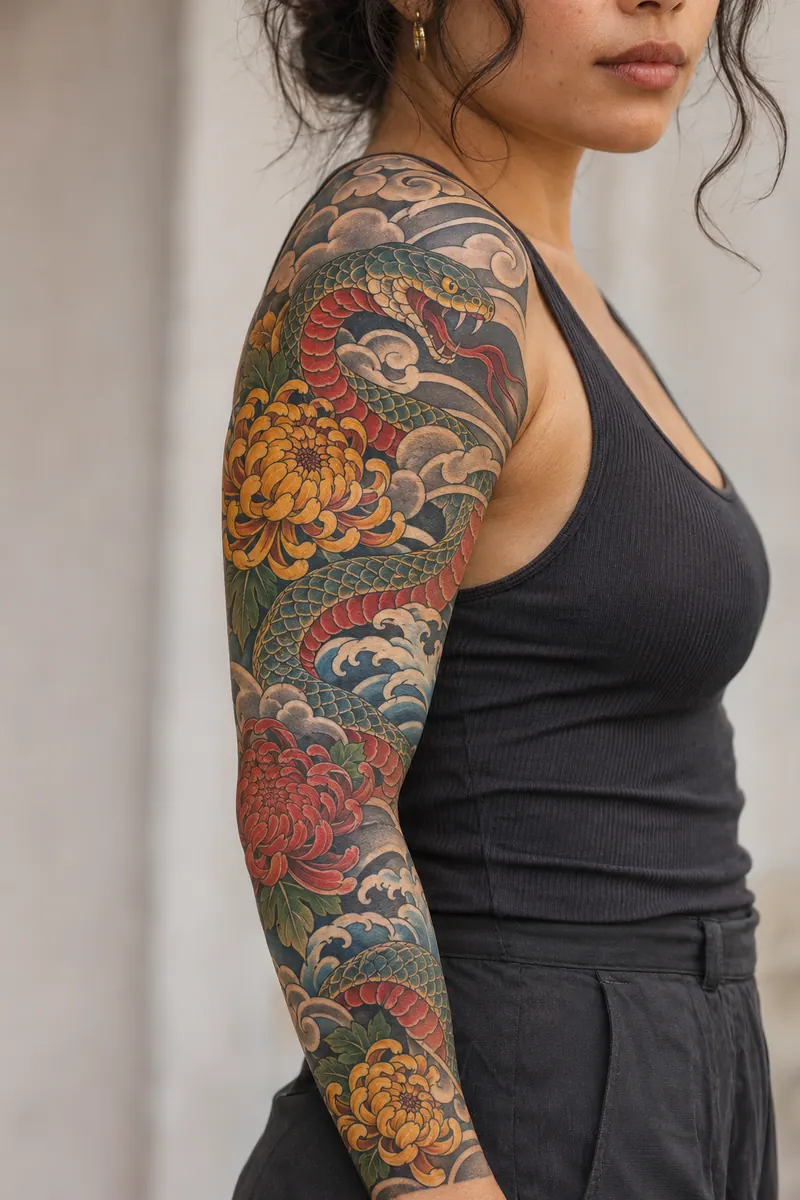
- Snake — protection, transformation and healing.
- Flowers — the peony (prosperity, boldness), chrysanthemum (longevity), cherry blossom (life’s brevity) and maple leaves (change), chosen to match the season of the main subject.
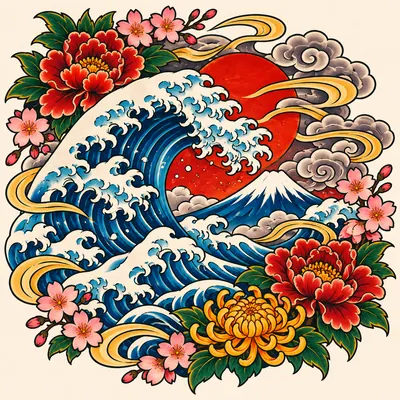
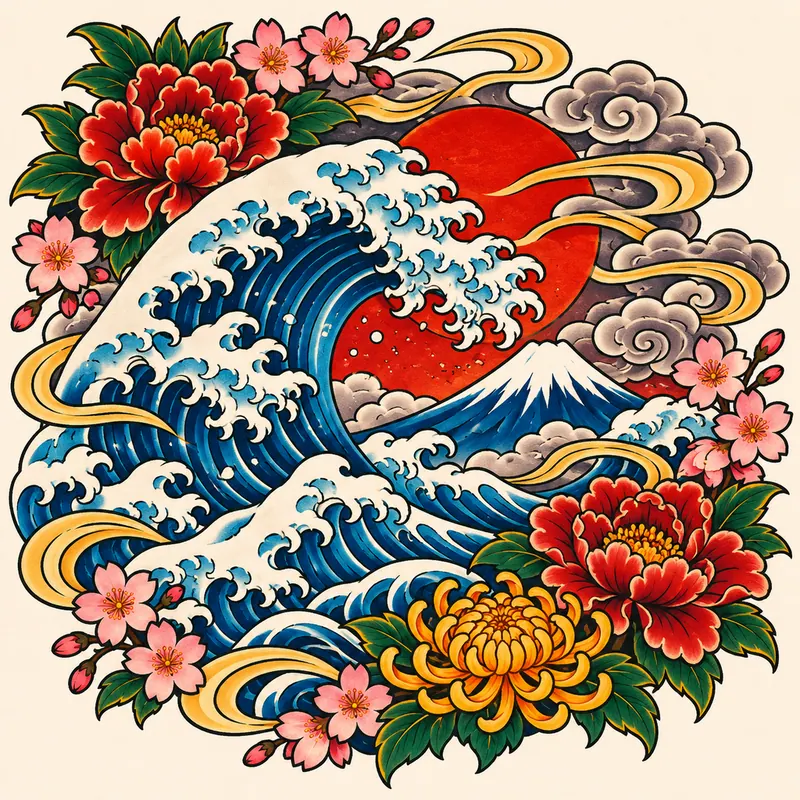
- Waves and wind — not just backgrounds but symbols of energy and movement in their own right.
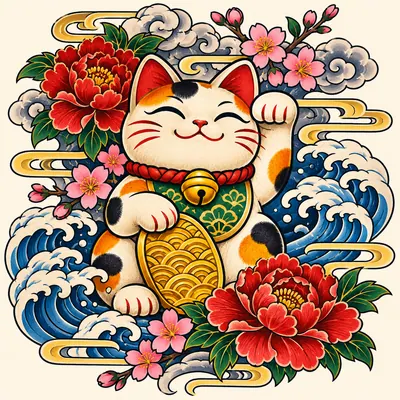
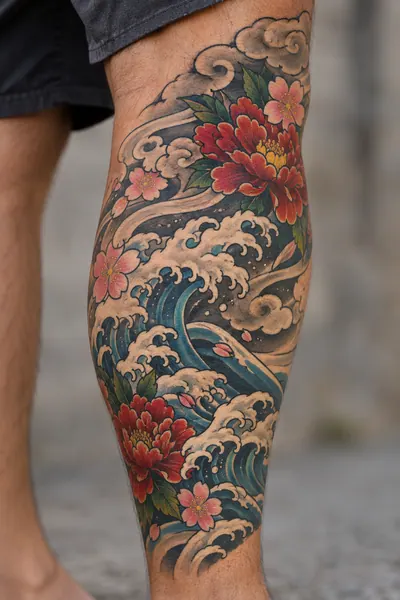
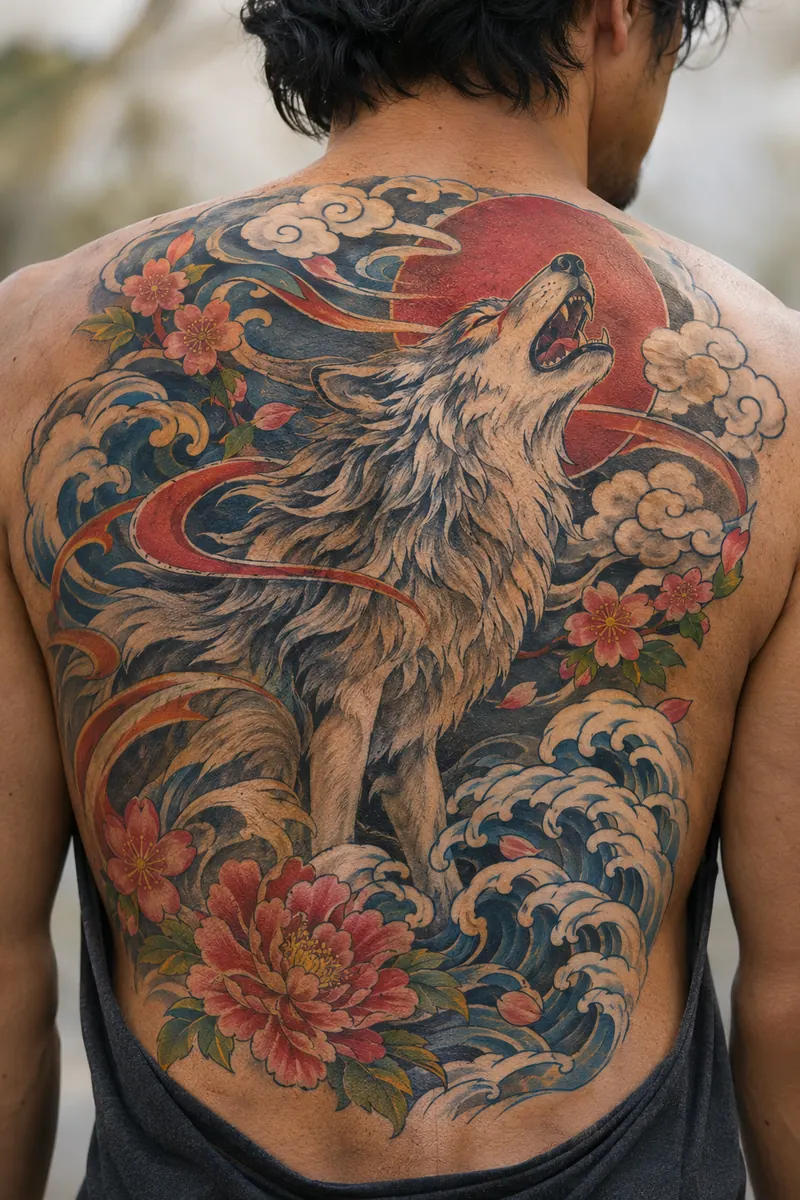
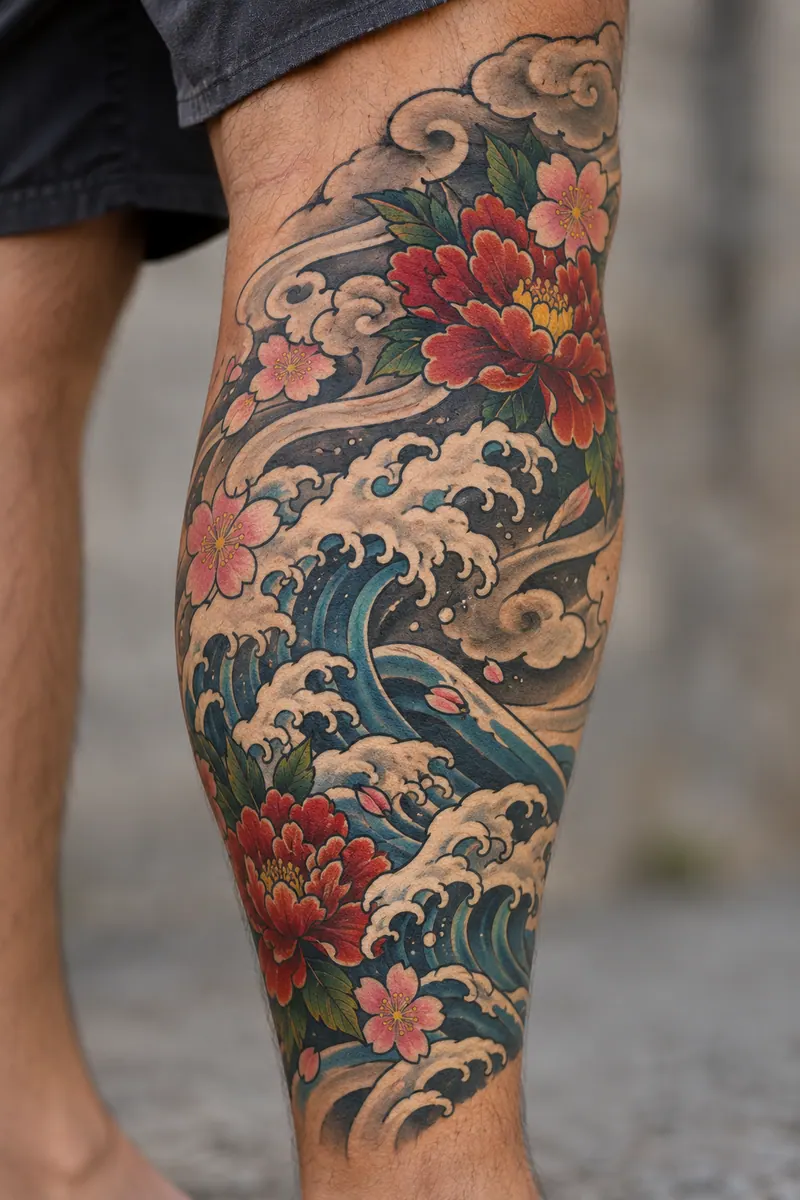
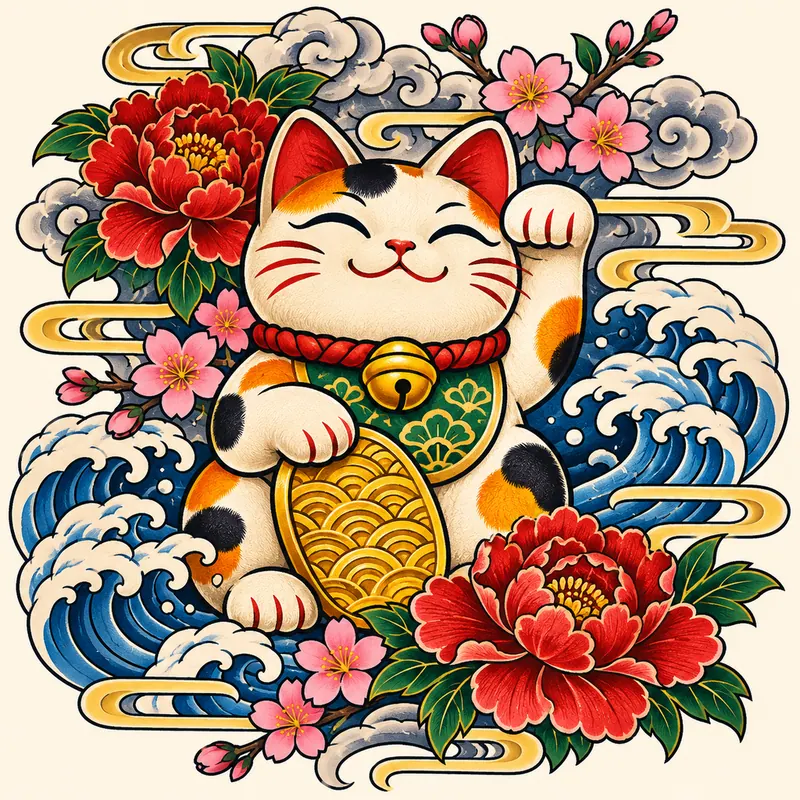
The gallery above follows these conventions: a dragon coiling through clouds on the back and a dragon rising from waves as a sleeve, a koi swimming upstream on the forearm and a koi sleeve with waves and maple leaves, a tiger among bamboo and a phoenix with peonies on the thigh, a snake with chrysanthemums and wind bars, a great wave in woodblock print style, and even a maneki-neko lucky cat, a folk figure believed to beckon good fortune.
Aging, placement and size
Japanese work is designed to last. Its bold outlines, dark backgrounds and large shapes usually hold up very well over decades. Colors such as reds, oranges and greens soften gradually, but the composition stays clear. The main factor is scale: motifs shrunk too small lose the open space that makes the style readable.
Where to place a Japanese piece
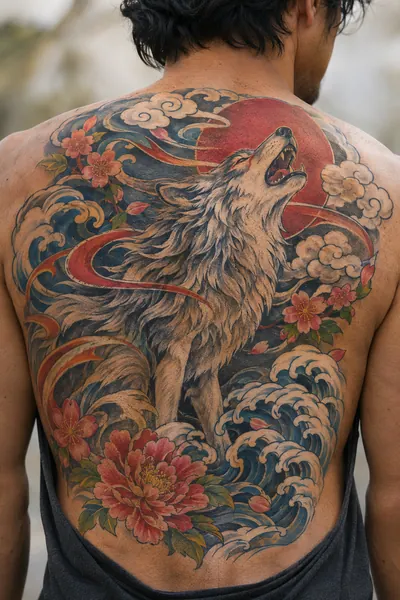
Japanese tattooing thinks big. Classic placements are the back (a full back piece), sleeves that may extend into the chest, and the thighs and legs. If you start with a smaller piece, such as a koi on the forearm or a wave on the calf, discuss with your artist how it could connect to future work through its background.
Japanese vs. neighboring styles
- vs. neo traditional. Both are bold and colorful, but neo traditional is more ornamental and illustrative, without irezumi’s backgrounds and body-wide composition.
- vs. traditional (old school). American traditional pieces are usually standalone flash images; Japanese work is designed to flow and connect.
- vs. watercolor. Watercolor waves or koi use soft washes without outlines, which is the opposite of the Japanese emphasis on solid structure.
Choosing a Japanese tattoo artist
Look for an artist who specializes in Japanese work and understands its rules — which flowers go with which animal, how wind bars flow, how to frame a sleeve. Ask to see healed sleeves and back pieces, and be open to their suggestions; in this tradition, the artist’s knowledge of composition is a big part of what you’re paying for.
InkForge can generate concepts in the Japanese style, so you can explore different motifs, flowers and backgrounds before your consultation. Use the results as a way to communicate the mood you want, then let your artist adapt the design to your body and to the tradition’s conventions.