 InkForge
What defines neo traditional
Neo traditional is easiest to understand as a conversation with old school tattooing. It keeps the things that made traditional flash last — bold black outlines, clear silhouettes, designs that read from across the room — and then pushes further with varied line weight, dimensional shading, decorative framing and a deeper color palette.
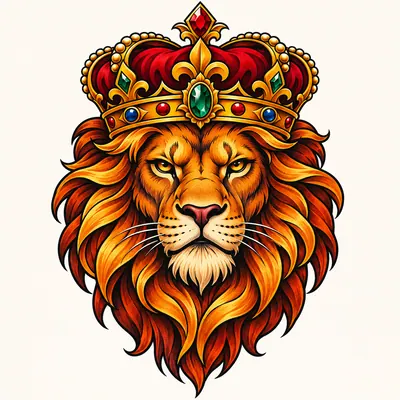
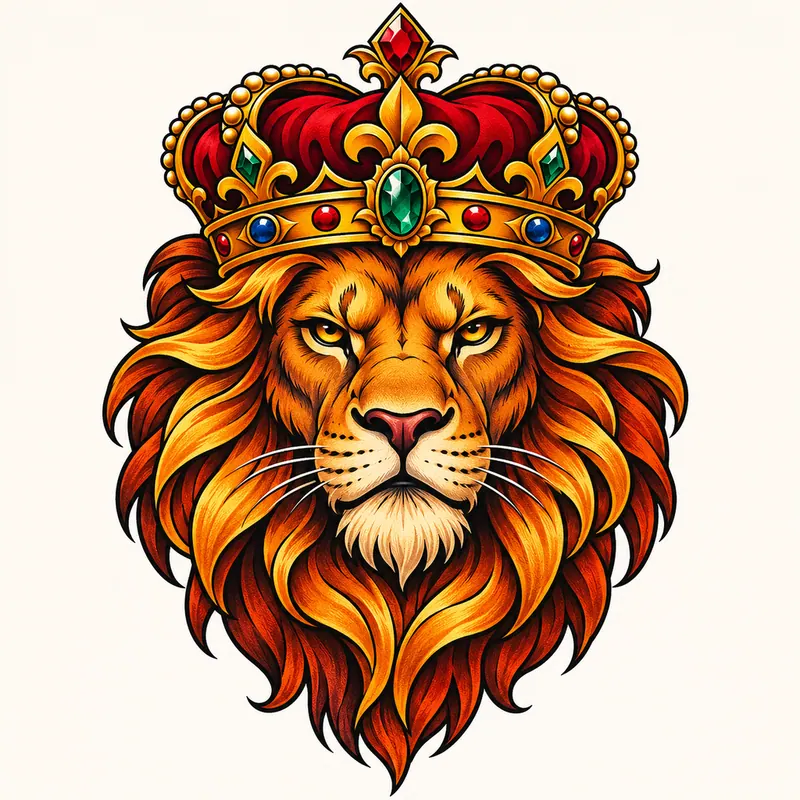
The result looks illustrated rather than photographic. A neo traditional lion is clearly drawn, but its mane has volume, its eyes have depth, and it may wear a crown, sit in an ornamental frame or be surrounded by flowers.
Where the style comes from
The style grew out of American traditional tattooing in the later decades of the twentieth century, as artists who had learned classic flash began experimenting with more detail and color. Its look is often linked to influences such as Art Nouveau, Victorian ornament and decorative illustration, which show up in the frames, jewels and flowing curves typical of the style. It has since become a widely practiced style of its own rather than a variation.
Visual characteristics
- Varied line weight. Thick outer contours, thinner inner lines for detail.
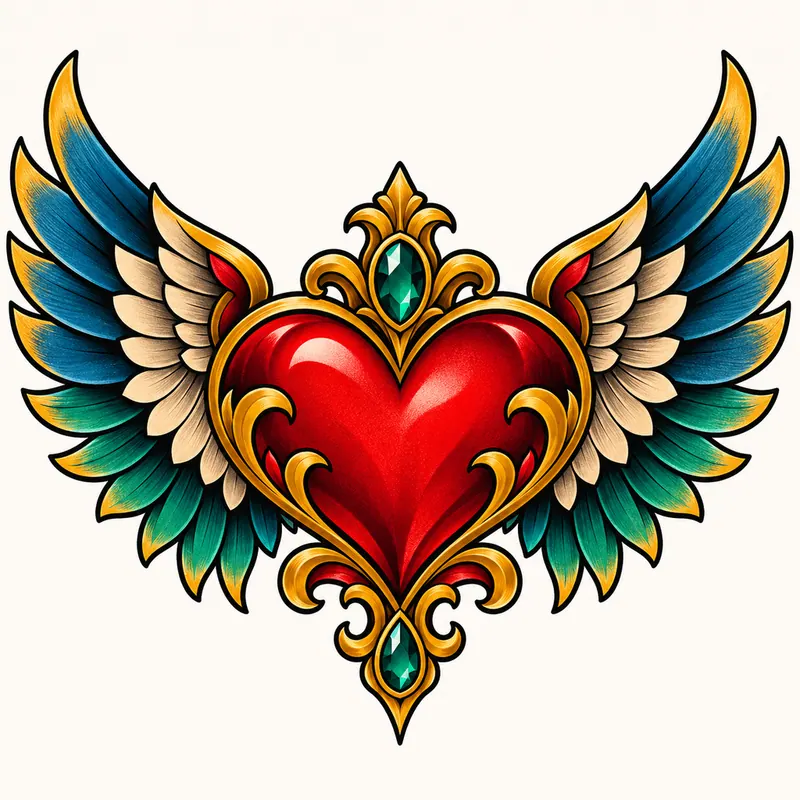
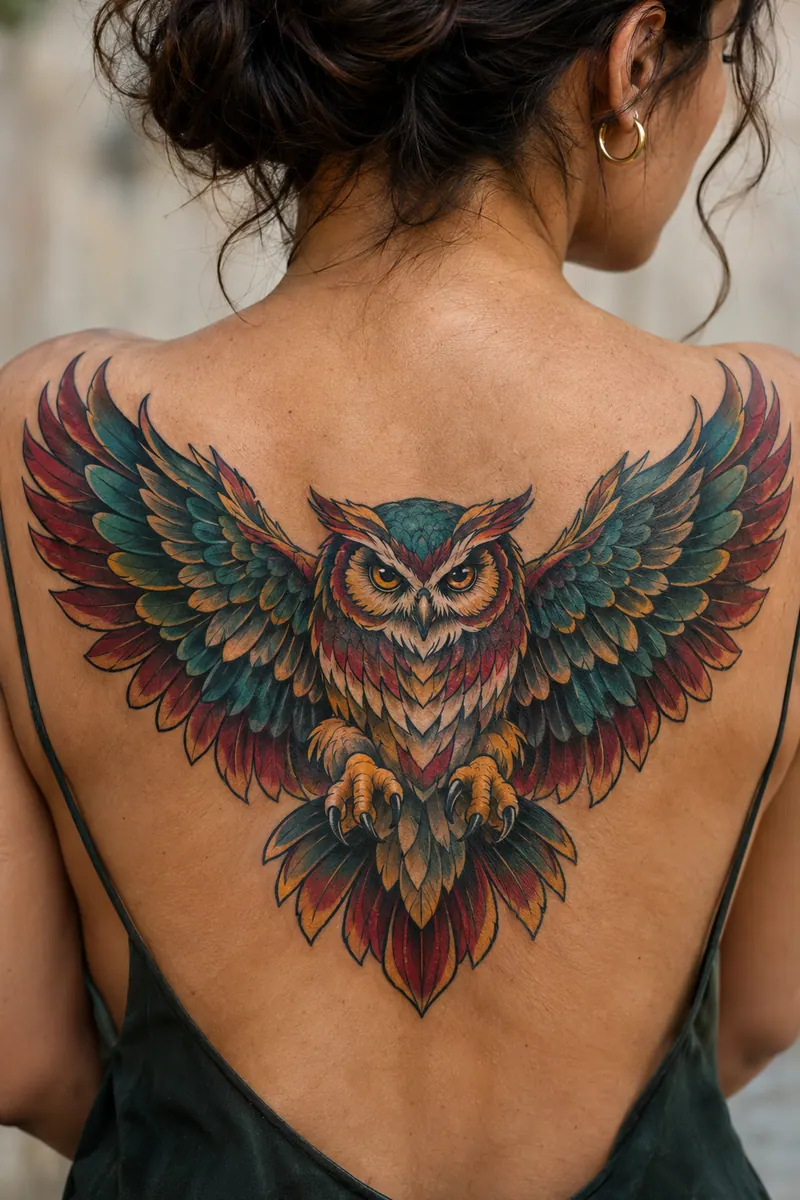
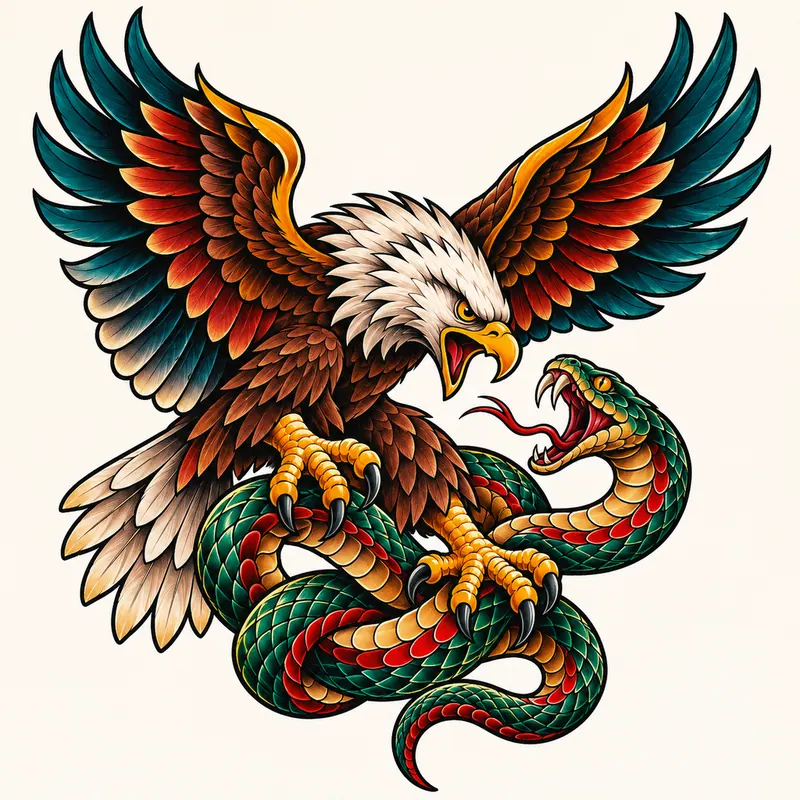
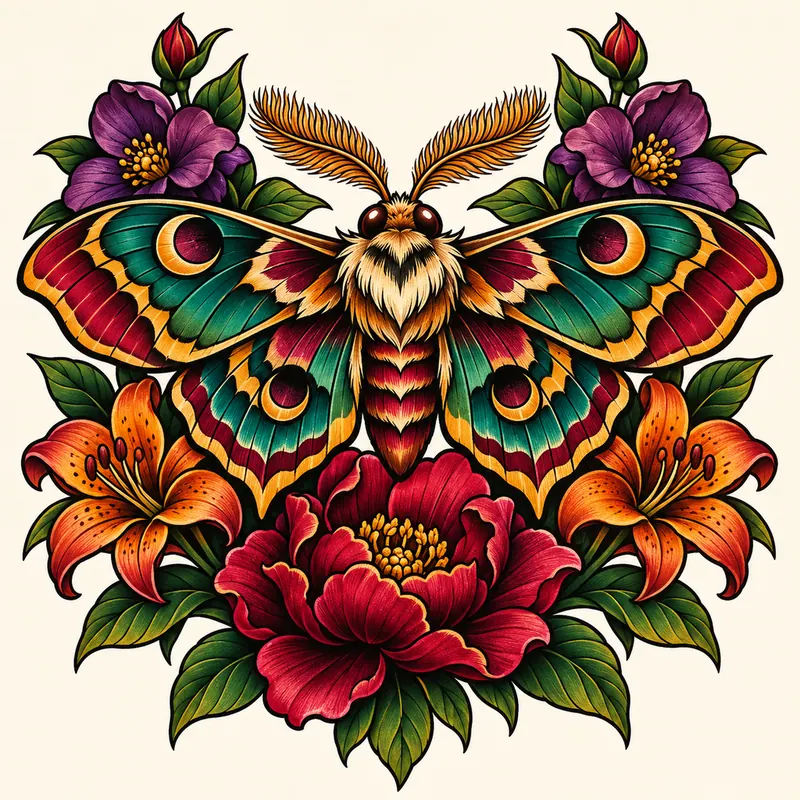
- Jewel-tone palette. Deep reds, burgundy, teal, emerald, purple, mustard and gold rather than primary colors.
- Dimensional shading with smooth blends and highlights.
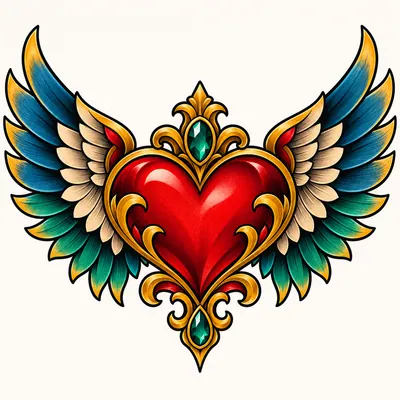
- Ornament and framing — filigree, gems, lace, banners and decorative borders.
- Stylized naturalism. Animals and flowers are recognizable and detailed, but exaggerated for drama.
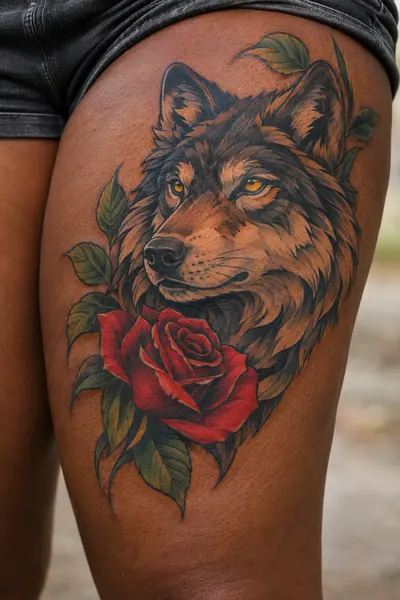
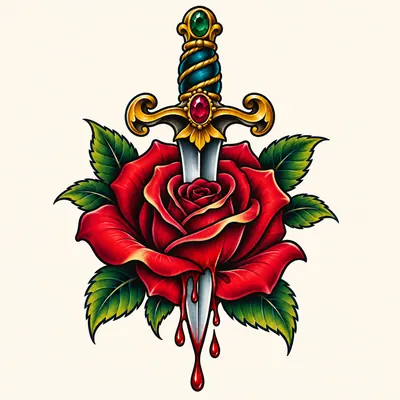
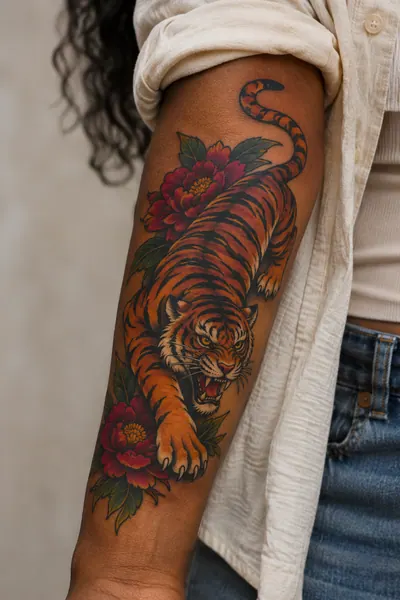
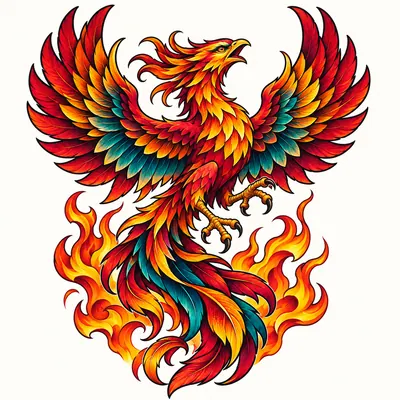
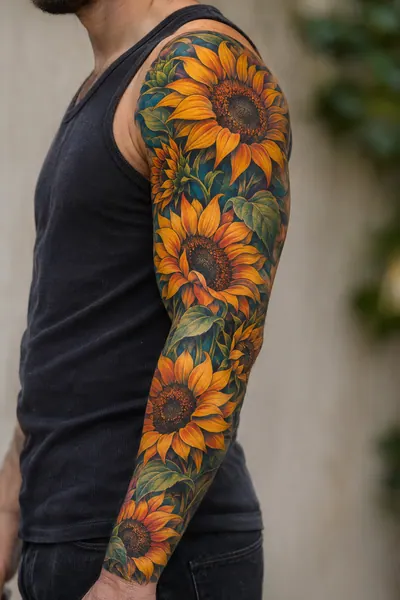
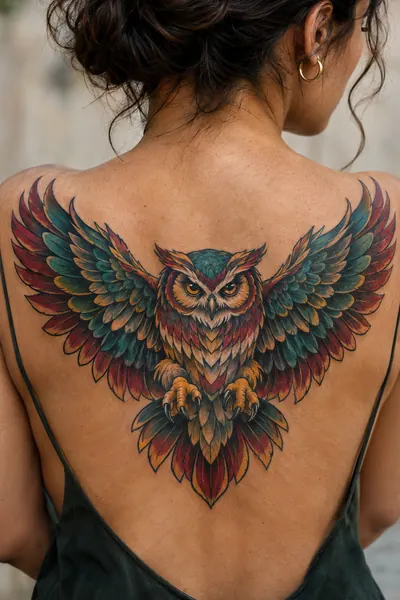
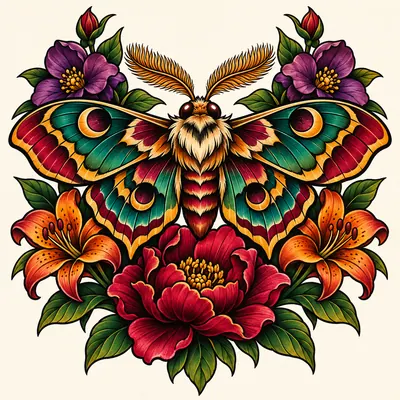
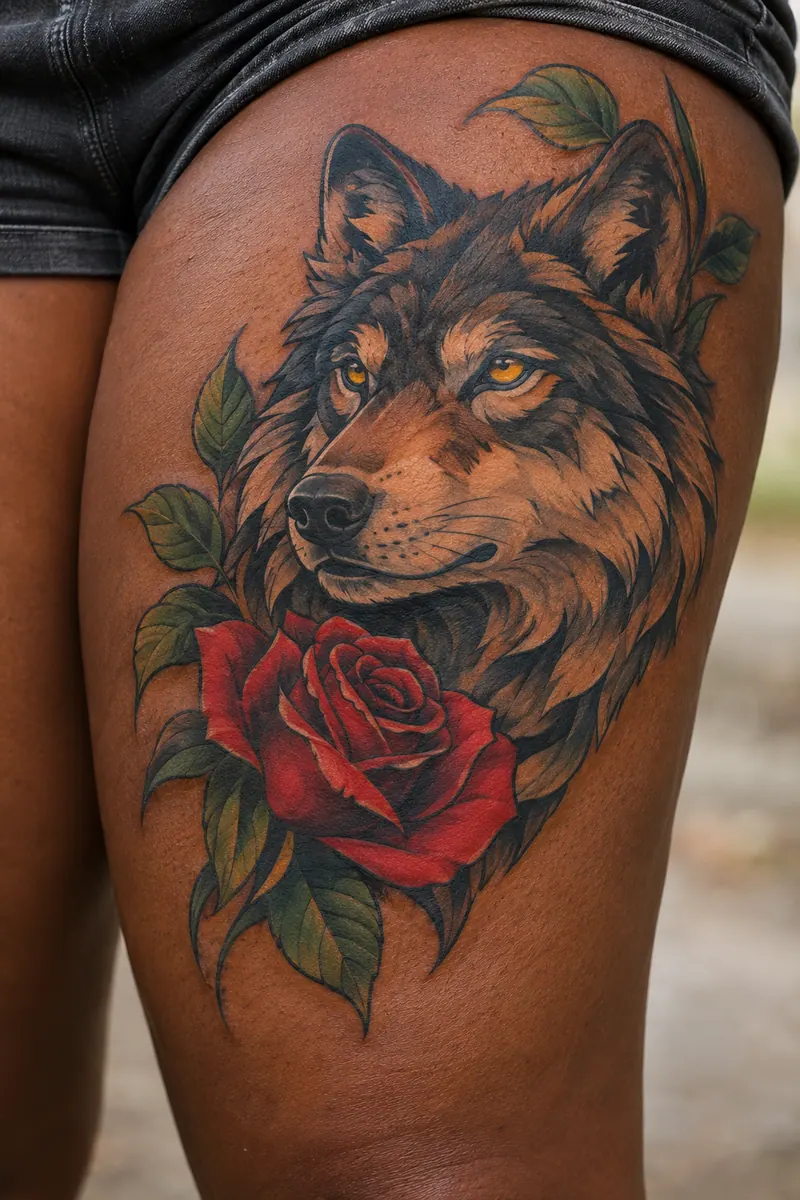
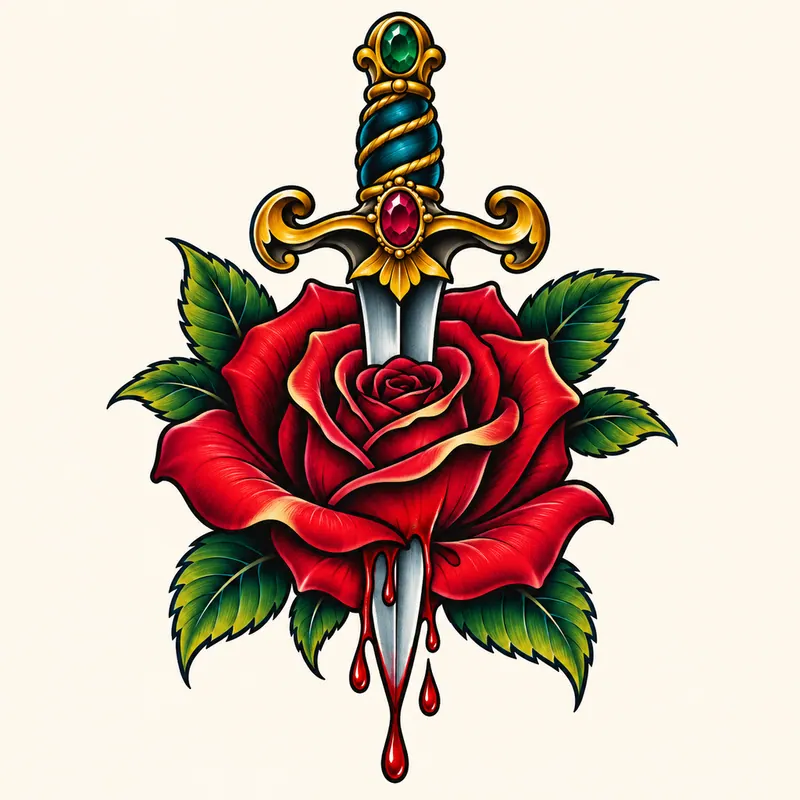
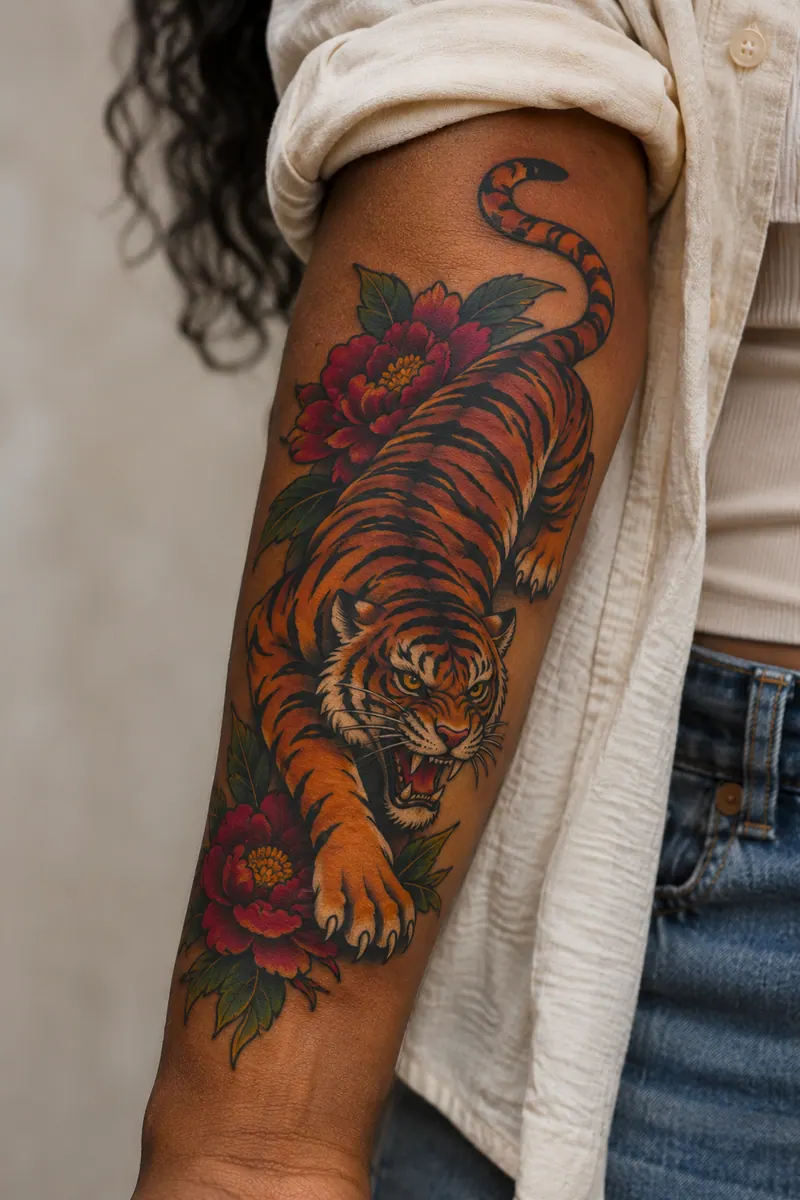
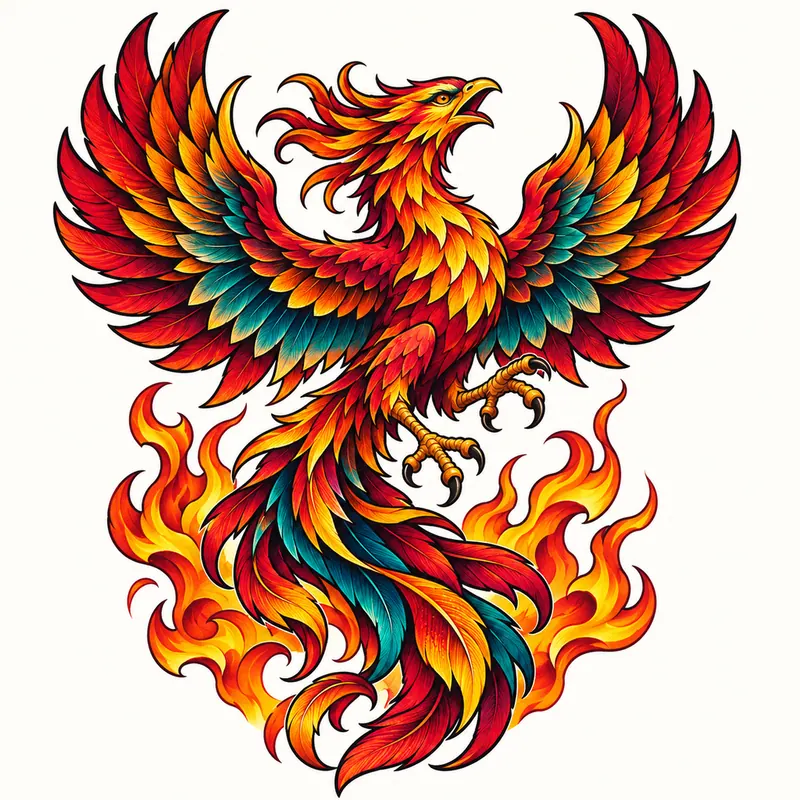
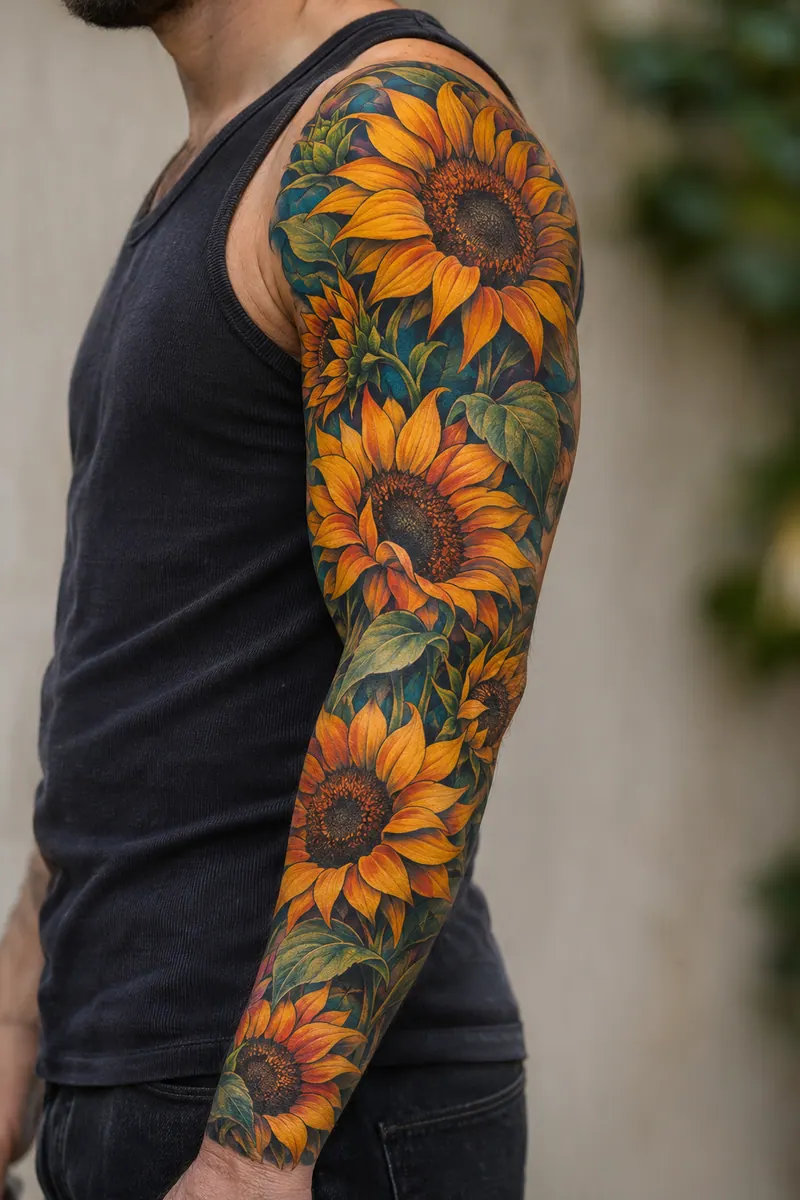
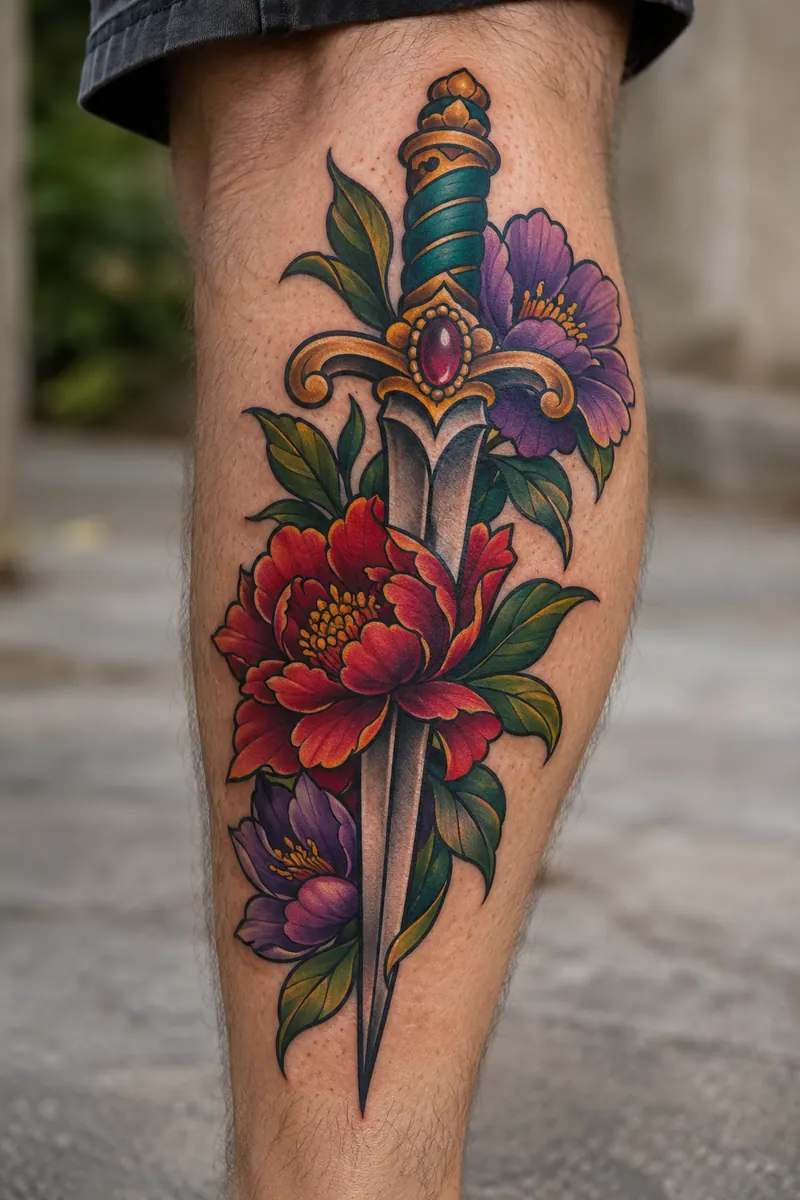
Look at the gallery above for typical examples: a wolf head with a red rose and an eagle fighting a snake on the thigh, a lion wearing a crown and a heart with wings on the chest, a phoenix rising from flames and an owl with spread wings on the back, a crawling tiger on the forearm, a rose pierced by a dagger on the calf, a moth with flowers and a cluster of sunflowers as a half sleeve.
How neo traditional tattoos age
The bold outer lines are the style’s insurance policy: as colors soften and mellow, the outlines keep the shapes legible. Things to watch:
- Fine inner details such as lace patterns or tiny gems blur first. They need enough size to survive.
- Light colors like yellow, pale pink and light blue fade fastest, especially in the sun.
- Contrast between neighboring colors matters more than the colors themselves. Two mid-tones side by side can merge visually over time.
Best subjects and placements for neo traditional
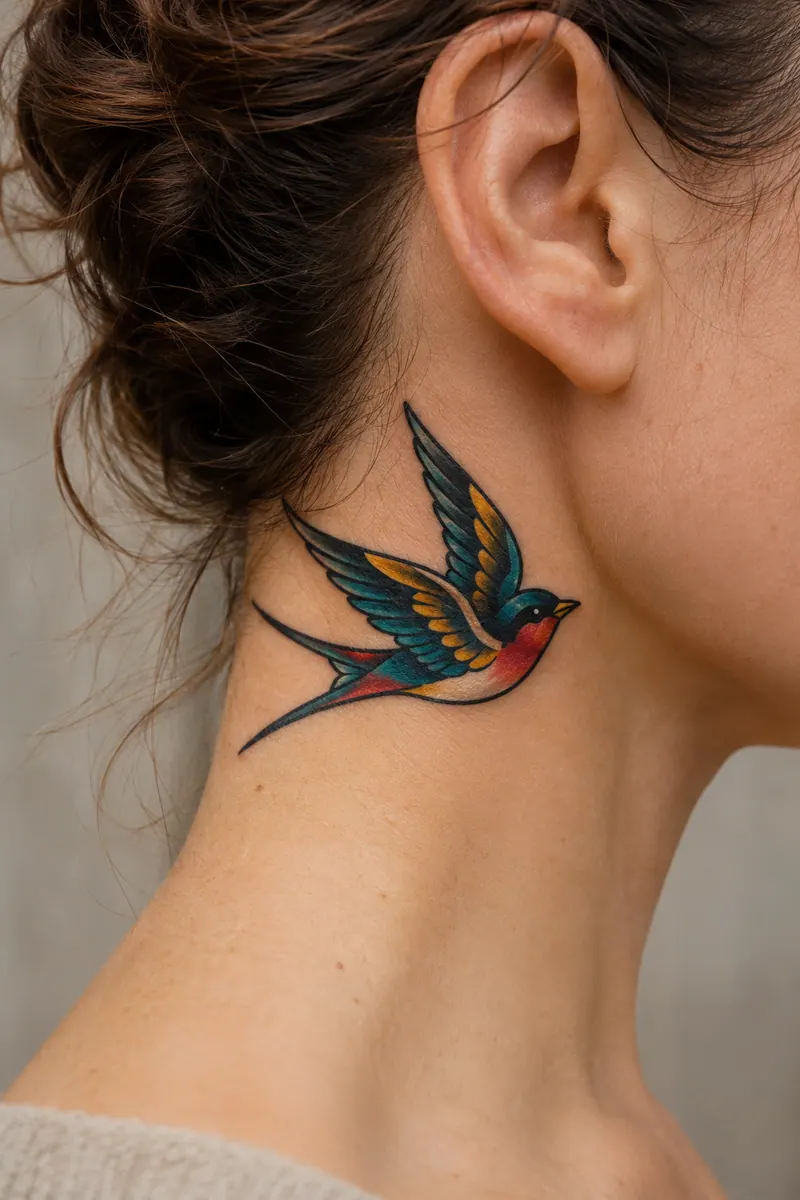
Neo traditional loves a strong central subject: animal heads (wolves, lions, tigers, owls), birds such as swallows and phoenixes, flowers like roses, peonies and sunflowers, moths, daggers, hearts and stylized portraits.
Because of its detail, the style usually needs medium to large sizes:
- Thigh and calf — ideal for vertical compositions like an eagle and snake or a dagger with flowers.
- Chest and back — space for symmetrical pieces such as a crowned lion or a phoenix with spread wings.
- Upper arm, forearm and sleeve — easily combined with other neo traditional pieces into a cohesive sleeve.
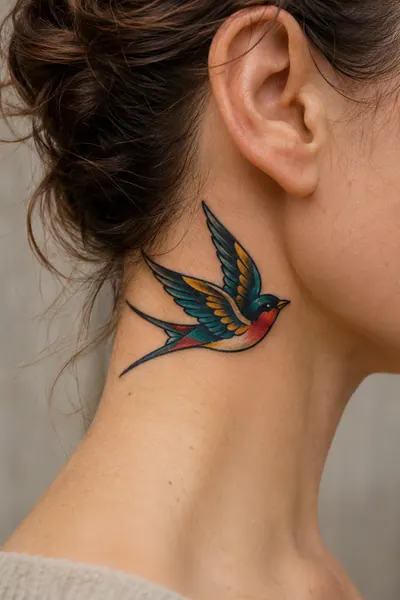
- Neck — small pieces like a swallow work when kept bold and simple.
Neo traditional vs. neighboring styles
- vs. traditional (old school). Traditional is flatter, with uniform lines and a limited palette; neo traditional adds depth, ornament and richer color.
- vs. illustrative. Illustrative is a broader category, often black and grey with etched or graphic shading; neo traditional has a more specific look built on bold outlines and decorative color.
- vs. Japanese. Both are bold and colorful, but Japanese follows its own traditions of imagery, backgrounds and full-body composition.
Choosing a neo traditional artist
Look for an artist whose color work looks saturated in healed photos, not just freshly done. Check how they handle line weight — confident, smooth transitions from thick to thin — and whether their color choices feel deliberate. Many neo traditional artists have a recognizable personal style, so choose one whose taste in ornament and palette matches yours, and let them adapt your reference rather than copying it.
In InkForge you can describe a subject — a crowned animal, a flower and dagger, a bird in a frame — and generate it in the Neo Traditional style in color, then compare it with a traditional version to see which you prefer. If you like most of a design, use the edit brush to regenerate just one area, such as the frame or the flowers, and bring the final version to your artist as a starting point.