InkForge
What a moth tattoo means
Where the butterfly belongs to the day, the moth belongs to the night, and its symbolism is shaped by that difference. A moth tattoo is often about the parts of life that happen in the dark: change you went through quietly, intuition, grief, or the search for something to hold on to.
- Drawn to the light. The image of a moth circling a flame is a long-standing metaphor. It can stand for faith, hope and devotion, or for obsession and attraction to something dangerous. Many people wear a moth as a reminder to keep moving toward their own light.
- Transformation. Like butterflies, moths go through a complete metamorphosis from caterpillar to winged adult. A moth emphasizes the slow, hidden side of that change.
- Night and intuition. Moths find their way in darkness, so they are linked to dreams, instinct and the subconscious.
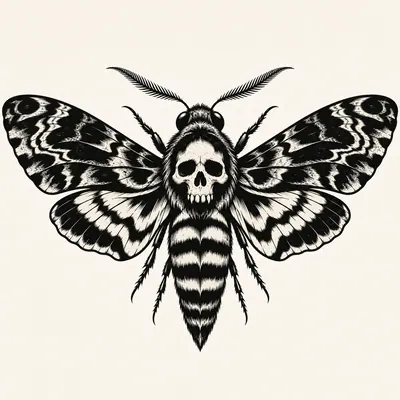
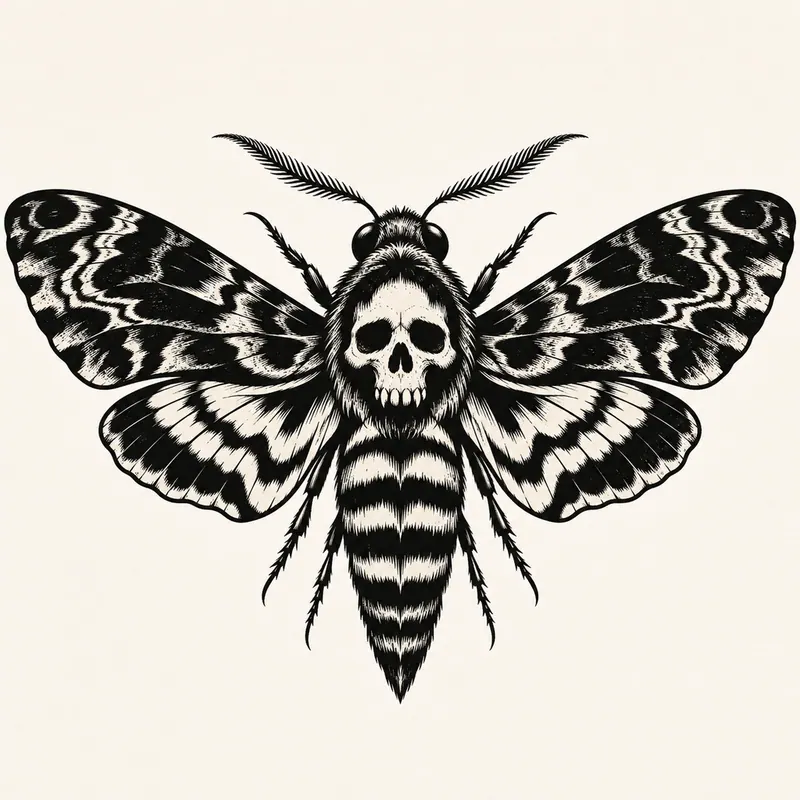
- Death and the soul. In some European folklore, moths were connected to souls or seen as messengers. The death’s-head hawkmoth, with its skull-like marking, turned that idea into a striking visual symbol.
How moths differ from butterflies in a design
If you like insect tattoos, it helps to know why a moth looks different from a butterfly tattoo:
- Antennae: moths often have feathery or thread-like antennae; butterflies have thin antennae with a club at the tip.
- Body: moths tend to have thicker, fuzzier bodies, which gives the design more weight in the center.
- Wings: many moths rest with wings spread flat, making a broad, symmetrical shape that reads almost like a crest.
- Colors and patterns: moth wings are often earthy, with eye spots, bands and fine textures that are perfect for dotwork and engraving.
That symmetry is the reason moths are so popular as centered pieces on the chest, sternum and throat.
Popular moth tattoo designs
The gallery above covers the main directions:
Death’s-head moth. The most iconic moth tattoo. A solid blackwork version with the skull mark on the back makes a bold chest piece.
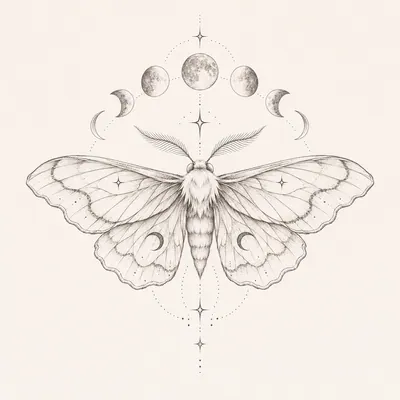
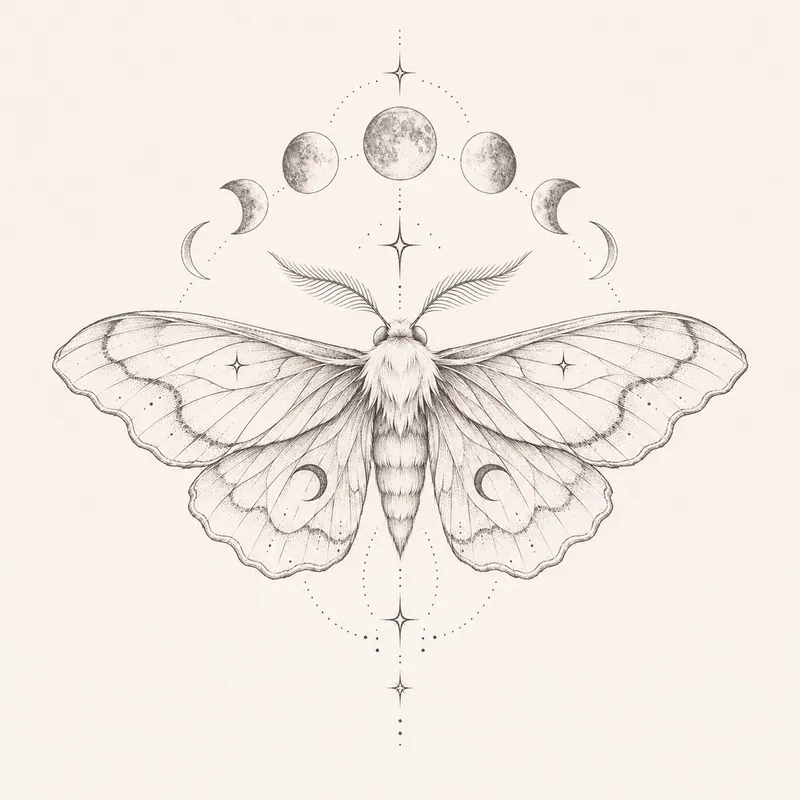
Moth with moon phases. A row of moon phases above or below the wings adds cycles and time. Fine line keeps it light and elegant on the chest; pair it with ideas from our moon tattoos.
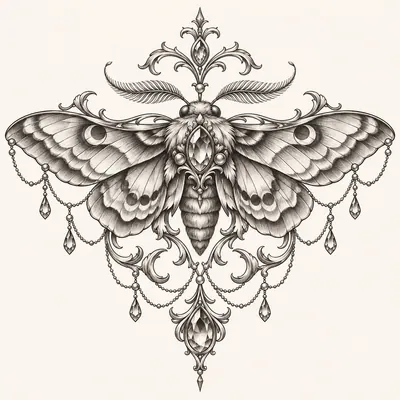
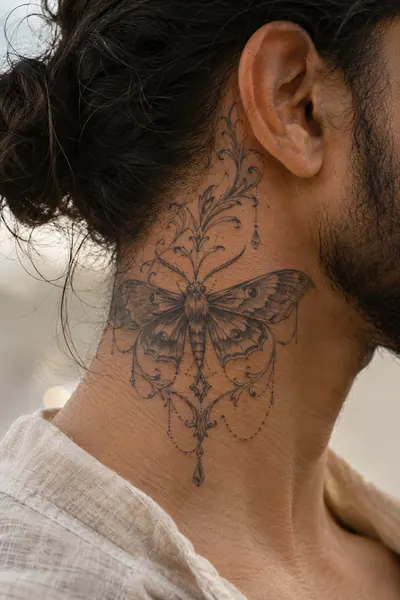
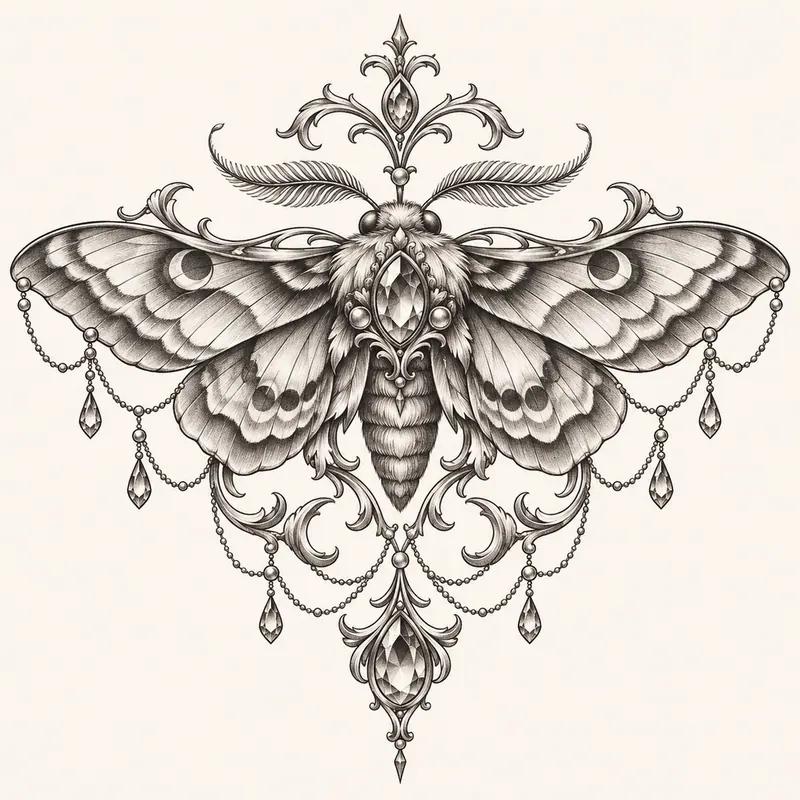
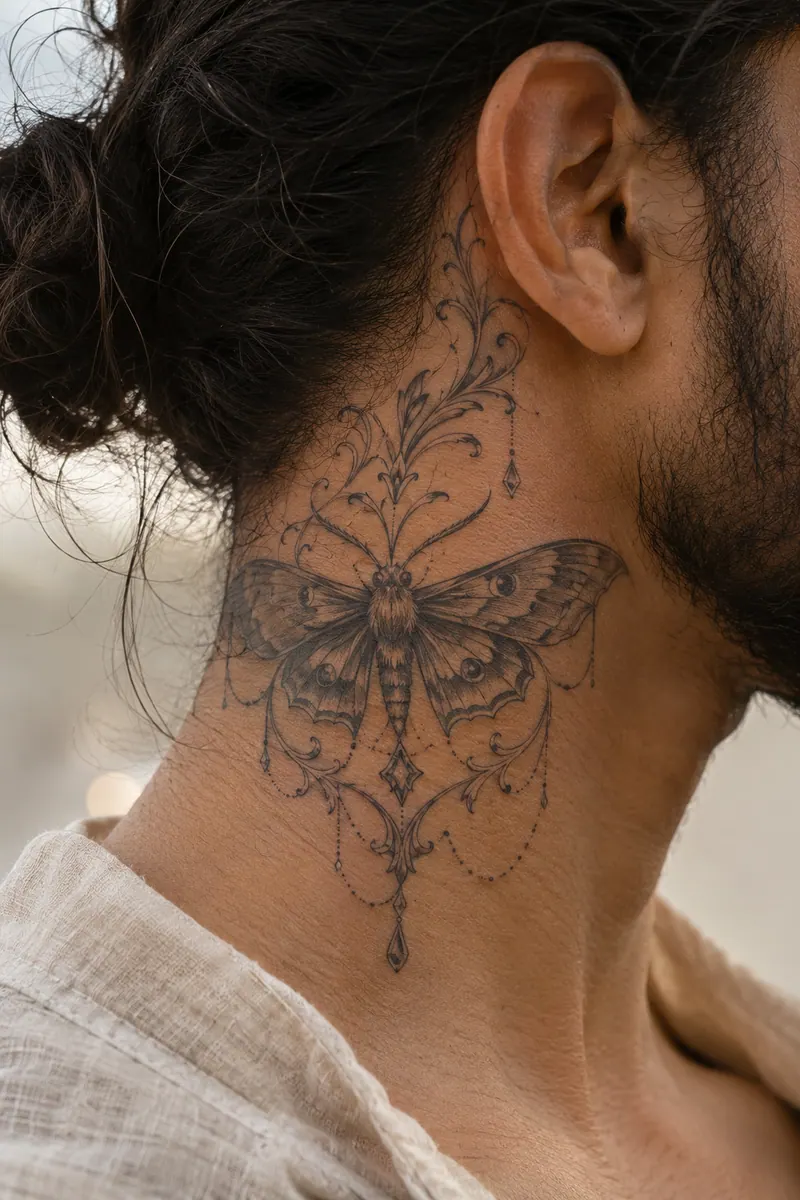
Jeweled and ornamental moths. Hanging gems, filigree and symmetrical lines turn the moth into something close to jewelry, beautiful on the thigh or at the center of the throat.
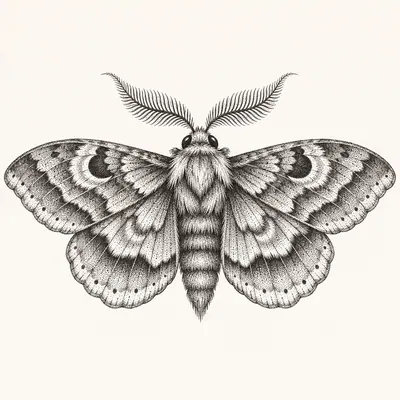
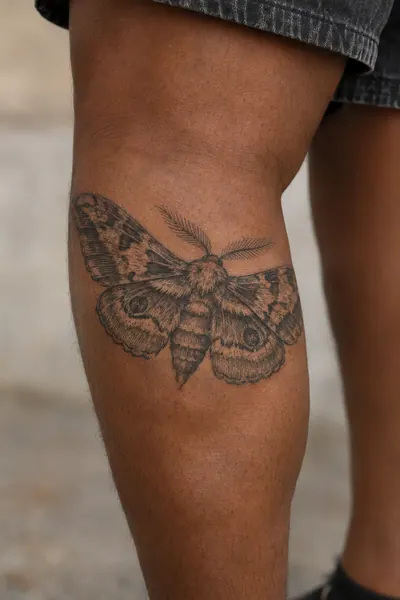
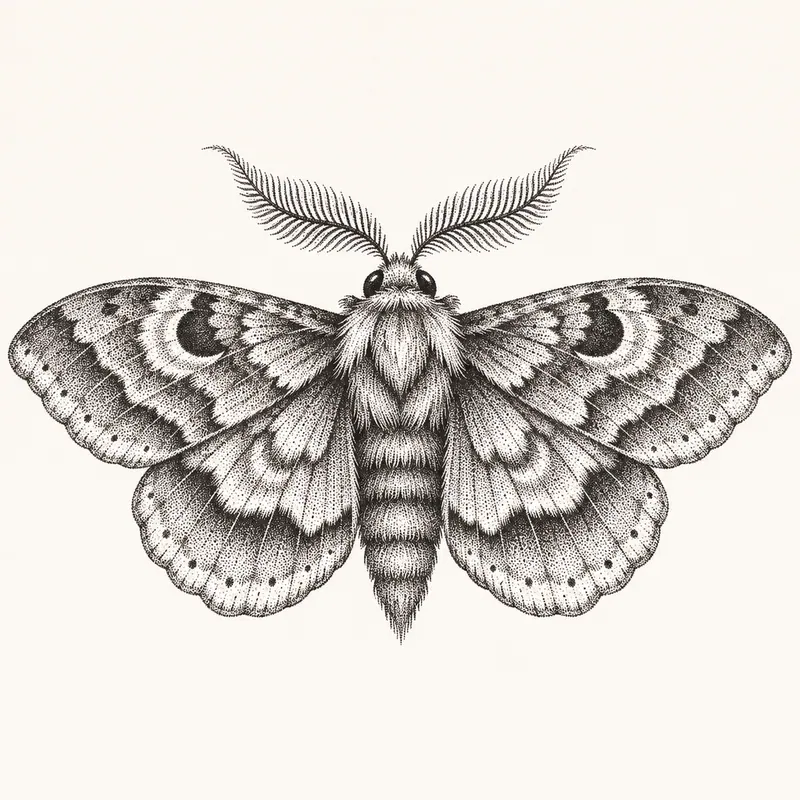
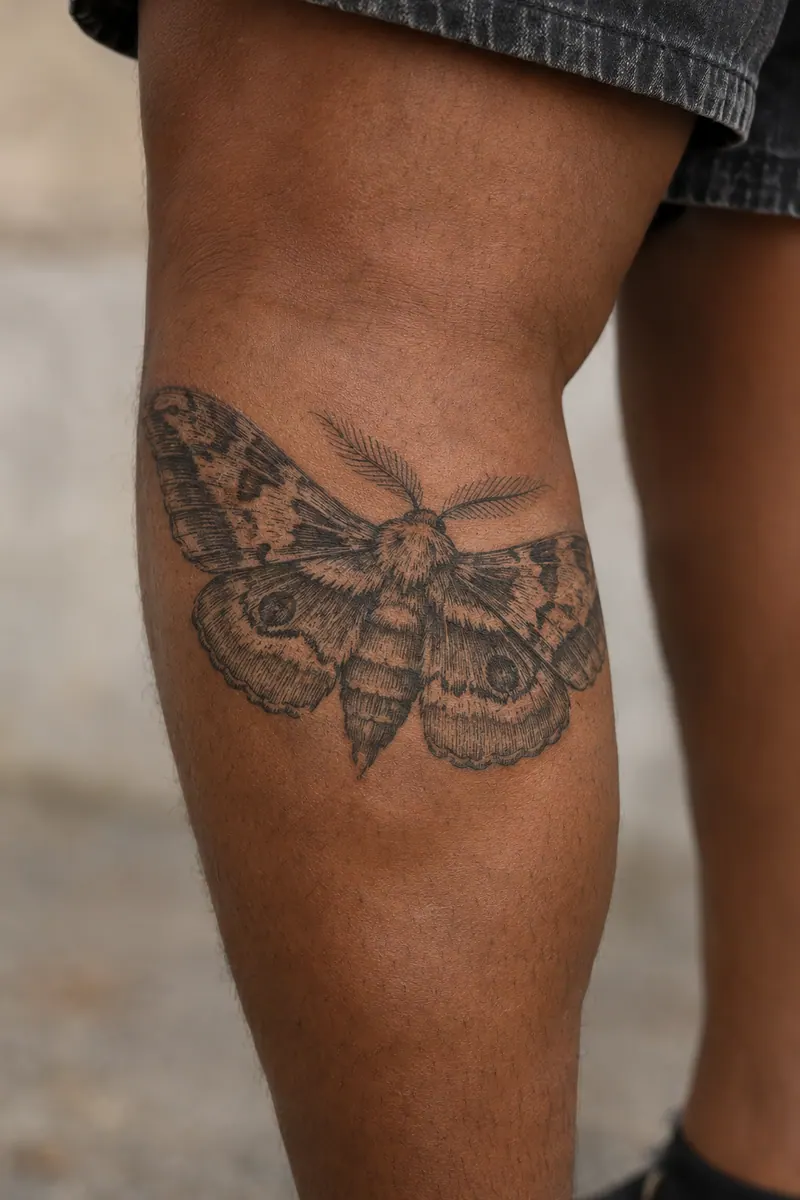
Stippled and engraved moths. Dotwork shading and antique etching-style lines bring out the soft texture of the wings, like an illustration from an old natural history book.
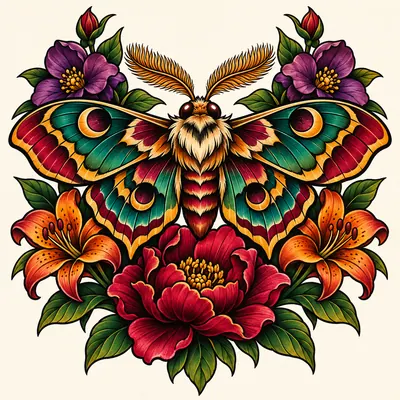
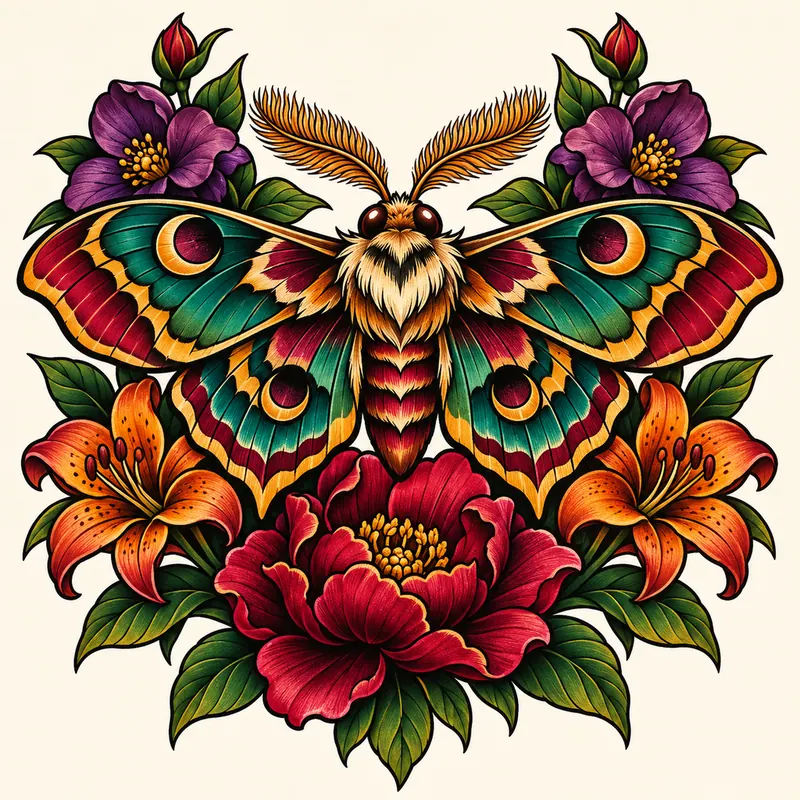
Moth with flowers. Neo traditional color and blossoms soften the darker meanings and create a lush upper arm piece.
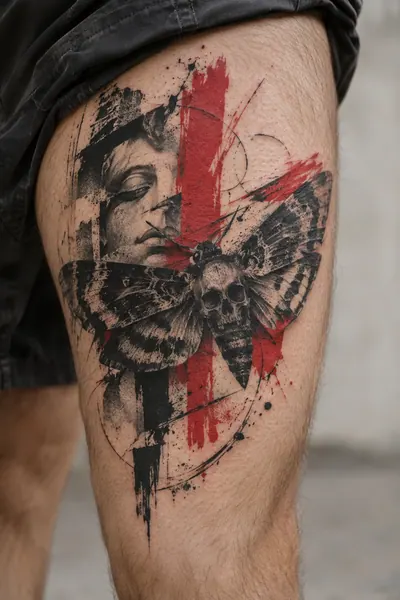
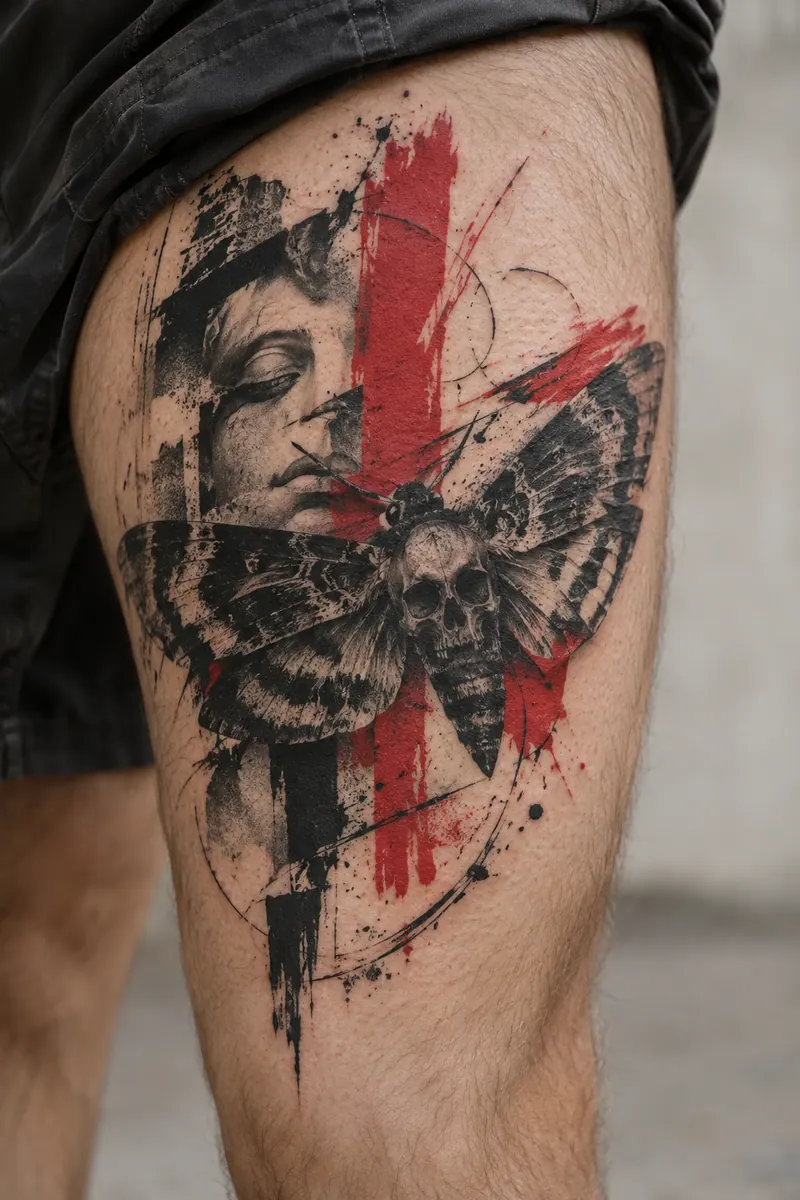
Moth with a skull. A trash polka collage of moth and skull doubles down on the memento mori theme with red and black accents.
Where to place a moth tattoo
Because most moth designs are symmetrical, they look best centered: the middle of the chest, the sternum, the throat or the back of the neck, or the center of the upper back. On limbs, place the body along the length of the thigh, calf or forearm so the wings open across it.
- Chest and sternum: ideal for a large death’s-head or ornamental moth. See our chest tattoo guide for sizing.
- Throat and neck: striking but very visible; for most people it is also one of the more sensitive areas.
- Thigh and calf: plenty of room for detailed wings and added elements like flowers or a skull.
- Forearm: suits a mid-sized stippled or fine line moth.
Wing patterns are full of small details. If you want a small moth, simplify the patterns so they don’t blur together as the tattoo ages.
Choose the species, the pattern on the wings and the elements around it, such as a lamp, a candle flame, a moon phase or a flower from a meaningful date. In InkForge you can describe that combination, compare it in fine line, dotwork or ornamental styles, and use the edit brush to regenerate just the wings or the background until it feels right. Then take your favorite design to your artist as a reference.