InkForge
What defines American traditional
American traditional — often called old school — is the style most people picture when they think of a “classic tattoo.” It follows a short list of rules that have barely changed in a century:
- Thick, confident black outlines that hold everything together.
- A limited palette: black, red, yellow and green, with occasional blue, brown or purple.
- Solid color fills and simple black shading, often whip-shaded with a sweeping, stippled gradient.
- Flat, graphic compositions without realistic perspective.
- Iconic subjects drawn the same recognizable way for generations.
The goal is a tattoo that reads instantly, from a distance, and still looks good decades later.
A short, honest history
Tattooing was common among sailors long before the style had a name, and many traditional motifs — anchors, ships, swallows, nautical stars — come from that world. The patenting of an electric tattoo machine in the United States in 1891 made tattooing faster and more accessible, and in the early 20th century American tattoo shops in port cities and near military bases began selling designs from flash: sheets of ready-drawn, pre-colored designs on the wall that customers could pick from.
Through the first half of the century, those flash designs were refined into the bold, simplified look we now call American traditional. The style was revived from the 1970s onward and has never really left; today many tattooers still paint flash by hand and offer classic designs alongside custom work.
Classic subjects and what they say
Traditional imagery has a vocabulary of its own:
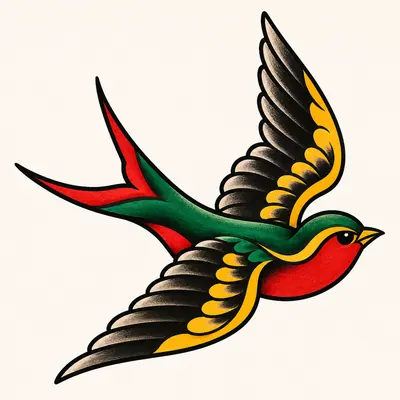
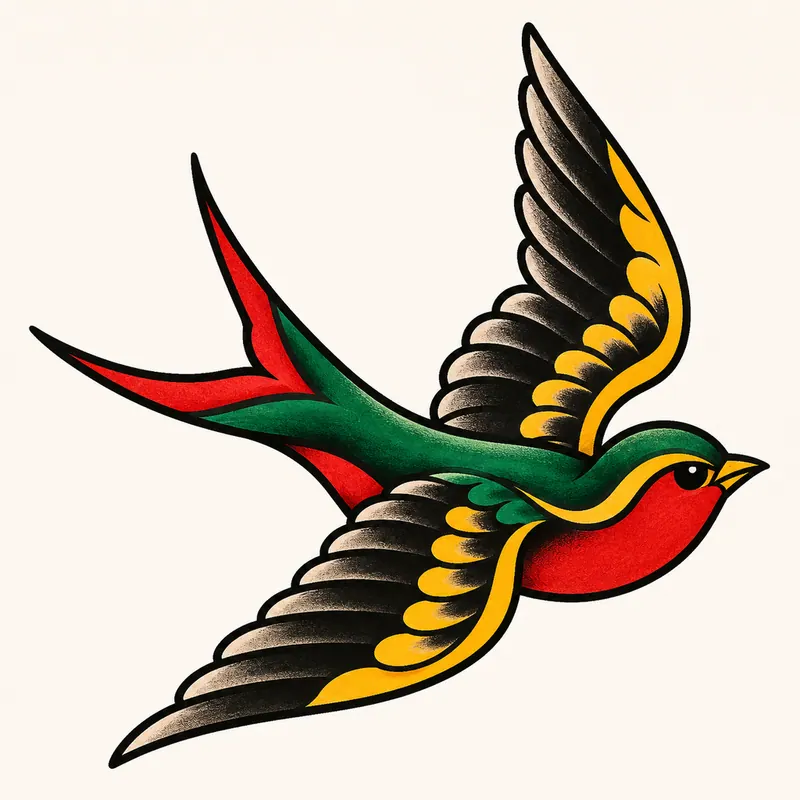
- Swallows — travel and returning home; in sailor lore, also a marker of time at sea.
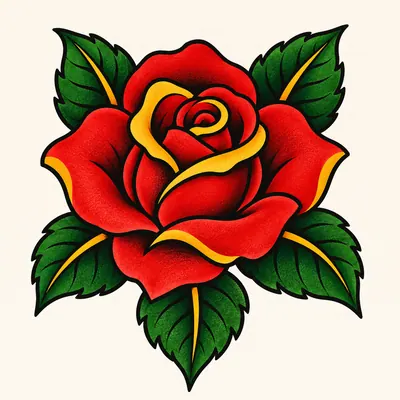
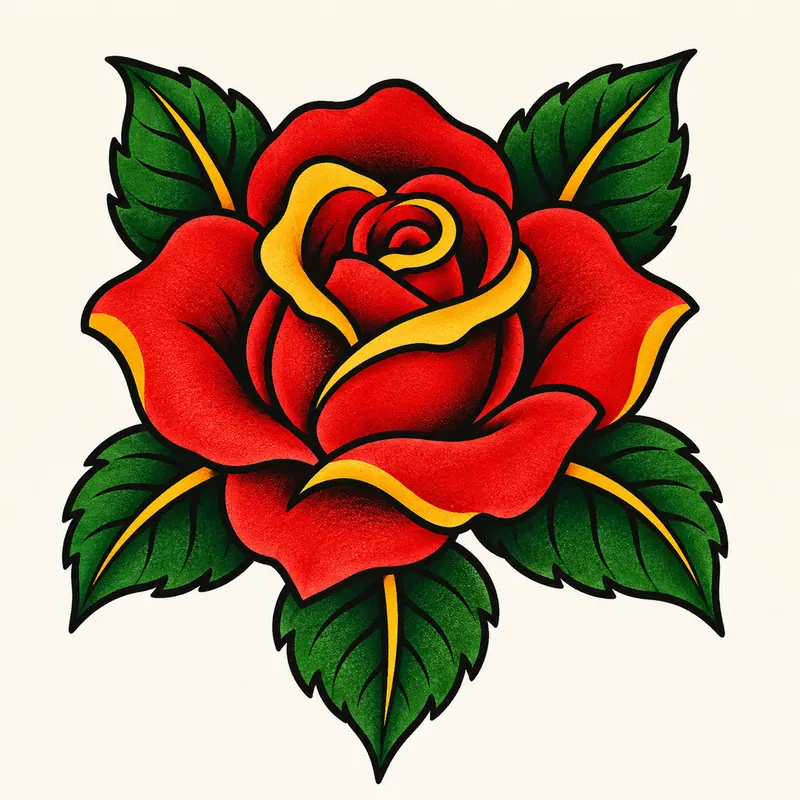
- Roses — love, beauty, sometimes loss.
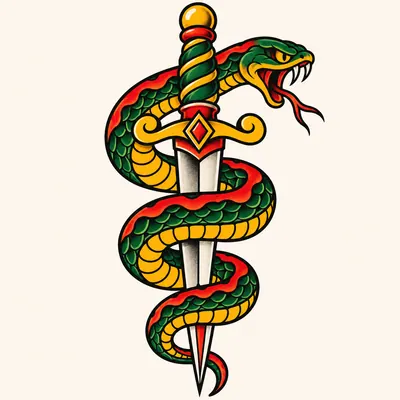
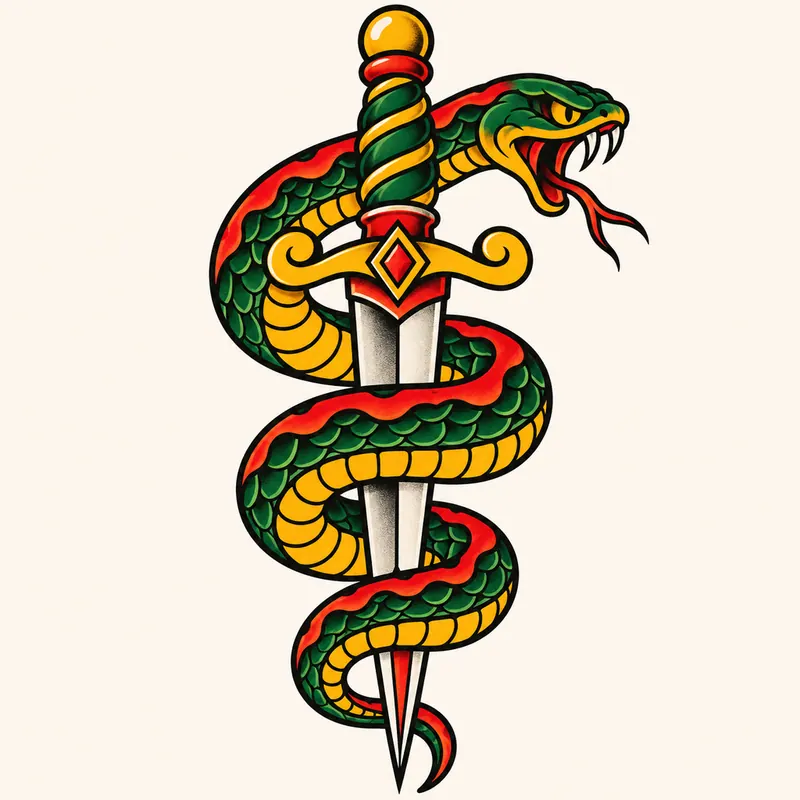
- Daggers — courage, sacrifice, or betrayal, especially when paired with a heart or rose.
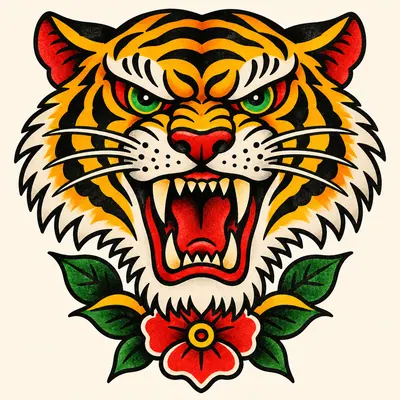
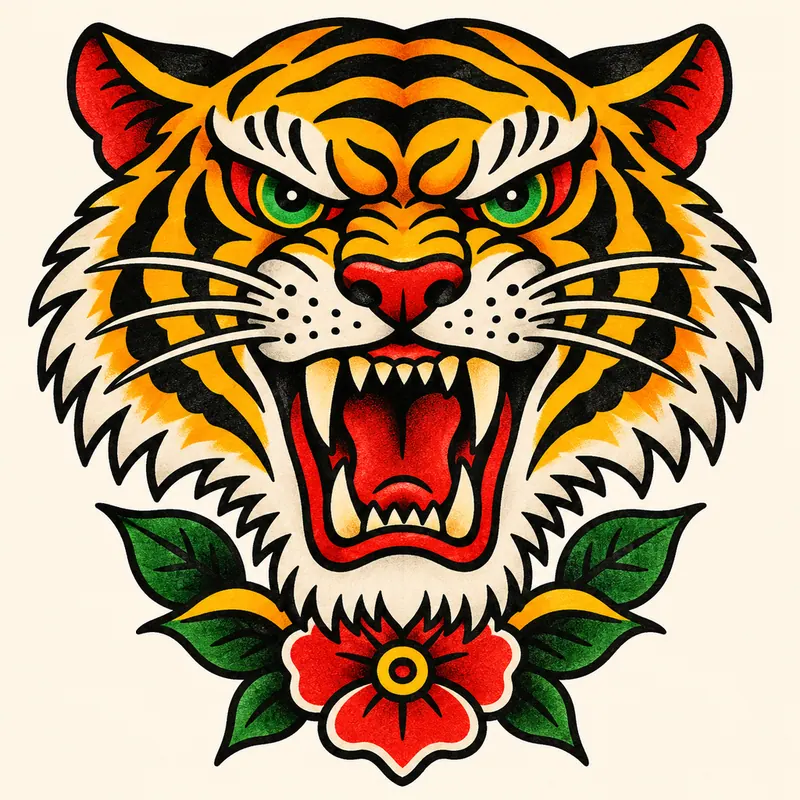
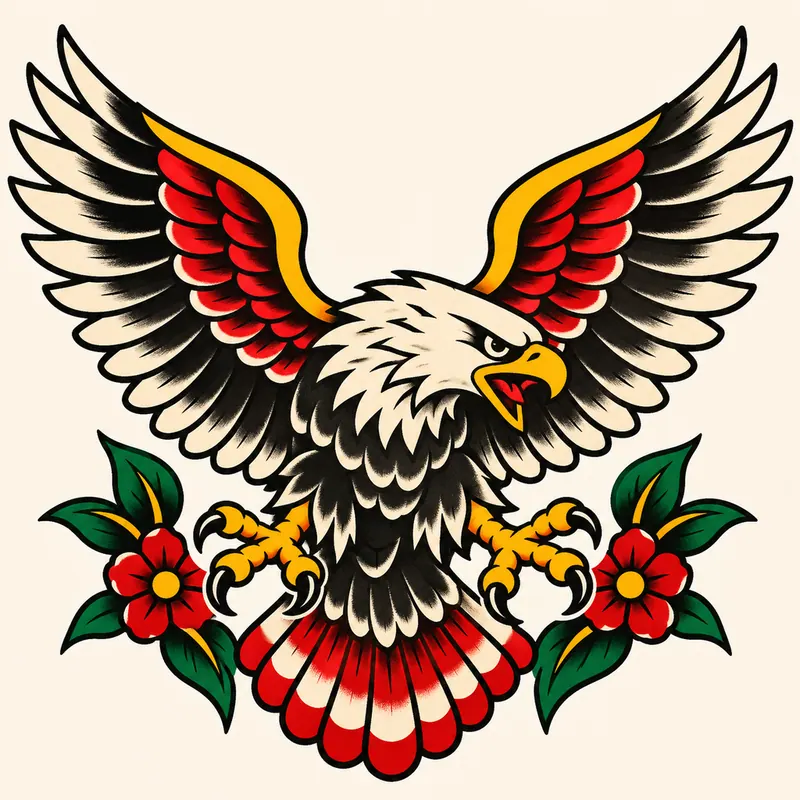
- Eagles and tigers — strength and pride.
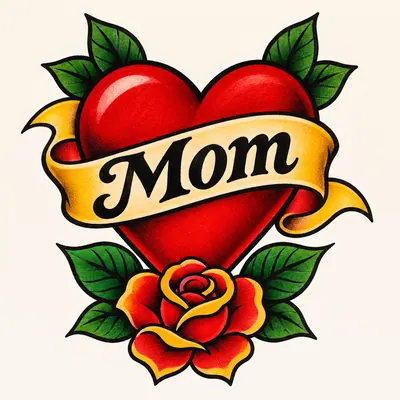
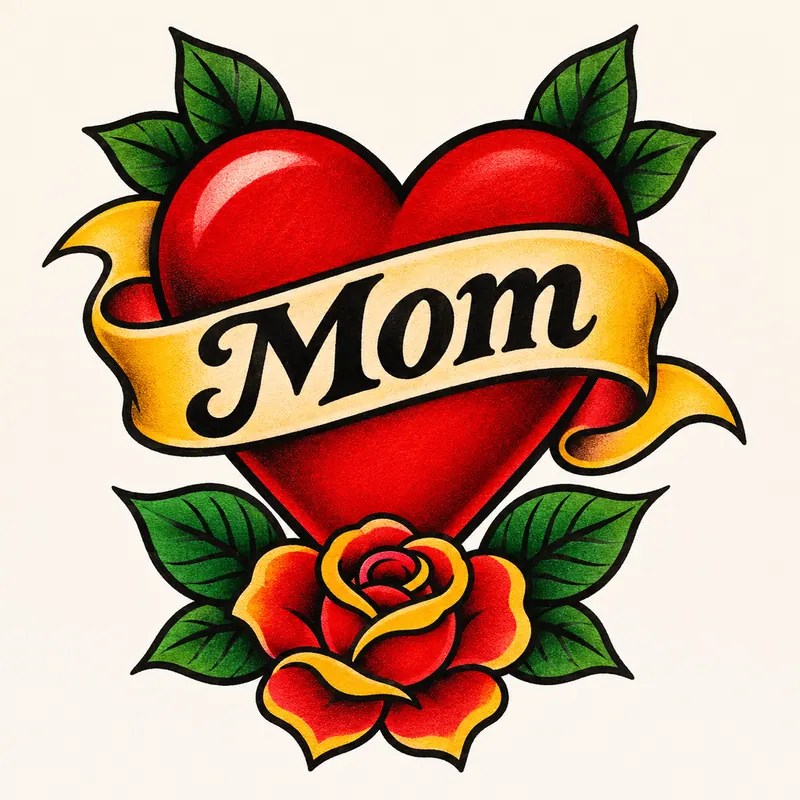
- Hearts with banners — devotion to a person, often “Mom.”
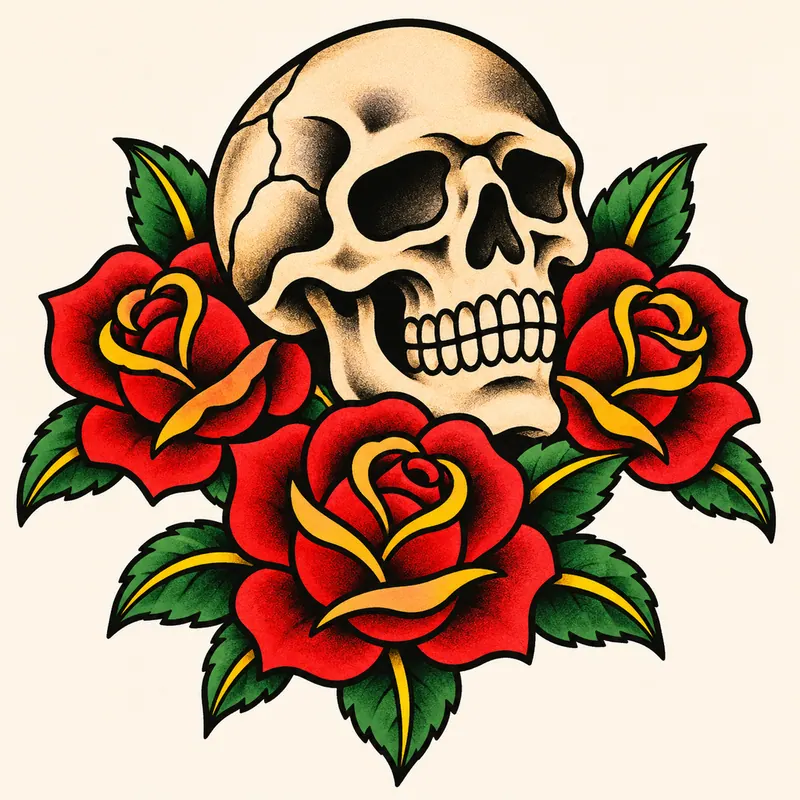
- Snakes and skulls — danger, temptation and mortality.
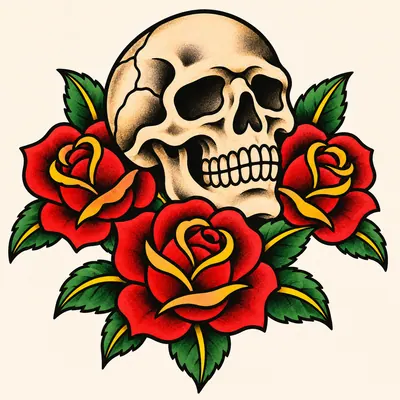
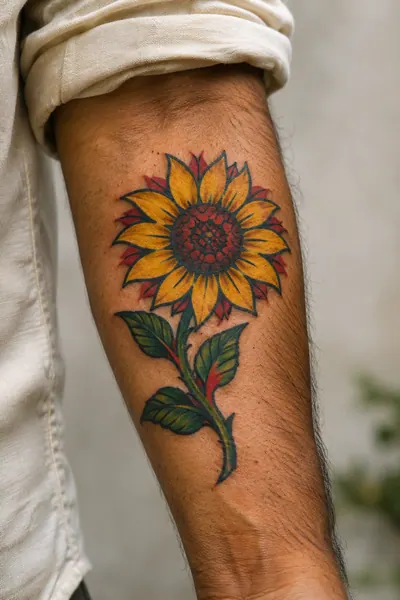
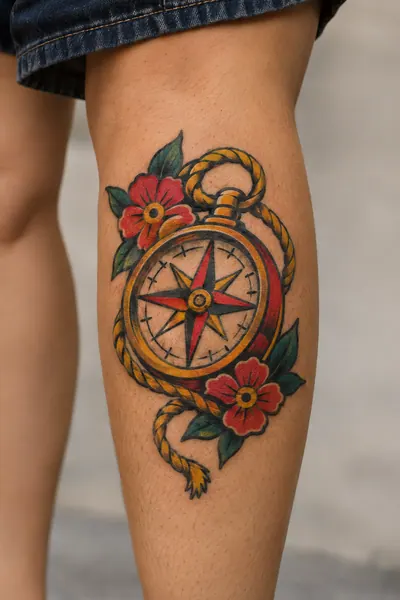
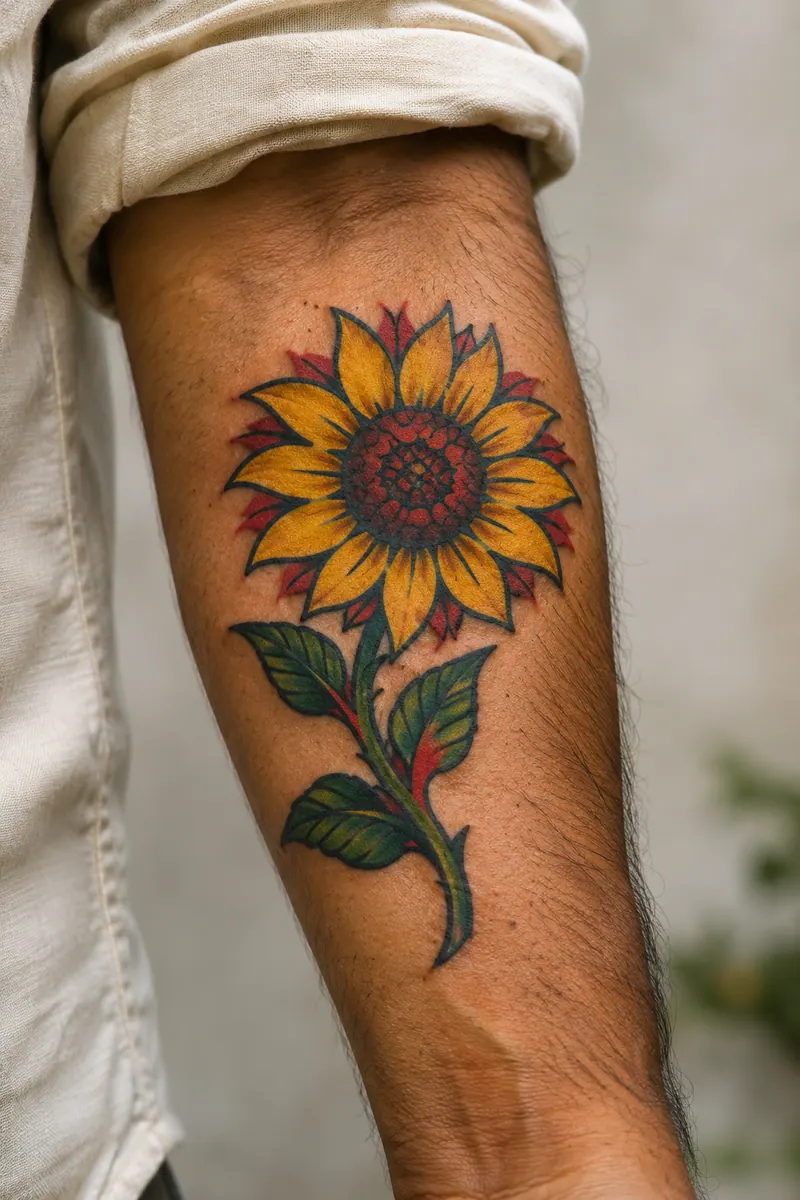
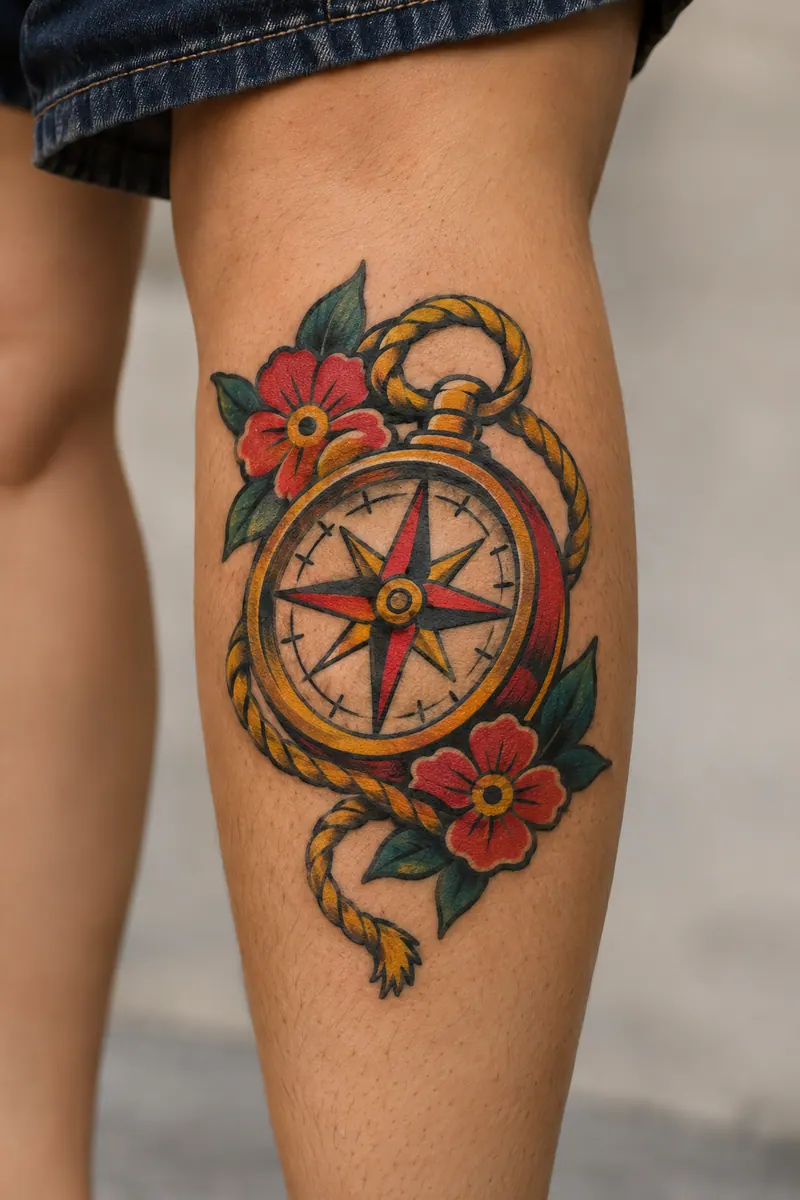
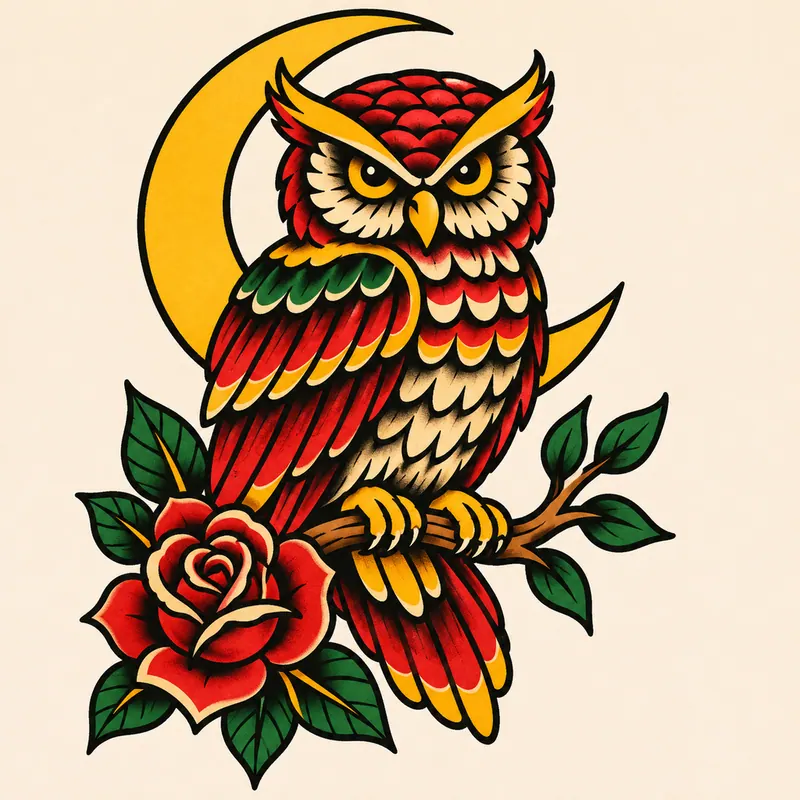
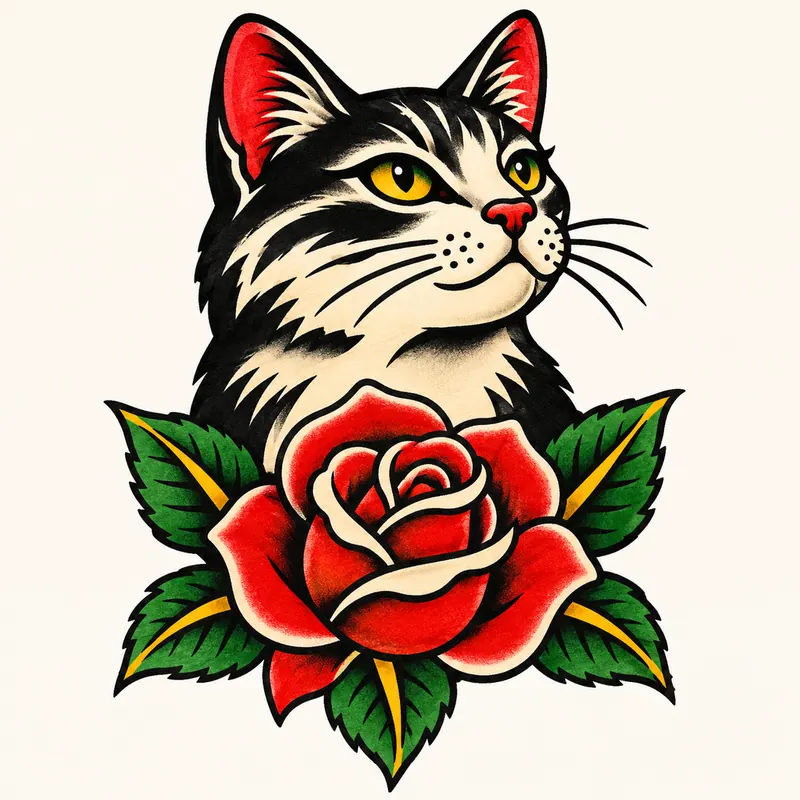
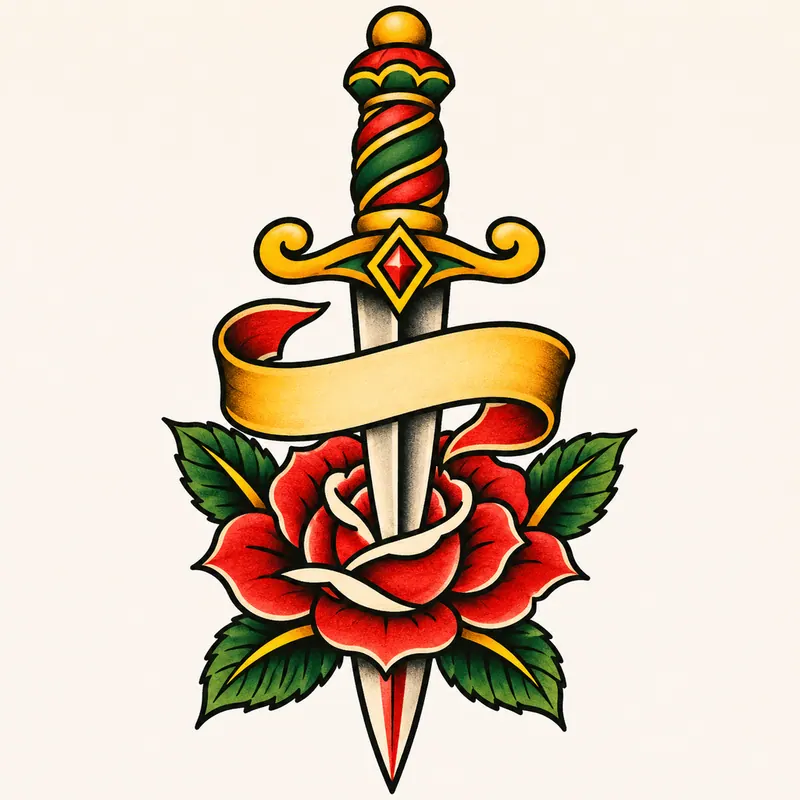
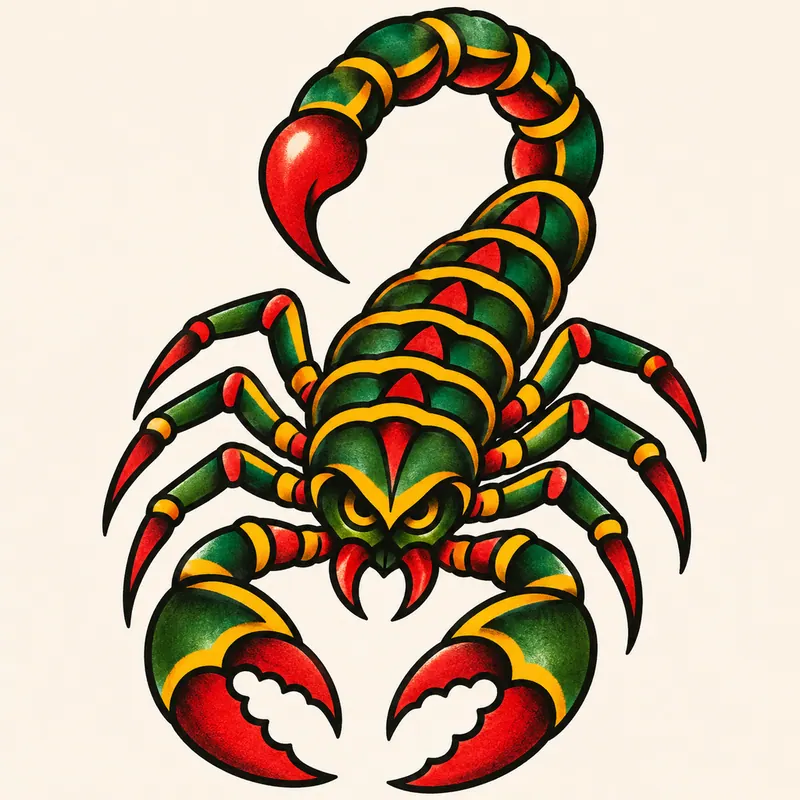
The gallery shows many of these: a snake coiled around a dagger, a classic rose, a swallow in flight and a facing pair, a roaring tiger, a skull with roses, a heart with a “Mom” banner, an eagle with spread wings, an owl with a moon, a compass with a rope, a cat with a rose, a sunflower, a scorpion and a dagger with a banner.
Aging, placement and size
How traditional tattoos age
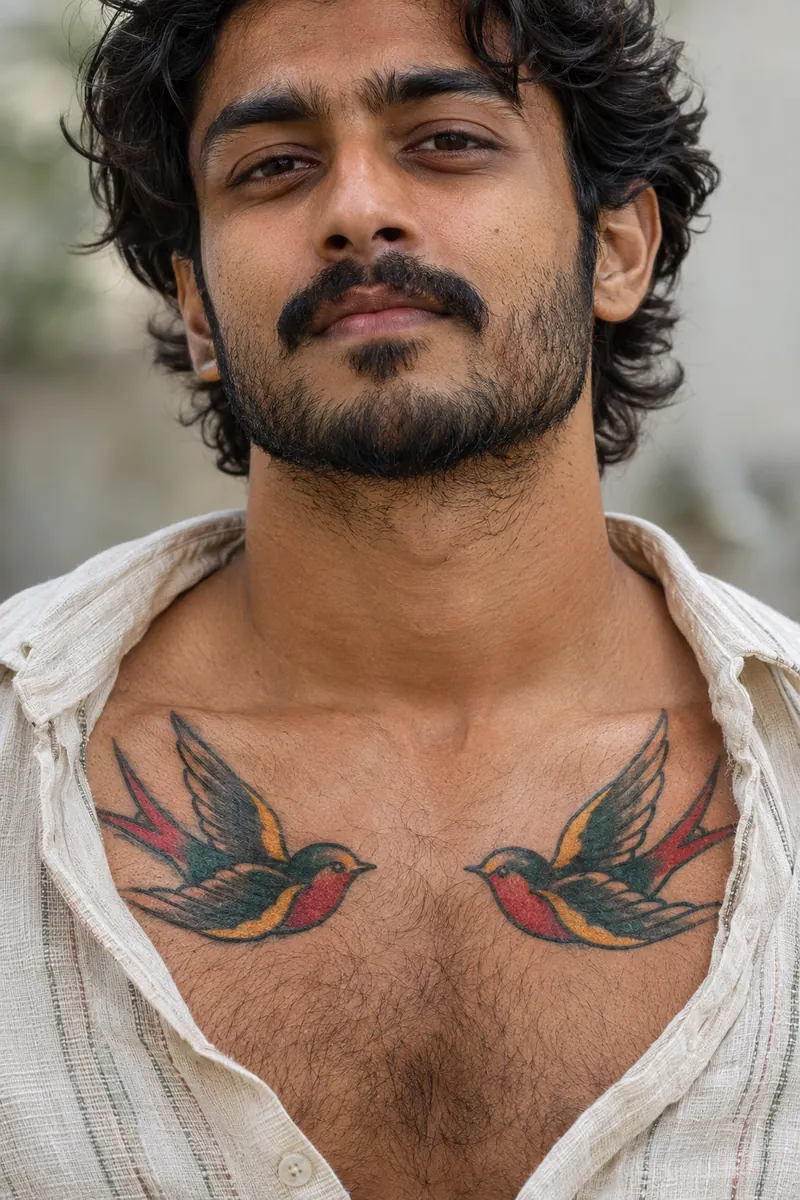
This is the style’s biggest strength. All ink spreads slightly in the skin over the years, but thick outlines and solid fills keep their shape, and the deliberate spacing in traditional designs keeps elements from blurring into each other. A twenty-year-old traditional swallow is usually still a clear swallow. Colors, especially yellow, can soften with sun exposure, so sunscreen on healed tattoos and an occasional touch-up keep them bright.
Best placements and sizes
Traditional designs are compact and self-contained, which makes them easy to place:
- Forearm and upper arm — the classic spots, especially for collecting individual pieces over time.
- Chest — swallows, eagles and symmetrical pairs look great across the pecs or collarbones.
- Calf and shin — good for medium-sized flash.
- Hands and fingers — traditional’s bold lines hold better here than most styles, though these areas still fade faster.
A popular approach is the patchwork sleeve: separate traditional pieces collected over the years and arranged on one forearm or arm, with small fillers between them.
Traditional vs. neighboring styles
- Neo traditional adds varied line weights, more depth and a richer, jewel-toned palette.
- Illustrative borrows the bold lines but allows more drawing-like detail, texture and perspective.
- Japanese irezumi also uses bold outlines and solid color, but has its own subjects, backgrounds and large-scale composition rules.
Choosing a traditional tattoo artist
Look at an artist’s linework first: lines should be smooth, consistent and confidently thick, with no wobble. Color should be packed solid, without patches. Many traditional tattooers have their own painted flash — picking a design from it is a great way to get a piece that is unmistakably theirs. If you bring a custom idea, expect them to simplify it; that is the style, not a shortcut.
Before your consultation
Describe a classic combination — a rose and dagger, a swallow with a name on a banner — and generate it in the Traditional style in InkForge. Compare it with a Neo Traditional version, repaint a detail you want to change, and use Try-On to place it on a photo of your arm, adjusting size and rotation by hand. Then take it to a traditional tattooer, who will redraw it in their own hand.