InkForge
What makes a tattoo surreal
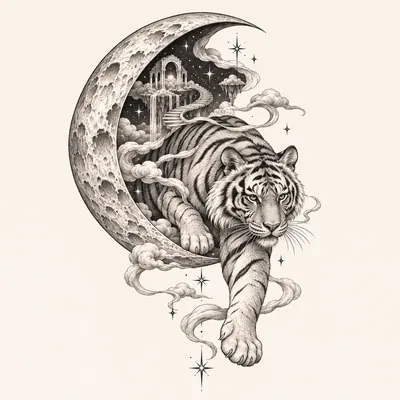
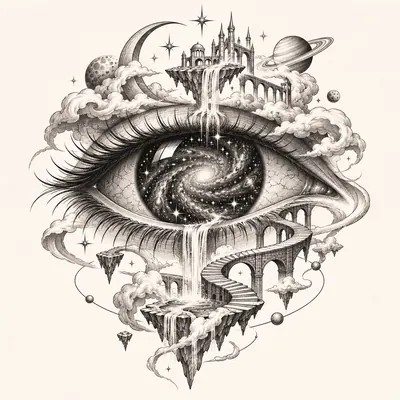
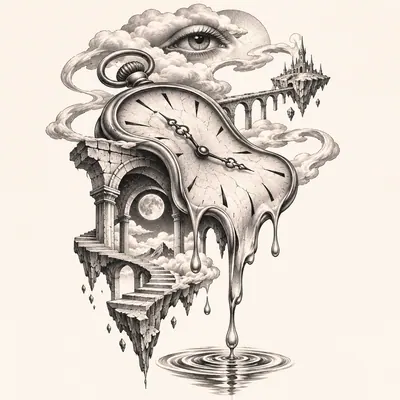
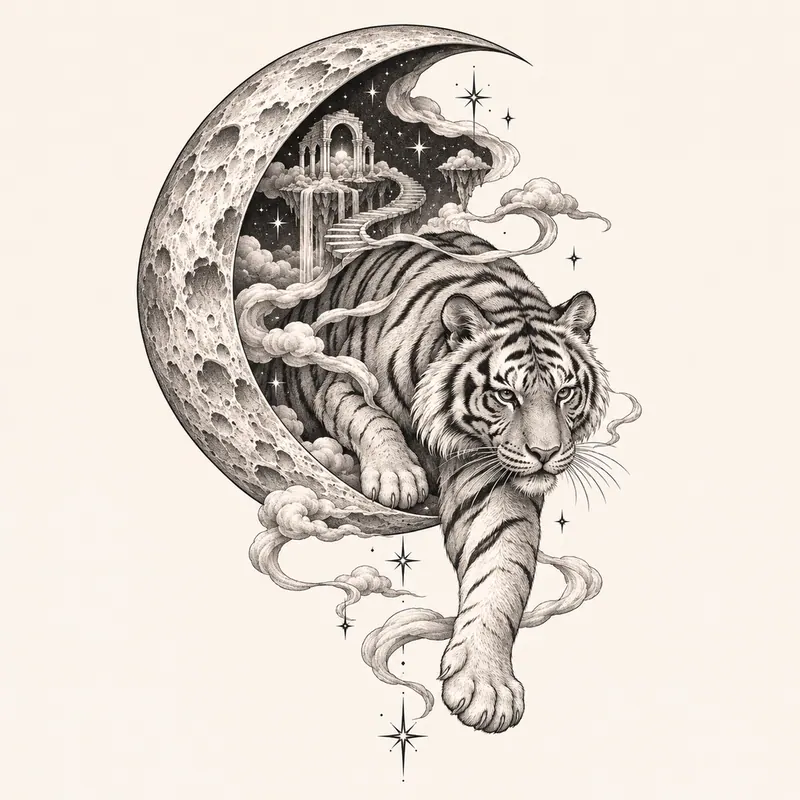
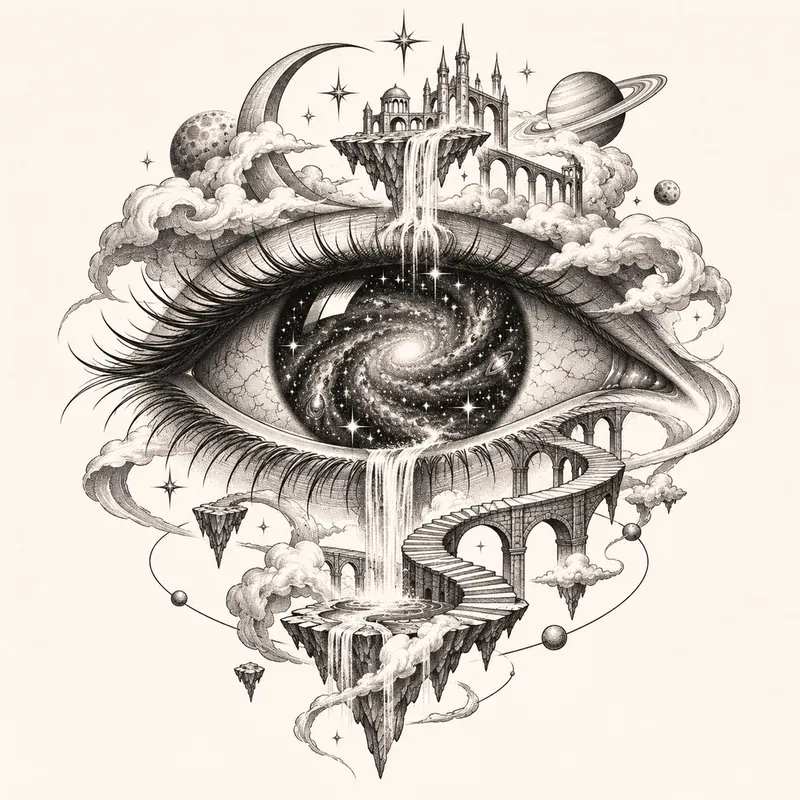
A surreal tattoo is defined by its idea, not by a particular needle or shading technique. It takes familiar things and makes them behave impossibly: a clock that melts, an eye whose iris is a galaxy, a tiger stepping out of a crescent moon. The image is precise enough to recognize, yet strange enough to make you look twice.
That’s why surreal tattoos appear in many techniques. You’ll see them in smooth black-and-grey realism, in bold illustrative linework, in dotwork and even in watercolor. The common thread is dream logic.
Where the style comes from
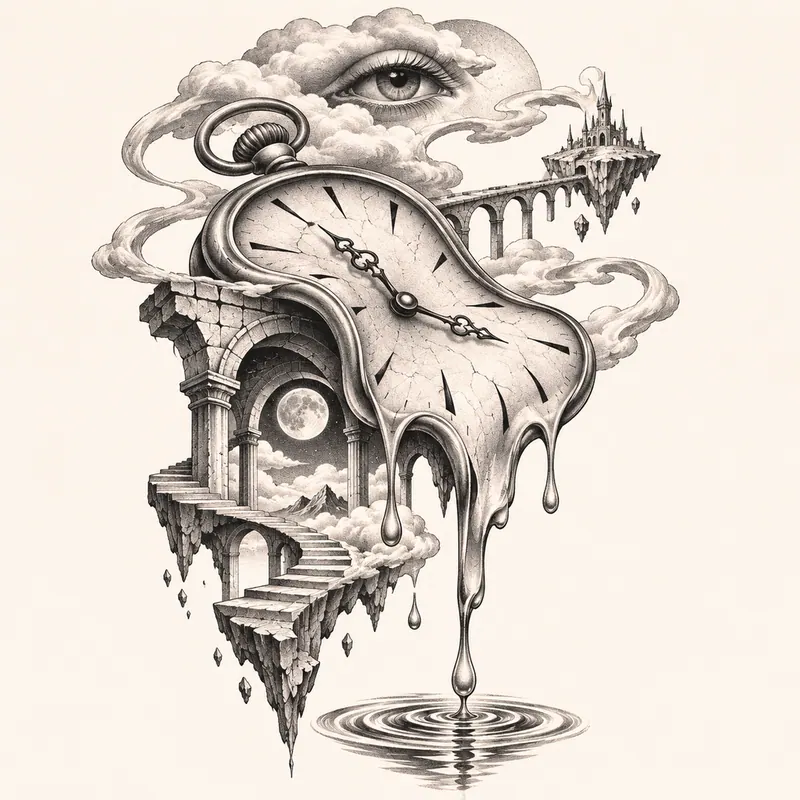
The name comes from Surrealism, an art and literary movement that began in Paris in the 1920s. Its artists tried to tap into dreams and the unconscious mind. Salvador Dalí’s melting clocks and René Magritte’s everyday objects in impossible settings are probably the best-known examples, and both remain direct inspirations for tattoos.
In tattooing, surreal work grew as custom design and realistic shading became widespread and clients began asking for one-of-a-kind concepts instead of flash. There is no single founding studio or date; it is better understood as a broad approach that many artists bring their own voice to.
Common techniques and motifs
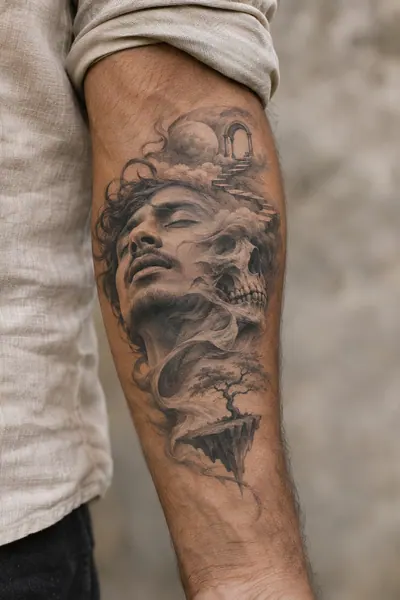
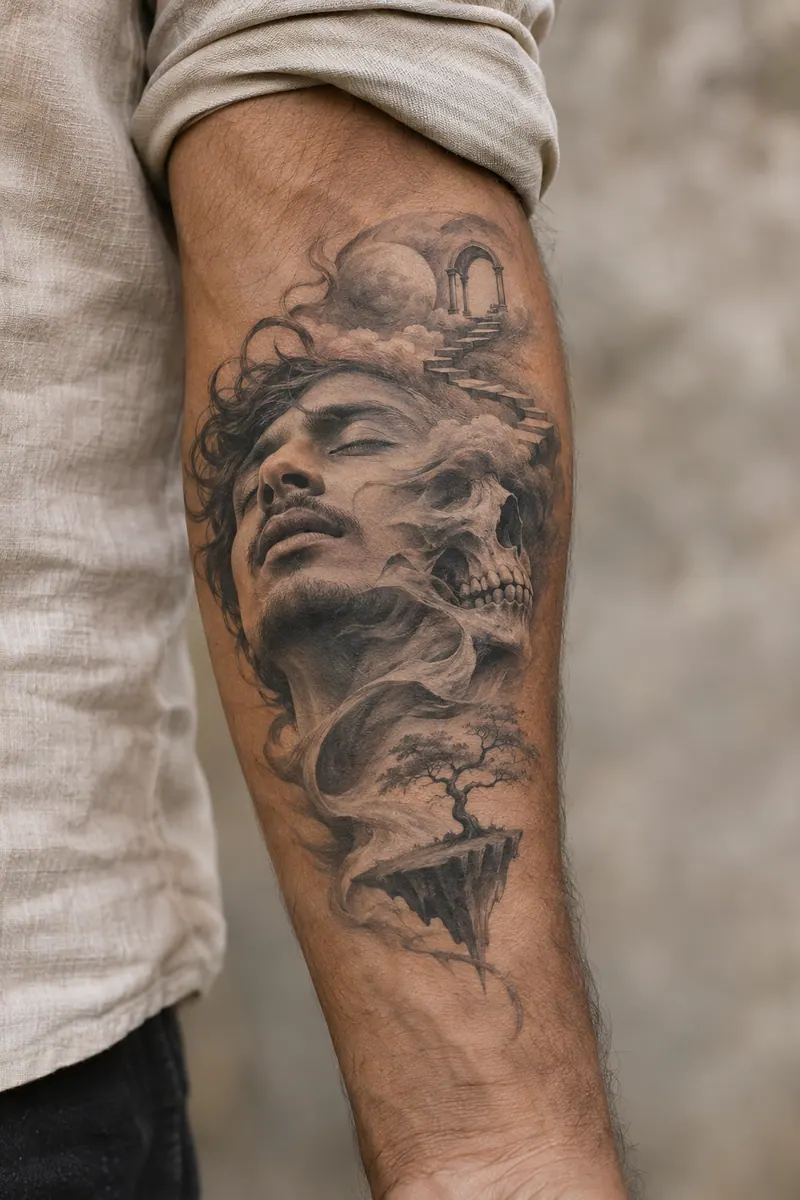
- Transformation: one thing turning into another, such as a face that dissolves into a skull or a koi becoming a dragon.
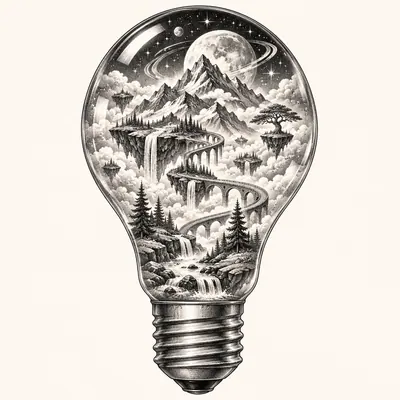
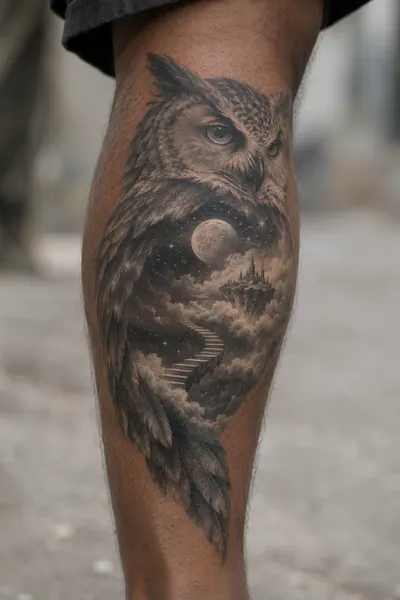
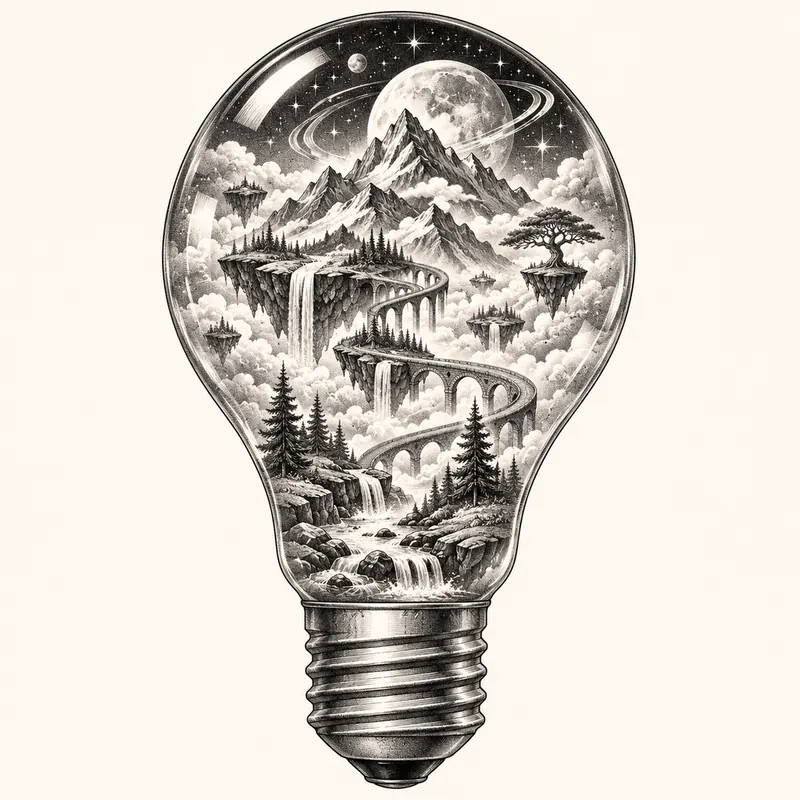
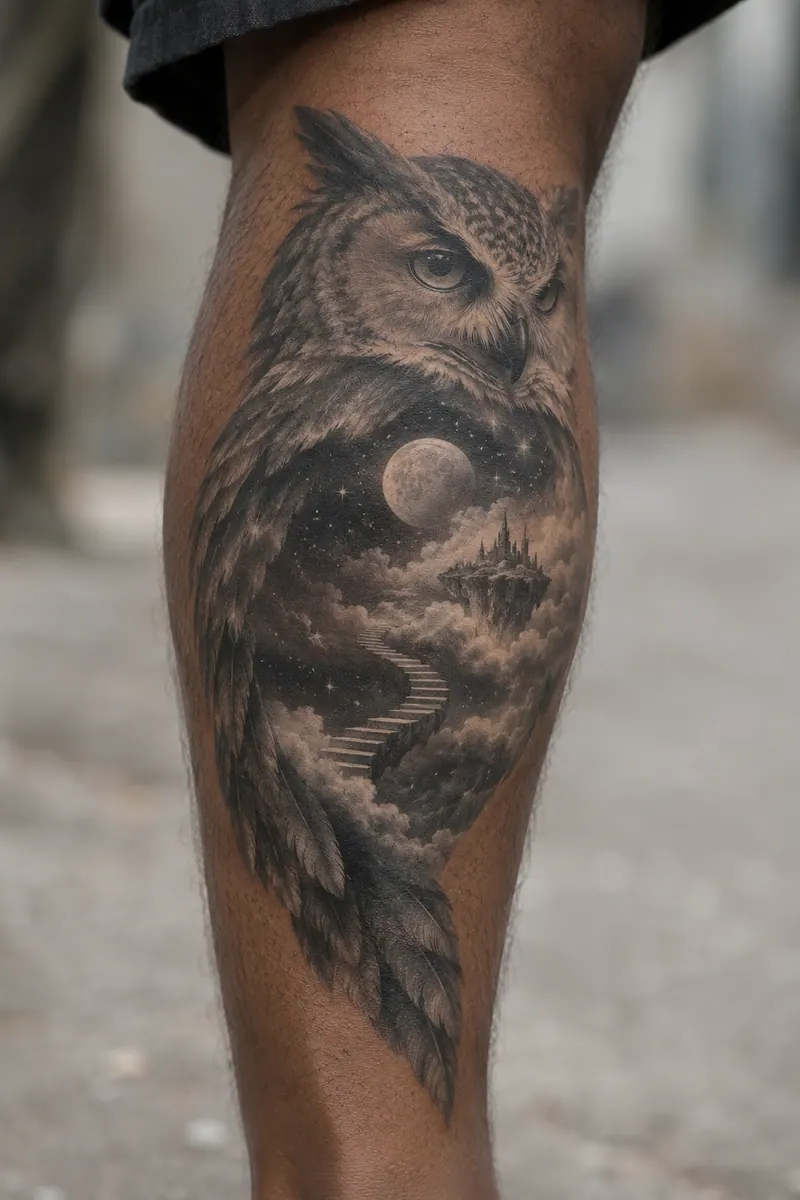
- Scene within an object: a landscape inside a light bulb, a night sky filling an animal’s body.
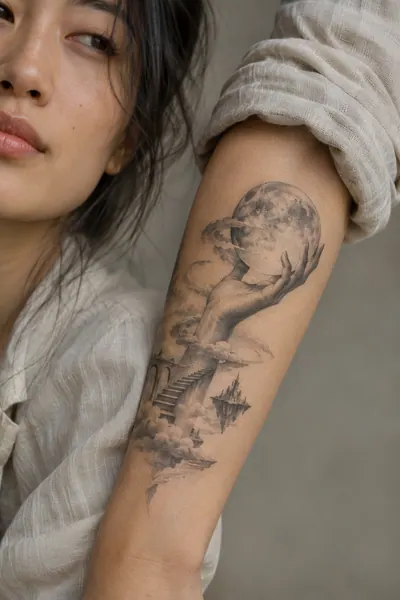
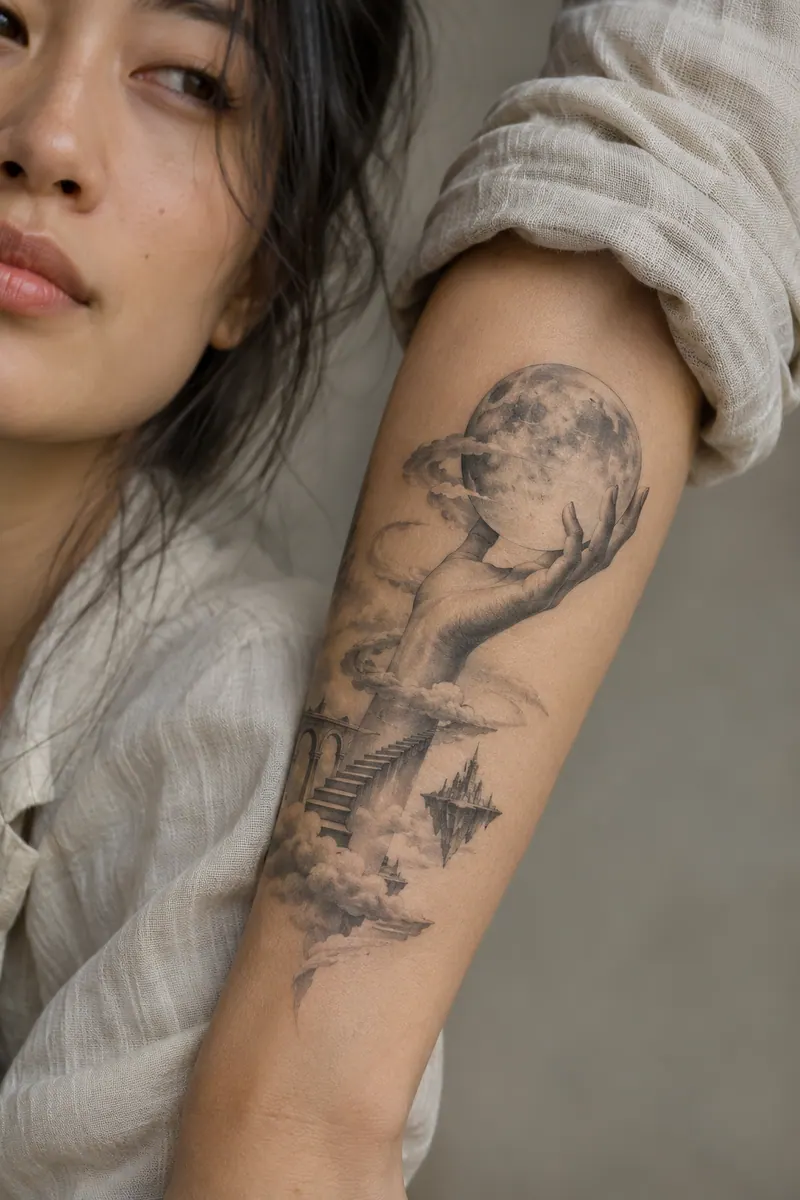
- Scale play: a hand holding the moon, tiny figures on a huge object.
- Melting and distortion: clocks, faces or architecture that bend or drip.
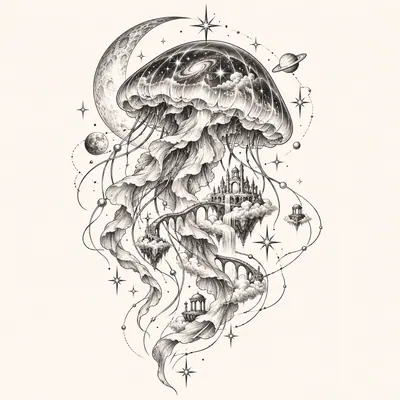
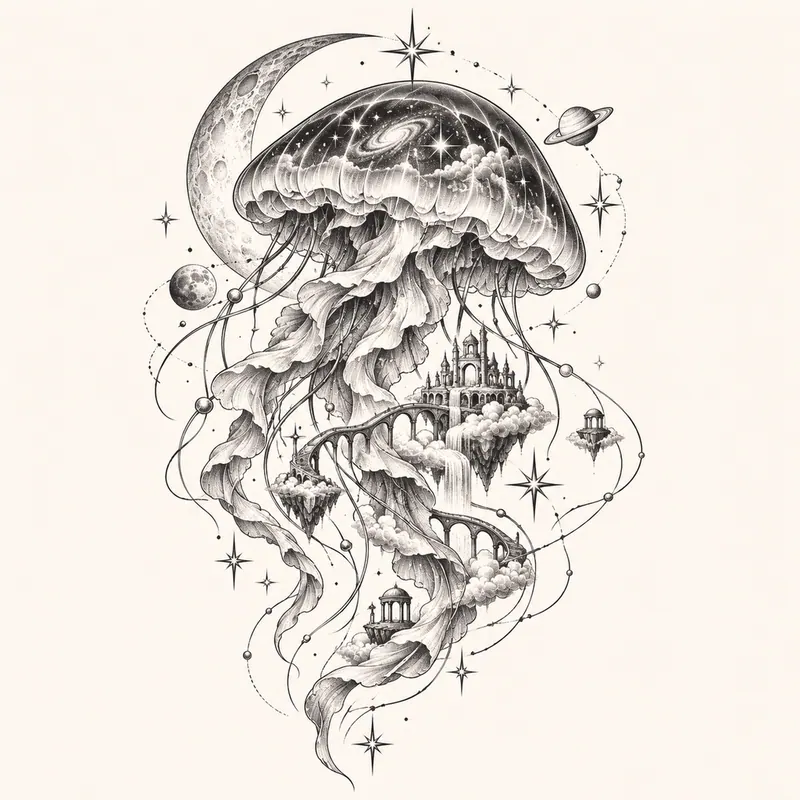
- Cosmic elements: galaxies, stars and moons replacing ordinary parts.
The gallery uses exactly these devices: a tiger walking out of a crescent moon, a face dissolving into a skull, an eye with a galaxy for an iris, a hand holding the moon, a mountain landscape inside a light bulb, a melting clock, an owl whose body is a night sky and a jellyfish floating among stars.
How surreal tattoos age
How a surreal piece ages depends on the technique used to make it, but one rule applies to all: the concept must stay readable. If the transformation zone, the tiny scene inside an object or the soft blend between two images is too small, it will blur into a grey patch over the years. Ask your artist to keep strong contrast at the key points of the idea and leave clear negative space around them.
Best placements for surreal tattoos
Surreal designs reward a flat, generous canvas:
- Forearm: ideal for vertical concepts like a hand holding the moon or a tiger emerging from a crescent.
- Shoulder and upper arm: good for round compositions such as a galaxy eye or a melting clock.
- Calf and thigh: room for scenes, like a landscape in a light bulb or an owl filled with stars.
- Back: large, multi-layered dreamscapes.
As a rough guide, if your idea needs a sentence to explain, it probably needs at least palm size.
Surreal vs. neighboring styles
Realism copies reality; surreal work often uses realistic rendering to depict something unreal. Biomechanical tattoos are a specific kind of impossibility, body fused with machine, while surrealism is open to any concept. Illustrative describes a drawing approach; an illustrative tattoo can be surreal or completely literal. Trash polka also juxtaposes images, but through collage, red-and-black ink and graphic brush strokes rather than seamless dream logic.
Choosing an artist for surreal work
Look for an artist who shows original concepts in their portfolio, not only copies of reference photos. Check how they handle transitions, the moment where one object becomes another, in healed work. Bring your idea as a story (“I want time slipping away from me”) rather than only as a picture; surreal artists often have strong ideas of their own and do their best work with some creative freedom.
Surreal concepts are hard to describe and easy to misunderstand. In InkForge you can write your idea in plain words, choose the Surreal style and generate several interpretations, then repaint just one part of a design with Edit until the transformation feels right. Take the strongest version to your artist as a shared starting point.