 InkForge
What makes a tattoo look like a sketch
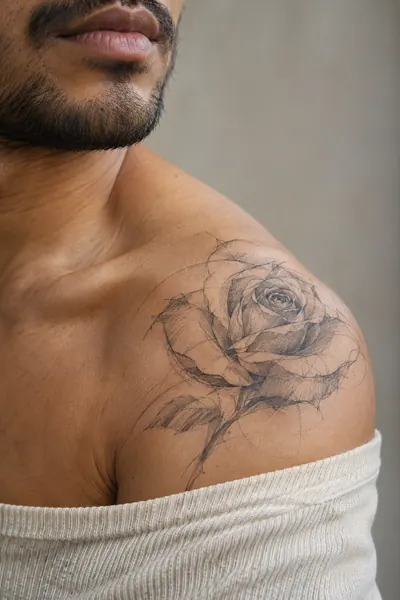
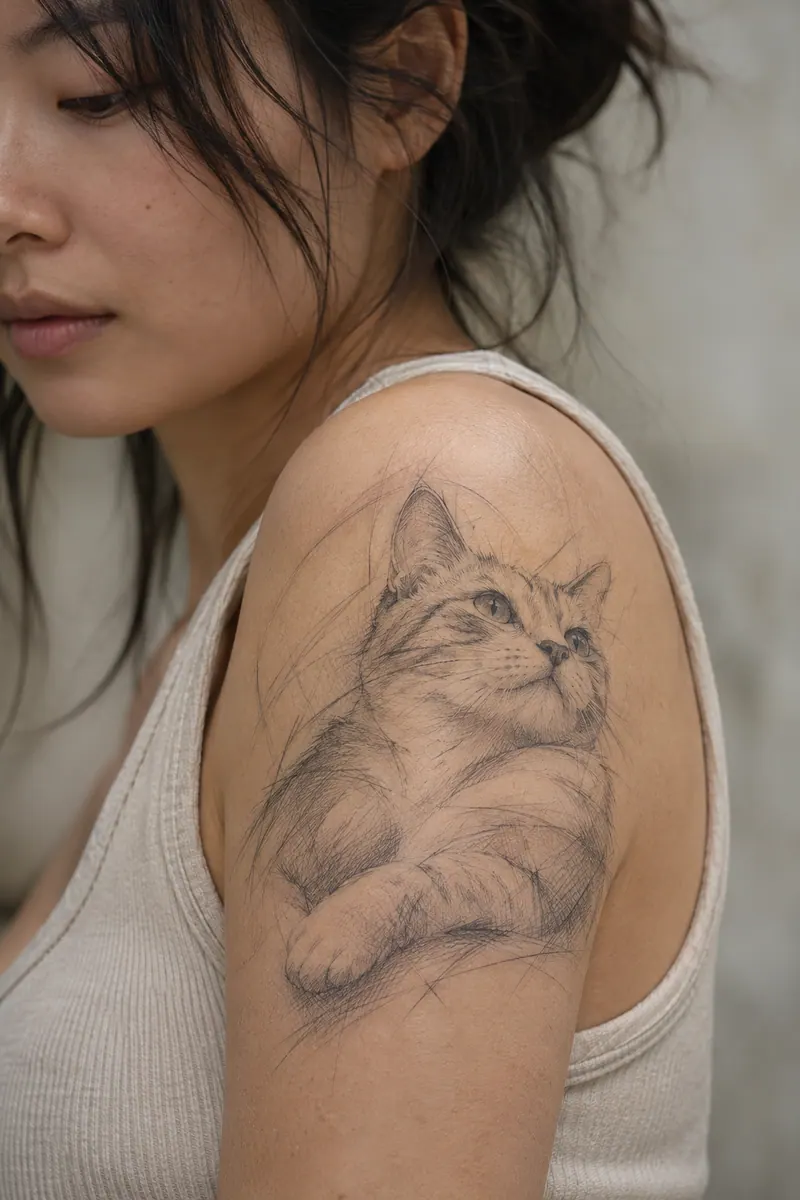
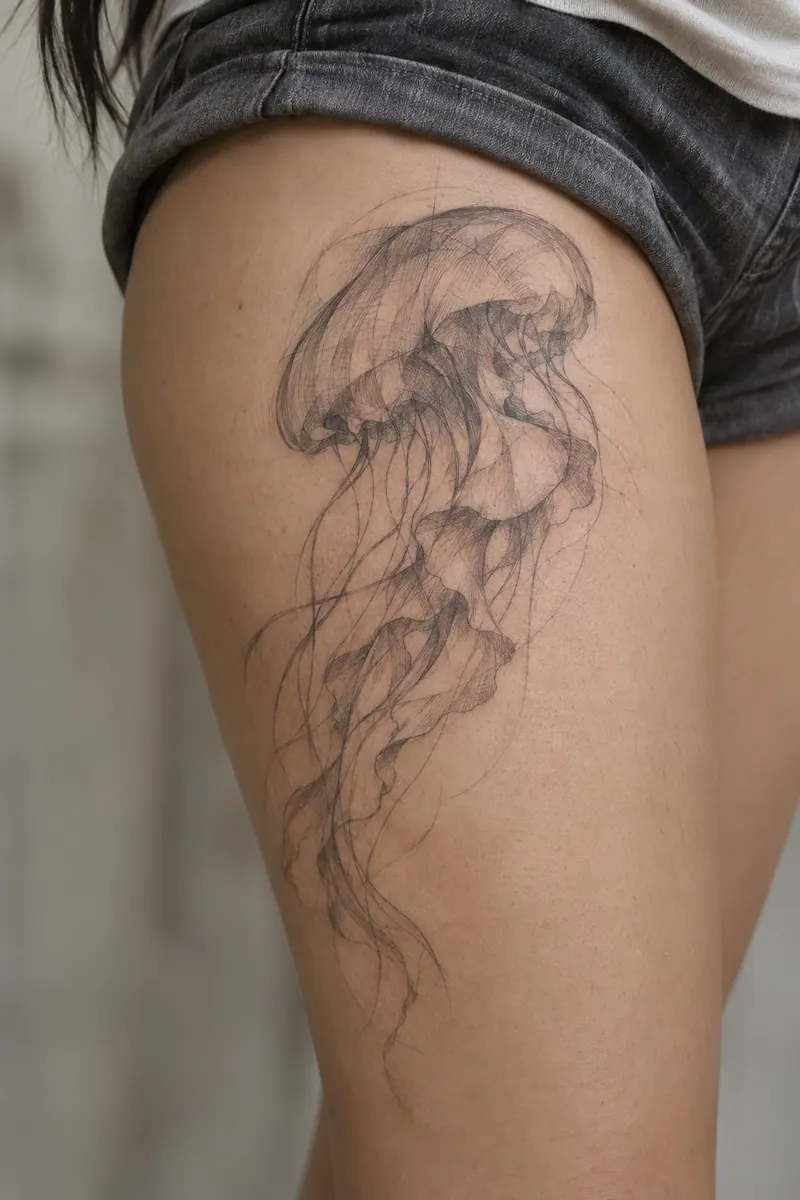
A sketch tattoo imitates the look of a drawing in progress. Instead of hiding the process, it shows it: light construction lines, overlapping strokes, rough contours, crosshatching and areas left deliberately unfinished. Some pieces look like a quick gesture drawing; others like a careful study in graphite with a few guidelines still visible.
The appeal is intimacy. A sketch tattoo feels hand-made and personal, as if the image was drawn straight onto the skin moments ago.
Where the style comes from
There is no single founder or school behind sketch tattooing. It grew in the 2010s as more tattooers came from illustration and fine-art backgrounds and as social media made artists’ sketchbooks visible to a wide audience. Improvements in fine needles and machines also made it easier to tattoo light, varied strokes that mimic pencil marks. Today it sits alongside fine line and illustrative work as one of the more artistic, drawing-led tattoo styles.
Visual characteristics
- Variable, broken lines — some confident and dark, others faint and searching.
- Construction marks: circles, axis lines and guide strokes left visible.
- Crosshatching and hatching in place of smooth gradients.
- Open edges, where the drawing fades out rather than ending in a clean outline.
- Mostly black and gray, sometimes with a touch of color.
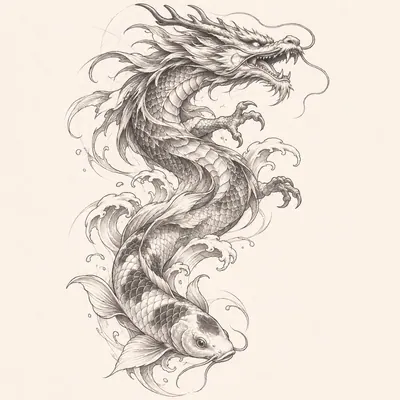
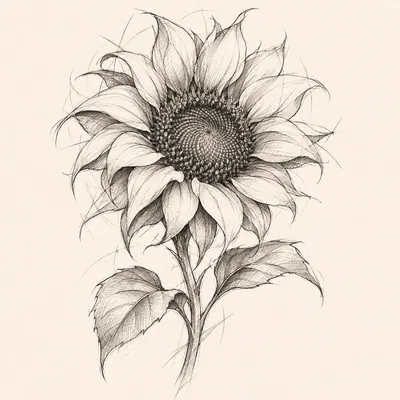
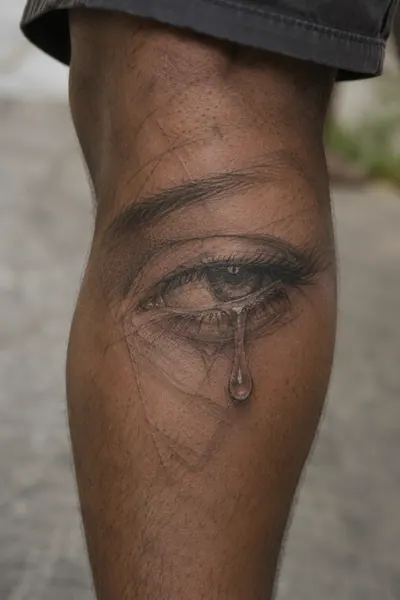
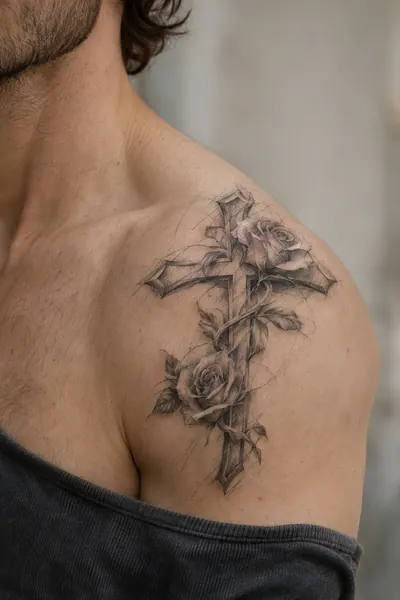
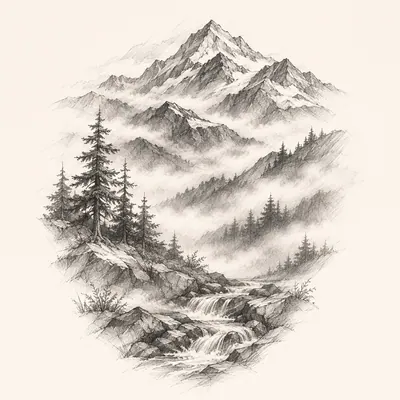
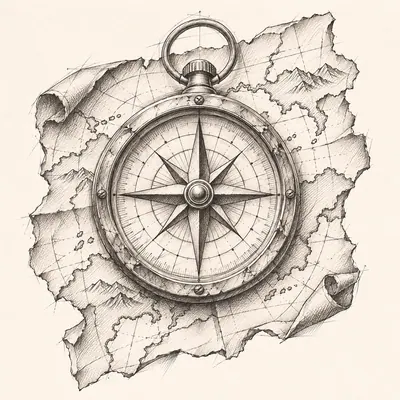
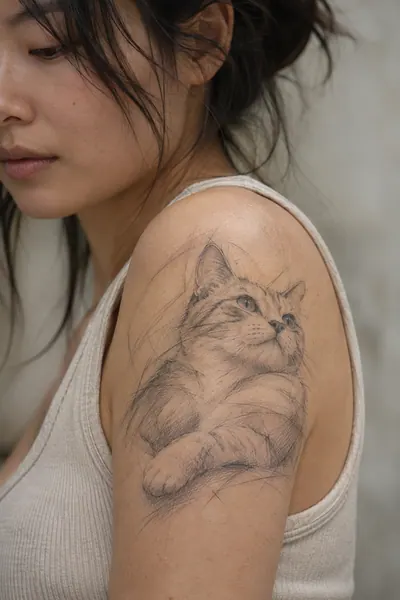
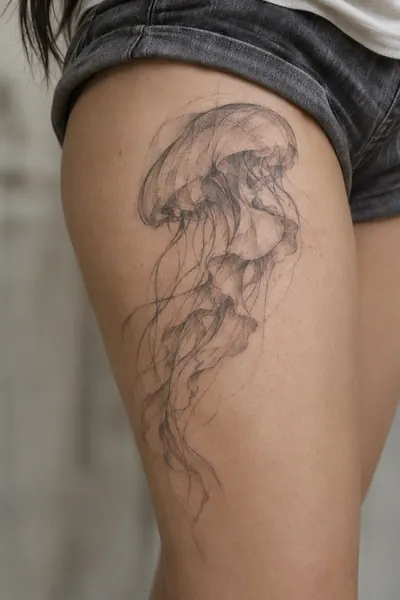
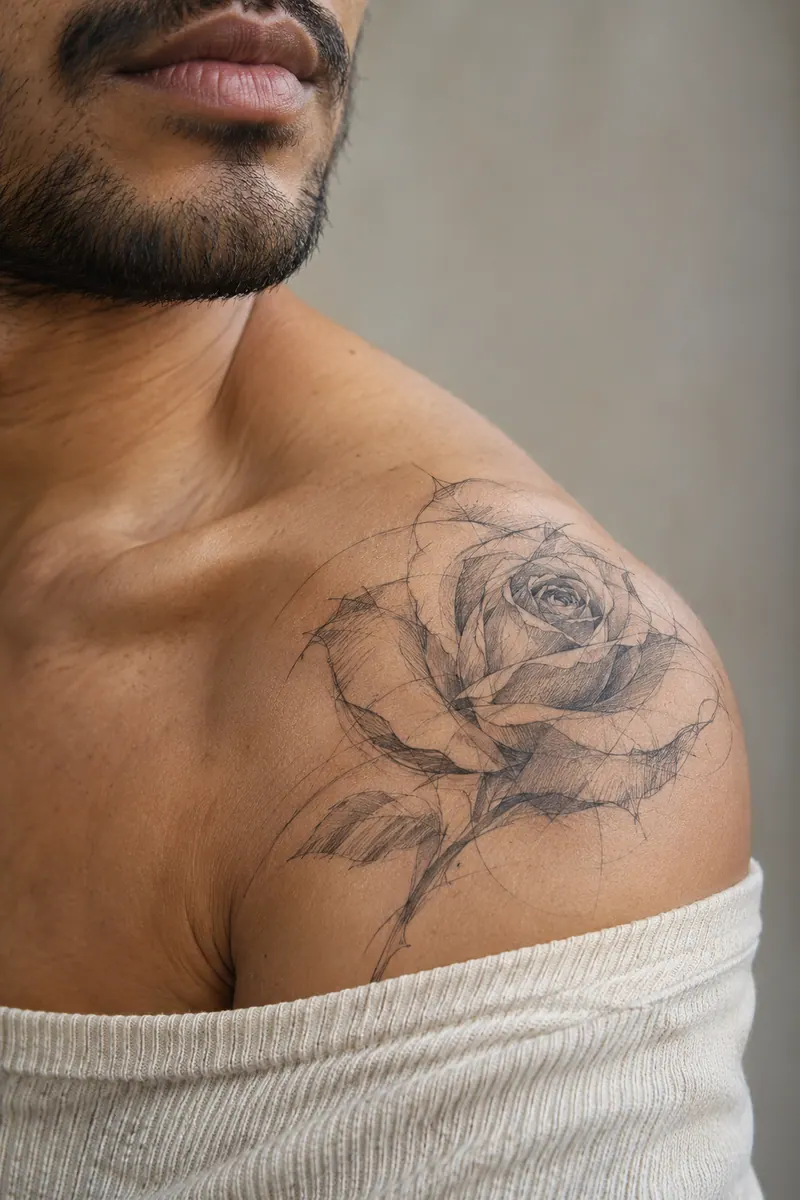
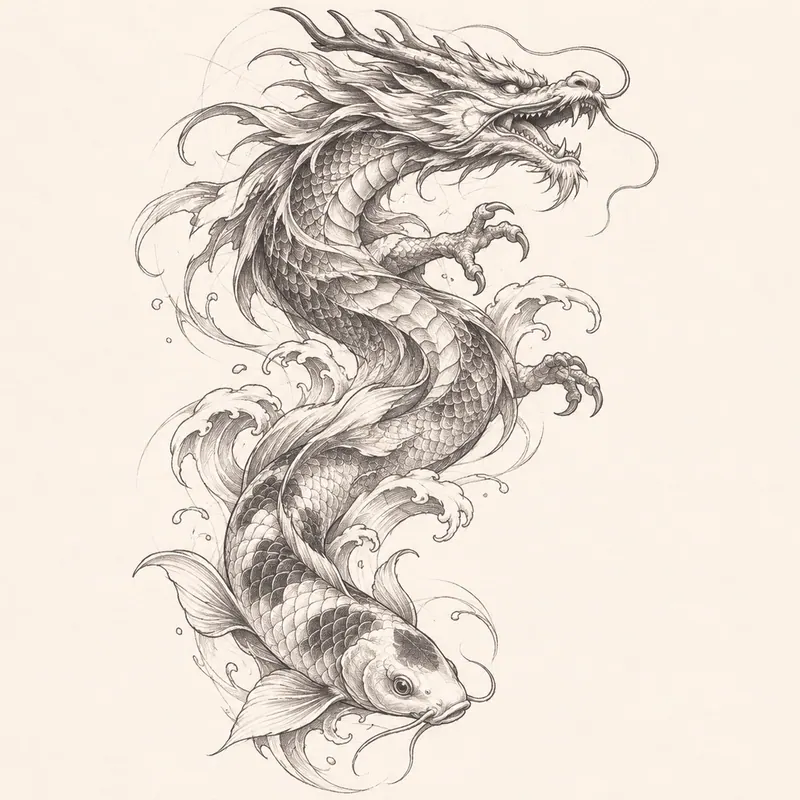
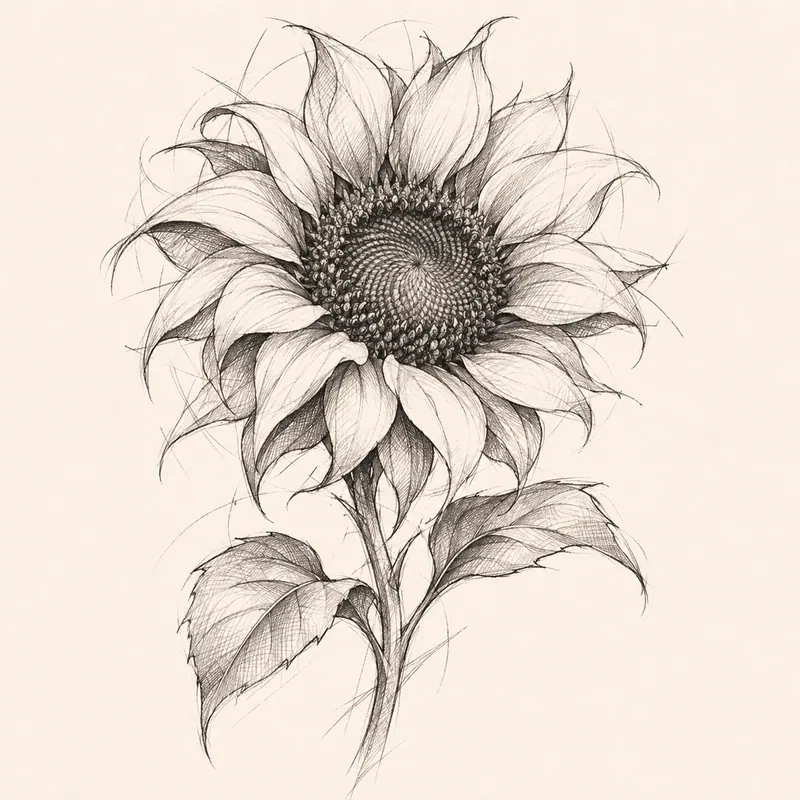
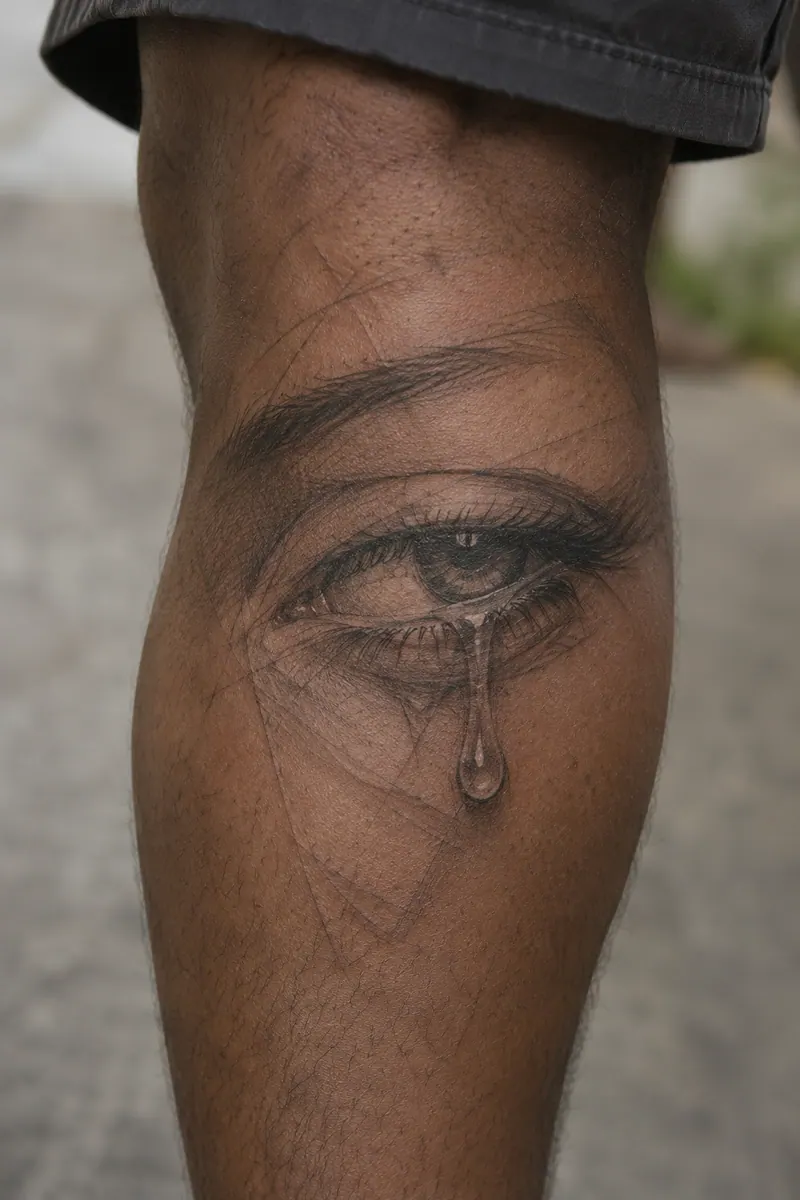
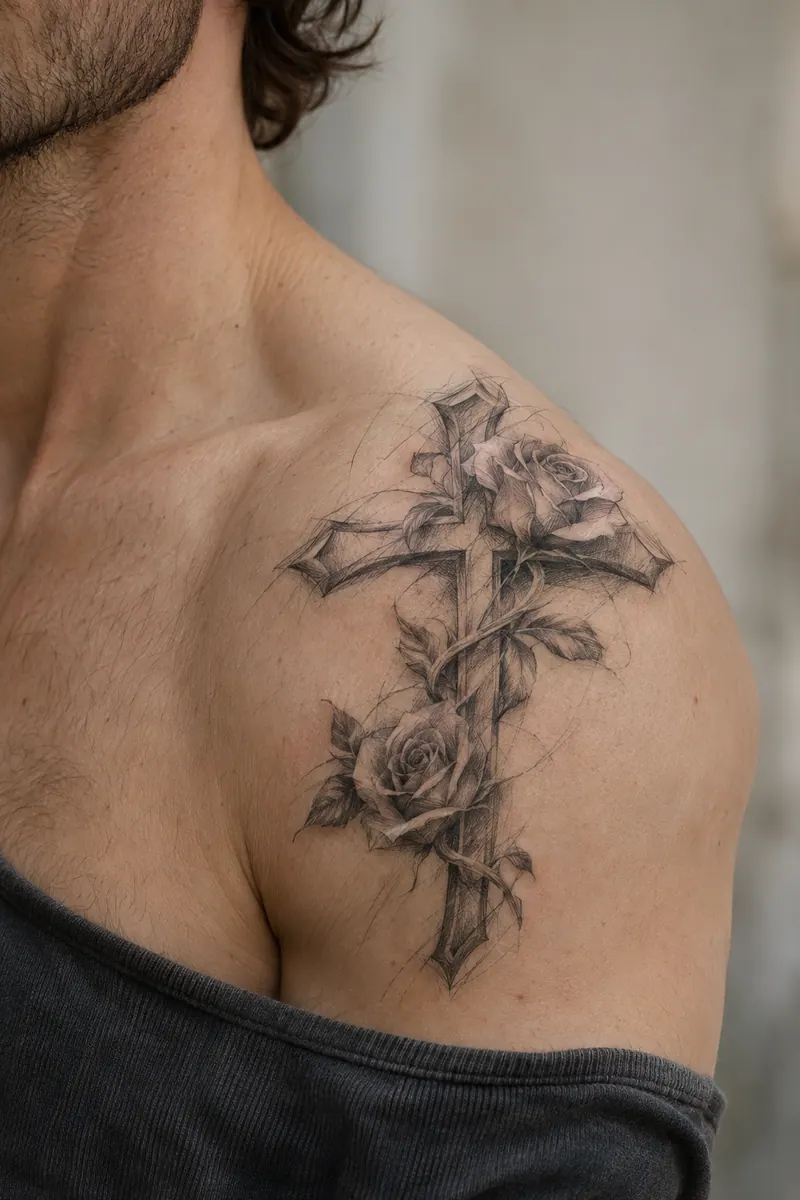
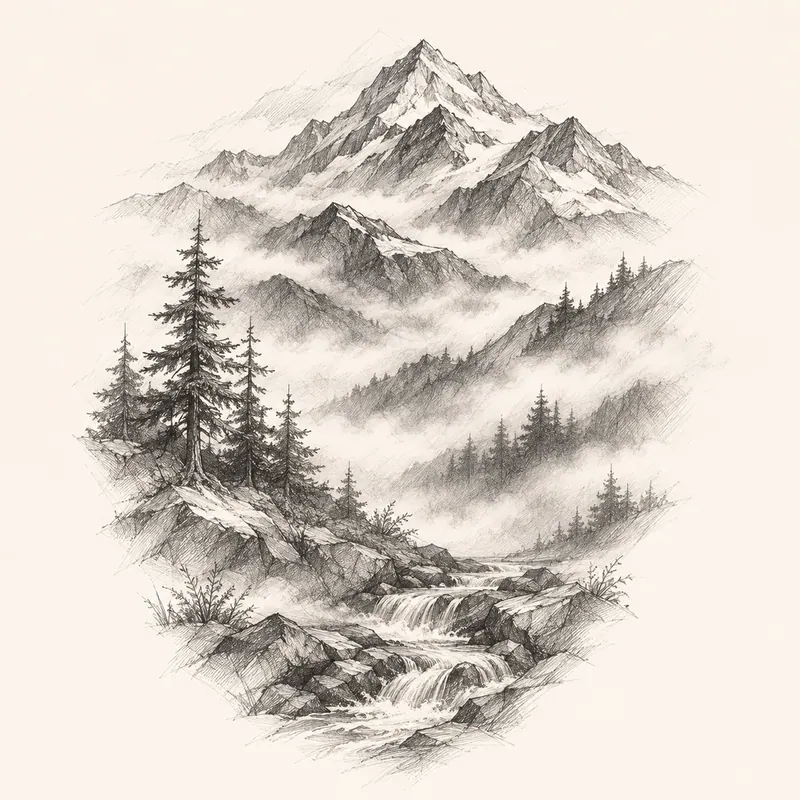
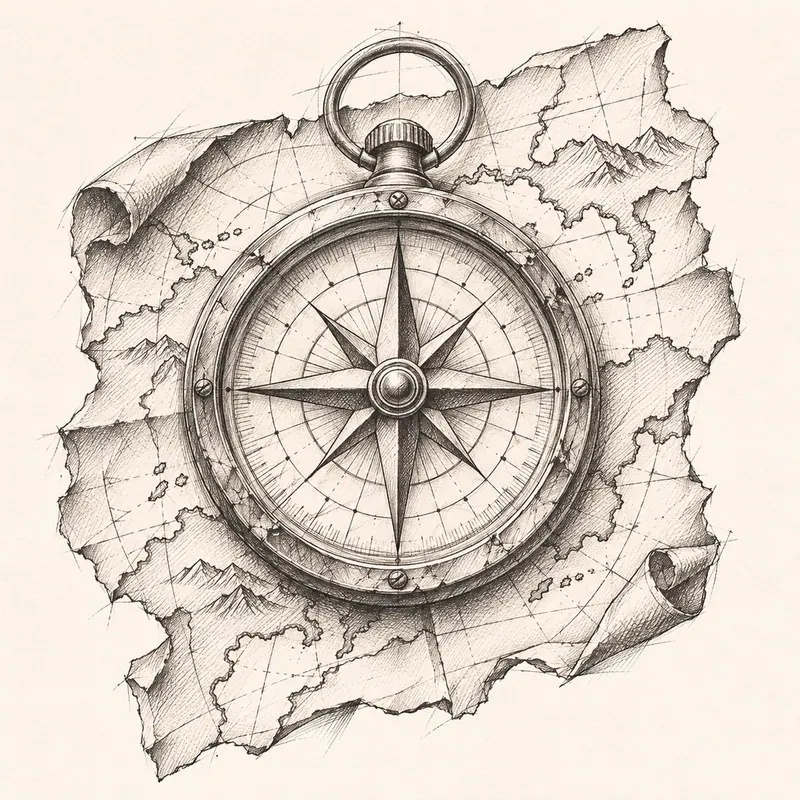
The gallery shows the style across a range of subjects: a loosely drawn blooming rose, a koi fish transforming into a dragon, a loose sunflower, a crying eye, a cross wrapped in roses, a misty mountain landscape, a compass over an old map, a cat and a jellyfish.
How sketch tattoos age
This is the most important thing to understand before you commit. Every tattoo spreads a little as it ages, and the faintest lines in a sketch design are the first to soften. That is not a reason to avoid the style — just a reason to plan:
- Give it a backbone. A few darker, defined lines around the main shapes keep the subject readable even when the lightest marks fade.
- Don’t over-hatch. Very dense crosshatching can merge into a flat gray area over time; open hatching ages better.
- Choose a generous size, especially for detailed subjects like eyes or faces.
- Use sunscreen on healed skin, since sun exposure fades light lines quickly.
Best placements for sketch tattoos
Sketch tattoos look best where there is space for loose marks to spread outward: the forearm, upper arm, shoulder, calf, thigh and back. Vertical subjects like a long-stemmed flower or a transforming koi suit the forearm or spine; landscapes fit a band across the forearm or a panel on the calf.
Medium sizes are the sweet spot. Very small sketch designs lose their texture, while large ones let the construction lines become part of the composition. Areas with lots of friction, like fingers and feet, are poor choices for light linework.
Sketch vs. neighboring styles
- Fine line uses thin needles too, but aims for clean, precise, finished lines. Sketch embraces roughness.
- Illustrative work is drawn and graphic but usually polished, with defined outlines and solid shading.
- Engraving uses hatching as well, but in a disciplined, parallel-line pattern that imitates antique prints.
- Watercolor is often combined with sketch linework, adding color splashes beneath the drawing.
Choosing a sketch tattoo artist
Look for an artist who draws — their sketchbook or flash often tells you more than their tattoo photos. In their healed work, check that the subject still reads clearly and that the loose lines look intentional, not shaky. Ask how they decide which lines to make darker. A skilled sketch artist will adapt your idea so it keeps its spontaneity on paper and its clarity in skin.
Bringing it to your artist
Describe your subject in InkForge and generate it in the Sketch style, then compare it with Fine Line or Illustrative versions to see how much looseness you like. You can also turn a photo of a pet or a place into tattoo artwork with Photo to Tattoo, repaint any area that feels too busy, and use Try-On to test it on a photo of your arm, adjusting size and rotation by hand, before sharing it with your artist.