 InkForge
What waves stand for
Water is constant motion, and a wave is that motion frozen at its most expressive moment. People read very different things into it:
- Resilience. Waves break and keep coming, a reminder that setbacks pass.
- Change and acceptance. You cannot stop the tide, only learn to move with it.
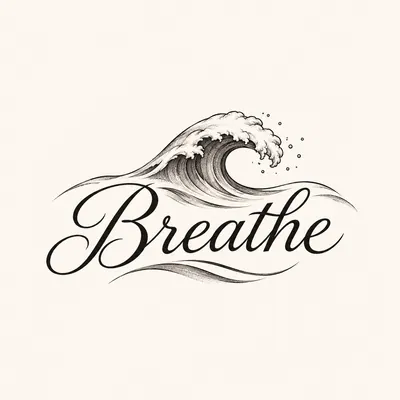
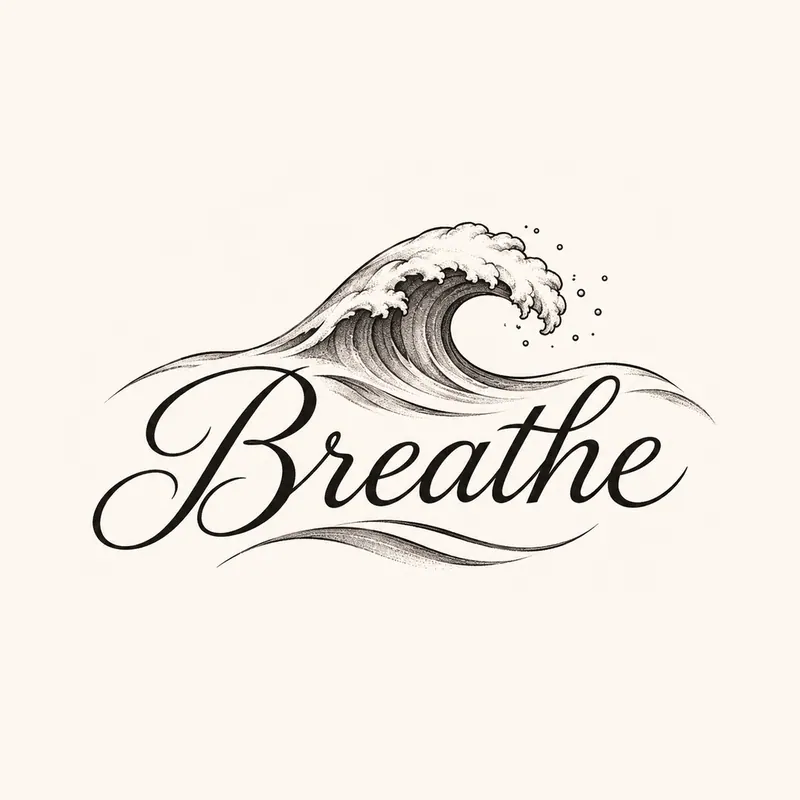
- Calm and breath. A slow, rolling swell can be a quiet reminder to slow down, which is why short words like “Breathe” pair so naturally with it.
- Belonging. For surfers, sailors and people raised on the coast, a wave is simply home.
Waves in Japanese art and tattooing
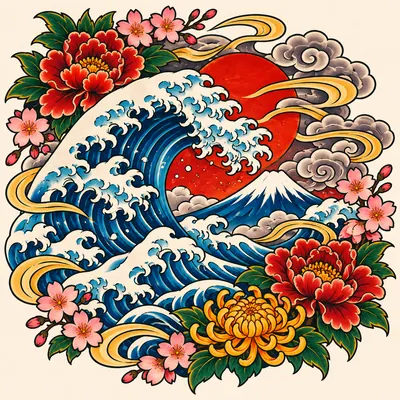
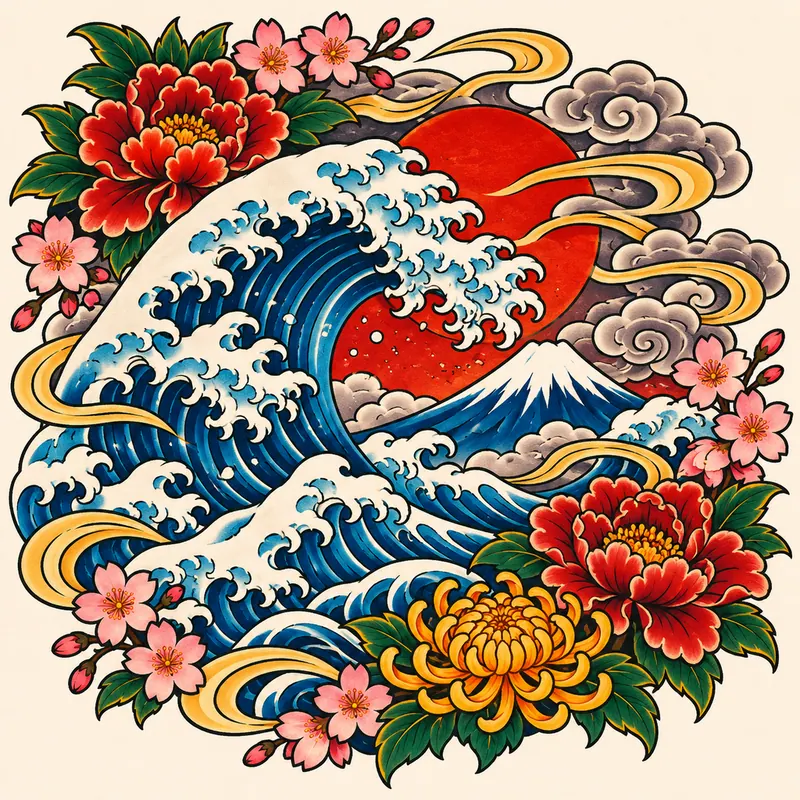
The most famous wave image in the world is Hokusai’s Under the Wave off Kanagawa, often called the Great Wave, a woodblock print from the early 1830s in his series of views of Mount Fuji. Its claw-like crests and tiny boats have inspired countless tattoos.
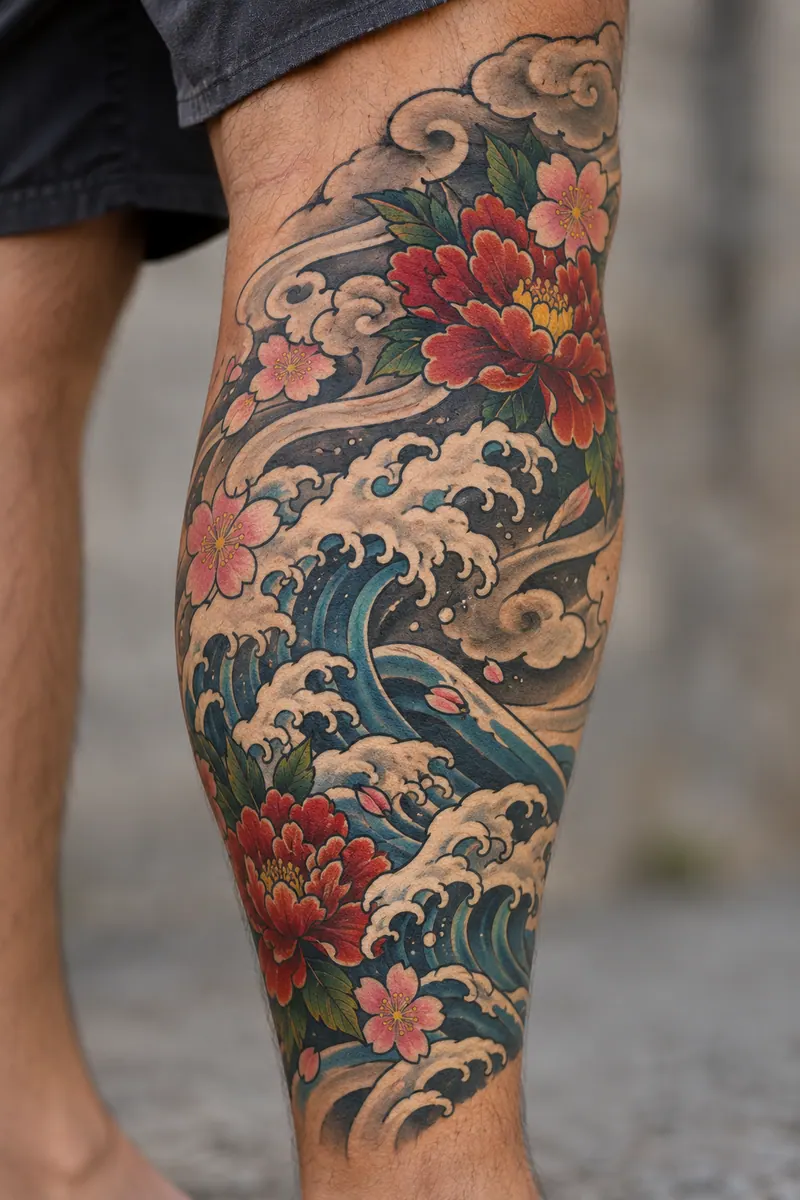
In traditional Japanese tattooing, waves also play a supporting role. Stylized water fills the background of large pieces, linking subjects like koi and dragons and moving across the body together with wind bars and clouds. If you love the look, our Japanese tattoo style guide explains how backgrounds and main subjects are traditionally balanced, and our koi fish ideas show waves at work as a setting.
Eight ways to draw water
The gallery above shows how much a single subject can change with style:
- Great wave in woodblock style (Japanese, forearm). Strong outlines and curling crests inspired by Edo-period prints.
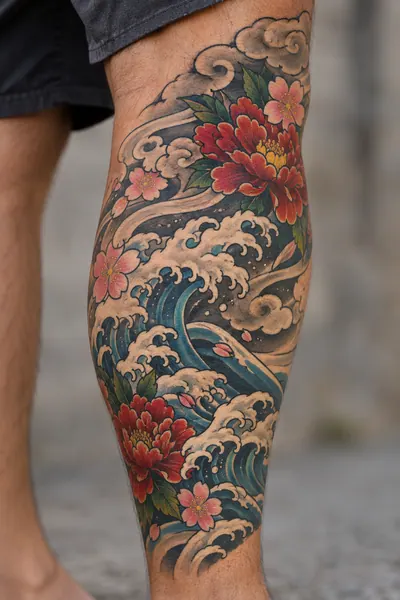
- Crashing waves with foam (Japanese, calf). A taller composition where spray and foam climb the leg.
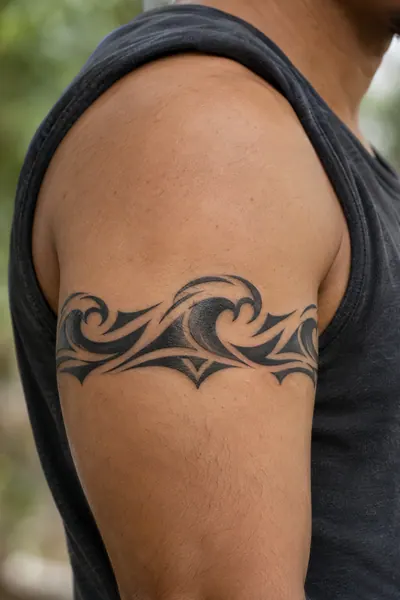
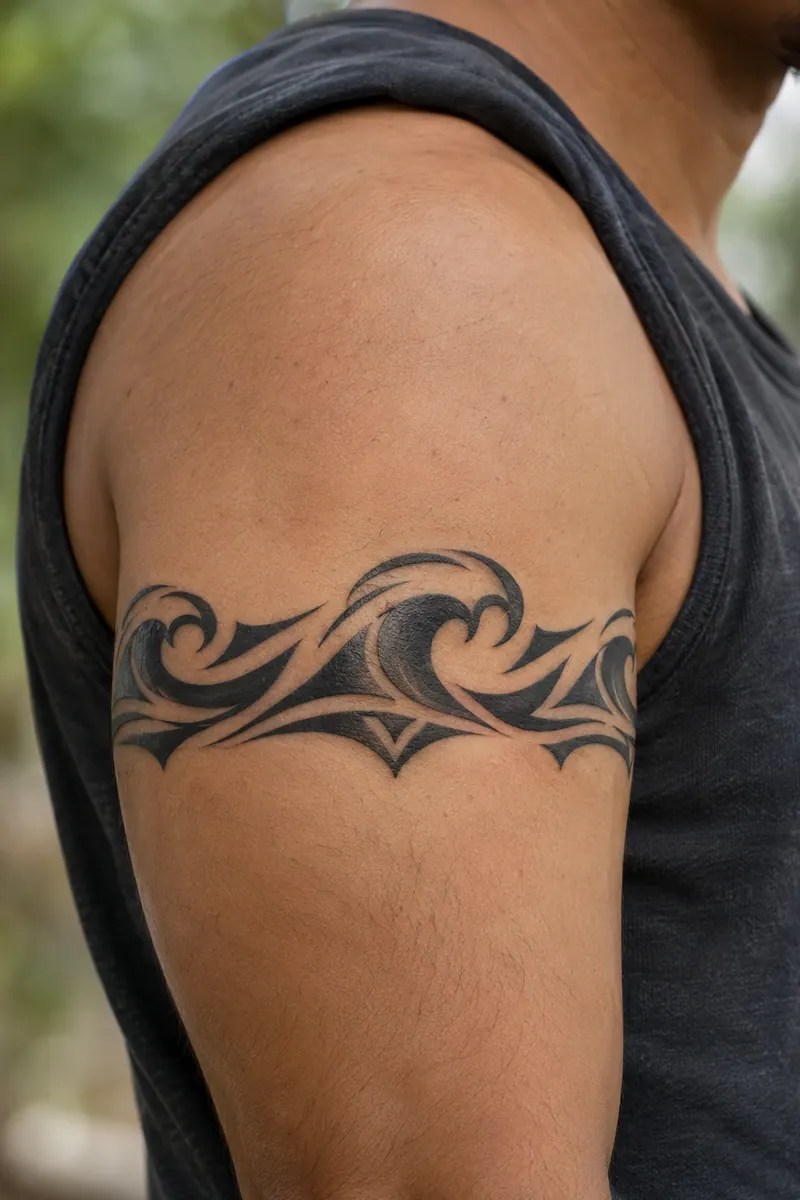
- Wave armband (tribal, upper arm). Curling waves rendered as sharp black shapes that wrap around the arm. This is the modern tribal style; Polynesian and other Pacific tattoo traditions have their own ocean motifs and meanings, which are best explored with artists from those cultures.
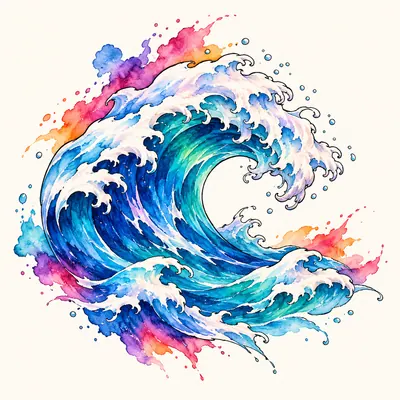
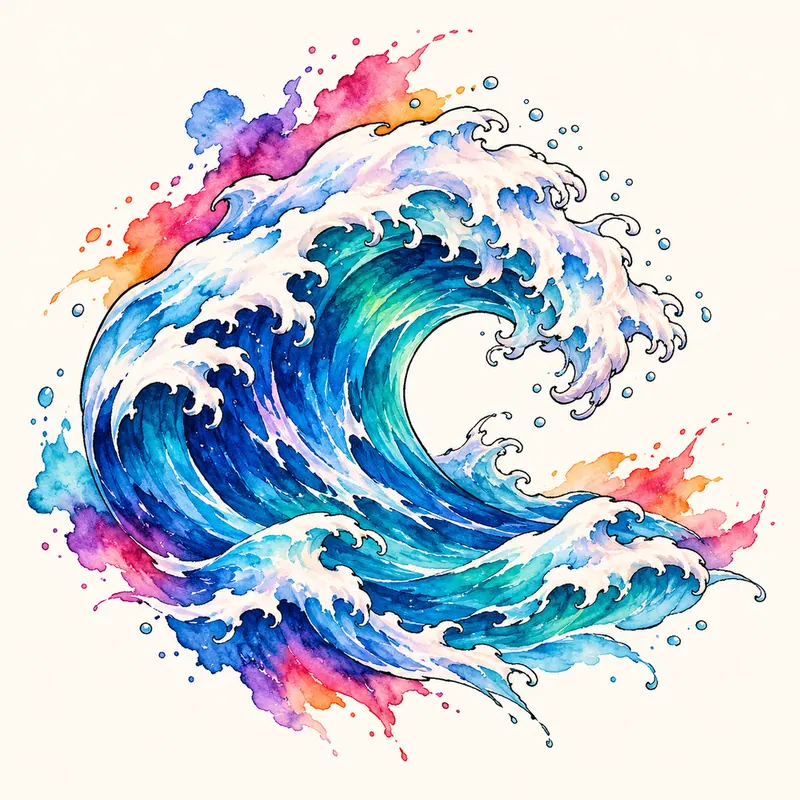
- Ocean wave in watercolor (shoulder). Soft blues and spray without heavy outlines. Watercolor is ideal if you want the wave to feel wet and light.
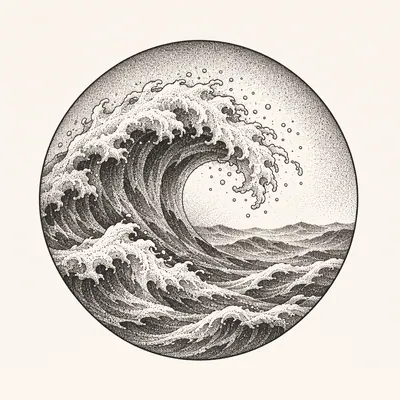
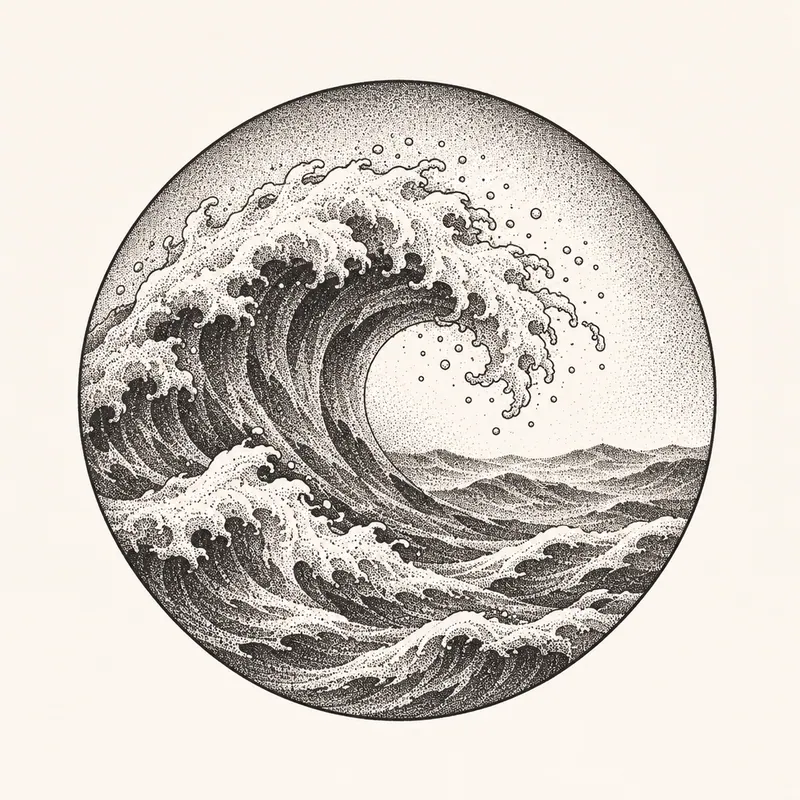
- Wave inside a circle (dotwork, upper arm). Stippled shading in a round frame, like a stamp or a porthole view.
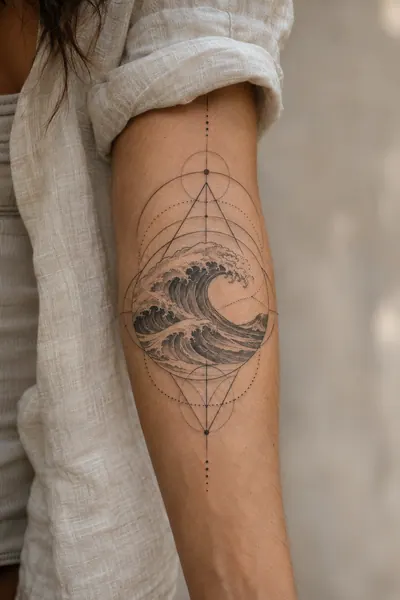
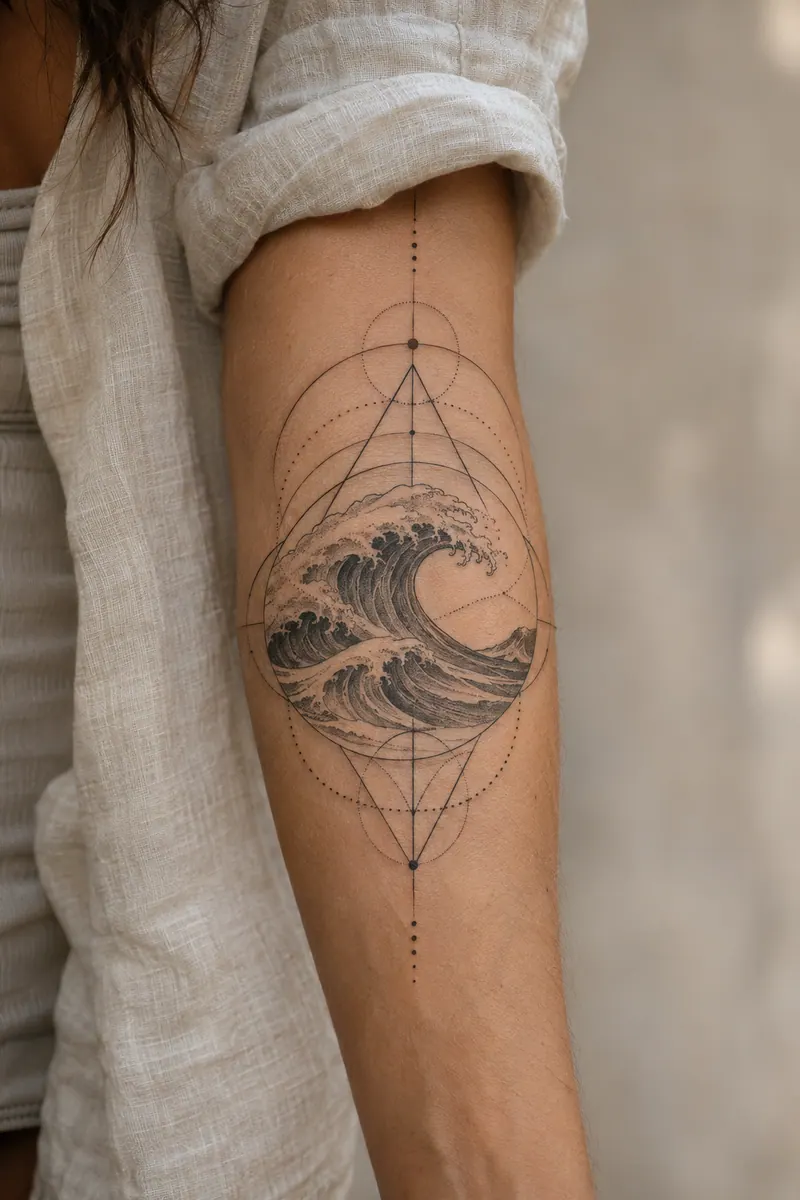
- Wave with geometric lines (forearm). Clean lines and shapes cut through the water for a modern, graphic look.
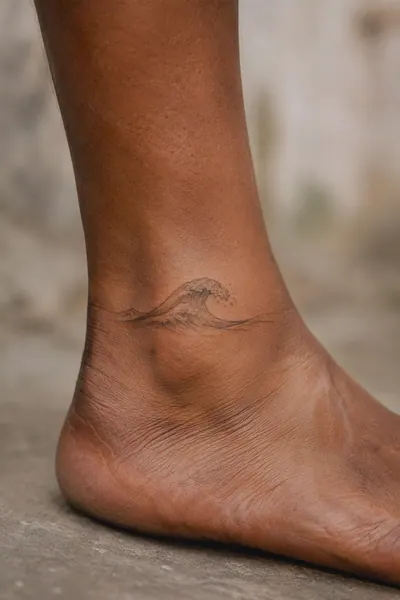
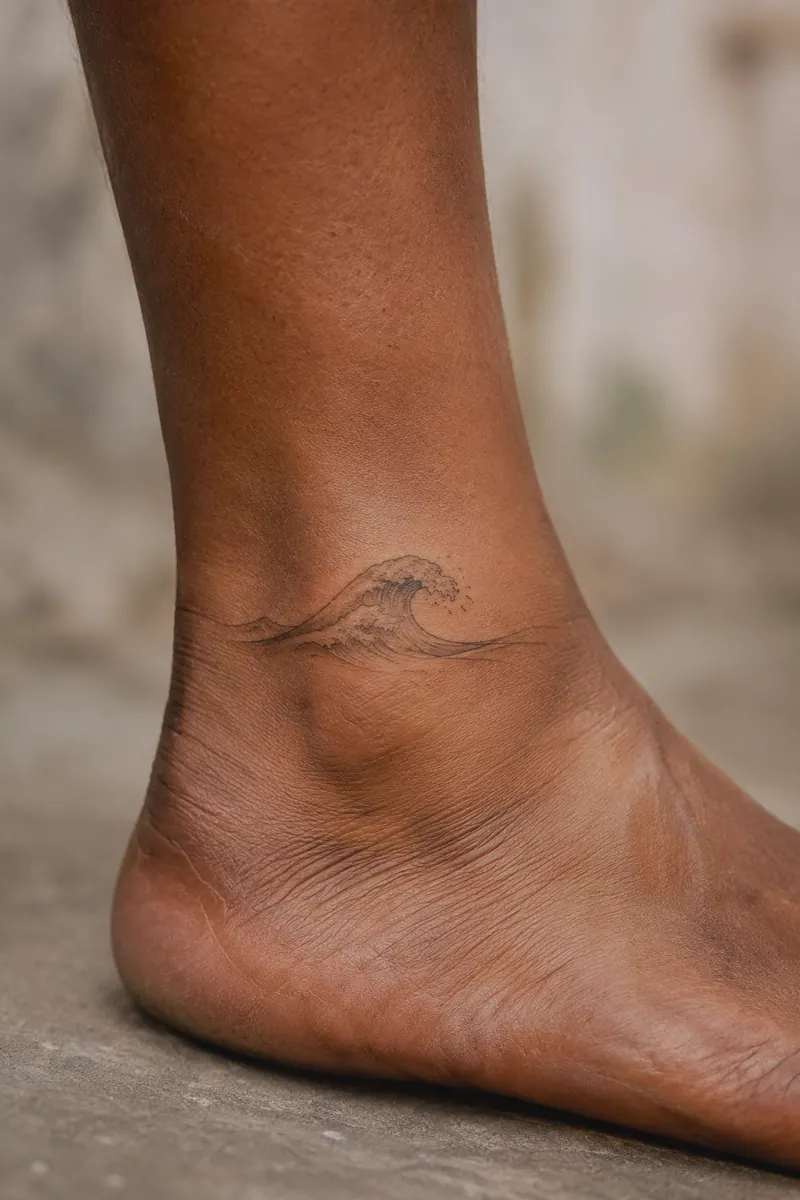
- Small wave with the word “Breathe” (lettering, ankle) and small fine line wave (ankle). Delicate versions that suit a first tattoo.
Making water read on skin
Waves are harder to tattoo than they look. A few principles help:
- Direction matters. A wave should move with the shape of the body: along the forearm toward the hand, or upward on the calf. Ask your artist which way it will break.
- Leave white space. Foam and highlights are often the unpainted skin. Over-shading kills the sense of light on water.
- Simplify small waves. At ankle size, one curl and two or three lines are enough. Tiny spirals inside the crest will blur together.
- Plan for expansion. Japanese-style water can later connect to a half sleeve or back piece. Leave edges that can grow.
Color or black and grey?
Blue is the obvious choice for water, and color waves can look beautiful when fresh. Keep a few points in mind before deciding:
- Light blues soften first. Pale tints and watercolor washes tend to fade sooner than black, especially on sun-exposed skin. A little black or dark blue structure helps them hold their shape.
- Black and grey ages predictably. Strong contrast between dark troughs and bare-skin foam stays readable for years.
- Skin tone matters. On deeper skin tones, bold outlines and saturated colors usually show more clearly than pastel washes. A good artist will advise you honestly.
If you cannot decide, generate the same wave in both color and black and grey and compare them side by side.
Best placements
The ankle is the classic spot for small waves, and the inner wrist and behind the ear suit fine line versions. The forearm handles both a horizontal great wave and a vertical geometric one. Calves fit crashing water that rises upward, and the upper arm suits armbands and circular designs. If you love the coast and the mountains, see how a mountain and wave combination can share one horizon line.
Maybe it is the break you learned to surf on, the color of the sea on a trip, or the date you moved to the coast. In InkForge you can describe that wave, compare it in Japanese, fine line or watercolor, and brush over just the crest to regenerate it. Use Try-On to place it on a photo of your ankle or forearm and adjust size and rotation by hand, then share your favorite with your artist.