 InkForge
What a cat tattoo means
People have lived with cats for thousands of years, and the animal has collected an unusual mix of meanings along the way. A cat tattoo can be playful, protective, mysterious or deeply personal.
- Ancient Egypt. Cats were valued for protecting grain stores from rodents and were associated with the goddess Bastet, a protector of the home, women and children. Many cats were mummified, a sign of their religious importance.
- Folklore and superstition. In parts of medieval and early modern Europe, cats, especially black ones, were linked to witchcraft and bad omens. Elsewhere, black cats were considered lucky. Both stories feed into the modern black cat tattoo.
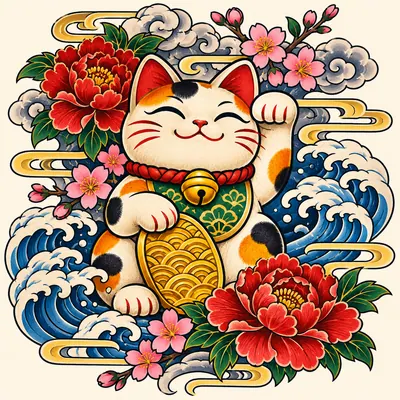
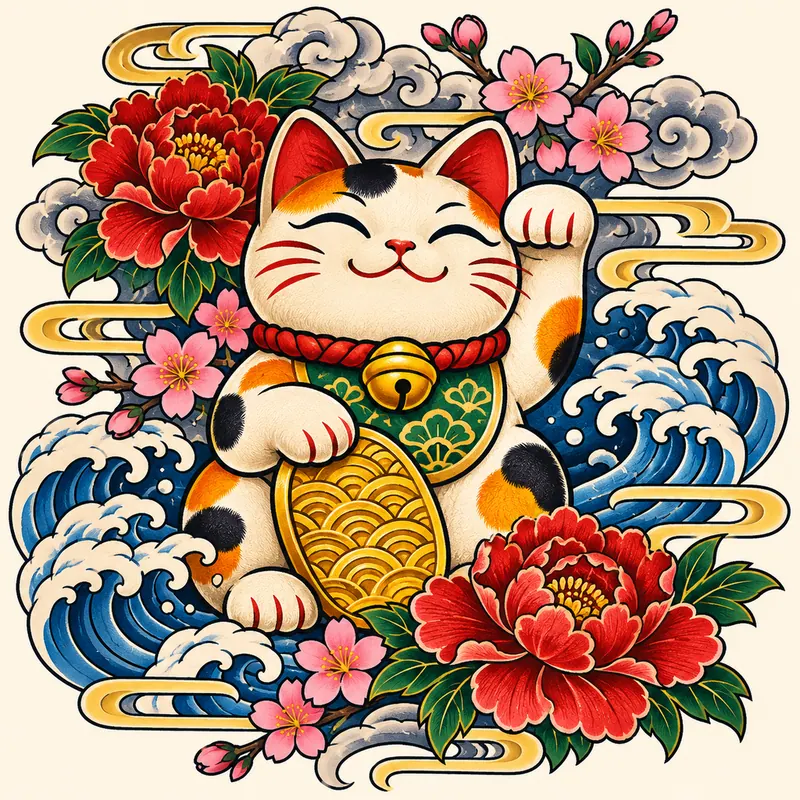
- Japan. The maneki-neko, or beckoning cat, is a familiar good-luck figure believed to invite fortune and visitors. Cats also appear in Japanese folklore as clever and sometimes supernatural creatures.
- Personality. Independent, curious, graceful and always landing on their feet: many people choose a cat because they see those traits in themselves.
Cat tattoos as a tribute to your pet
For many people, a cat tattoo is not about symbolism at all: it is about one specific cat. Memorial tattoos and portraits of living pets are among the most common reasons people get cat tattoos.
Some ideas for a personal tribute:
- A portrait with your cat’s exact markings and eye color.
- A silhouette of their favorite pose, sleeping, stretching or sitting with the tail curled.
- Their name or paw print worked into the design.
- A small detail they loved, like a toy, a window seat or a favorite plant.
If you have a good photo, you can turn it into tattoo-style artwork with photo to tattoo and use the result as a reference for your artist.
Popular cat tattoo designs
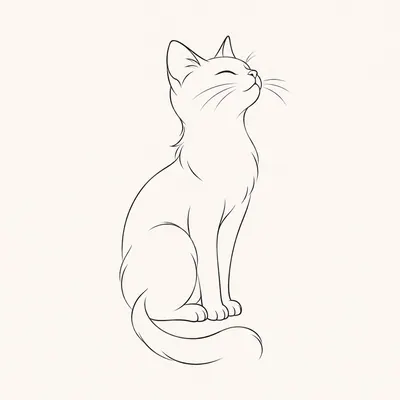
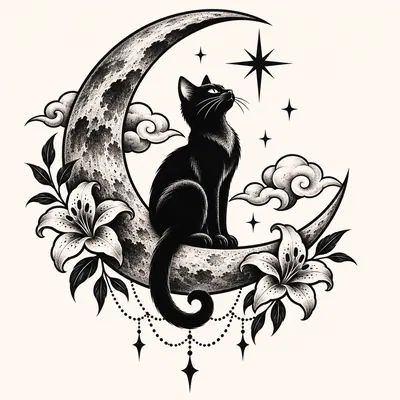
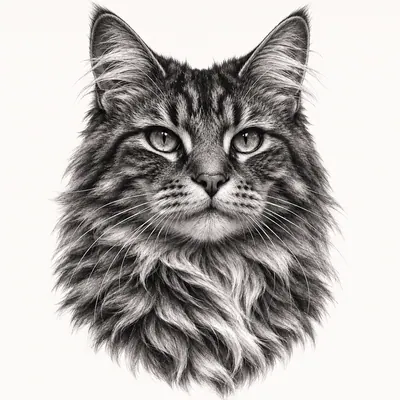
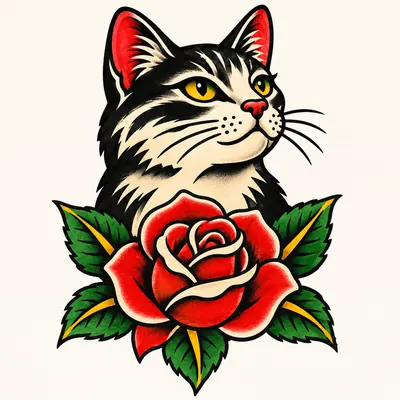
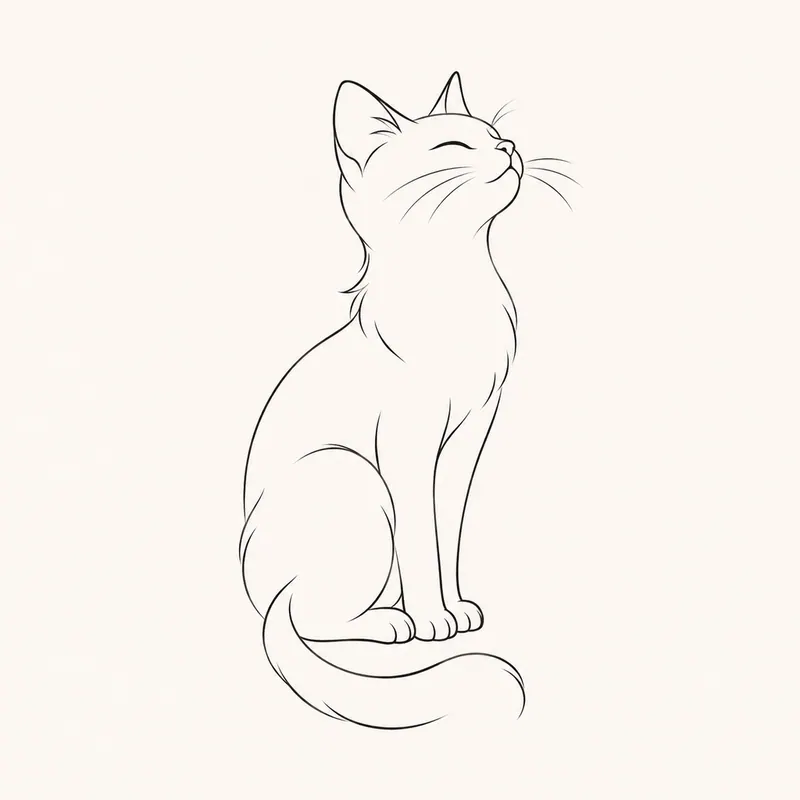
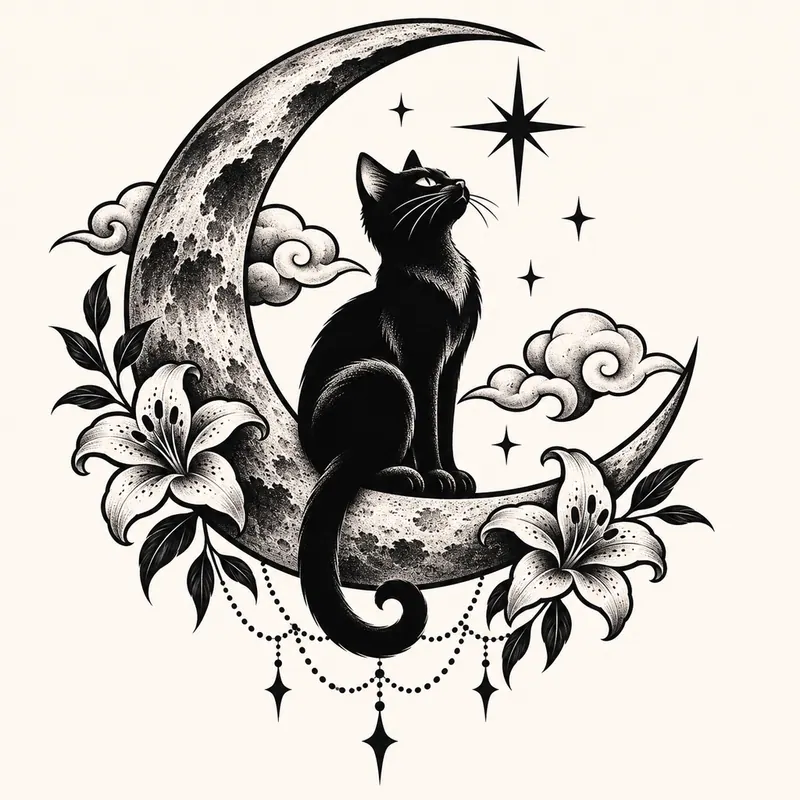
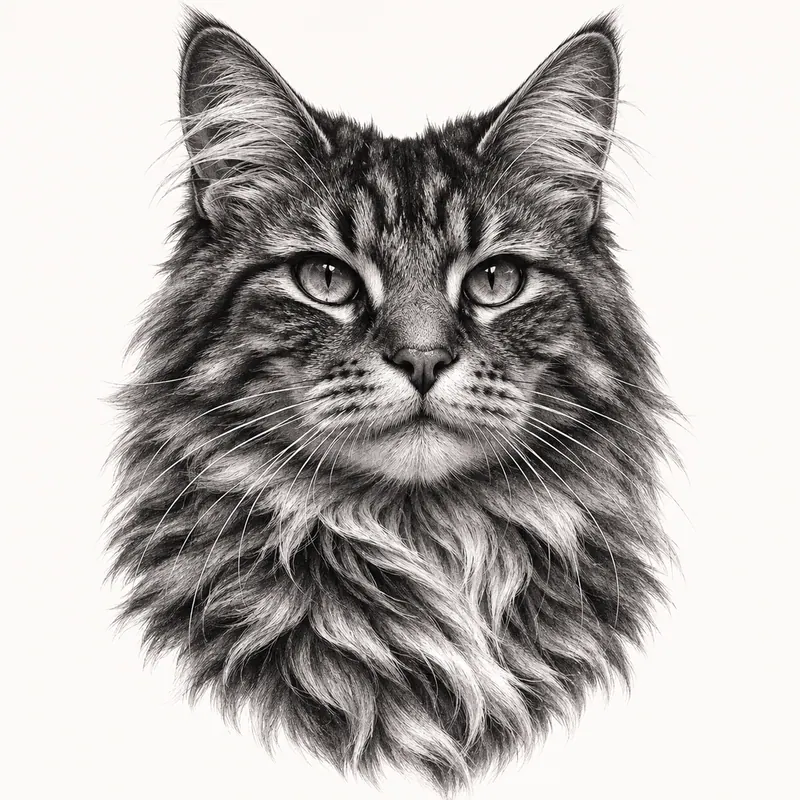
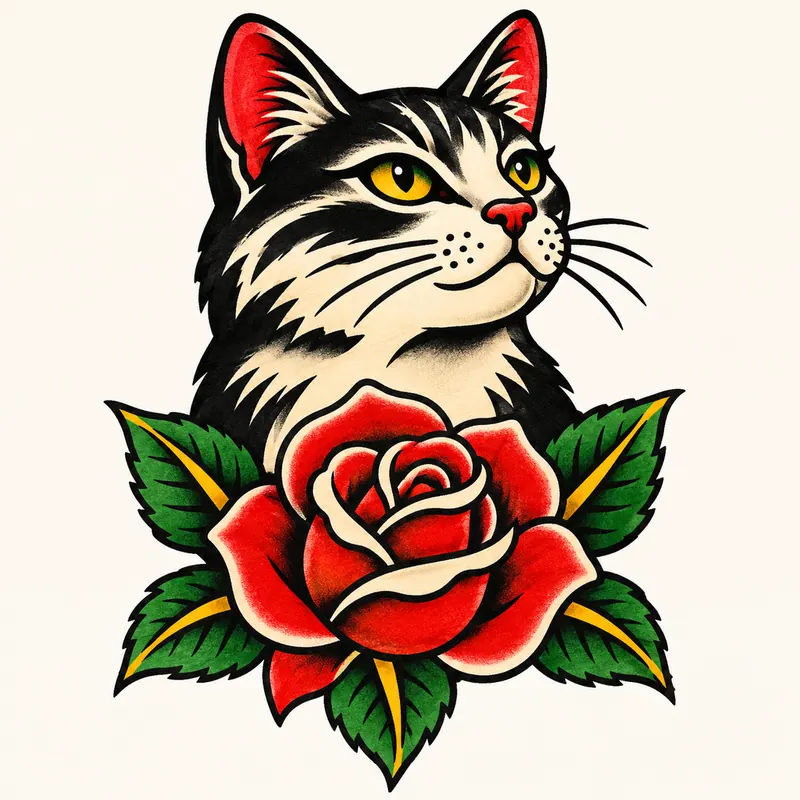
The gallery above shows the range:
Minimalist outline. A cat drawn in a few unbroken lines, perfect for the wrist and a classic first tattoo.
Black cat on a crescent moon. A blackwork silhouette against the moon, a favorite for anyone who loves the night, witchy aesthetics or Halloween.
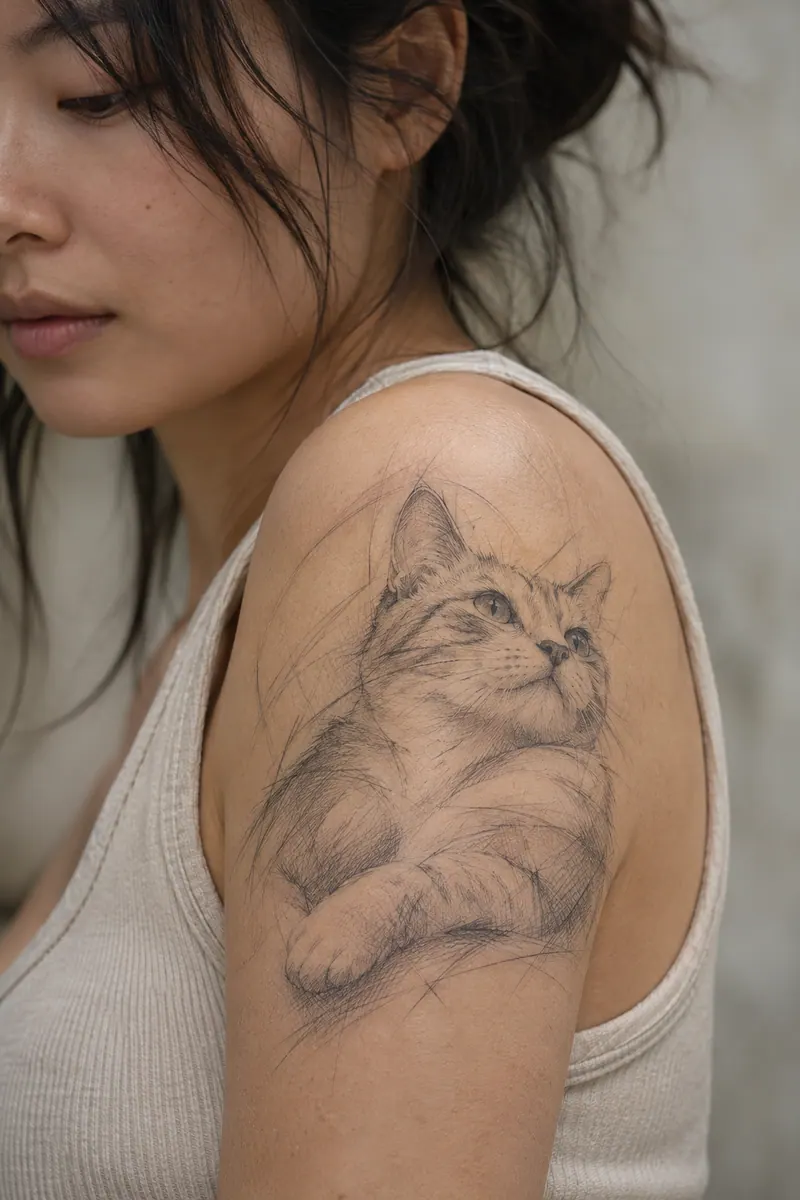
Realistic portrait. Fur, whiskers and reflective eyes in black and grey or color. Realism needs space, so the forearm is a good fit.
Cat with a rose. A traditional flash take with bold outlines and red petals, playful but timeless.
Maneki-neko. A lucky cat in Japanese-inspired style with bold color, a nice nod to the folk figure, here on the calf.
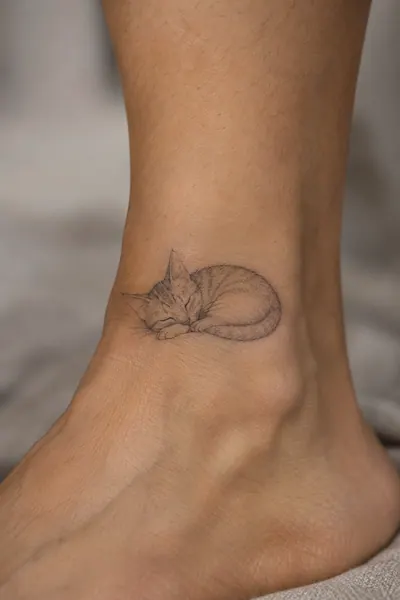
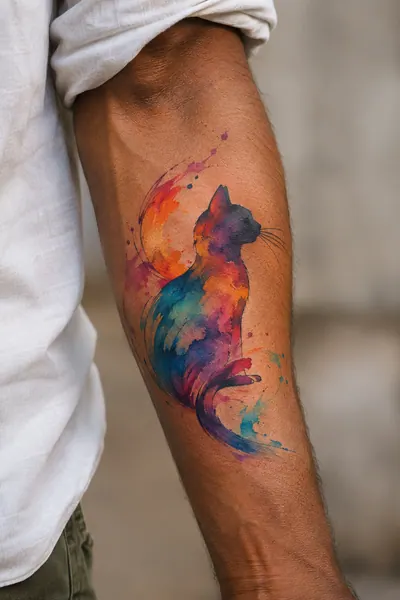
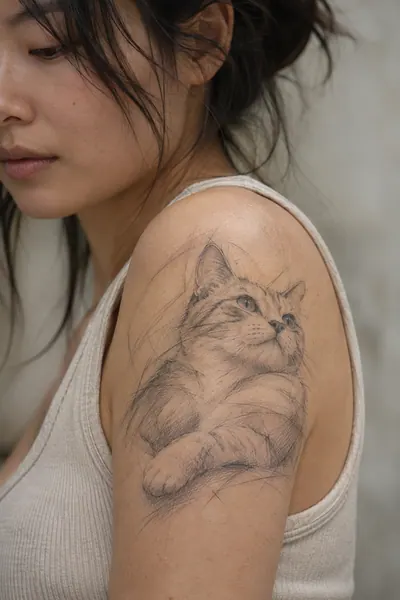
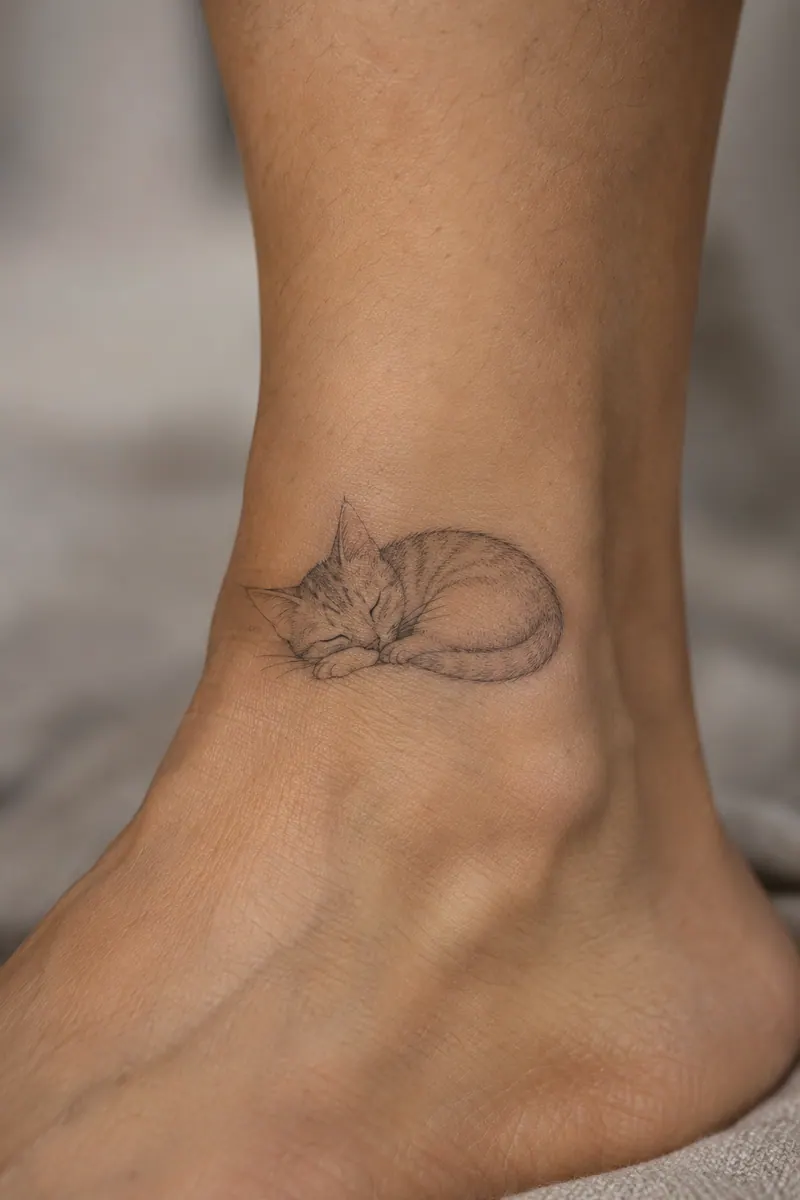
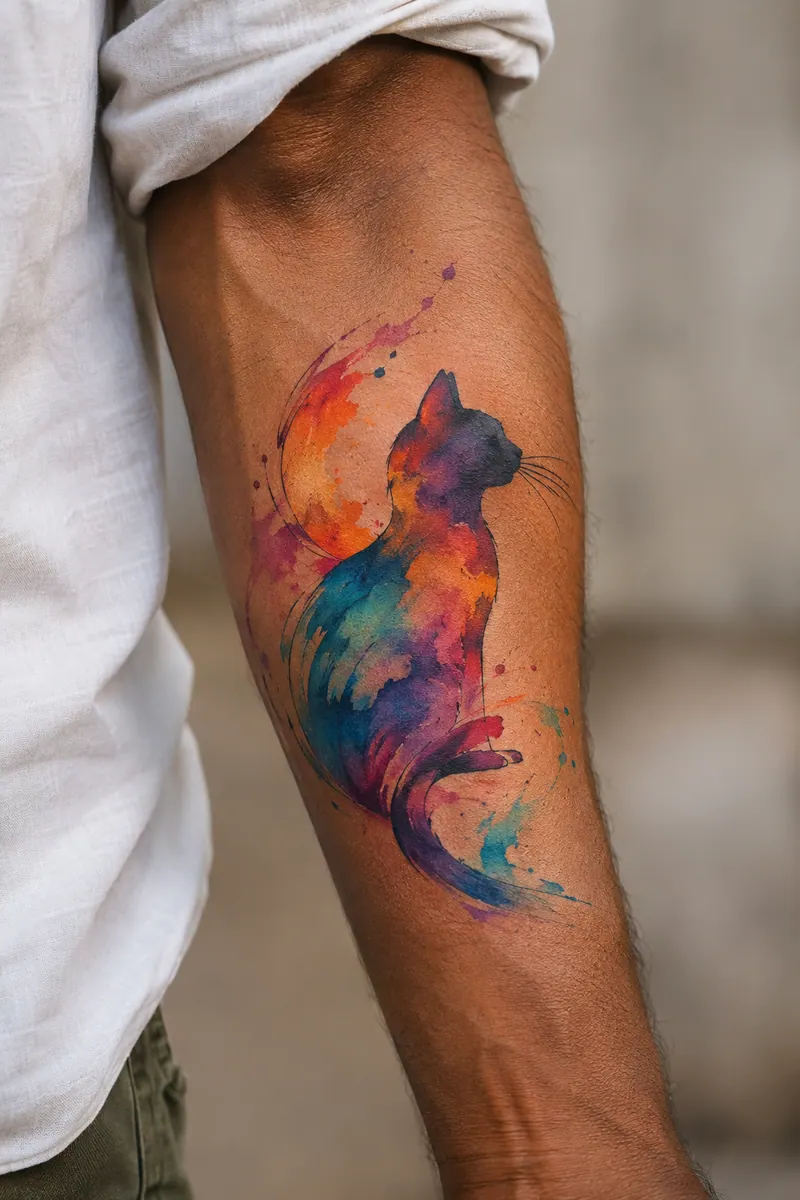
Sleeping, watercolor and sketch cats. A curled-up fine line cat on the ankle, a silhouette washed in watercolor, or a loose sketch that looks like a page from a notebook.
Choosing style and size
Cats are small animals, and many cat tattoos are small too, but detail needs room:
- Under about 5 cm: stick to outlines, silhouettes and simple poses. Whiskers and fur texture blur at this size.
- Palm size: enough for a stylized head, a traditional cat or a fine line sleeping cat with a few details.
- Larger: needed for realistic portraits, where the eyes and fur pattern carry the likeness.
Style changes the personality of the cat as much as size does. Fine line and minimalist cats feel gentle and private; traditional and blackwork cats feel bold and a little mischievous; watercolor and sketch versions feel artistic and soft. If you have more than one cat, small matching silhouettes in the same style can sit side by side, or each cat can get its own spot as your collection grows.
Popular placements include the wrist, ankle, forearm and upper arm. Portraits sit best on flatter, larger areas such as the outer forearm, upper arm or calf.
Before you book
The best cat tattoos feel like a particular cat, not just any cat. Note the details that make yours recognizable, such as an odd ear, a white sock, a crooked tail, and describe them in InkForge, or start from a photo and turn it into a tattoo design in the style you like. Generate a few variations, save your favorites and bring them to your artist so they can see exactly what you have in mind.