 InkForge
What a scorpion tattoo means
Scorpions are survivors. They have existed for hundreds of millions of years, live in deserts, forests and mountains, and can go long periods without food. That reputation shapes most scorpion tattoo meanings:
- Protection and defense. The raised tail is a warning: approach with respect. Many people wear a scorpion as a guardian symbol or as a sign of their own boundaries.
- Resilience. Thriving in harsh environments makes the scorpion a symbol of endurance through hard times.
- Danger and intensity. A scorpion can stand for passion, power and a personality that should not be underestimated.
- Patience. Scorpions often wait motionless before striking, a nod to strategy and control.
Scorpions in myth and the stars
The scorpion has played a role in human stories for thousands of years:
- Ancient Egypt. The goddess Serket (also spelled Selket) was often shown with a scorpion on her head. She was associated with protection, especially against venomous stings, which made the scorpion a guardian rather than just a threat.
- Greek mythology. In some versions of the myth, a giant scorpion was sent to defeat the hunter Orion, and both were placed in the sky. That is often given as the reason the constellations Orion and Scorpius appear on opposite sides of the sky.
- Astrology. Scorpio, the eighth sign of the zodiac, is linked to intensity, loyalty and transformation. A scorpion is the most common symbol for the sign.
- The night sky. The constellation Scorpius, with its bright red star Antares, is one of the few that really looks like its namesake, with a curved tail of stars.
A fun detail for designs: real scorpions glow blue-green under ultraviolet light, which can inspire glowing or neon-like color accents.
Popular scorpion tattoo designs
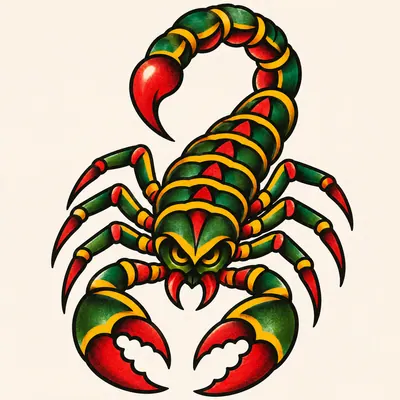
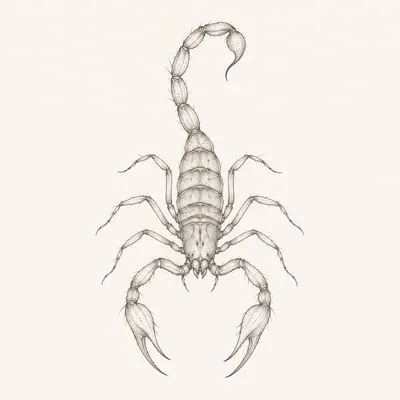
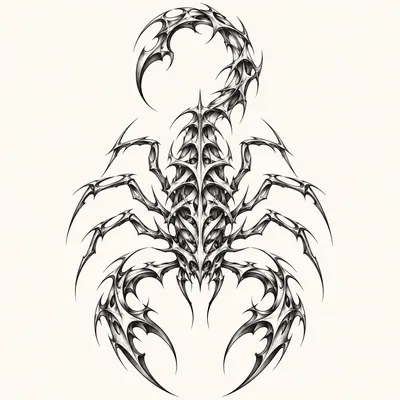
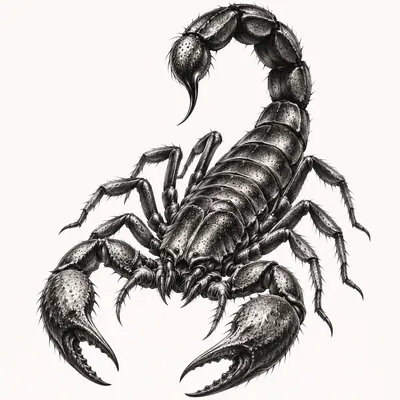
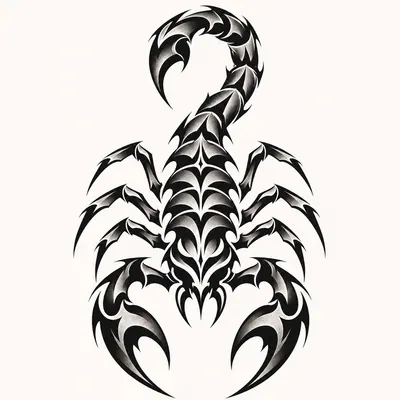
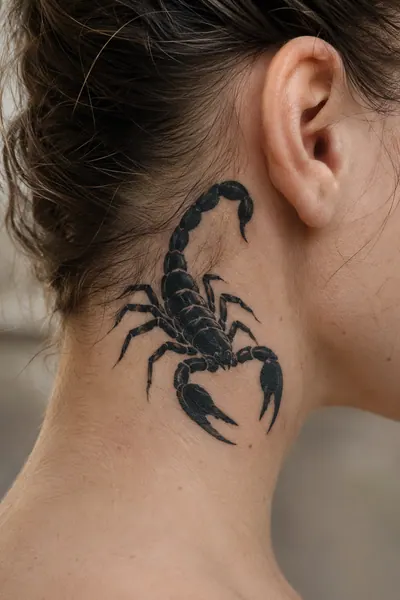
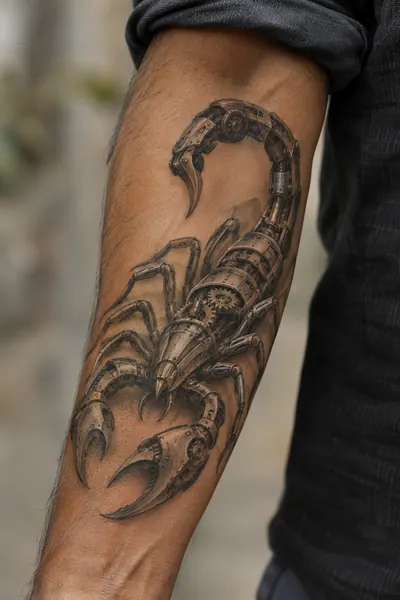
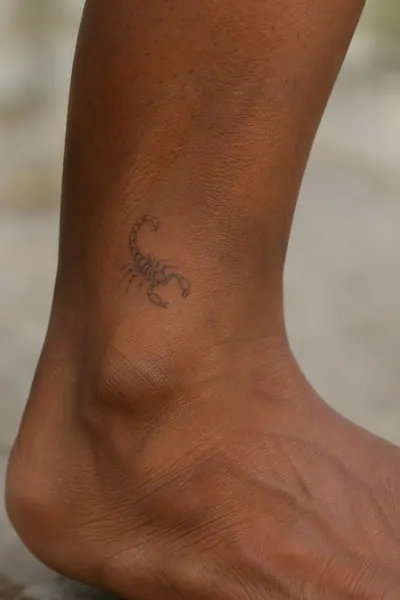
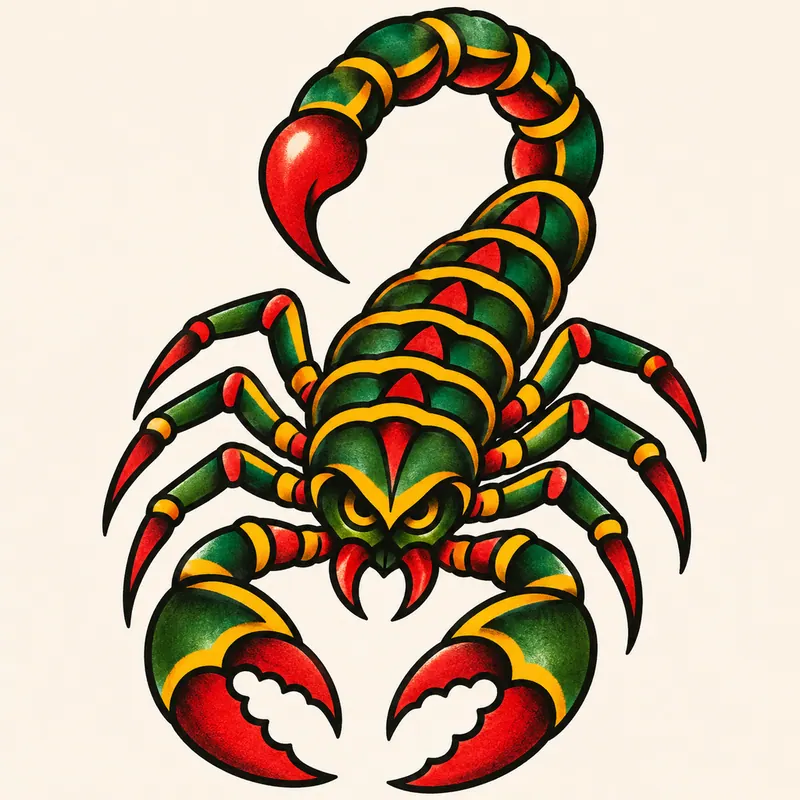
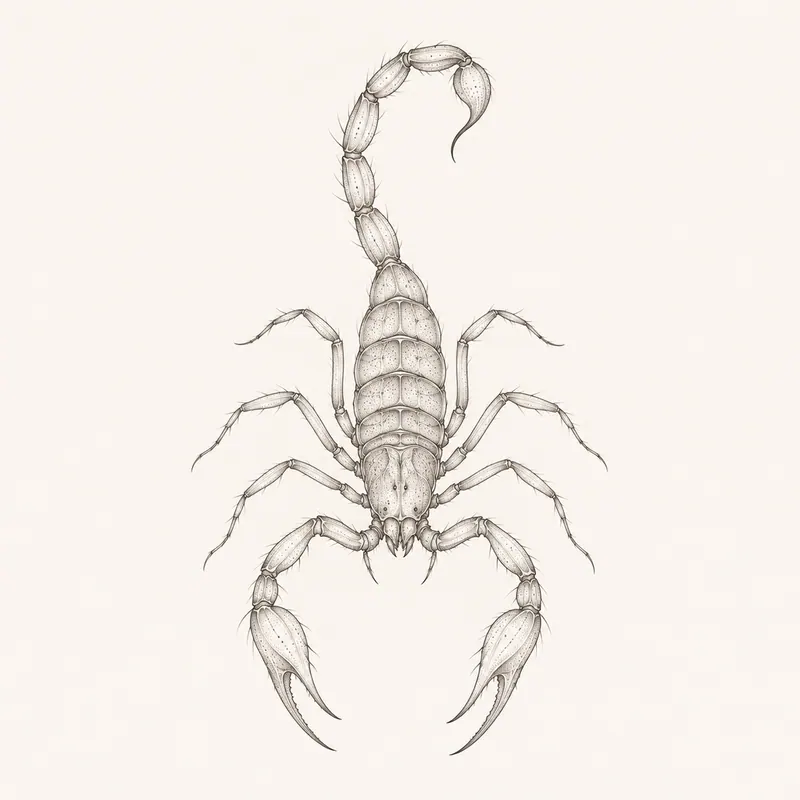
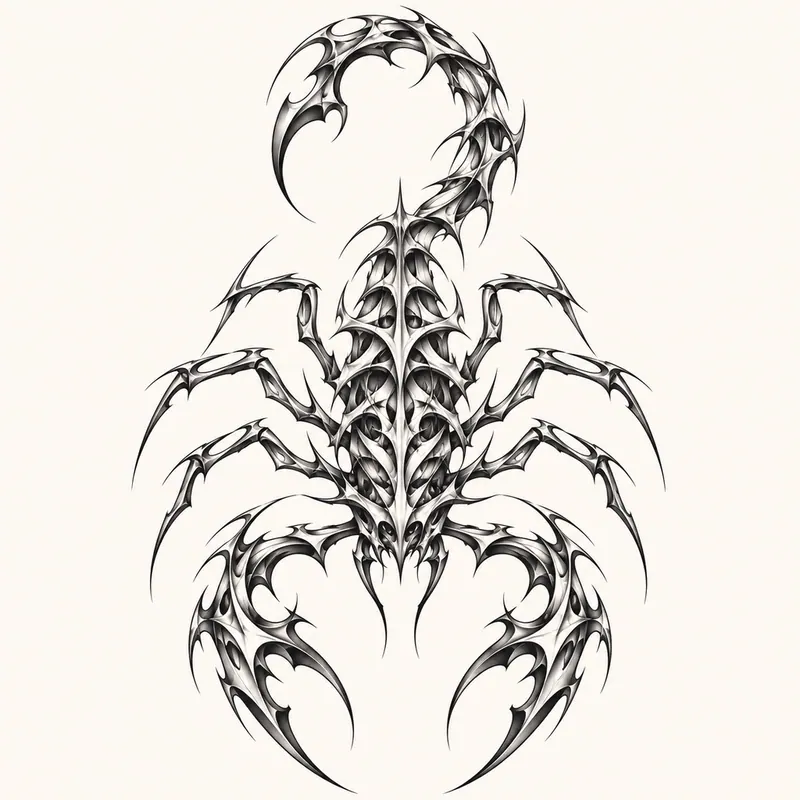
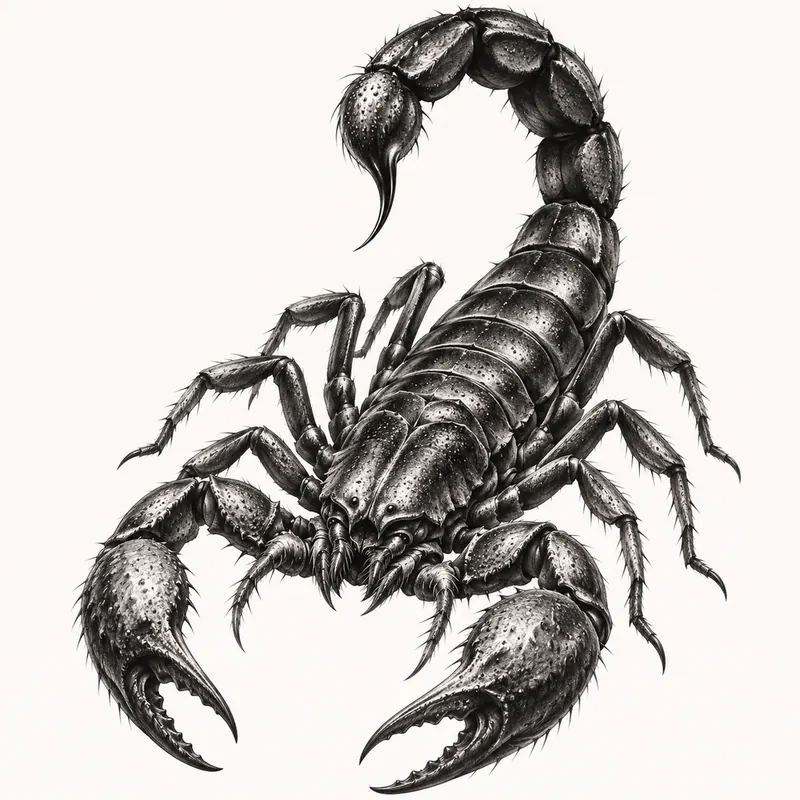
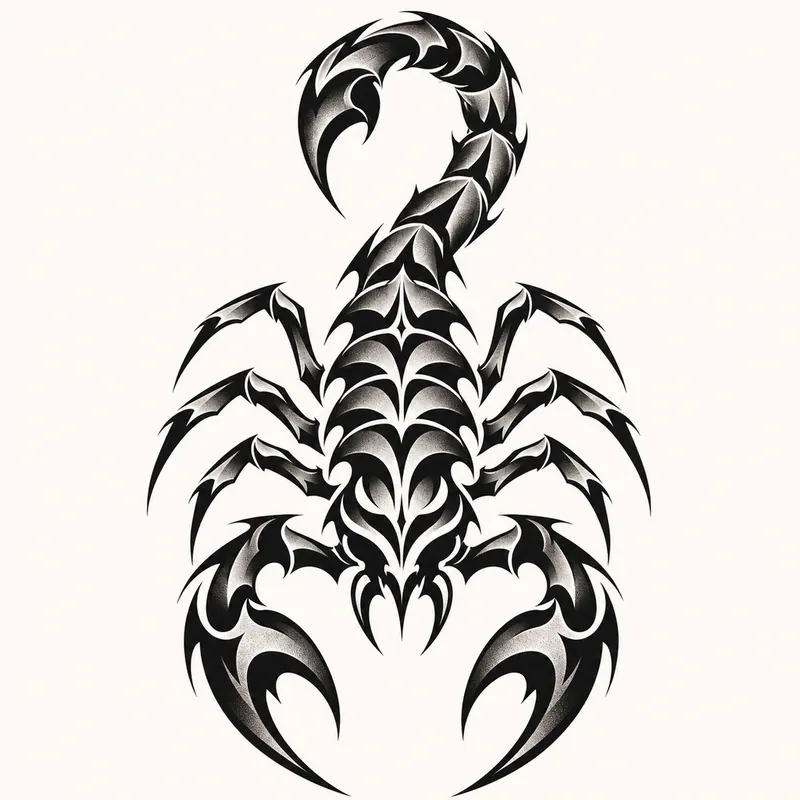
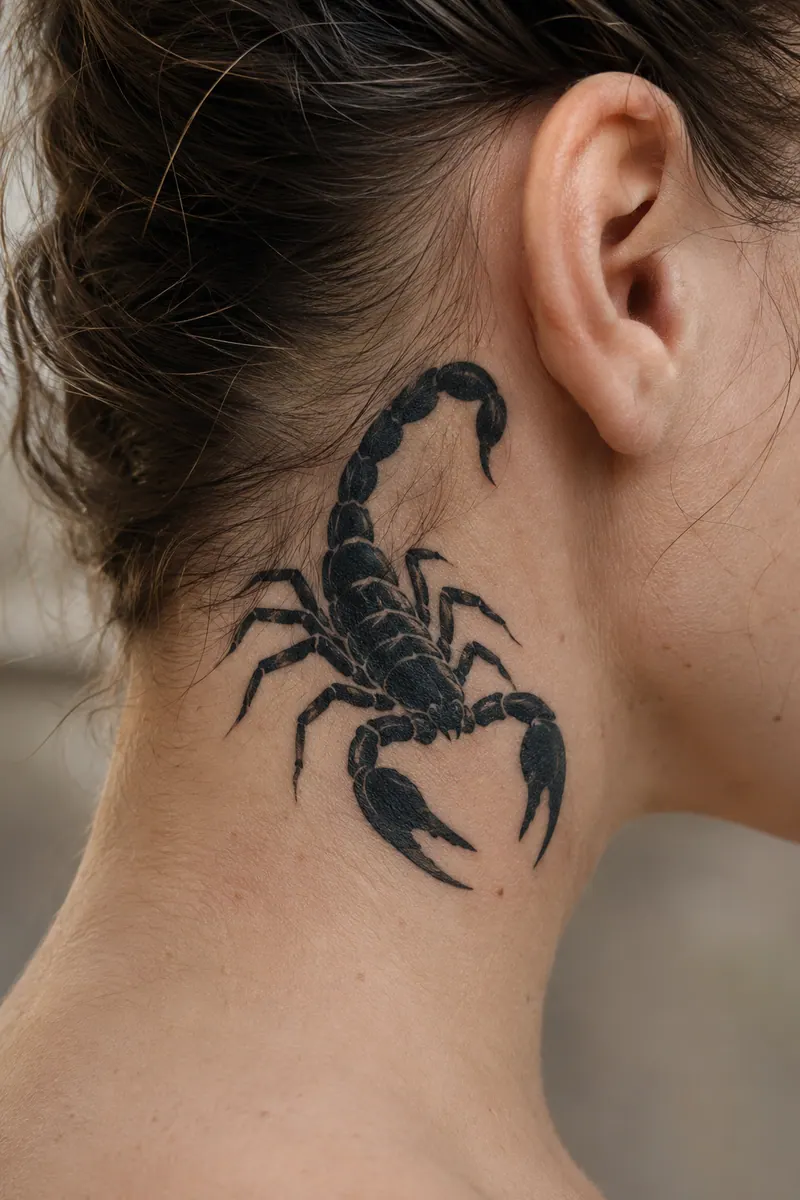
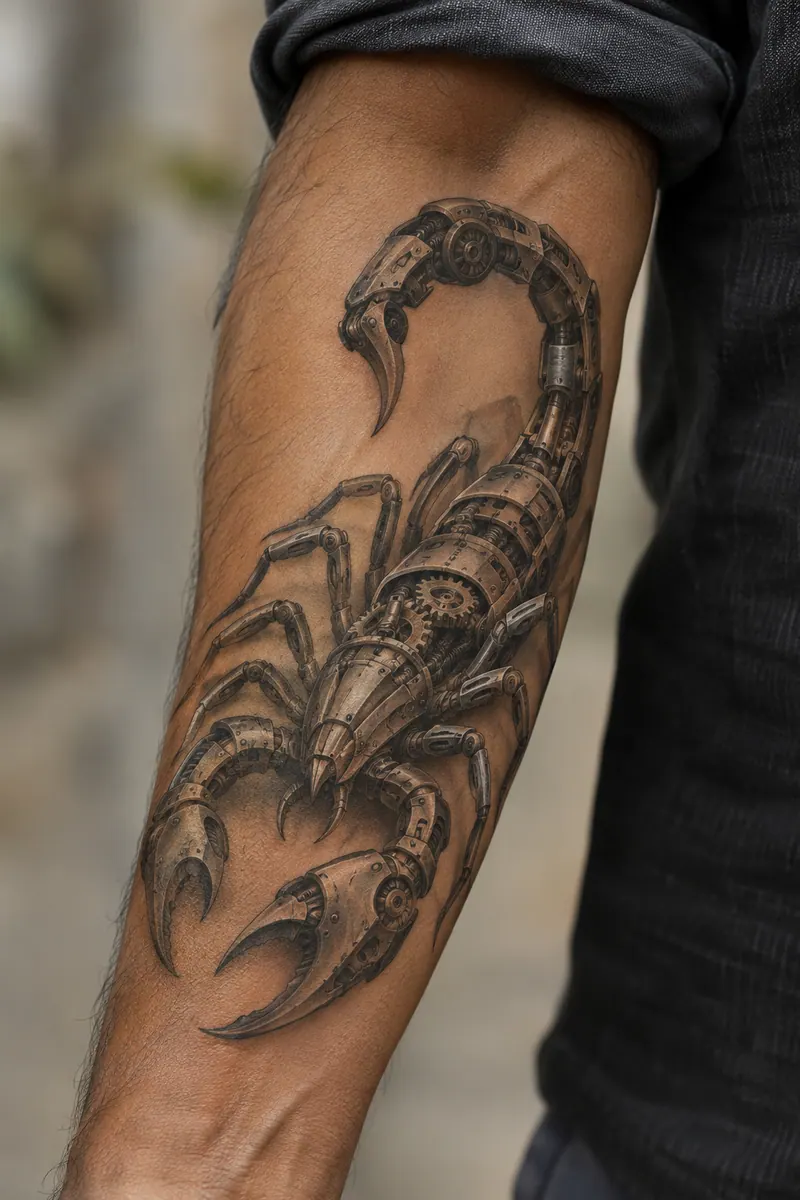
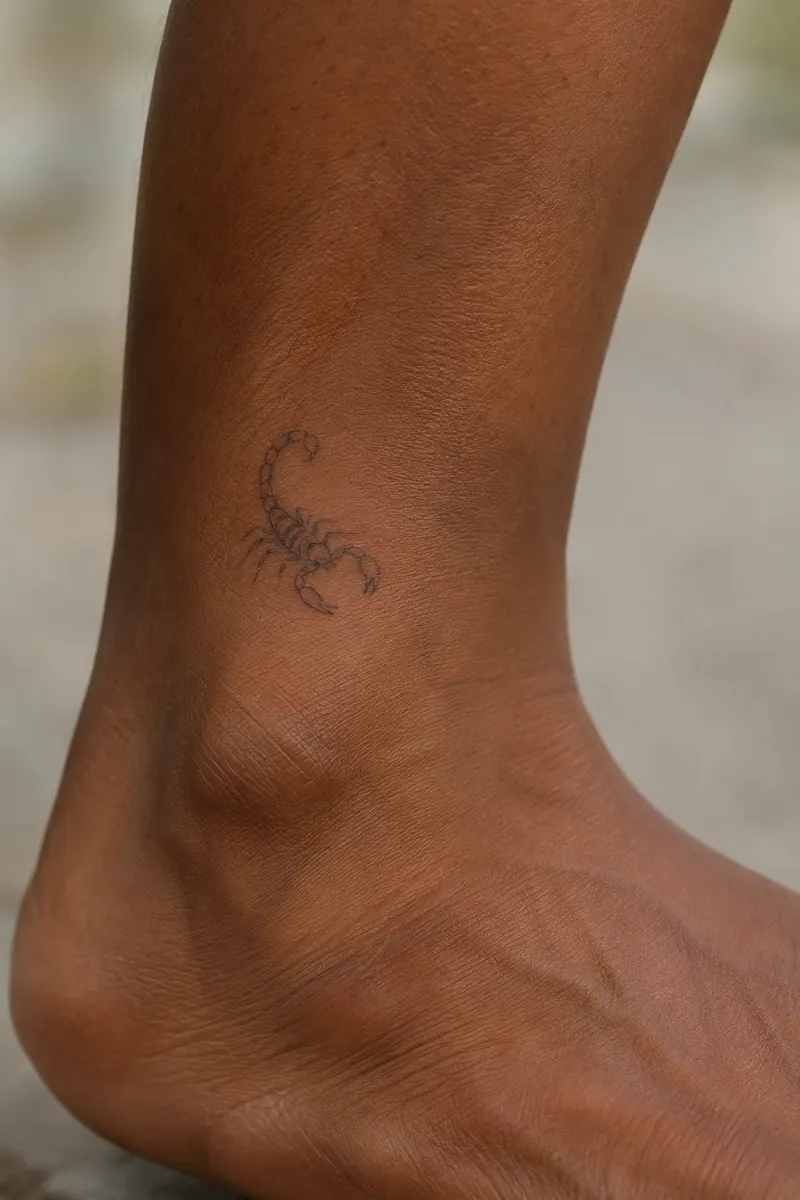
The gallery above shows the full range:
Traditional scorpion. Bold outlines and a limited color palette make a traditional scorpion instantly readable on the forearm, and it pairs well with flash classics like daggers and roses.
Thin and minimalist scorpions. A fine line scorpion on the neck or a tiny outline on the ankle keeps the shape but loses the threat, a subtle choice for a first tattoo.
Cyber sigilism scorpion. The body and tail turn into sharp, thorny cyber sigilism glyph lines, a futuristic look that follows the forearm.
Realistic scorpion. Detailed armor plates, legs and a translucent tail. Realism needs space, so the calf is a good fit.
Modern tribal and blackwork scorpions. Sharp black shapes or a solid silhouette make the scorpion a graphic emblem, bold on the upper arm or neck.
Mechanical scorpion. Biomechanical plates and joints turn the animal into a machine, an idea that naturally fits a forearm.
Designing the pose and anatomy
A scorpion looks simple, but the details decide whether it reads correctly:
- Top-down view gives a symmetrical shape with the claws forward and the tail curled overhead. It is the classic tattoo view and fits centered spots like the back of the neck or the sternum.
- Side view shows the curve of the tail and feels more dynamic, good for long areas like the forearm.
- Get the anatomy right: eight legs, two pincers and a segmented tail ending in the stinger. Your artist will check this, but it helps to know what to look for in a reference.
- Tail direction changes the mood: raised and curled feels alert or aggressive; relaxed feels calmer.
Where to place a scorpion tattoo
Scorpions are compact, so they adapt well to small and unusual placements. The neck and the area behind the ear are popular for small scorpions; see the neck tattoo guide before choosing such a visible spot. The forearm, calf and upper arm give room for realism or biomechanical detail, and the ankle suits a tiny minimalist version. Keep legs and pincers simple if you go very small, so they don’t blur together over time.
Trying variations first
Add the details that make it about you: Scorpius stars along the tail, your birth date in the claws, a desert landscape or a flower from someone close to you. In InkForge you can describe your idea, test it in traditional, fine line or blackwork styles, and open Try-On and position it on a photo of your neck or forearm, adjusting size and rotation by hand. Bring your favorite version to your artist as a starting point.