InkForge
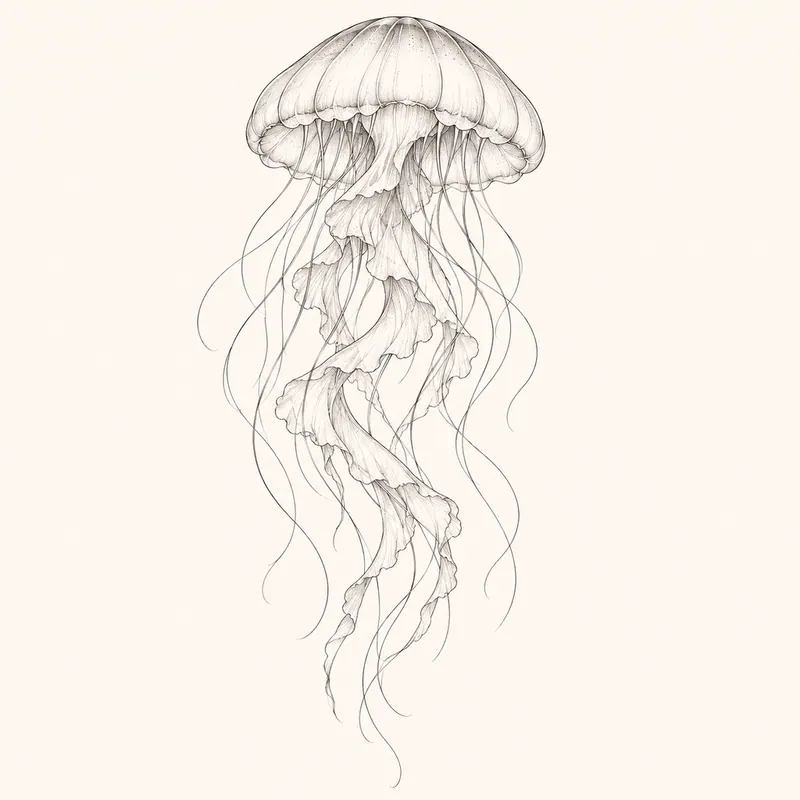
What a jellyfish tattoo means
Jellyfish are among the oldest animals in the ocean, around in some form for hundreds of millions of years. They have no bones and no brain, they drift with the current, and yet they thrive almost everywhere in the sea. That mix of softness and survival is what draws people to them.
Common meanings include:
- Going with the flow. Jellyfish can swim by pulsing their bell, but they mostly let currents carry them. For many people the tattoo is a reminder to stop fighting what they cannot control.
- Resilience and adaptability. An animal this fragile-looking has outlasted countless others, a quiet symbol of endurance.
- Gentle but protected. Jellyfish sting to defend themselves and to catch food. The tattoo can mean being soft without being defenseless, or setting boundaries.
- Light in the dark. Some species produce their own light, which links the jellyfish to hope and inner light in deep, dark places.
- Renewal. The small Turritopsis dohrnii can revert to an earlier life stage, which earned it the nickname “immortal jellyfish” and made it a symbol of second chances.
There is also a mythological echo: the bell-shaped, free-swimming stage of a jellyfish is called a medusa, a name taken from the Medusa of Greek mythology, whose hair of snakes the trailing tentacles are said to recall.
Popular jellyfish tattoo designs
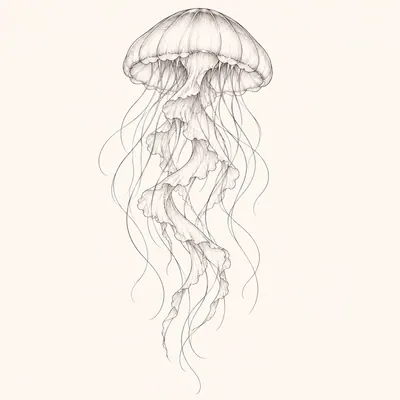
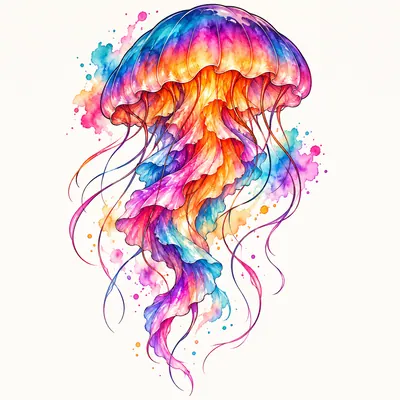
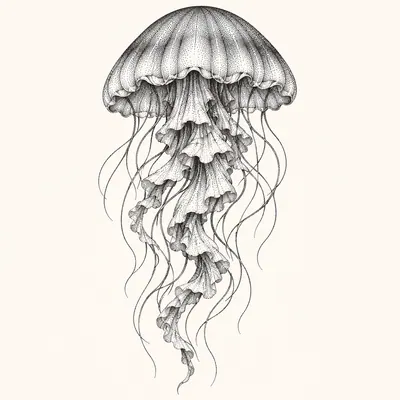
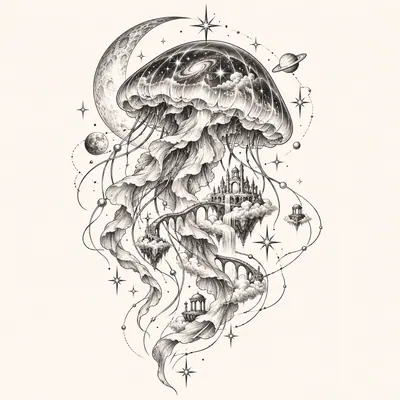
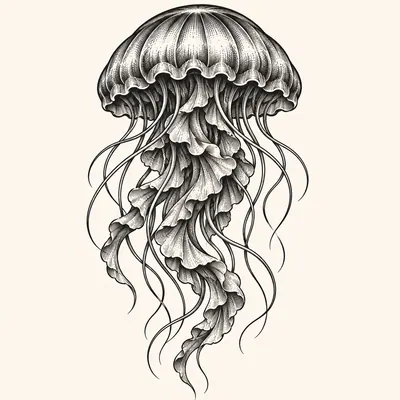
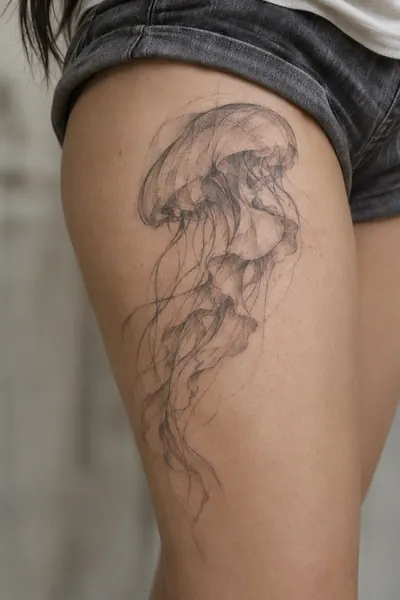
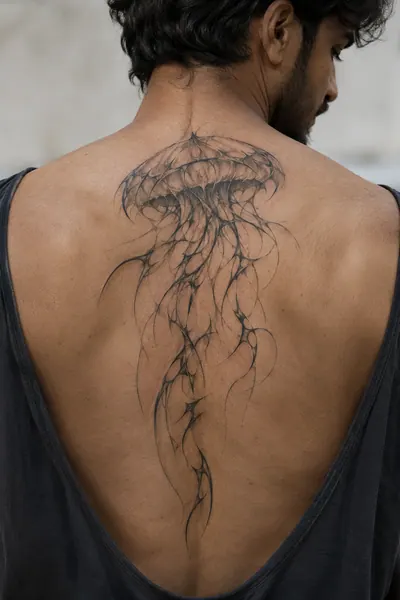
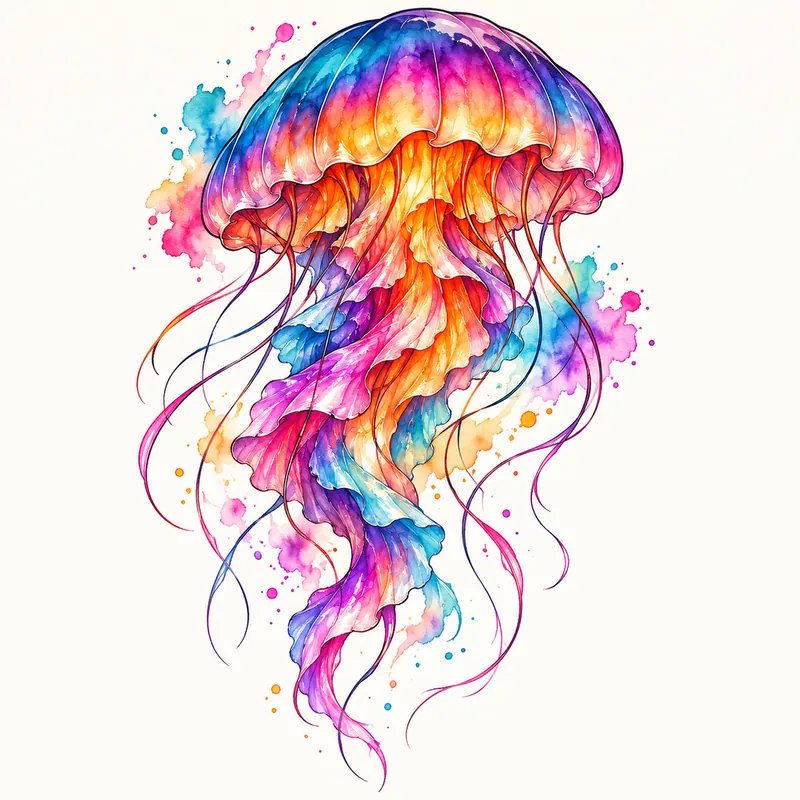
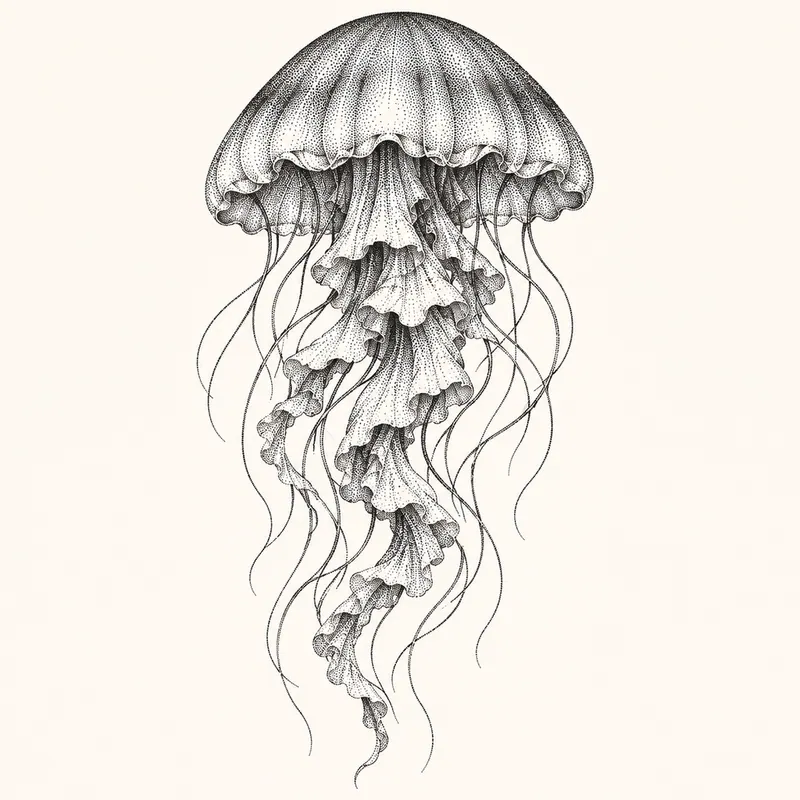
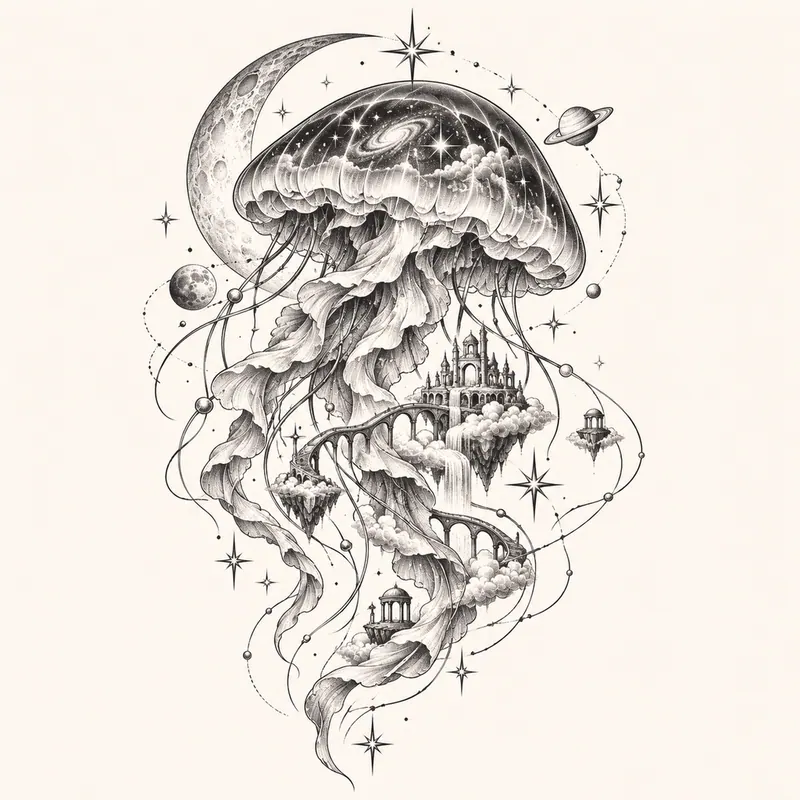
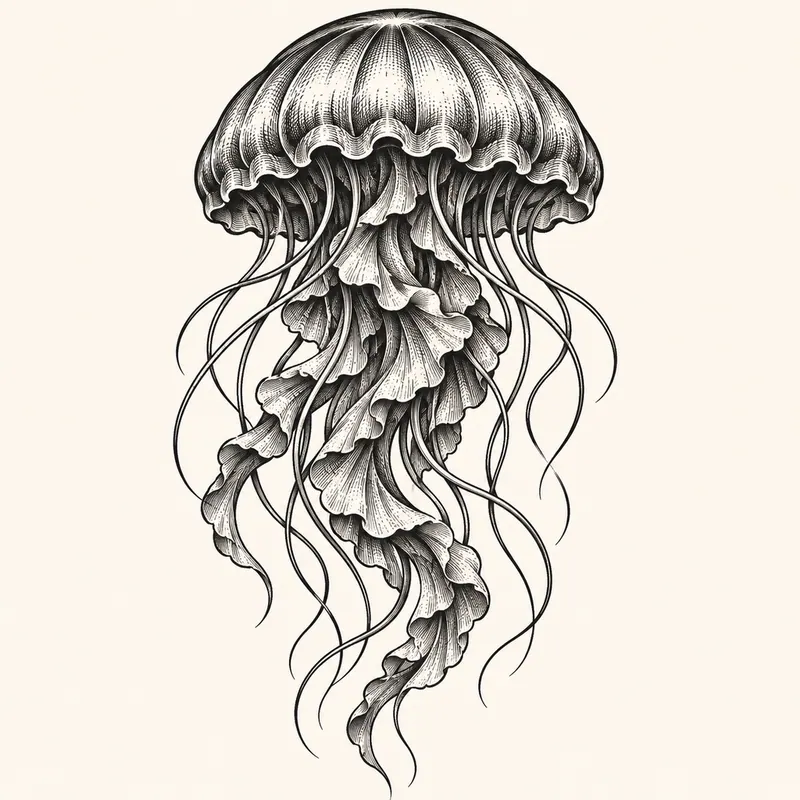
The gallery above shows how many moods the same animal can take:
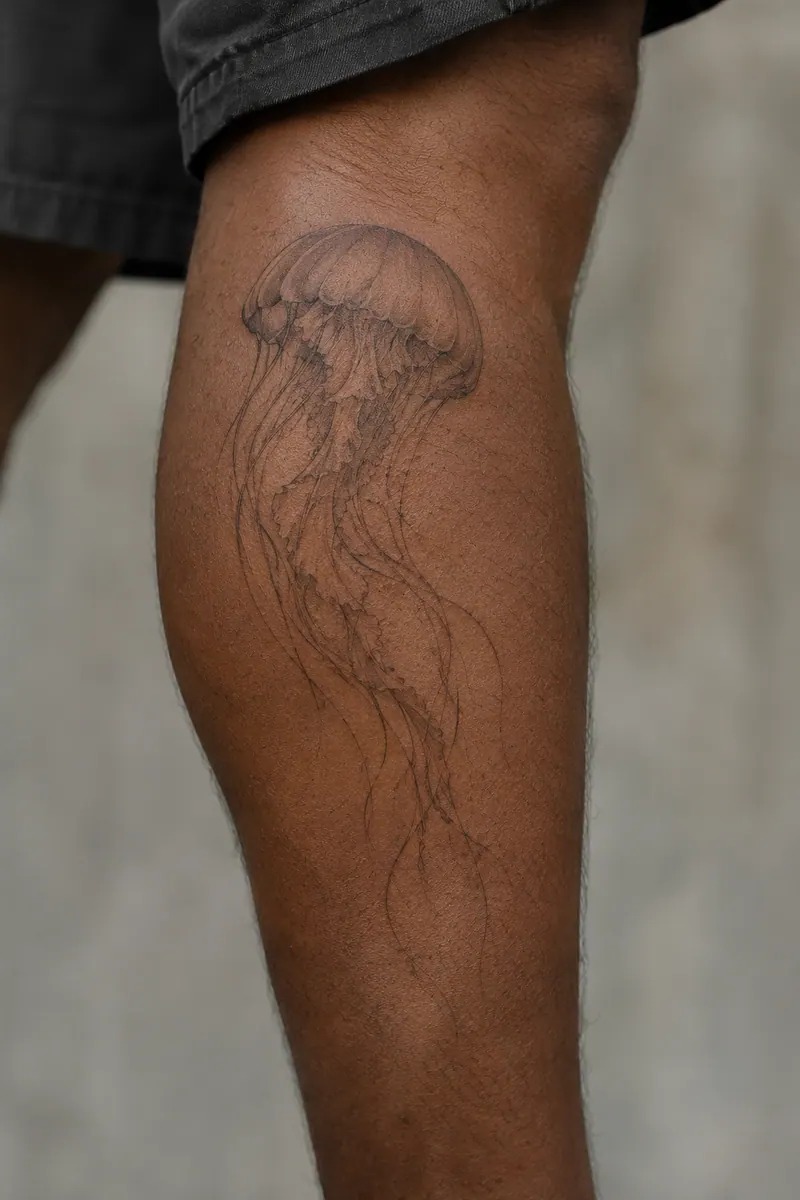
Fine line jellyfish with flowing tentacles. The most popular version: a delicate bell and long, wavy lines trailing down the forearm or calf. Fine line keeps it airy and elegant.
Glowing watercolor jellyfish. Soft blues, violets and pinks fading into bare skin create the bioluminescent effect. Watercolor suits the thigh, where there is space for the color to breathe.
Stippled jellyfish. Dotwork builds the translucent bell from thousands of dots, giving depth without heavy outlines.
Jellyfish among the stars. A surreal idea that swaps the ocean for outer space, turning the jellyfish into a drifting cosmic creature on the shoulder.
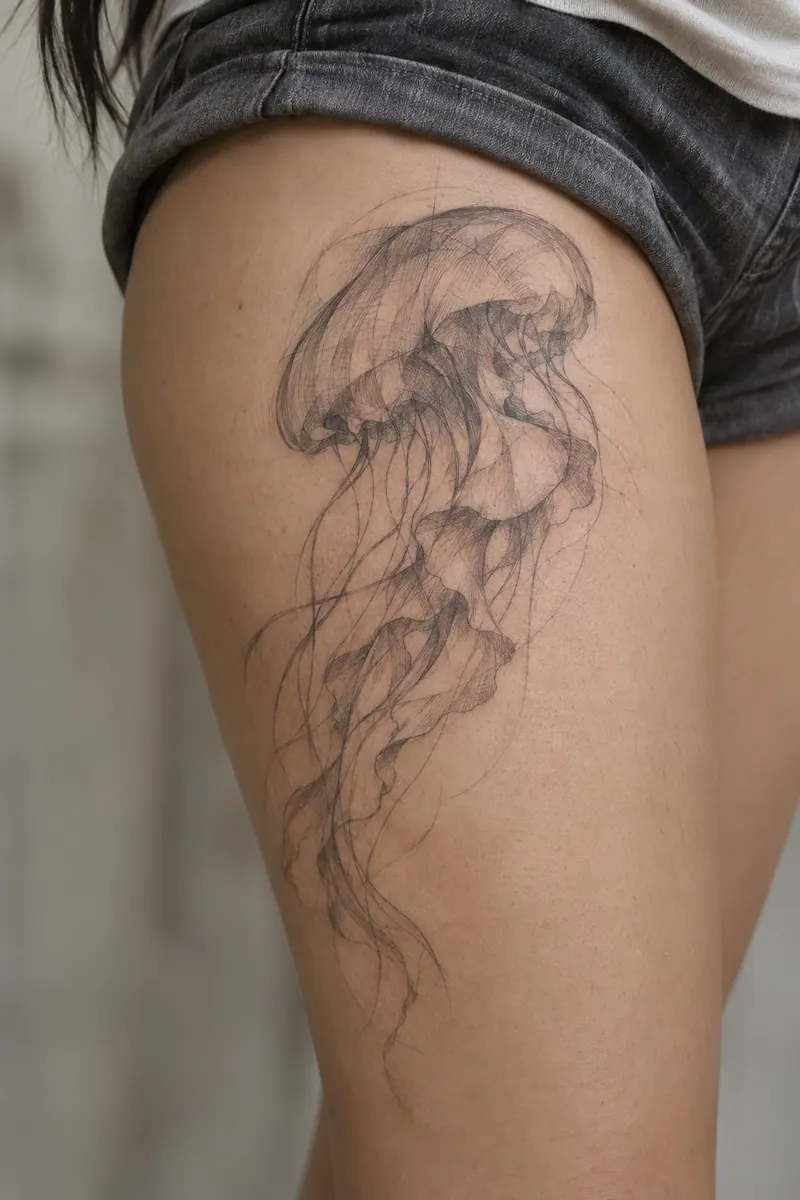
Illustrative and sketch jellyfish. Strong linework and graphic shading for the upper arm, or loose, pencil-like lines on the thigh for an unfinished, artistic look.
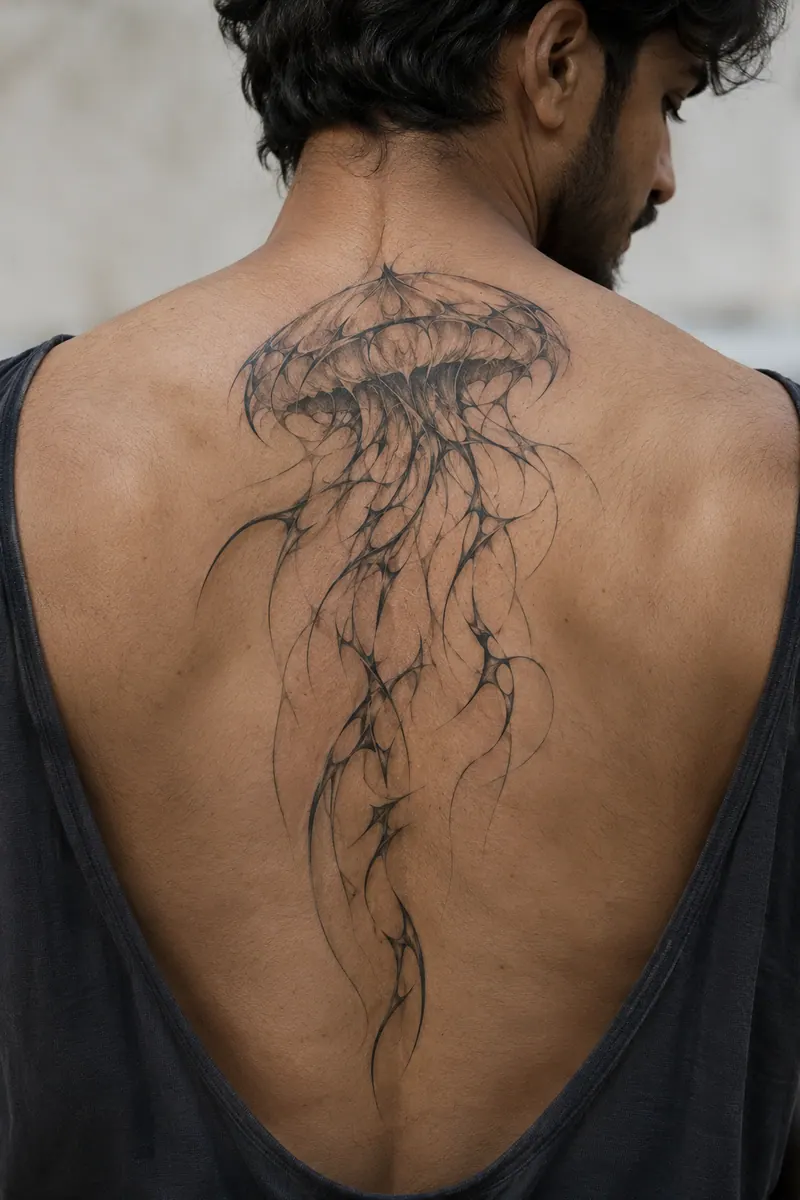
Glyph-line tentacles. In cyber sigilism, the tentacles become sharp, thorny glyphs running down the back, a striking mix of organic and futuristic.
Planning tentacles that age well
The tentacles are what make a jellyfish tattoo beautiful, and they are also its biggest technical challenge. A few things to discuss with your artist:
- Spacing. Lines placed very close together can blur into one over the years. Give each tentacle some breathing room, especially in fine line.
- Length versus size. A long, flowing composition reads best when the whole tattoo is fairly large. Squeezing many tentacles into a small design is a common regret.
- Variety in line weight. Mixing a few bolder lines with thinner ones helps the design stay readable as it softens.
- Glow effects. Soft color gradients without outlines can fade unevenly; a few thin black accents help hold the shape.
Where to place a jellyfish tattoo
Jellyfish are naturally vertical, so place them where the tentacles can fall:
- Forearm and calf: the most common choices, with the bell near the elbow or knee and tentacles trailing toward the wrist or ankle. See the calf placement guide for details.
- Thigh: room for larger watercolor or sketch pieces.
- Spine and back: perfect for long, dramatic tentacles.
- Shoulder: suits a rounder composition, like a jellyfish surrounded by stars.
Jellyfish also combine well with other ocean imagery, such as waves or a koi fish, as part of a larger sea-themed sleeve.
Trying variations first
Think about the mood you want: calm and floating, glowing in the deep, or sharp and defensive. Then decide on the details, from the number and length of the tentacles to the colors of the glow and what surrounds it. In InkForge you can describe your jellyfish, compare fine line, watercolor and dotwork versions, and preview it on a photo of your arm or leg with Try-On, adjusting the size and angle yourself to see how far the tentacles should reach. Take the version you love to your artist as a reference.