InkForge

What a compass tattoo says
Few tattoos are as easy to read as a compass. Everyone understands it as a tool for finding your way, and that simple idea stretches in several directions:
- Guidance. A compass points somewhere reliable. Many people treat it as a symbol of their values or of a person who guided them.
- Adventure. For travelers, sailors and hikers, it marks a life of moving and exploring.
- Returning home. A needle always swings back to north, so a compass can mean that you will always find your way back.
- Staying on course. It can be a quiet reminder after a hard period to keep heading in the right direction.
A short history of the compass on skin and paper
The magnetic compass was first developed in China and later spread into European navigation, where it changed how ships crossed open water. Long before tattoos, the compass rose appeared on medieval and Renaissance sea charts as a decorative star showing directions, often with many points and with a fleur-de-lis marking north. That ornate chart tradition is why compass roses still look so good as tattoos.
Sailors were among the most tattooed groups in the 19th and early 20th centuries, and navigational imagery naturally found its way into their flash. The nautical star is the best-known example, and it is often said that sailors wore it, like the compass, for luck in finding their way home. Treat that lore as tradition rather than strict fact, but it explains why compasses, stars, ropes, anchors and swallows appear side by side in classic sailor designs.
You may also see the Icelandic symbol Vegvísir sold as a “Viking compass.” It is recorded in 19th-century Icelandic manuscripts, not the Viking Age, and was a magical stave meant to keep a traveler from getting lost rather than an instrument.
Compass designs in the gallery
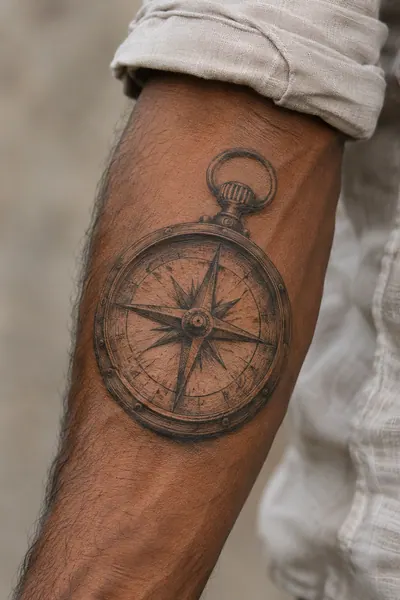
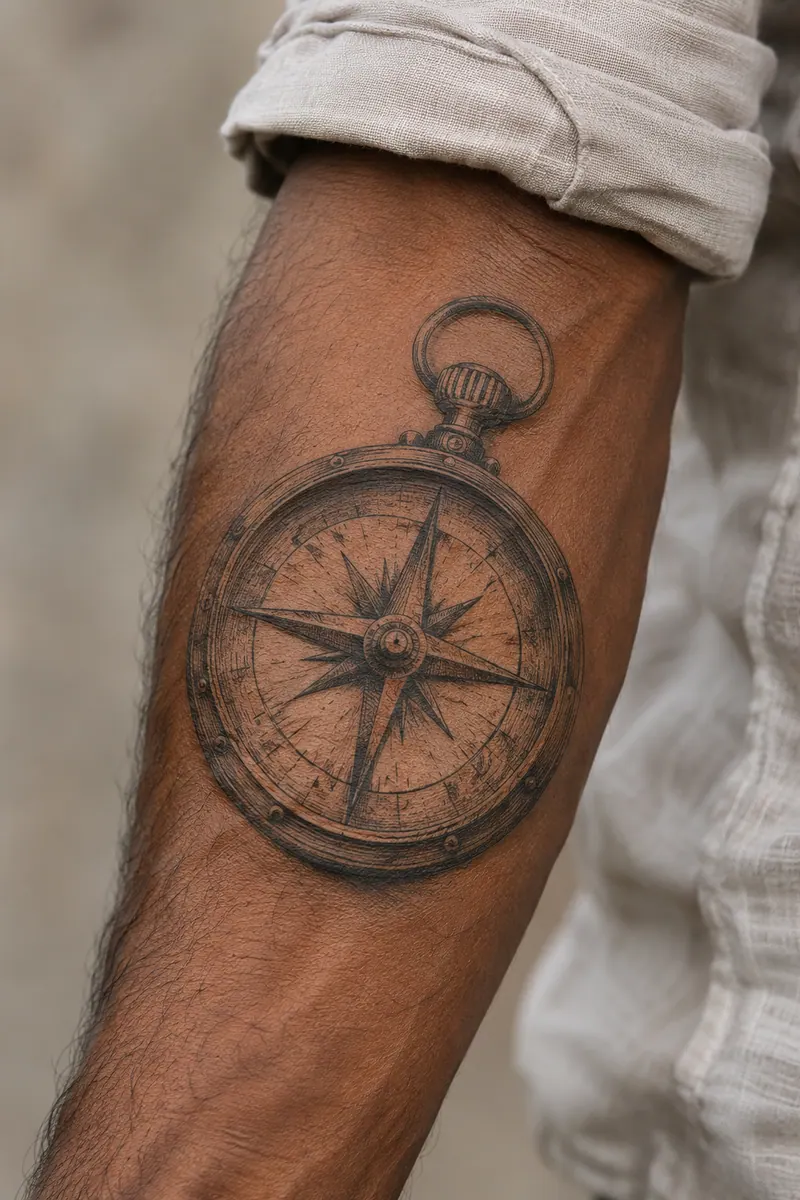
- Nautical compass (realism, forearm). Brass case, glass reflections and a needle in sharp focus. Realism needs enough size for the markings to stay readable.
- Antique compass (engraving, forearm). Fine hatching makes it look like a plate from an old navigation manual. Engraving suits vintage instruments perfectly.
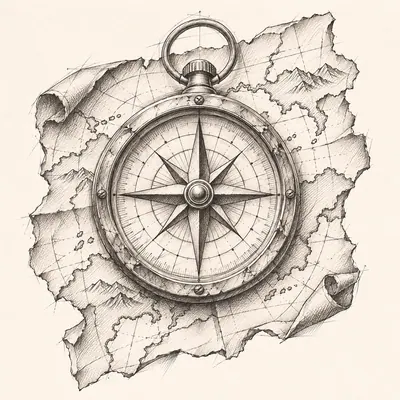
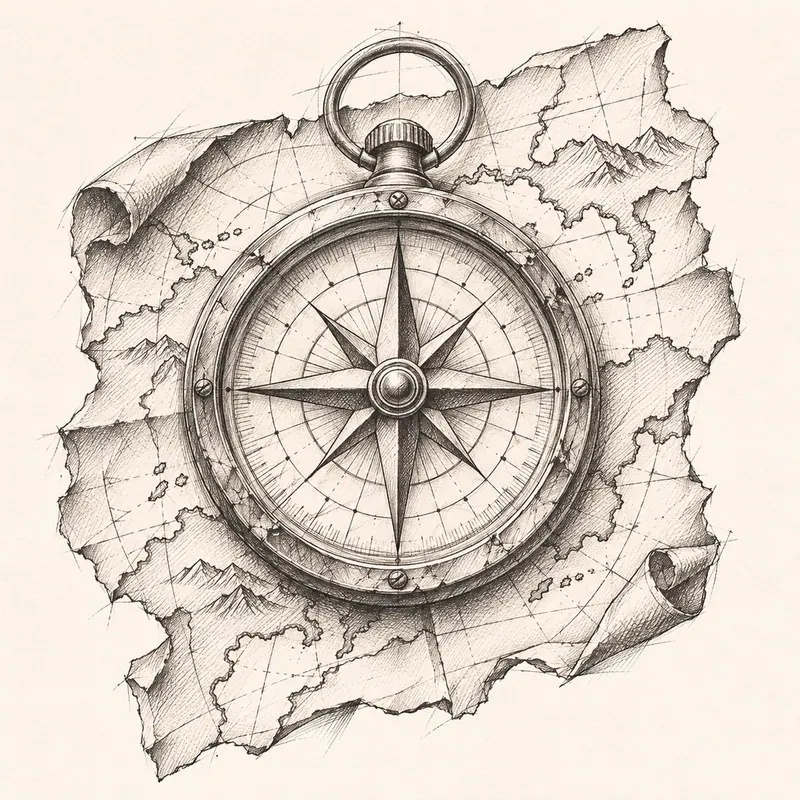
- Compass over an old map (sketch, upper arm). Loose lines and a coastline behind the dial, ideal if a particular region matters to you.
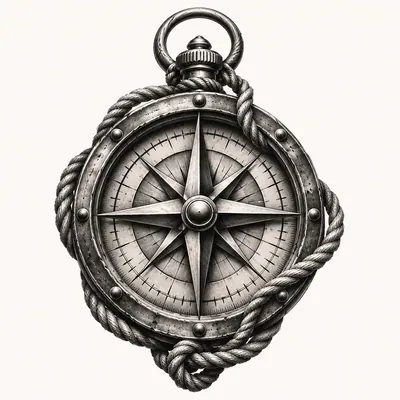
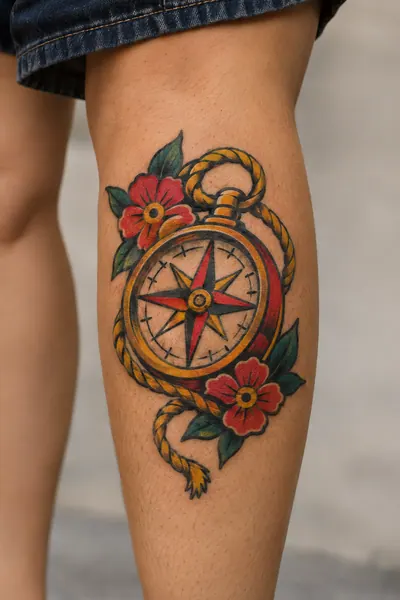
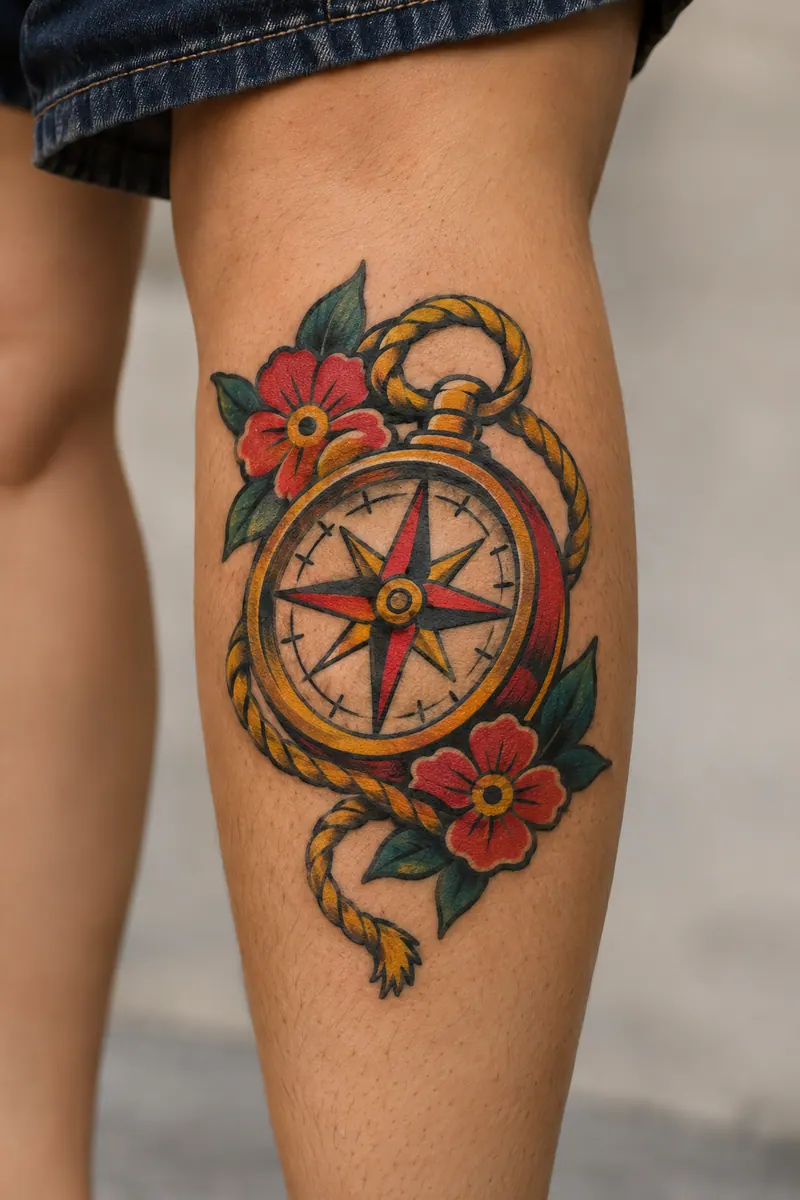
- Compass with a rope (traditional, calf). Bold outlines and a limited palette straight from sailor flash. Traditional compasses read clearly from across a room.
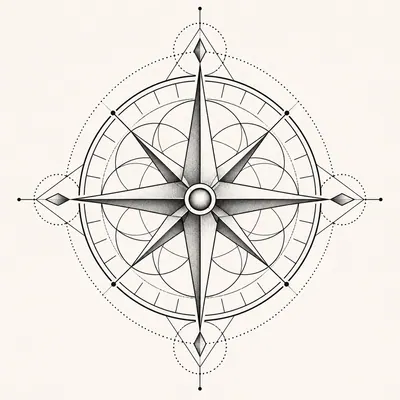
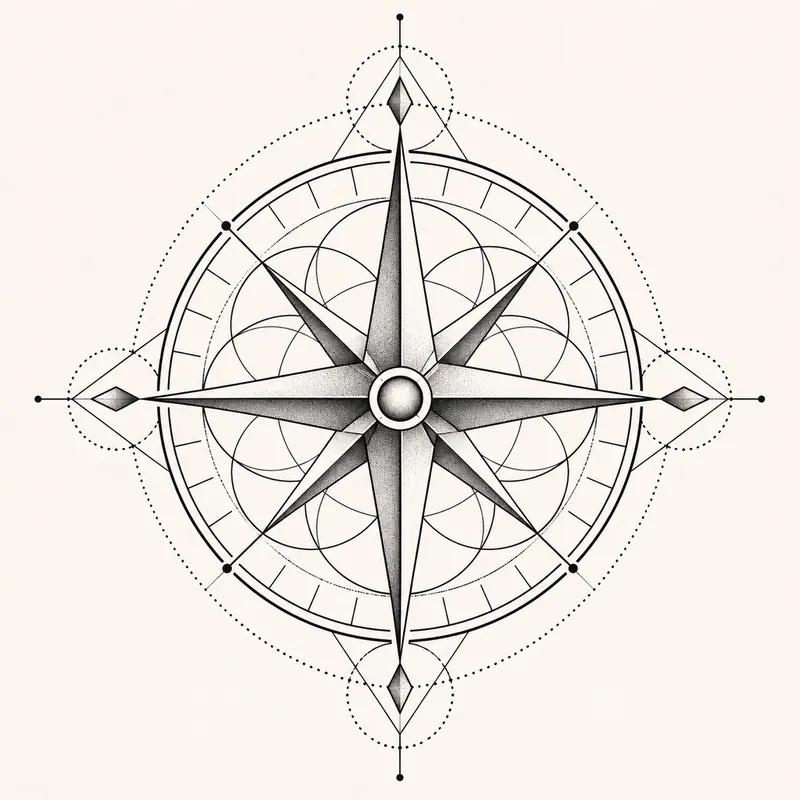
- Compass made of clean lines (geometric, chest). A modern, symmetrical take built from precise lines and circles.
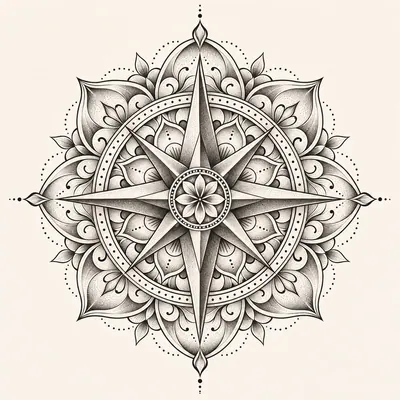
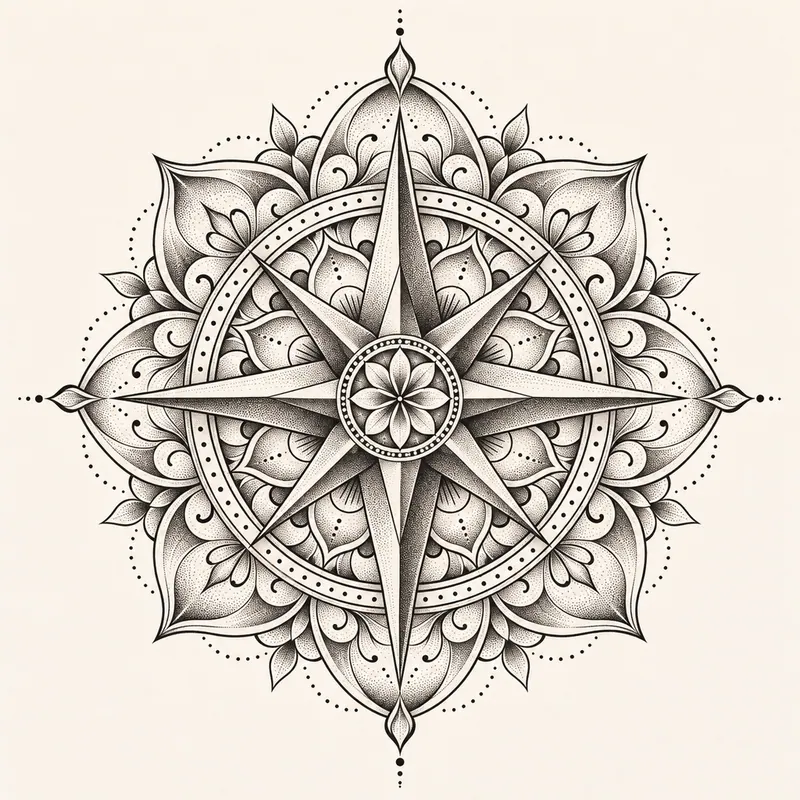
- Compass rose shaped like a mandala (thigh). Radial symmetry turns direction into balance and focus.
- Compass with the word “Wanderlust” (lettering, forearm). Script turns the instrument into a personal motto.
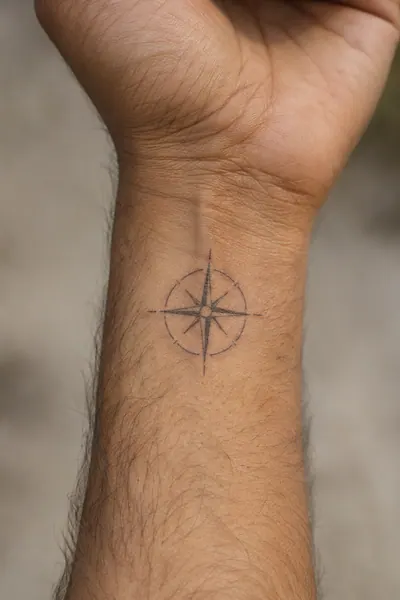
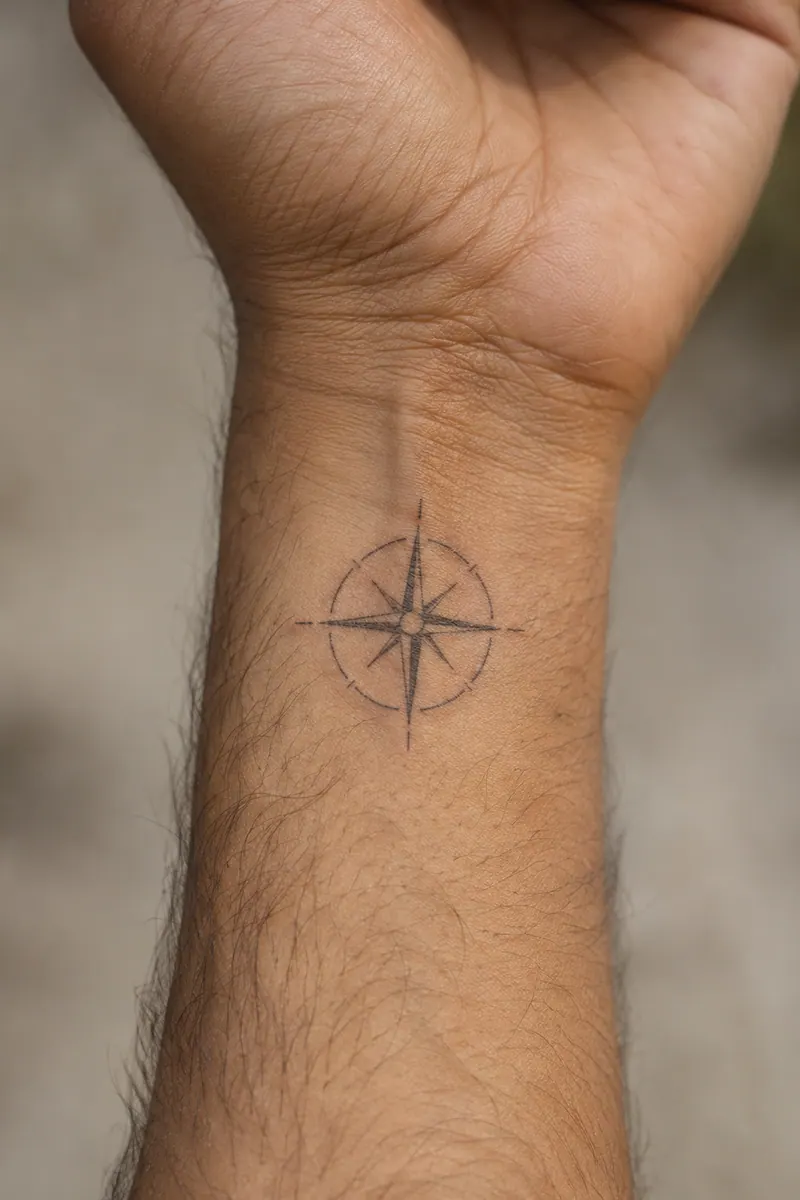
- Small compass (minimalist, wrist). A circle, four points and a needle, nothing more.
Getting the details right
Compasses look simple, but they contain fine elements, such as degree markings, letters and thin needle points, that can blur if they are too small.
- Decide how much detail you want. If you want numbered degrees or a detailed bezel, plan for at least palm size. Otherwise drop the tiny markings.
- Choose your north. Pointing the needle toward a meaningful direction, such as your hometown or a place a loved one lives, is a subtle personal touch.
- Use real coordinates. Many people add the latitude and longitude of a meaningful place around the dial.
- Watch the symmetry. Compass roses must be perfectly even, so a geometric or mandala artist with clean linework is a good match.
Placement ideas
Round compasses sit naturally on the outer forearm, the upper arm and the calf. Compass roses with long points suit the chest, the upper back between the shoulder blades, and the outer thigh. Minimalist compasses fit the inner wrist, ankle and behind the ear. If you plan a travel-themed sleeve, the compass is a natural center piece with maps, mountains and waves around it.
Point it toward your own story
The most personal compasses often start with something real: a grandfather’s pocket compass, a map of a hometown, or the coordinates of the place you met someone. With InkForge you can turn a photo of an heirloom compass into tattoo-style artwork using Photo to Tattoo, try it in engraving or traditional style, and edit just the needle or dial until it points where you want. Save your favorites and share them with your artist.